"1/ what are the cup bodies made of? 3D-printed resin. The denser material helps with the acoustic properties of the sound we are trying to achieve.
2/ what is the driver made of? From a paper composite.
3/ how do the ear pads attach and what are they made of? The earpads are velour and attach via a turn'n'clip mechanism. They're quite similar in shape to AKG earpads. We experimented with others which modulated the sound in a rather horrific way so found this pad to be the sonically best.
4/ what is the headband made of? From PU leather. However, we are in the midst of looking for alternative headbands addressing the leather as we have received feedback from customers regarding the fit especially on smaller heads.
5/ for international customers, what is the preferred sales portal? Is there a fixed international price or is it always tabulated on the going currency rate of that day against your Malaysian currency? How about shipping? Is it included or extra? What carrier do you use – FedEx, UPS, DHL, other? For international customers it is still a bit difficult. Most of our current distributors can arrange international shipping at an additional cost. We are in the midst of negotiating with a US distributor to ensure that we have global reach. There is a fixed international price set by the distributor. Shipping is a separate charge. We primarily deal with DHL but are open to other carriers when price favours it."
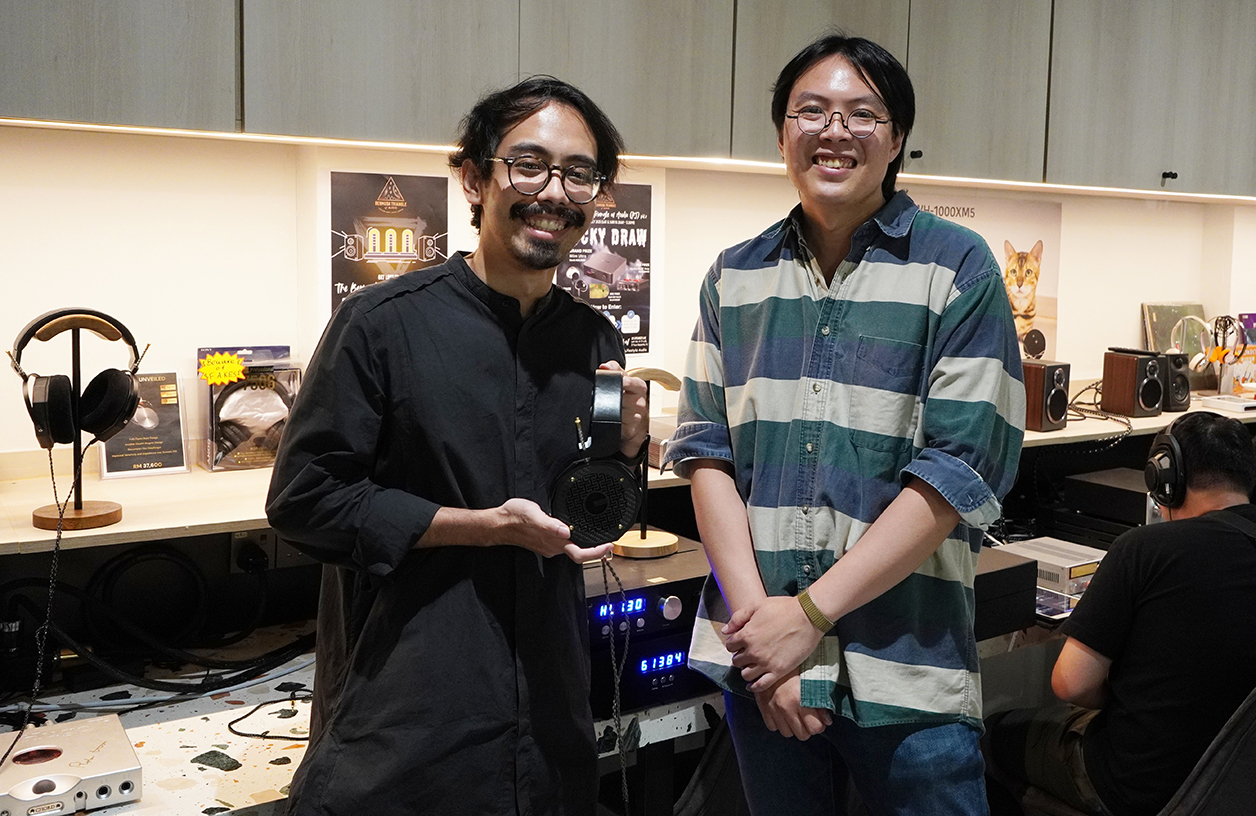 Nabil & Leong. Daniel prefers to remain anonymous.
"6/ is your team associated with the Stars Picker headphone café/boutique like a quasi house brand? The team is not formally associated with Stars Picker Audio but one of our partners is currently employed there. Stars Picker Audio Library have been a fervent supporter of the brand since day one and remain our principal distributor out of respect to our relationship and the support they have shown us. There is some nationalist pride involved when Omne was born in a country which isn't a typical headphone-producing nation. Only Elysian is the other world-renowned brand but they make IEM. We are the first headphone brand to carry the Malaysian flag.
7/ what can you tell my readers about team Omne, who you guys are, how many of you are there, what your backgrounds are, what got you into hifi manufacture and headphones in particular? There are three of us from three different backgrounds. I come from marketing, Daniel from an automotive workshop background running operations and Leong has the relevant degrees in engineering and lends his expertise and passion to Stars Picker. The journey for all of us was rather unanimous. We roughly started out during our high-school years. I began with the Alessandro MS-1 and a JDS Labs CmoY BB and then was thrust into the world of headfi. The idea to produce our own headphones came about when Daniel and I were mulling over what we could do for a business when we had started a small copywriting agency which didn't work out too well because it entailed running two simultaneous marketing jobs. We already loved music and the hobby so why not turn it into a business? We reached out to Leong who agreed and the rest is history. We've been in operation since July 2025 and grown ever since. It's still surreal at times to realize that it's not been a full calendar year yet here we are. I'm honestly grateful for the support we have had from reviewers, fans and the general public."








"8/ what about the genesis story of Hendeka? How many years did R&D take, how close to initial ideas did the final version materialize? Did you have particular design goals and things you wanted to avoid? The Hendeka has been a sort of culmination study because on the side, Leong already made DIY headphones. He had experimented with a few contraptions but never scaled them into anything commercial until he met us. We were lucky because leveraging Leong's expertise cut our tentative 1-year R&D period short by about 6 months and hit the signature sound we were aiming for sooner than expected. We built a total of three iterations tested heavily on Chord equipment, specifically the Hugo TT2 and Mojo then learnt that the Hendeka scales very well with more expensive gear. Couple that with the ability to roll cables and you can modulate the sound to your preference while still remaining true to our ethos of making genre exploration easy. Things we wanted to achieve were musicality and fun. The main criteria was that you should subconsciously bop your head with whatever you play. So it had to be genre-agnostic. These were the two goals we set ourselves. We achieved them and are glad that people lean towards what we stand for. What we wanted to avoid was being overly analytical or tuned to a preset response that would essentially just fight with every other headphone in the mainstream. We want to bring the fun back and let the Hendeka become a permanent choice in your headphone rotation. Sure, there will be others with a more impressive soundstage or depth but when you want to kick back, relax and just enjoy the music, you come back to the Hendeka. As for your sample, we will ship within a month or so. Unfortunately we face the usual supply-chain problems of a small start-up but are working hard to get stock up and ready."
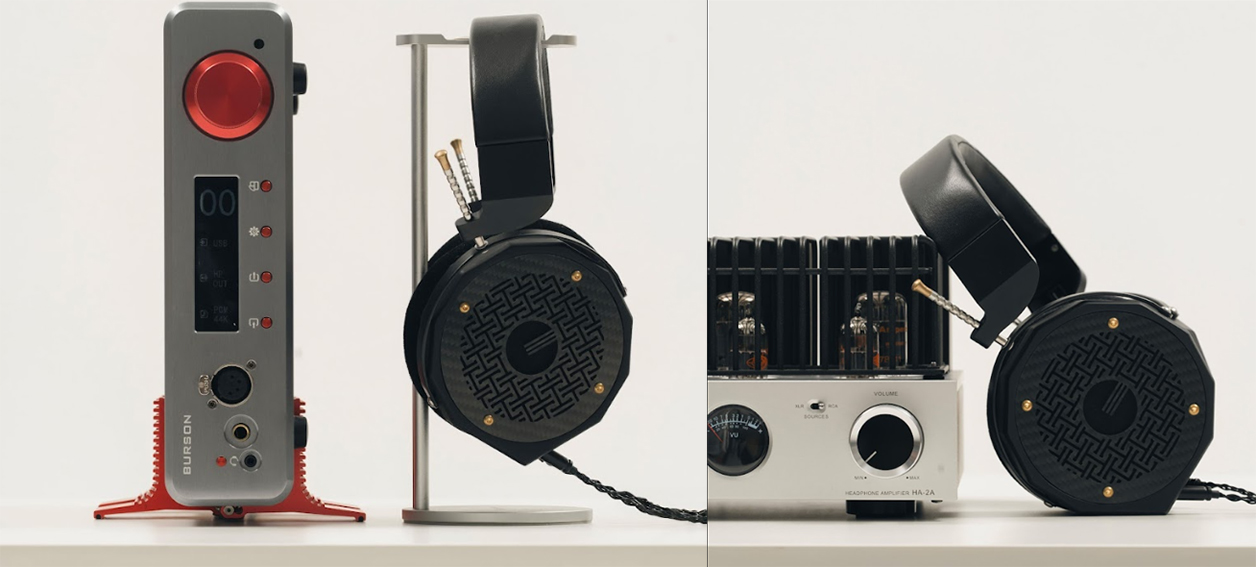 Whilst the exposed screw heads could seem less polished, they should make replacements of grills and driver easy for modular appeal.
In 1964, US Supreme Court Associate Justice Potter Stewart famously wrote "I know it when I see it" in his opinion of the Jacobellis v. Ohio case which dealt with the banning of French film Les Amants accused of being obscene. In hifi commentary, terms like musical are as elusive as the judge's struggle was to differentiate hardcore pornography from artistic expression. At first blush, fun could seem equally loose but unlike musicality's far higher likelihood of meaning different things to different people, might just be more universal? If so, it should be something all of us recognize when we hear it, no formal judgeship required. To my mind, bass and what musicians call the engine room—the bandwidth and instruments which hold down a groove—speak to the belly and our vital bits of feeling whilst treble and its qualities of air, spaciousness, gloss, image specificity and associated soundstage sorting appeal to our sense of sight and the observer's mind. With a fun tuning I associate strong bouncy bass, musical propulsion or grooviness, density, strong colour and a firm anchoring in pace, rhythm and timing without undue damping. Rather than pretend at this being universal, I present it as personal expectation bias and something I could contrast the actual experience of hearing Hendeka against. Would it overlap or diverge; and if the latter, how and where? As to genre agnosticism, I generally view the mere notion as moo poo. An inanimate playback contrivance cannot identify different music styles to then treat them different. The small print I would sign has to do with presence-region/treble detailing and its effect on poorer recordings. By that metric, a high-resolution linear design is quicker to expose them than a more forgiving warmer less precise tuning. Being able to listen across a broader swath of popular music that's not been mastered to coddle audiophile pretensions would then be less exclusionary so more quality agnostic. Replace 'genre' with 'recording quality' and suddenly agnosticism makes sense to me.