That walk in the park. Even with my PSI Audio bass traps active in the two front corners, I kept getting hung up on how VC2's looser bass textures mismatched the VC'1 sleek timing when run solo. Though ported too, the monitor's alignment wasn't problematic in this or my smaller upstairs room. Even in series mode's greater amplitude linearity, the bass bin's triple-port action caused time-domain ringing. The presentation had a belt line like the physical stack. Above it timing was taut and snappy, below it less so. For me that discontinuity undermined VC1's unique qualities; the same which had stirred such personal anticipation over this reunion. Though my Ripol solution was on hand, I couldn't use it. It makes VC2 redundant. VC3 probably wants a larger room to really stretch its legs; or listeners less critical of the temporal price which omni-radiating bass extracts. No matter the psychic distance I tried to create with my sonic status quo to let these visitors make their own aural argument uncorrelated to comparison, I couldn't not hear the effect. Call it somewhat pear-shaped; in the time not amplitude domain. It's obviously endemic to non-infinite-baffle box bass and always a matter of degrees, never absence. Were VC1 less special, this belt-line difference would be less, too. Though it reads unfair, I didn't think VC2 quite special enough to make that utterly undeniable argument its extra €11K would demand. I'd prefer an active sealed sub with a Sublime Acoustics active crossover. It could leave substantial coin in the cupboard but would admittedly eliminate the super tweeter.
Mine won't be a popular conclusion with today's maker or their audience. So it's important to stress that my sensitivity to the time delay which long wavelengths free to wrap around their enclosure cause by playing snookers with our room plus the ringing of ports is quite uncommon. If it were different, divergent bass solutions would rule. Even sealed bass is in the abject minority compared to ported bass. Clearly the vast majority of buying listeners don't hear these issues; or if they do, aren't bothered. In which case, my take on it is quite immaterial, isn't it?











It's exactly why reviewing really isn't about just one person's opinion. Any solitary opinion gets weighed against its relevance to the general readership. Honesty demands that first we give our opinion. Fairness then demands that we place it in bigger context to ask: does it matter; how much; and to whom? That's when I conclude that tone-first listeners who want more subjective accuracy than typical for such a tuning should really fancy VC3. They will appreciate the warmer undertones which its bass+treble extender brings to the party as strategic enhancements. They'll hear it not as any dilution or step change of the VC1. Resolution-first listeners adverse to that level of warmth altogether would probably gravitate elsewhere in the first place; perhaps hi-tech metal-laminated drivers à la Monitor Audio or graphite-enhanced versions in sealed enclosures like Magico's. In my mind, the MonAcoustics stack sits right in that transitional area. It has the locked imaging of inert cabinetry, tonality between metal and paper drivers and with VC2's 1½-octave reach advantage over VC1, foundational heft and dynamic headroom which well exceed even butch monitors. In terms of domestic appearance too, it'll be an easier sell than a 2.1 or 2.2 stereo proposition with its separate sub/s.

The twin hook-up options and Beryllium tweeter settings add voicing leeway that's very uncommon in passive loudspeakers. The argument that in your room and to your ears, one combo will sound best so why pay for the others forgets that to know which one works best requires the others.
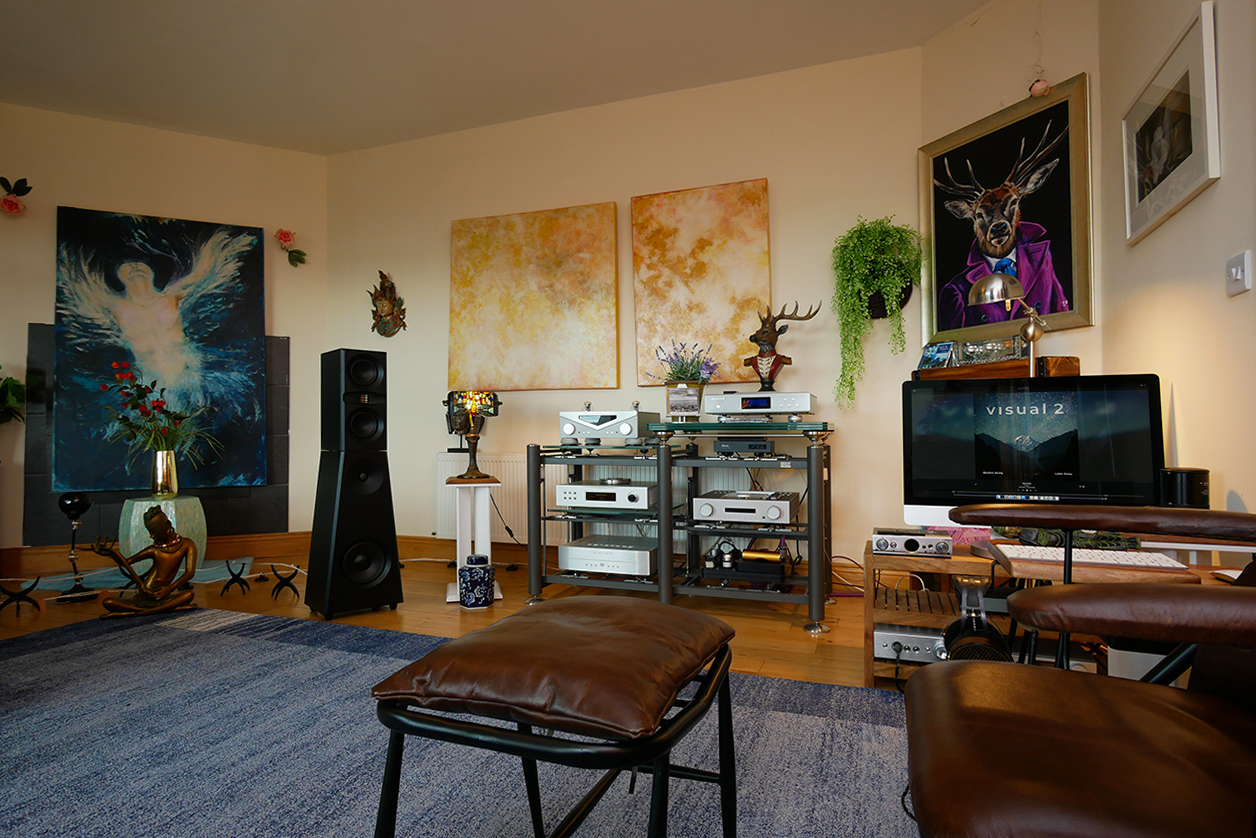
On the acoustic Mon-ey. The closest alternative to today's stack I can find is YG's $19'800/pr Ascent, a unibody 3-way with 7.25" mid and 8.75" woofer. To my eyes the Mon looks even better. Its two-piece construction is certainly easier to manoeuvre. Its features are more comprehensive. YG will get the nod for its advanced billet-reduced cones and dome. Without having heard the Colorado model, it's still relevant to say that the Korean seems head-on competitive. A conscientious shopper after a sub $20K/pr floorstanding aluminator would really hope to compare these two. Being from a far younger brand, it makes MonAcoustic's latest floorstander quite the potential usurper so one to watch. As more reviews come in, we'll learn how other ears in other rooms rate it…
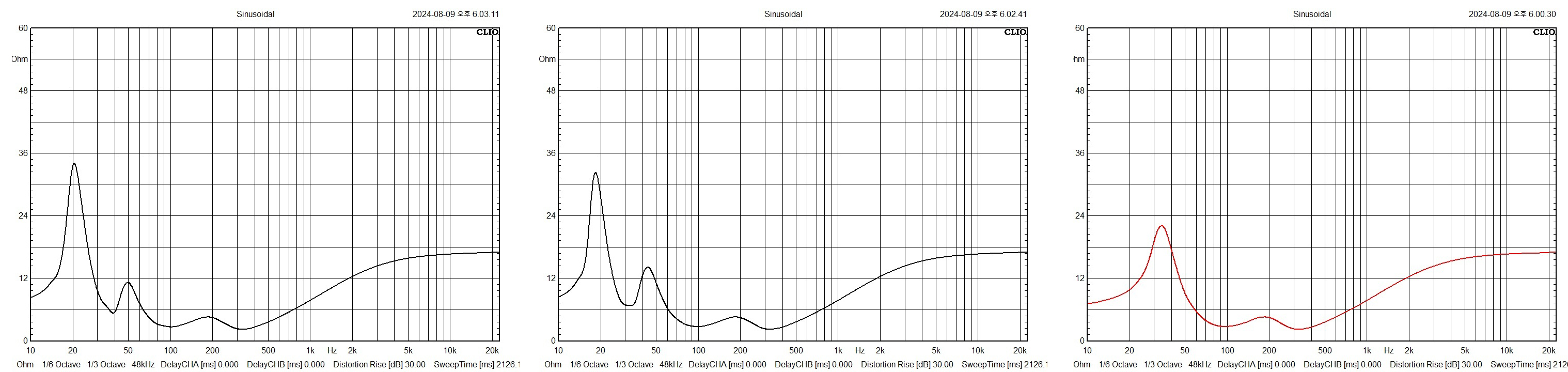 All ports open | single rear port closed | all ports closed.
PS: After I wrapped this review to request a call-tag pickup, Young explained that he had asked Jun for more bass to satisfy his US clients. American sheetrock construction is notoriously lossy in the bass. In Europe, more common brick construction like ours keeps far more low frequencies in the room. That wants different tuning. I suggested that perhaps MonAcoustic can include dense port bungs for all three of VC2's vents so listeners with harder walls enjoy more adjustments. Young suggested that they'll consider it. By August 9th, "we took the above measurements and think that providing port plugs might make sense indeed so are going to offer them to our distributors first to collect some feedback."