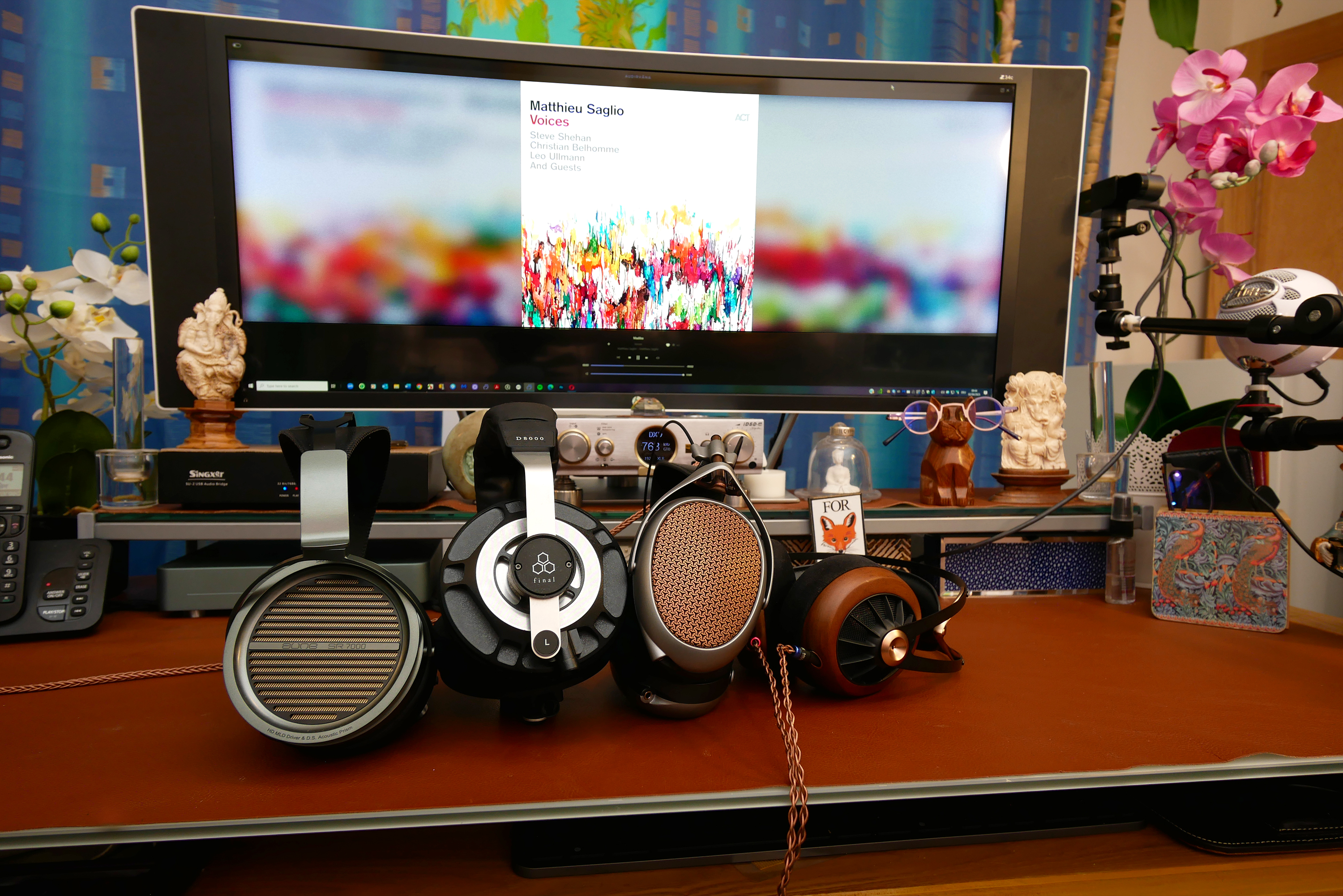
Imperious? With the original Empyrean no more and neither it nor the 2nd-gen successor at hand, I had no direct A/B means. But I still had the same Final D8000 against which back when I'd ranked the 1st Empy as on par on overall resolution. Using that bigger costlier planar as Empyrean 'stand-in', I didn't think that Meze's current best worry one bit about Poet encroaching. Not that good business sense would follow such self-defeatist strategy in the first place. Poet was of clearly lower resolution than the D8000 which itself sits below HifiMan's Susvara which sits below Camerton's Binom-ER which sits below Raal 1995's Immanis. All of them eclipse Meze's sticker, some drastically so. To my ears, warmth can come at us from two main sources: amplitude and/or time. A rolled-off treble, recessed midrange, emphasized power region or elevated bass, in isolation or together, can all generate warmth in the frequency domain. That's not what I heard from Poet. Its bass was linear not shelved up. The warmth I heard came from the time domain. This registered as a soft fuzziness to translate as medium mellow separation. Think comfort sound whose baked-in temporal blur sets resolution to moderate. Also think propensity to get a bit crowded or congested. Fans of expansive, airy and cleanly layered staging won't wax poetic. Neither will fans of incisive attacks. Poet doesn't worship at their altar of Crispianity. For that Meze's own 109 Pro, on the very same cable, goes rather farther; for less than half. That's my perfect segue into a personal perplexion. When so many planarmagnetics seem to suffer reflection, phase-shift and air-flow issues from the magnet arrays between their and our diaphragms so drivers and ears which dynamics avoid by putting nothing big between themselves and us… why do we pay significantly more for planars yet get less high fidelity? When we ask that, the whole luxury game which Poet promotes with such undeniable flair begins to feel like a booby prize. Do we pay €2'000 to primarily look cool by wearing something superbly styled?
Before you mistake me, I've nothing against comfort sound. In my hierarchy it simply sits below higher fidelity; not above it. Now being asked to pay more doesn't sit right even if here it does buy more glitz and tech exotica. But if said coin allocates primarily to high style and luxury materials, such product is more fashion than hifi item. And there's absolutely nothing wrong with that. I like stylish wrist watches which tell worse time than the cheapest mobile phone and don't auto adjust to daylight saving's time. There's simply no obfuscation or misdirection about it. Watches as male fashion jewellery are perfectly legit. We just leave performance out of it with ±12-sec daily drift. Back on today's planar Poet, I register more bragging rights over next-gen Rinaro tech with meta-material absorption from Dan Clark and the titillating cosmetic/finishing aspects than I hear competitiveness with sub-€1K dynamic cans like my €630 aune SR7000 – or Meze's own €799 109 Pro. That's my personal vexation. Why is that the shape of things? Following that question and given €2'000 to spend like Poet, what could clearly resourceful Meze do with/for a classic dynamic effort that takes no prisoners? Could they author 2025's HD800 with their own signature build quality? For that I'd sign up in a heartbeat. As for Poet? I must confess to hard times correlating its ask with the aural aspirations. Poet might be telling tall tales in the bar but a sharpshooter he is not. The post of new sheriff in my town remains open.












Before this reads like an obituary, forget raw res and expectations tied to price. Not everyone is after hi def. Comfort sound with a bit of mid/upper treble flash has its own audience. I'm thinking particularly of those who pipe music into their brains for untold hours each day. Except for the rare cortex capable of processing non-stop intensity to the exclusion of all else, endless sessions ought to be less desirous of lit-up detail and separation. That would soon cause overload and fatigue like a 10-course meal of exclusively super-spicy dishes. It's for such high-mileage sonic travellers that a thicker more opaque tuning like Poet's could be heaven-sent. Just because that's not me doesn't make it any less attractive or relevant. I'm simply the wrong type to sing its praises other than theoretically where I must imagine the correct target audience. Call it an unintended mismatch between reviewer and product. The only real excuse I can muster on my behalf? With their own 109 Pro, Meze already have in-house proof of doing more with less. My bad that I made the wrong assumptions based on it. Clearly getting there with balanced-drive planarmagnetic tech is a lot harder than doing it with classic dynamic drivers; and takes more money than Poet demands. That being my takeaway, you'll have to excuse me, again, for wondering why we'd want to chase a technology that's makes it harder and costlier to not even match the standards which 'old' tech has already established? Just to be different? To trade the exotic?
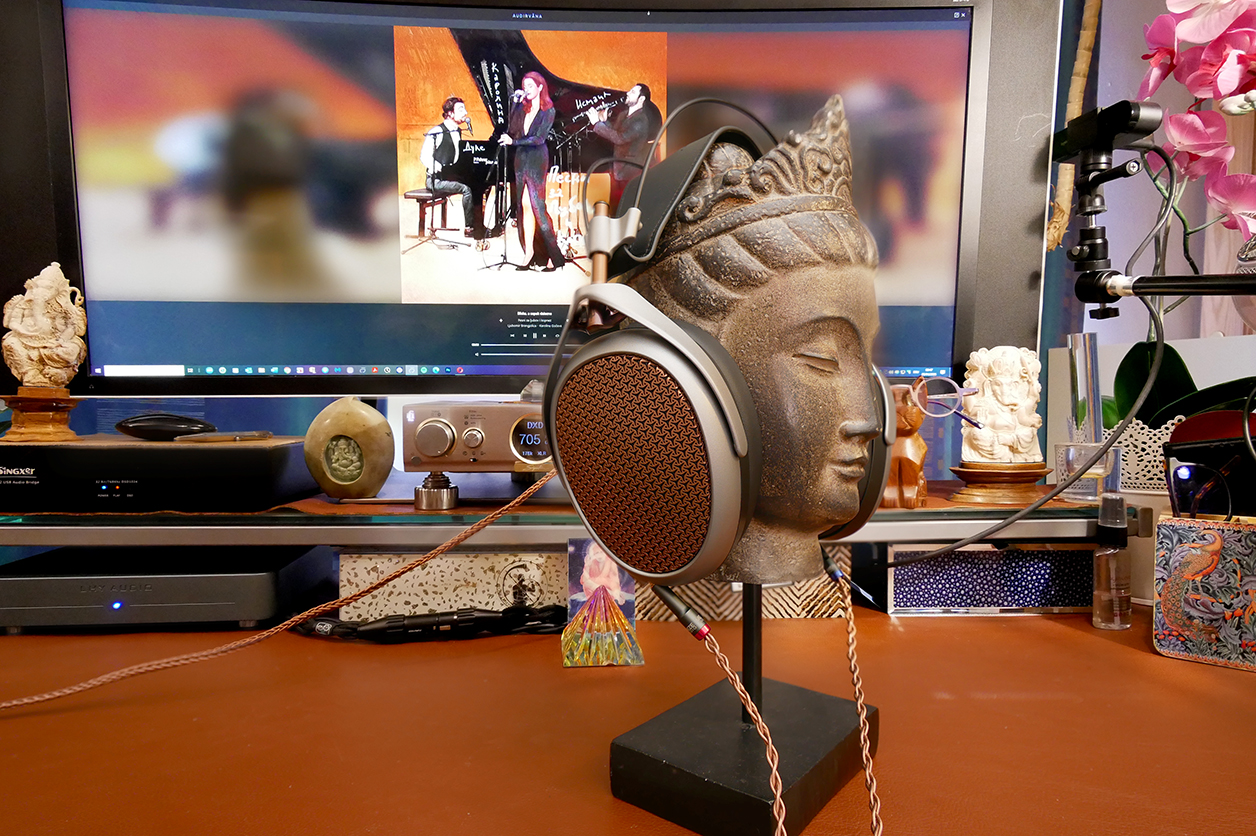
Back to my prior page, everything holds. Poet looks swish, is built superbly, wears ergonomically ace. On that score it's everything a fashionable luxury product needs to be. Even the biodegradable cardboard box is on time. If one starts there then adds making sound in more gemütlich than greased fashion, it all adds up. That in Meze's catalogue I remain far more romanced by their 109 Pro not because it's cheaper but because I much prefer its sound says more about me than aught else. Who of us can jump their own shadow? Let me now practice that. Just like our self image which nobody sees but us, expectations don't meet things as they are, only as we'd like them to be. That's not really meeting them, just an overlay of our own projections. Having ascertained that my own expectations were misplaced, what could I do to better welcome Poet on its own terms? With undue warmth caused by frequency-response tuning, we can counter-tune with the proverbial tone control; or EQ in DSP. But temporal warmth is baked in. We can't bleed it out¹. We can only assemble ancillaries of superior timing and clarity themselves to avoid piling on. And I certainly had quicker snappier DAC/amps than my iFi. Cue up the old chart topper "if at first we don't succeed".
_________________________________
¹ Strictly speaking that's not entirely true. Andrew Startsev of Slovakia's DMAX has shown how custom code can perfect a transducer's impulse response. That would require super-tight driver matching then special filter code written for that transducer. In the absence of such code, my statement is true again. Driver-based time-domain errors can't be extricated from the music signal. Their stain is in the signal not on it like something we can somehow rub off.