

Country of Origin

Reviewer: Srajan Ebaen
Financial interests: click here
Main system: Sources: Retina 5K 27" iMac (i5, 256GB SSD, 40GB RAM, Sonoma 14), 4TB external SSD with Thunderbolt 3, Audirvana Studio, Qobuz Sublime, Singxer SU-6 USB bridge, LHY Audio SW-8 & SW-6 switch, Sonnet Pasithea, COS Engineering D1, Laiv Audio Harmony; Active filter: Lifesaver Audio Gradient Box 2; Power amplifiers: Kinki Studio EX-B7 monos & Gold Note monos on subwoofer; Headamp: Enleum AMP-23R; Phones: Raal 1995 Immanis; Loudspeakers: Qualio IQ [on loan] Cables: Exact Express Flame, Furutech; Power delivery: 2 x Kinki/Vinshine Tai Hang on amps and source stack, Furutech DPS-4.1 between wall and conditioners; Equipment rack: Artesanía Audio Exoteryc double-wide 3-tier with optional glass shelves, Exoteryc amp stands; Sundry accessories: Acoustic System resonators, AudioQuest FogLifters; Room: 6 x 8m with open door behind listening seat; Room treatment: 2 x PSI Audio AVAA C214 active bass traps
2nd system: Source: FiiO R7 into Soundaware D300Ref SD transport to Cen.GRand DSDAC 1.0 Deluxe with POW; Preamp/filter: Lifesaver Audio Gradient Box 2; Amplifier: Kinki Studio EX-M7; Loudspeakers: ModalAkustik MusikBoxx + Dynaudio S18 sub; Cable loom: Exact Express Earth; Power delivery: Vibex Granada/Alhambra, Akiko Audio Corelli Corundum & Castello Solo; Equipment rack: Hifistay Mythology Transform X-Frame [on extended loan]; Sundry accessories: Furutech cable lifts, Furutech NFC Clear Lines; Room: ~3.5 x 8m
2nd headfi system: DAC: Cen.Grand DSDAC 1.0 Deluxe with POW; Headamp: Cen.Grand Silver Fox; Headphones: Raal 1995 Magna, HifiMan Susvara
Desktop system: Source: HP Z2 work station Win11/64; USB bridge: Singxer SU-2; DAC/headamp: iFi iDSD Pro Signature; Speakers: DMAX P61 Headphones: Final D-8000, aune SR7000
Upstairs headfi system: FiiO R7; Headphones: Meze 109 Pro, Fiio FT3
2-channel video system: Source: Oppo BDP-105; All-in-One: Gold Note IS-1000 Deluxe; Loudspeakers: Zu Soul VI; Subwoofer: Zu Submission; Power delivery: Furutech eTP-8, Room: ~6x4m
Review component retail: €5'990
For reasons explained at the end of this article, today's review couldn't complete as planned to now function as a basic product introduction; an extended news item if you will.

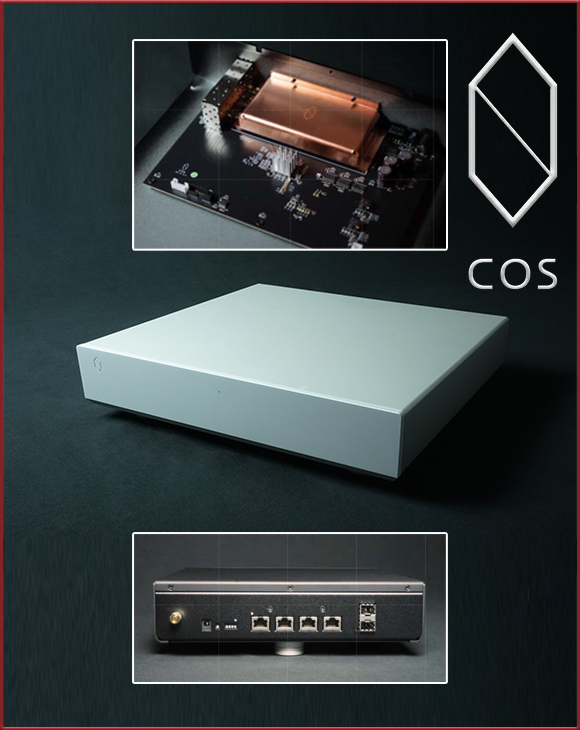
If I'm a Kraut—ancient slang for a German based on our nation's presumed fondness for pickled cabbage—what does that make today's DSAS? A bullfrog? It's twice French. Concept and hardware are by Métronome, software/OS by Audirvana. This collab is a first of its kind. It's a very special kind of grenouille. Do the French really eat frogs? The popular recipe of cuisses de grenouille à la Provençale suggests as much. It must have freaked out the invading Krautlingers. Had they headed south to Sicily, they'd have encountered risotto al nero di seppia, rice cooked in squid ink. Perhaps that spared Sicily? As someone sold hard on Audirvana Studio to run it on my Win11/64 office and music-dedicated iMac in the main listening lounge, I had quite the appetite for today's small streamer. Though I've never yet tried sautéed frog legs, in audio I'll try pretty much anything. Truth told, streamers and I have somewhat strained relations. I don't wholly get them. But then I'm not self-referential enough to not recognize that many folks not beset by WiFi allergy do not want a computer in their listening space. That was four negatives in one sentence. Too much pickle juice even for a Kraut. As a no-WiFi man, I do the old-fashioned thing. That means a hardwired mouse, keyboard and LAN into a fully loaded 27" iMac with 4TB external SSD and Audirvana Studio. That outputs USB to a Singxer SU-6 bridge with I²S and AES/EBU out. The big super-res iMac display makes a mockery of servers with tiny displays which are useless from the distance. It also stomps tablet remotes. I did review a number of big expensive 'audiophile' streamers to check whether my residential status still had it. Like the headless horseman, those rode in blind to mandate access by tablet remote. Enter WiFi. Not only did I view their kind as UHF noise promoters—what else do we think WiFi is—but pretenders who disavowed their computer guts yet often lacked basic UPnP. Meanwhile they charged loads more than openly-computer computers then in most cases sounded no better than my actual computer if that. Some which possibly sounded slightly better didn't make enough of a gap to matter and still needed a costly Mac Display to equal my iMac's GUI. When I wrote this, Apple's 27" display wanted €1'799. Add that to a headless streamer that asks €10'000 on its own. You perhaps can appreciate my minor underwhelm over their kind. Trust me, having a WiFi allergy isn't fun or convenient. It's why I don't review such machines unless they're UPnP compliant like Nagra's small streamer was. That was instantly discoverable inside my iMac's Audirvana install.

To the bit-perfect 1+0 brigade the following statement is offensive never mind impossible. Yet routing software and its operating system have as much influence on a streamer's sound as its hardware. Unlike very resource-intense Roon with its big footprint of constant background threads, Audirvana was designed to tax our CPU only minimally. That's easily seen with Activity Monitor. The software player's embedded r8brain and SoX upsampler engines can exploit our CPU's greater processing powers over a DAC's own FPGA or sample-rate converter. We can unload those postage-stamp or smaller chips from upsampling math, even present them PCM already resampled to DSD256. Audirvana even includes a sophisticated 10-band digital EQ. That could notch out our three biggest room modes. Audirvana is UPnP, Qobuz and Tidal compliant to access our subscription services from inside its own desktop app. I suspect that my somewhat strained relations with costly streamers are at least partially due to Audirvana's superior sound optimization. I carefully compared it to Roon and J.River before buying my annual license. I've never looked back. The frogs pipped the competition to the post. Perhaps I ought to try grenouille. But not in Ireland. I don't want to croak. I leave that to the green hoppers. For now I'll sample the DSAS, merci beaucoup. I like its small form factor. From prior Métronome gigs I knew to expect sterling build quality. I like the deliberate connectivity minimalism of USB B/C and LAN in, USB out. Why limit ourselves to S/PDIF with its 24/192 and DSD64 ceiling? Why present EMI/RF with lots of open sockets for ingress? Onboard storage is 2TB or 4TB SSD. To my eyes the DSAS concept makes perfect sense. What would my pink bits say?








If it wasn't crystal yet, the DSAS runs on Audirvana/Linux so includes its fantastic library management. Some of that my screen captures hint at. I don't do Tidal, HRA or Presto Music so only show Qobuz embedded. Our local music can spread across multiple folders in different locations. We simply tell Audirvana where and it all shows up as one unified library. The DSAS includes a 3-year subscription to Audirvana Studio. The unlimited version of Audirvana Origin also included is for pure offline work so local libraries. Unlike Studio which routinely checks our subscription to need Internet access even if we only stream local, the unlimited Origin license has no such needs. With it we can really disconnect from the tangled web and The Algorithm's constant surveillance. My PCfi adventures started on an iMac with iTunes as the first comprehensive library navigation system. I soon replaced that with the PureMusic software player which worked behind iTunes to do the sonically relevant data routing and sound optimization procedures. Eventually Audirvana usurped PureMusic and my library completely untangled from iTunes and Cupertino's insidious infrastructure. Because Audirvana processes .aiff and .flac, .wav & Co. without prejudice, mixed Windows/Mac libraries are no issue. Neither are native DSD files. Not being a citizen of the Roon Republic, I was thrilled to learn of a streamer built squarely upon Audirvana not Roon. Finally I could go fully native and let my hair down if I had any. Just no frogs. I leave those to the cranes and storks. And, pssst, I don't do sauerkraut either¹.
 A partial look at the 'Qobuz Purchased' part of my library.
¹ To take the food angle to its necessary conclusion, consider Cambodia under the Khmer Rouge. When regular food ran out, the rural population went foraging to bring home snakes, spiders and other previous 'inedibles'. Having learnt how to prepare and enjoy them, they remained part of the local cuisine even after the regime change. Celebrity chef and cusser extraordinaire Gordon Ramsey visited a remote Northern Indian village whose natives harvest a special type of ant. Very often, the origins of 'unusual' foods date back to periods of plight where they became a matter of survival, source of protein or other. Calling people names because their diets differ is obviously in poor taste. Just because I'm not culinarily adventurous enough to eat snails or crickets doesn't mean I begrudge those who do. Variety truly is the spice of life.

12
