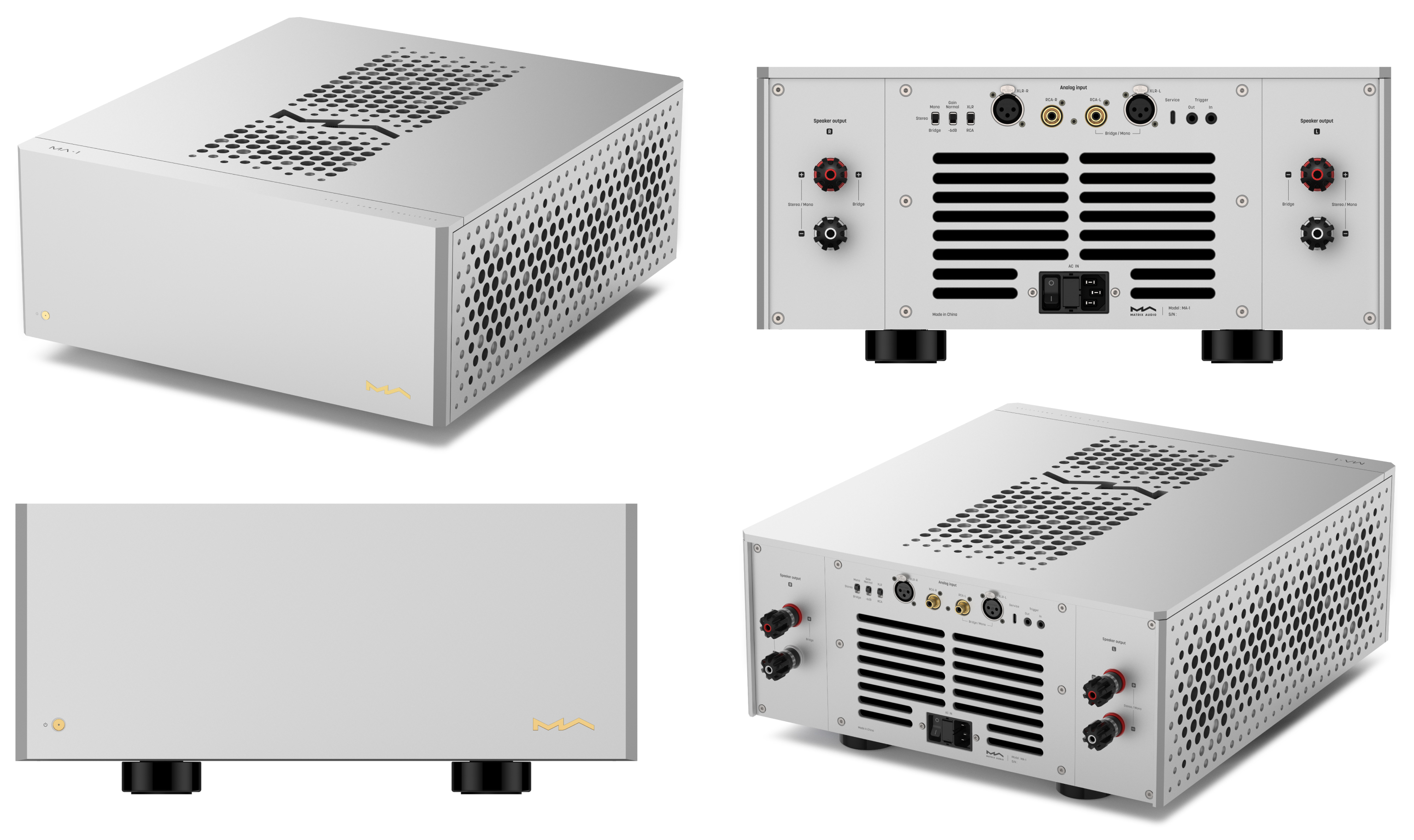
King Kong versus Godzilla. In a bow to bygone C-movie matinée marathons, my comparison to Kinki's EX-B7 monos was a fight to the death. Carnage. Total annihilation. Not. At Kinki's level, little to nothing remains unsaid except for raw power. If we venture beyond their post, we're essentially down to pronouncing things with a different accent. According to our tastes, that could be more charming or less familiar. As in saying it better, period? That could be far rarer than our accountant would countenance if he had any say over our hifi spending. In my movie¹ which only played on a single screen in rural Ireland, 'better period' limited itself to more dominant bass control as already covered. And even that gap was narrow. As for the rest, think sideways differences. Kinki's tuning was the more lit up from the treble down. It intensified image separation, focus and the presence of upper harmonics during tone modulations and peaks. I call that the personality of pentode perspicacity. This triple 'p' packs pricklier pop. Think peppery cayenne dash of piquancy, citrus injection of incisiveness. The Matrix manner veered a tad into triode sweetness to prioritize across-the-range smoothness and from it, a slightly denser demeanour, rosier tone and more relaxed gait.
________________
¹ The MA-1 was on for 24 hours after which its chassis, particularly the top plate, was warm to the touch. Equally pre-warmed were the EX-B7 which remained cooler. Proper protocol for switching between two live amps on the fly is to stop playback, then connect the interconnects first, speaker cables second and do the inverse upon disconnecting. It's how we avoid noises.

If measured on an apothecary scale, this divergence dosage was quite slight. Just so, knowing my system inside out and having curated it to my tastes not any mythical 'absolute' sound, the effect of said difference was an easy tell. The Kinki version felt more quicksilvery and adrenalated, the Matrix reading more stately and round. Importantly, the MA-1's offset remained within my inner circle whenever I gave it sufficient time to raise its temps. Right after coming out of standby frost, I found its smoothness a bit too polite. Once the output transistors had reached thermal equilibrium, the 'too' vanished and what remained of the smoothness simply had the tunes speak a slightly different dialect as though from just one county over. You understand everything perfectly whilst knowing that your guest didn't grow up down the road nor go to the same school as you.










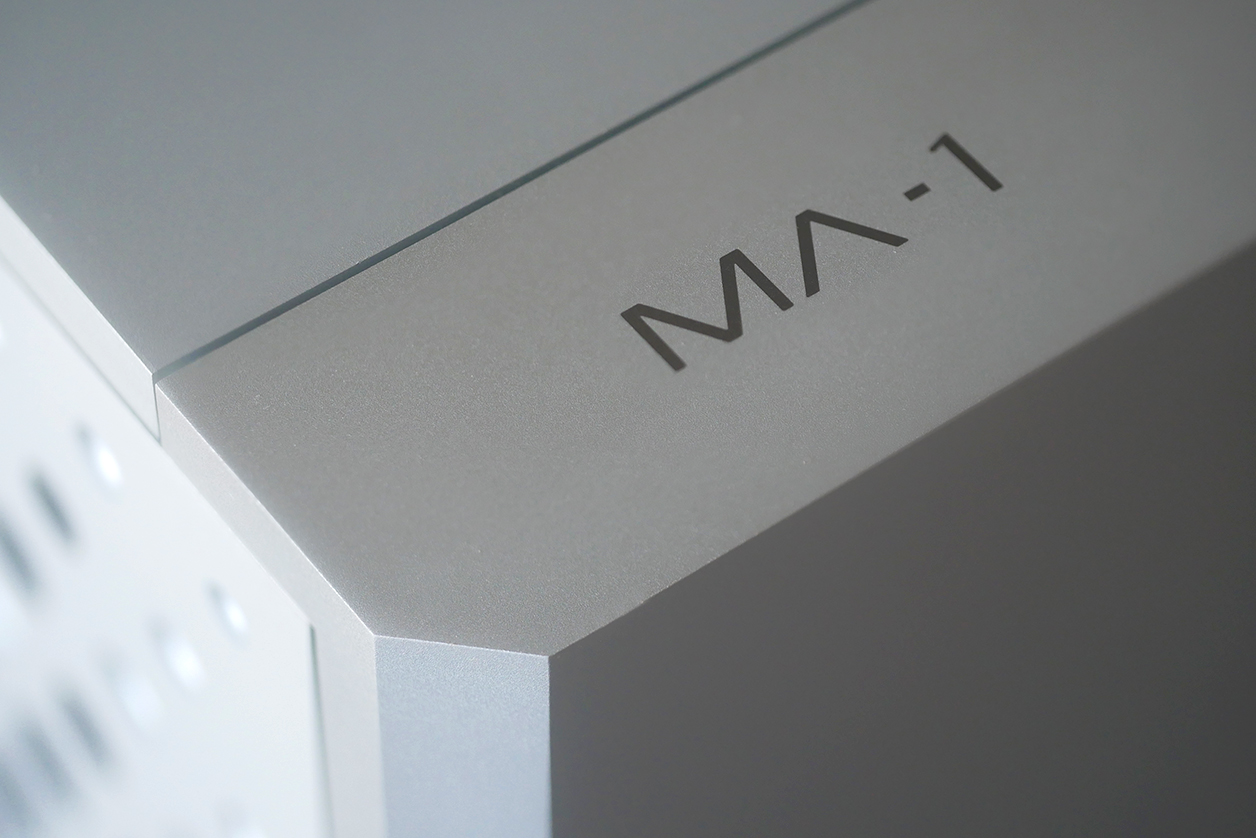
I didn't hear this 'dialect' as any poncification or paunchiness as predicted by the earlier likelihood of big power from multi-paralleled output devices sounding less lucid or quick on the uptake than simpler circuits. Neither did I hear any dynamic edge which power buyers could have expected. But I do suspect that at SPL higher than ours and on speakers with far more complex energy-absorptive xover networks, the MA-1's current/power advantage over our amplification would have audibly led on dynamic contrast and range. According to my ears then, with their MA-1 team Matrix have authored a suave sophisticated muscle amp that elects to err on the side of smoothness not aggressive attack. Given likely speaker mates at its price level, there'll be candidates with diaphragms of super-hard nano skins like ceramics and hi-tech alloys. Most of those pursue lucid mode over the type comfort sound cellulose transducers and soft domes champion on a whole. Voilà, the usual observation of hifi matching that 'like plus like' intensifies shared traits whilst 'opposites attract' balances things out. Here our Matrix MA-1 strikes me as tailormade for inefficient hard-coned speakers that are tuned for high transient resolution. The MA-1 will inject into them a dash of the debonair, a sliver of the stately. That'll calm down over-eager reflexes and attendant sharpness to land us right in the broader middle. This last word segues neatly into the Middle Kingdom of China and my earlier riff on the overdue shift in how its present-day hifi offerings are perceived. Styled and executed to a fare-thee-well, this Matrix MA-1 bridgeable to 900 watts into 4Ω looks at customers who shop Burmester or Moon, Luxman or Pass. Lacking only their name recognition and associated standing in an insider's brand hierarchy, it has everything else plus—and this seems virtually guaranteed—a lower sticker when compared kilogram for kilogram or watt per watt.
Now my only question isn't if the West will catch up with China's High End but when. Budget-conscious shoppers could celebrate another decade with their heads buried deep in the patriotic quicksand to spend more for less elsewhere. Or, they could look up now and reap the rewards today. Kudos to Matrix Audio for not cutting any corners, aiming high and being one of the first Sino brands to attack this glass ceiling. Hopefully they'll shatter it for the benefit of all their upscale domestic colleagues in the home-electronics sector. For headphones, HifiMan's original Susvara and now Susvara Unveiled have already done so. But big-league transistor amplifiers at ~€10K? That's a still newer frontier. Hopefully today's review inspired you to give it a closer look. If so, my job here is done!