 Years ago I encountered my first Manger speaker of identical size and form factor by way of the active S1. I still nurse pleasant memories of its effortless non-capricious traits. So wondering whether the Manger P2 would follow the same sonic profile or mark out different accents was personally exciting. Incidentally, my choice of matching wine was not by chance a delicate finely sparkling Crémant from the Fellbacher Weingut Heid. In contrast to a Riesling Brut developed with pronounced fruit and acidity to be a bit flirtatious, a special elegance and naturalness go to the Crémant precisely due to its restraint. And that also describes the Manger P2 in apt broad strokes. First a word on overall tonality. It seemed to me on the slightly softer side of neutral in the sense that the P2 was positively inconspicuous in the lower and upper registers. Other might simply call it discreet. But if we now assume that the Manger was midrange-y, we'd be wrong. The frequency extremes simply didn't develop a life of their own but integrated with wonderful coherence. Sure, one can pursue showier bass and treble action for the money but that's not what the P2 is about. It presents a coherent whole not individual parts. That's what makes it so convincing to create this natural, calm tonal impression. More on that later. For now onto the core strength of the Manger P2…
… soundstaging. A good litmus test for this was Shostakovich's Symphony N°8 which just recently blew up my ears in the Beethoven Hall of the Stuttgarter Liederhalle. The whole piece but especially the third movement "Allegro Non Troppo" proved to be a highly dynamic ride that inevitably had me cling to my seat. With haunting dramatic expressivity we encounter thirty-four violins in the front row on the left followed by violas and cellos in the middle and a phalanx of ten double basses on the right. In the second row on the left are the French horns and saxophone followed by flutes, oboes, clarinets and bassoons. One level behind to the right are the other brasses of trumpets, tuba, trombones as well as the hemispherical timpani, bass drums and bronze man-sized tam-tam gong supported by a potpourri of percussive elements.









The Manger P2 were among the few loudspeakers I've heard thus far which didn't curtail the instruments, groups or orchestra in terms of individual outlines or ensembles. Nothing zoomed out too much to render as shrunk nor did space balloon up where there wasn't any. In the absence of the actual concert I heard which unfortunately the SWR needs a bit more time to issue as streaming live recording, I resorted to the Pittsburgh Symphony Orchestra under Mariss Jansons which shouldn't be close to the Currentzis version in any way. Here I was struck by the P2's ability to render a stage perspective that came close to my concert which on one hand showed instrumental groups in their entirety and on the other hand allowed me to hone in on the position of individual soloists with great precision. Hence the depiction of individual performers and their intonation against the whole felt authentically live.
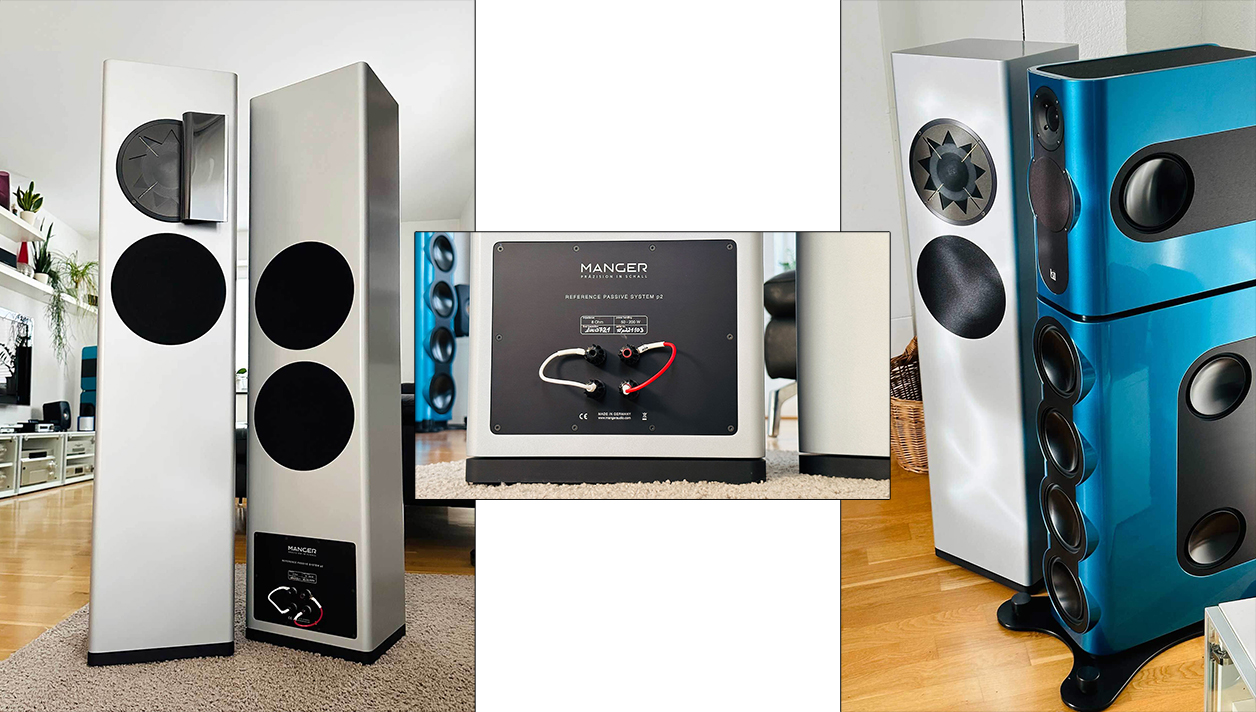 With one holo profile attached.
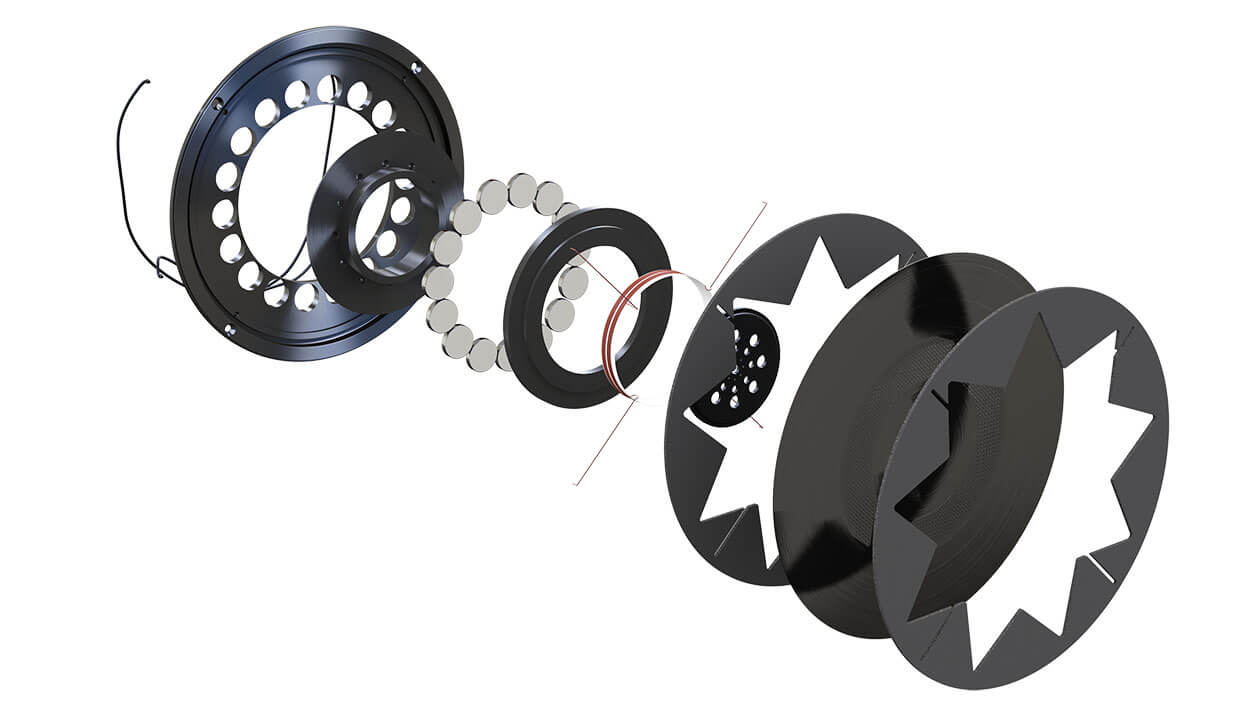
It shouldn't surprise that my far cheaper active compacts of KEF LS50 Wireless II do not demand chamber music yet still stage far smaller. Even my ~€10K/pr oldie-but-goldie Isophone Vertigo upgraded by Dr. Gauder himself wasn't remotely as relaxed and fanned out as the Manger P2. How about the above €30K Kii Three BXT? Despite extreme conceptual differences (cardioid DSP active vs. classic passive), I heard surprising parallels in their depiction of space. The Manger located instruments within the orchestra just as precisely as the Kii even if the latter seemed a little more insistent and intense. Another similarity was homogeneity and tonal integrity even at low SPL. What shouldn't be overlooked is that the Manger P2 consistently and accurately illuminated the outer quadrants of the stage and that images detached effortlessly from its elegant cabs. The soundstage action sometimes started in front of, sometimes behind the speakers' base line depending on recording. The stage impression was almost holographically tangible. Speaking of which, there still were the so-called Manger holo profiles which Daniela conveniently had in her luggage. Those should delight fans of panoramic vistas. Once these waveguides attach carefully to the left and right of a Manger converter, the spatial casting fans out even further to have us seem still deeper in the midst of the action. Also, experiment with the placement of the P2 in general. I found it particularly pleasant to angle their axes such as to cross directly in front of my head which resulted in an impressively large sweet spot.