 Take the American jazz trombonist Steve Turre who released a wonderfully catchy bebop album with Rainbow People in 2008. The cut "Cleopatra's Needle" grooves like mad. Alongside the energetic trombone there are jagged drums and a beautifully squeaky analogue Fender Rhodes. The Combo succeeded despite or especially because of its tonal neutrality to breathe life into the trombone and Rhodes. It reproduced the brassy attacks very realistically and also brought out the numerous player noises to full advantage, from the light blub that occurs when overblowing to the varying colourations that arise from different lip pressure and air speed. In other words, everything from flowery and soft to jubilant and howling came off. The same went for the Fender Rhodes which gets to play a very fine solo from the second minute onwards. The highly natural approach of the Lindemann pleased again. We can tell from the timbre that this is a Rhodes not Wurlitzer as two instruments which get often confused. The Woodnote Combo not only cleanly conveyed the signature Rhodes sound but also the very minimal tremolo of its amplifier that follows. But there was something else that made listening fun: dynamics and timing. The drummer here plays very groovy so not precise as clockwork but deliberately a little off or laid-back. This was very obvious with the Lindemann which was dynamically nimble and quick to respond. Hence the drums weren't just background fill but an essential groove-generating element. Regardless of whether it were accentuated hi-hat openings or sophisticated figures on the ride cymbal, with the Woodnote we follow such moves as vividly as if we were sitting in the front row. Powerful impulses also implement quickly. The bass drums fit like a glove and revealed themselves with force and verve.
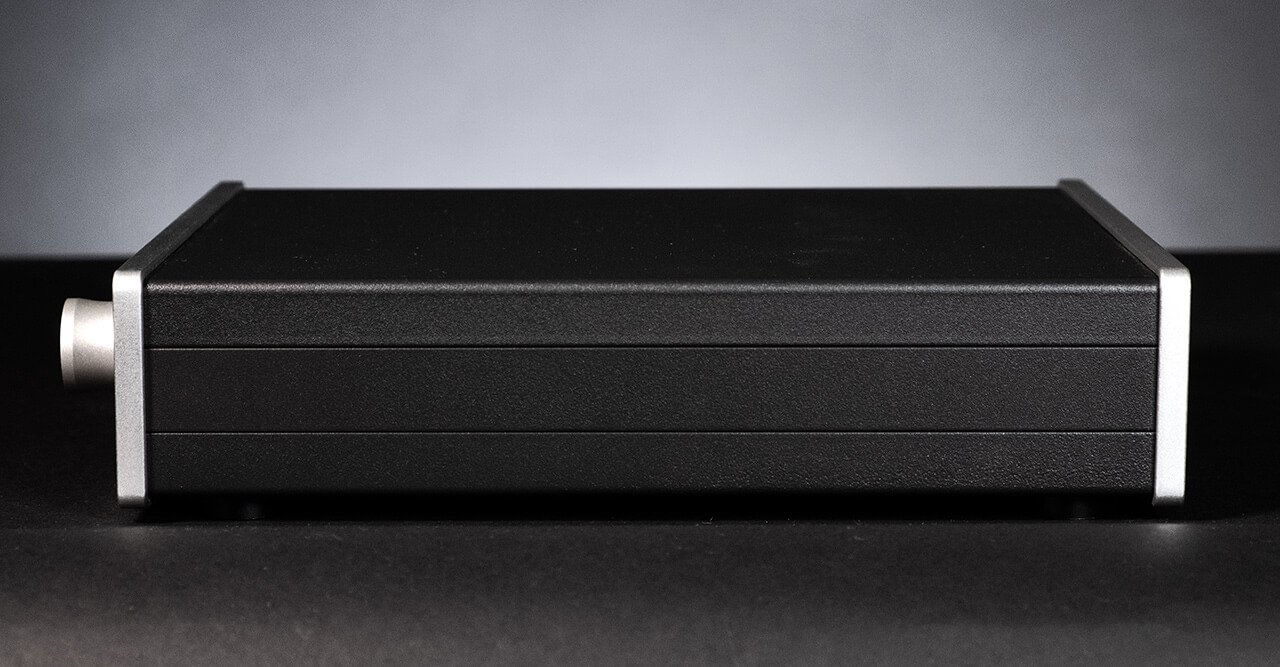
The track "Cleopatra's Needle" has no drastic jumps in dynamics but more subtle nuances. As befits a good jazz number, sometimes one instrument, sometimes the other solos to the fore which if you were to measure it, doesn't make significant differences in terms of level but contributes to the mood. The Combo managed to always track these slight dynamic shifts of the other players present unlike for example my €5'500 tubed Audio Note Cobra which won't follow these differences as precisely but has other talents, above all exceptionally spatial casting in which sounds seem to magically stand completely detached and 'walkable' in the room. Here the Lindemann amp was a little less effective but more on that later.









 I would now like to say a bit about resolution. The 6 weeks I spent with this streaming amp lasted from the beginning of December to January so it's no wonder that I once again treated myself to extended sessions with Bach's Christmas Oratorio. Bach's compositions here cover a huge range from delicate arias to lush orchestral tutti, from plaintive woodwinds to dramatic upswings with radiant high trumpets. Here too the little Lindemann scored with authentic timbres and wonderfully complete tonality. The fine resolution was completely appropriate for the price range and you have to dig deeper into your wallet to achieve significantly better. The fourth part begins with the chorale "Fallt mit Danken, fallt mit Loben" before which there is an extended prelude with strings and winds. The instrumental line-up is quite dense and large but at a muted volume with delicately reedy oboes. When the choir enters, we have a fairly complex mix. Here I found the sonic imagery of the Lindemann Woodnote Combo absolutely legit whilst admitting that my reference combo still unveils some details a little more clearly, more finely broken down if not spatially then in terms of raw separation. But let's remember that my Tsakiridis Alexander valve preamp, Cambridge CXN v2 streamer and Valvet monos clock in at a whopping €10'000 before cables. Not only was this contrast unfair, some people may actually favour the Lindemann approach because as we know, not everyone is into resolution down to the microscopic level which can easily tip into the analytical. To sum up, when in doubt, the Lindemann player will tease out emotions rather than the very last recorded nuance.
Let's get to soundstaging. This starts pretty much exactly on the speakers' base line and appears pleasantly large overall. The imagery spreads out beautifully wide and deep but appears more as an integral sound body and not so much teased out into individual components. In other words, locating individual images is not a matter of millimeter work as I know it from my Abacus Ampollo for example. In my view however, this is not a quality criterion but rather one of several possible ways that serve different tastes. Because if things gets too hyper-realist sketchy, the overall feel of musical cohesion can come apart and seem less holistic. But otherwise the sound separated well from the speakers without having to match the stupendous level of my Audio Note Cobra which here sets a benchmark across various price ranges. In short, I found the spatiality surprisingly good for a streaming amp of this class and type. I have experienced many class D amplifiers where this discipline was carried out in a somewhat static and listless manner so the Lindemann Woodnote Combo surprised me positively in this regard.

You may remember that in April 2024, I hosted Lindemann's Move speakers. Norbert Lindemann is apparently in a current thrall of a downsizing frenzy because in addition to the cuddly Woodnote Combo, he also shrunk the Move speakers. The little siblings accordingly go by the name Move Mini. They are only 26.5 centimeters tall, 14 centimeters wide, almost as light as a feather and deliberately designed for civilized SPL. They are intended to be congenial playmates for the Woodnote Combo and together form a complete chain for pleasure listeners. What can I say? Jawohl! That's really how it is! The Lindemann Woodnote Combo and Move Mini have fantastic symbiosis together and play wonderfully light, transparent, clear and subtle. As I already wrote in my report on the bigger Move, it's as though you were bringing really really good headphone performance out into open space. The Move Mini is not available yet but one thing I know for sure: we will be hearing a lot more about these fine little rascals. [For my earlier review of the Mini, click here. – Ed.]