

Country of Origin

Reviewer: Srajan Ebaen
Financial interests: click here
Main system: Sources: Retina 5K 27" iMac (i5, 256GB SSD, 40GB RAM, Sonoma 14), 4TB external SSD with Thunderbolt 3, Audirvana Studio, Qobuz Sublime, Singxer SU-6 USB bridge, LHY Audio SW-8 & SW-6 switch, Sonnet Pasithea, COS Engineering D1, Laiv Audio Harmony; Active filter: Lifesaver Audio Gradient Box 2; Power amplifiers: Kinki Studio EX-B7 monos & Gold Note monos on subwoofer; Headamp: Enleum AMP-23R; Phones: Raal 1995 Immanis; Loudspeakers: Qualio IQ [on loan] Cables: Exact Express Flame, Furutech; Power delivery: 2 x Kinki/Vinshine Tai Hang on amps and source stack, Furutech DPS-4.1 between wall and conditioners; Equipment rack: Artesanía Audio Exoteryc double-wide 3-tier with optional glass shelves, Exoteryc amp stands; Sundry accessories: Acoustic System resonators, AudioQuest FogLifters; Room: 6 x 8m with open door behind listening seat; Room treatment: 2 x PSI Audio AVAA C214 active bass traps
2nd system: Source: FiiO R7 into Soundaware D300Ref SD transport to Cen.GRand DSDAC 1.0 Deluxe with POW; Preamp/filter: Lifesaver Audio Gradient Box 2; Amplifier: Kinki Studio EX-M7; Loudspeakers: ModalAkustik MusikBoxx + Dynaudio S18 sub; Cable loom: Exact Express Earth; Power delivery: Vibex Granada/Alhambra, Akiko Audio Corelli Corundum & Castello Solo; Equipment rack: Hifistay Mythology Transform X-Frame [on extended loan]; Sundry accessories: Furutech cable lifts, Furutech NFC Clear Lines; Room: ~3.5 x 8m
2nd headfi system: DAC: Cen.Grand DSDAC 1.0 Deluxe with POW; Headamp: Cen.Grand Silver Fox; Headphones: Raal 1995 Magna, HifiMan Susvara
Desktop system: Source: HP Z2 work station Win11/64; USB bridge: Singxer SU-2; DAC/headamp: iFi iDSD Pro Signature; Speakers: DMAX P61 Headphones: Final D-8000, aune SR7000
Upstairs headfi system: FiiO R7; Headphones: Meze 109 Pro, Fiio FT3
2-channel video system: Source: Oppo BDP-105; All-in-One: Gold Note IS-1000 Deluxe; Loudspeakers: Zu Soul VI; Subwoofer: Zu Submission; Power delivery: Furutech eTP-8, Room: ~6x4m
Review component retail: $1'694 Singaporean

One Tai Hang, two Tai Hangers? I'm Swarovski crystal. These aren't coat hangers from Thailand. Meanwhile I'm Irish foggy on how to pluralize this name for Kinki Studio's first collab¹ with Vinshine Audio. It's this luxurious DC blocker with extra benefits. Why ought I know? Because now I've got two in my main rig. It'd be nice to refer to them correctly. Surely not hängers-on. Whatever proper form, it certainly feels proper to give this AC distributor renewed visibility after my award-nabbing review in March. Apparently inventories depleted in haste. It took me until August to go seconds. And no, there won't be thirds. I've run out of components in need of clean power sockets. My floor lamps live just fine on dirty AC. So would my hifi of course. I'd just not call it living in style; only menial getting by. To refresh your memory or make a new one, here's the hardware again.
________________________
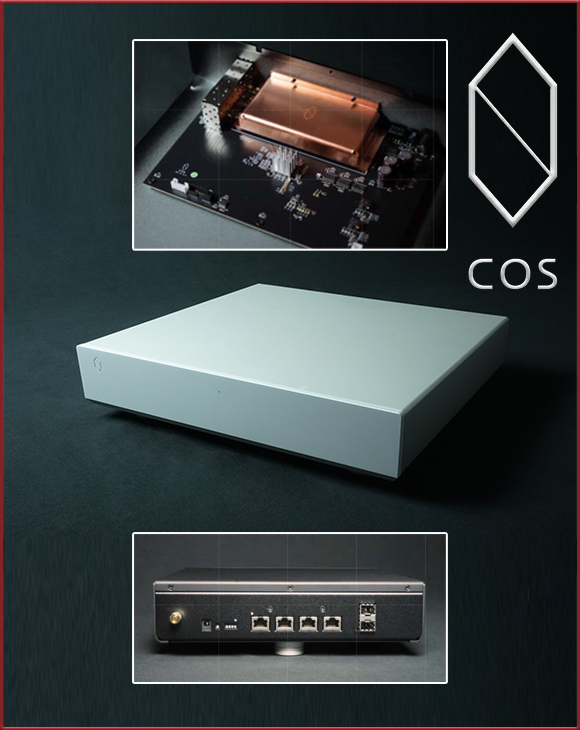
¹ There's already a second one, an ambitious LAN distributor aka network switch with internal fibre-optic isolation and 10Mz clock outputs.

Why would you want a DC blocker? According to Vladimir Kraz of OnFilter, DC on the AC is part of audiophilia's irrational mythology. I don't have his audio engineering degree from St. Petersburg to argue the point. It were Nagra's engineers via their sales manager who first hipped me to DC blockers more than a decade ago. They used an advanced version by Spanish brand Vibex to lower the noise floor of their lab's measuring kit and engineer their circuits to finer tolerances. In various junctions I use Vibex DC blockers, an AC conditioner with optional DC blocker from Puritan and now two Tai Hangs from Kinki/Vinshine. Not only do transformers which slightly or not so slightly hum go quiet. Sonics improve. British engineer Nic Poulson of Isol-8 has technical explanations for the how and wherefore. If engineers on the industrial and audiophile divide wanted to argue the matter, Nic and Vlad could certainly step into an octagon discussion. I take my very cheap seat in the bleachers based purely on personal experience. I leave the tech to the smart kids. I'll just add that I've come across announcements for a few hifi components whose circuits build in DC blockers. One is the Eversolo AMP-F10 whose "marketing materials highlight its innovative DC filtering circuit between the main AC supply and audio circuit, effectively removing low-frequency DC interference. This design ensures that only clean AC power is delivered to the audio circuits, effectively enhancing the performance of the audio circuit while reducing the hum from the toroidal transformer" [from this Stereophile review]. Another is the ML One integrated by Matway Electronics of Poland. Also from Poland are power specialists GigaWatt whose best AC distributor includes a DC blocker. There are numerous critical listeners well versed in their benefits. The large isolation-transformer AC distributors from Audes pack DC blockers to stay quiet. With iFi's subsidiary brand Silent Power, you can find basic inline DC blockers for single components at €129 and €149.











As my formal review explained, I was so impressed with my first Tai Hang sample that I acquired it. That unit ended up on my quad of mono amps. Kinki direct-coupled EX-B7 drive the speakers, bridged Gold Note PA-10 Evo the twin 15" woofers of my passive sub. A precision analogue crossover by Lifesaver Audio splits the incoming full-range signal into 100Hz/4th-order high- and low-pass legs. The second Tai Hang just slipped into the source stack. It powers a Sonnet Pasithea or alternate COS Engineering D1 DAC, Denafrips CD transport and Kinki Studio THR-1 headphone amp. With my cable loom an Exact Express Flame which started life under the Kinki banner, you could feel hinky about my Kinki kink. But it's very simple. Once you cross paths with a design team whose aural notions perfectly overlay your own and who then sell their kit at prices you can actually afford… well, one keeps going back to the well. For me it means the stereo version of my Kinki monos in this smaller system fronted by an Exact Express Earth loom. So in some ways today looks like shameless propaganda for an established Chinese brand around long enough to no longer make the press rounds like newcomer Laiv do; or hyper-productive big houses FiiO and Shanling which drop bags of new models per annum. Kinki Studio are far more conservative with product launches. That can mean disappearing from the public eye. It's why as a very satisfied enthusiast, I'm using my platform to momentarily shine up Mr. Ivan Liu's wheels. The arrival of his Tai Hang N°2 made for this self-prompted occasion.

'cc' can abbreviate credit card, carbon copy, cubic centimetre, close-captioned, country club or chief clerk. Today it stands for clarity and contrast. Those were the second Tai Hang's contributions. More clarity was the result, higher contrast the enabler. Look at a winter tree without leaves. All its thick branches subdividing into thinner and thinner branches resemble the human arterial system upside down. We can focus either on the branches or the emptiness between them. Say that emptiness wasn't empty but filled with background, perhaps houses, perhaps other trees. Now it's easy to not make out the thin arterial detail. So remove the background. It turns the tree into a silhouette. Let's add a dimmer to our imaginary scene. Let's set it quite dim for a start. It's intuitive that as we turn up our backlight, we intensify negative space. At full lumen, we're in a classic shadow play. We have maximal contrast ratio; a pitch-black tree against a white background. With sounds, this enlarges contrast between tones/noises and silence. In audio, more silence always means less noise. Once noise is subliminal, we no longer hear it like we do a ground loop, transformer hum, noisy power supply, passing traffic or a couple fighting in an upstairs flat. Once noise is subliminal, we only notice the masking effect it caused when we're present just as the noise floor drops some more. We hear change by direct contrast. Soon afterwards, that gain goes back into hiding. It becomes a steady-state condition. That eludes our attention just as prey won't notice a stalking cat which moves in extreme slo-mo.
It's why initial excitement over a hifi addition fades. The improvement difference doesn't last. The improvement remains, the difference disappears. It's why reviewers conduct multiple A/B. When after the initial swaps the difference factor shrinks even disappears during the lengthier live-with-it period, going back to our status quo recreates contrast intensity. Et voilà, confirmation. The change was real not imaginary. If a system is already dialled, a change like I just made won't be Tai Hangar huge to fit a Boeing 747 in. An actual symphony orchestra won't fit into my listening room either. But if a change flies high enough to make me want to pay for it because I enjoy the scenery? Happy days. That's exactly how I feel about my second Tai Hänger. Airborne. "You can now release your seat belts." To minimize self aggrandizement—the selfie generation's look-what-I-got obsession—that's all I've got. All the important stuff is in my earlier actual review…

Vinshine Audio's website
