Simply right. When a component offers high resolution, microdynamics tend to be a remarkable experience and the Zenith Next-Gen is no exception. It also responds effortlessly to abrupt level changes. But to be honest, I almost forgot to mention dynamics because the Innuos is so naturally adept at them and perfectly balanced in terms of attack/decay. It plays with fluidity and speed. You can't detect any tendency in any particular direction. For context, in my review of the Zen Next-Gen I wrote that my Antipodes sounded slightly more impulsive. I can no longer say that versus the Zenith Next-Gen. The two are now on par. This also means that the Zenith is more agile than the Zen. However, during large-scale dynamic attacks, the Zen throws itself into the bass/midrange with a bit more mass where the Zenith is faster at translating the volume change. In terms of spatial representation and imaging, the Zenith is both different and better than anything I've heard from the Portuguese brand thus far. What I find 'different' is that while the Zenith can start the virtual soundstage in front of the stereo base if the recording requires, this quasi-automatic half step forward that many Innuos devices take isn't as pronounced. It usually starts more on or just in front of the speaker line. Whether you prefer that or not is matter of taste.
For me, three things then are clearly 'better': the blackdrop and transparency of the soundstage; its depth of field; and the three-dimensionality and imaging precision. What the Zenith Next-Gen achieves here is enormous. It's a clear step forward over the Zen Next-Gen. Even the Antipodes K22 G4 can't compete. True, the Zenith Next-Gen comes at a price but also delivers. My K22 G4 does model individual sounds with a bit more breadth and a softer edge—for example, Liz Durrett's voice and the electric guitar in "Vine" from  Husk—while our tester renders them more compact but accurate, leaving a more tangible 3D impression. Above all, this Innuos server excels at letting sounds be sounds and nothing be nothing. There's true silence between individual images. No foggy grey veil obscures the view. Because of this, it layers beautifully and transparently into the background as can be experienced with the spartan percussion of this song which sounds as though it had been imported from another recording space. Okay, I'm slowly drifting into the poetic but it really does sound superb! Such virtues are of course even more relevant with densely arranged music, complex electronica or larger classical works. The absolute blackness of the background ensures that even the smallest fragments stand out clearly, creating a transparent open soundstage. The music as a whole feels very free and tangible in the room. Nothing sticks to the speakers. If you derive your audiophile thrills primarily from the spatial presentation of music, this is the music server for you. You should, however, have some cash to spare.












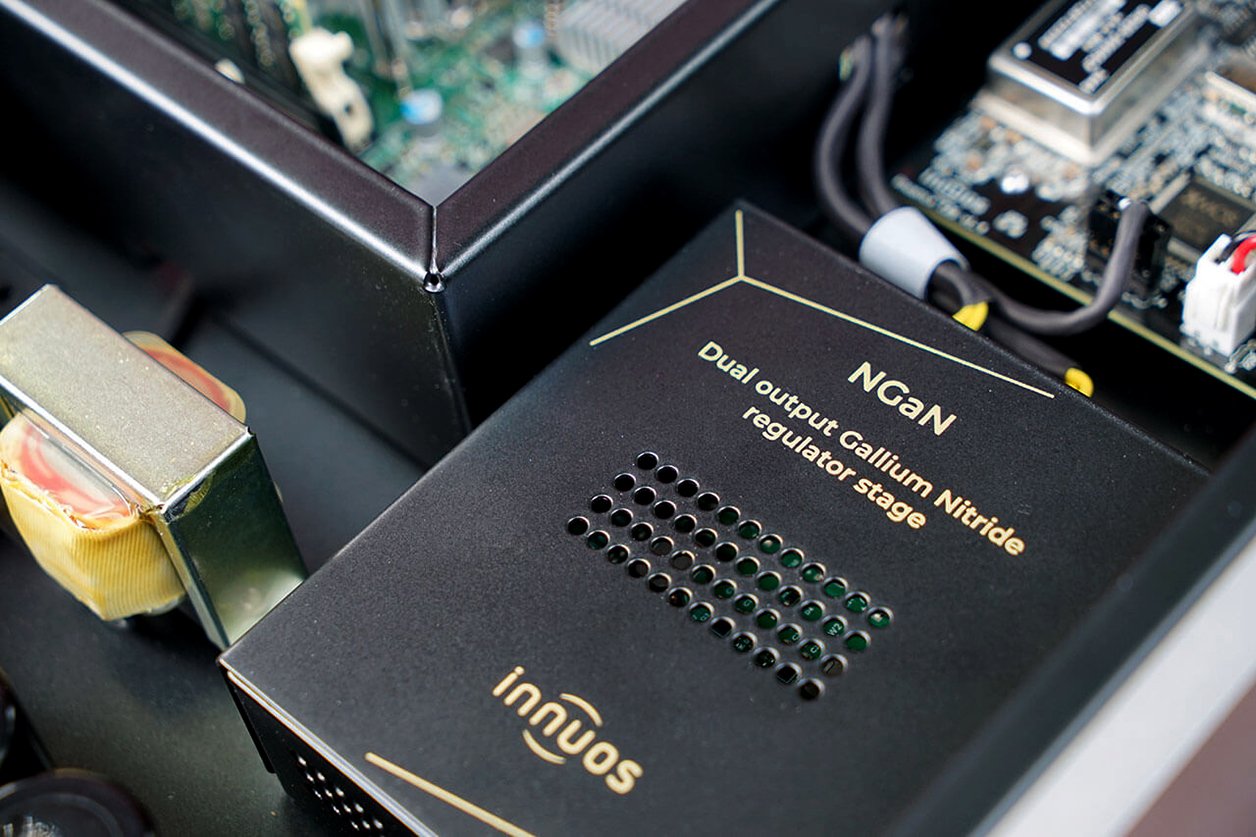
Is it even possible to seriously speculate about the price-performance ratio of such a device? On one hand it's true that you can still spend considerably more. On the other hand, I strongly suspect that those truly prepared to invest five-figure sums in a server/streamer don't need to calculate hard but rather aim for the absolute best. With the Zenith Next-Gen, there's now a candidate that financially well-heeled audiophiles should have on their radar. Why? First off, there's the extremely solid build quality, luxurious finish, proven proprietary software and flexibility regarding hard-drive size and digital outputs. The other and more crucial aspect is the sonic merit of this machine. The Innuos Zenith Next-Gen is very very refined. One can always wish for something different—more attack or flow for example—but after some time, one realizes that the Zenith hits the sweet spot precisely. Some may miss a touch of warmth in the bass and/or a slightly more frontal presentation of the soundstage as other Innuos players offer them. However, the Zenith Next-Gen is truly "true to the recording" and its extreme background blackness and three-dimensionality allow for an even stronger sense of spatial involvement. I'd almost like to describe the Zenith Next-Gen as a purist machine but that has the connotation of studio-like which isn't how it strikes me at all when it sounds far too charming for that. My God, this thing is truly balanced! Lucky are those who can put it on their shortlist.
Psych profile of the Innuos Zenith Next-Gen…
 Facts: