

Country of Origin

Reviewer: Srajan Ebaen
Financial interests: click here
Main system: Sources: Retina 5K 27" iMac (i5, 256GB SSD, 40GB RAM, Sonoma 14), 4TB external SSD with Thunderbolt 3, Audirvana Studio, Qobuz Sublime, Singxer SU-6 USB bridge, LHY Audio SW-8 & SW-6 switch, Sonnet Pasithea, Laiv Audio Harmony; Active filter: Lifesaver Audio Gradient Box 2; Power amplifiers: Vinshine Audio x Kinki Studio Dazzle & Gold Note PA-10 Evo in mono on subwoofer; Headamp: Enleum AMP-23R; Phones: Raal 1995 Immanis; Loudspeakers: Qualio IQ [on loan] Cables: Exact Express Flame, Furutech; Power delivery: 2 x Kinki/Vinshine Tai Hang on amps and source stack, Furutech DPS-4.1 between wall and conditioners; Equipment rack: Artesanía Audio Exoteryc double-wide 3-tier with optional glass shelves, Exoteryc amp stands; Sundry accessories: Acoustic System resonators, AudioQuest FogLifters; Room: 6 x 8m with open door behind listening seat; Room treatment: 2 x PSI Audio AVAA C214 active bass traps
2nd system: Source: FiiO R7 into Soundaware D300Ref SD transport to Cen.Grand DSDAC 1.0 Deluxe with POW; Preamp/filter: Lifesaver Audio Gradient Box 2; Amplifier: Kinki Studio EX-B7 monos; Loudspeakers: Virtual Hifi Cobra [on loan]; Subwoofer: Zu Method; Cable loom: Exact Express Earth; Power delivery: Vibex Granada/Alhambra, Akiko Audio Corelli Corundum & Castello Solo; Equipment rack: Hifistay Mythology Transform X-Frame [on extended loan]; Sundry accessories: Furutech cable lifts, Furutech NFC Clear Lines; Room: ~3.5 x 8m
2nd headfi system: DAC: Cen.Grand DSDAC 1.0 Deluxe with POW; Headamp: Cen.Grand Silver Fox; Headphones: Raal 1995 Magna, HifiMan Susvara
Desktop system: Source: HP Z2 work station Win11/64; USB bridge: Singxer SU-2; DAC/preamp: COS Engineering D1; Headphone amp: Kinki Studio THR-1; Speaker amps: Topping B200 monos; Loudspeakers: Virtual Hifi Viper; Headphones: Final D-8000, aune SR7000, FiiO FT7
Upstairs headfi system: FiiO R7; Headphones: Meze 109 Pro, Fiio FT3
2nd upstairs speaker system: Source: FiiO R7; Integrated amplifier: Simon Audio Lab i5; Loudspeakers: ModalAkustik Musikboxx with Dynaudio S18 subwoofer
2-channel video system: Source: Oppo BDP-105; All-in-One: Gold Note IS-1000 Deluxe; Loudspeakers: Zu Soul VI; Subwoofer: Zu Submission; Power delivery: Furutech eTP-8, Room: ~6x4m
Review component retail: varies with model and features
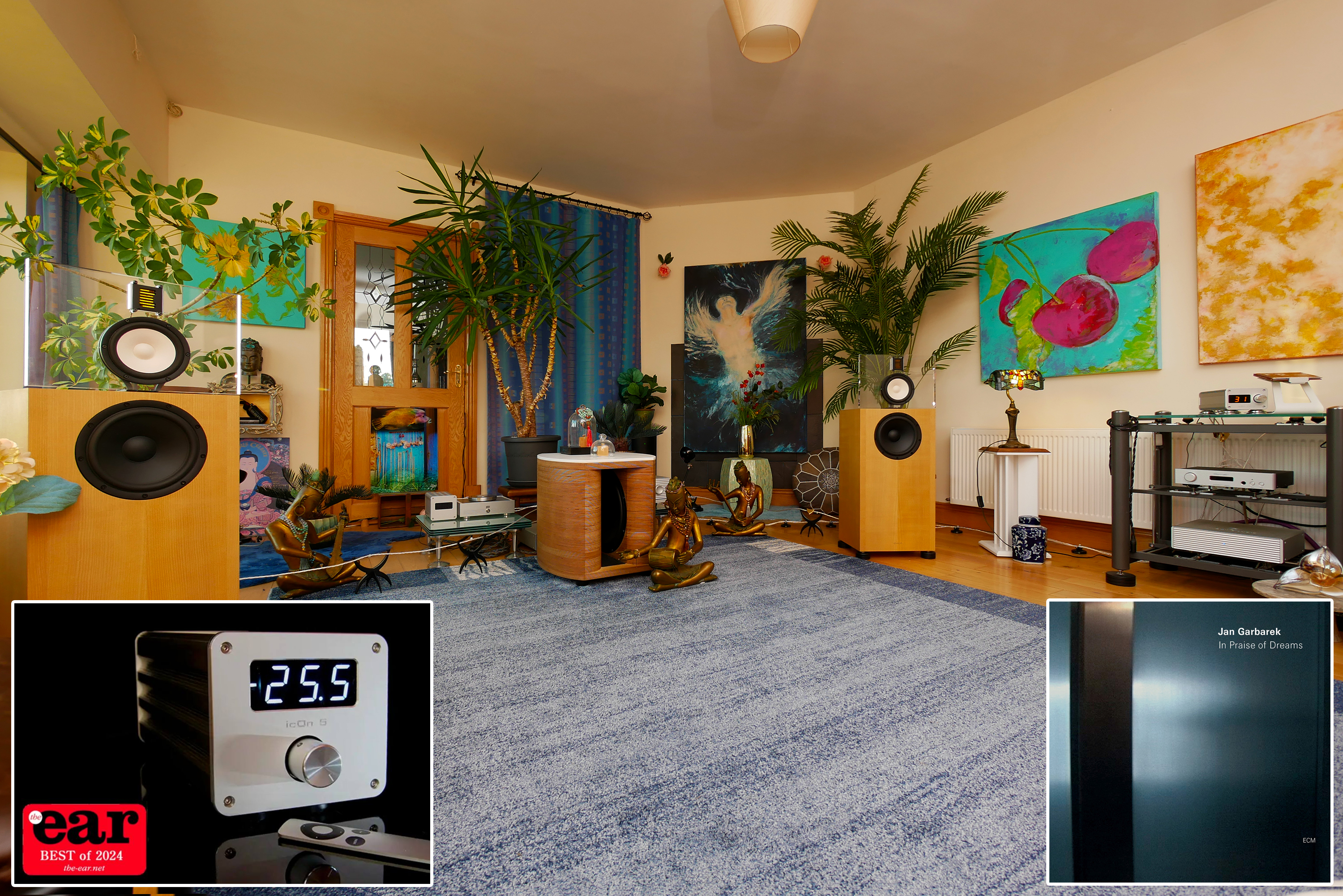
It's the name of a fabulous Jan Garbarek album. 'I have a dream' is what Martin Luther King's speech is remembered for. My own dream is far more self-serving and prosaic: sound I enjoy. A recent main-system update was Dazzle, a high-power class AB integrated from the collaborative pens of Ivan Liu at Kinki Studio and Alvin Chee of Vinshine Audio. Today isn't about that. Today is about what made Dazzle sizzle: the icOn 4Pro autoformer passive from Pál Nagy's Manchester microbrand Lifesaver Audio. Popular misconceptions of passive preamps cite lack of raw drive. That can manifest as insufficient dynamics, lean body, pale colours and meagre mass. If we just stick an Alps pot into a box and wire up simple i/o with flying leads, that well might be the outcome. Once we add active input and output buffers for stable impedance as E.J. Sarmento did many moons ago for his Wyred4Sound reference passive with nude Vishay resistor ladders, things get very different. But in my estimation, still going beyond that is a quality passive-magnetic solution. Now multi-tapped autoformers convert voltage to current with no issue of driving 6-metre interconnects. Alas, this was a lesson I had duly forgotten until a recent hardware shuffle revived it. I already knew that replacing my prior Kinki Studio EX-B7 monos with Dazzle had me prefer the latter's pre/in sockets to bypass the built-in line stage of an extra 13dB voltage gain. I thus ran it as a dual-mono stereo amplifier, controlling volume with either the variable reference voltage on my Sonnet Pasithea DAC's R2R ladders; or the resistive attenuator on my Lifesaver Audio Gradient Box II smart crossover exactly as I had controlled the monos all along.
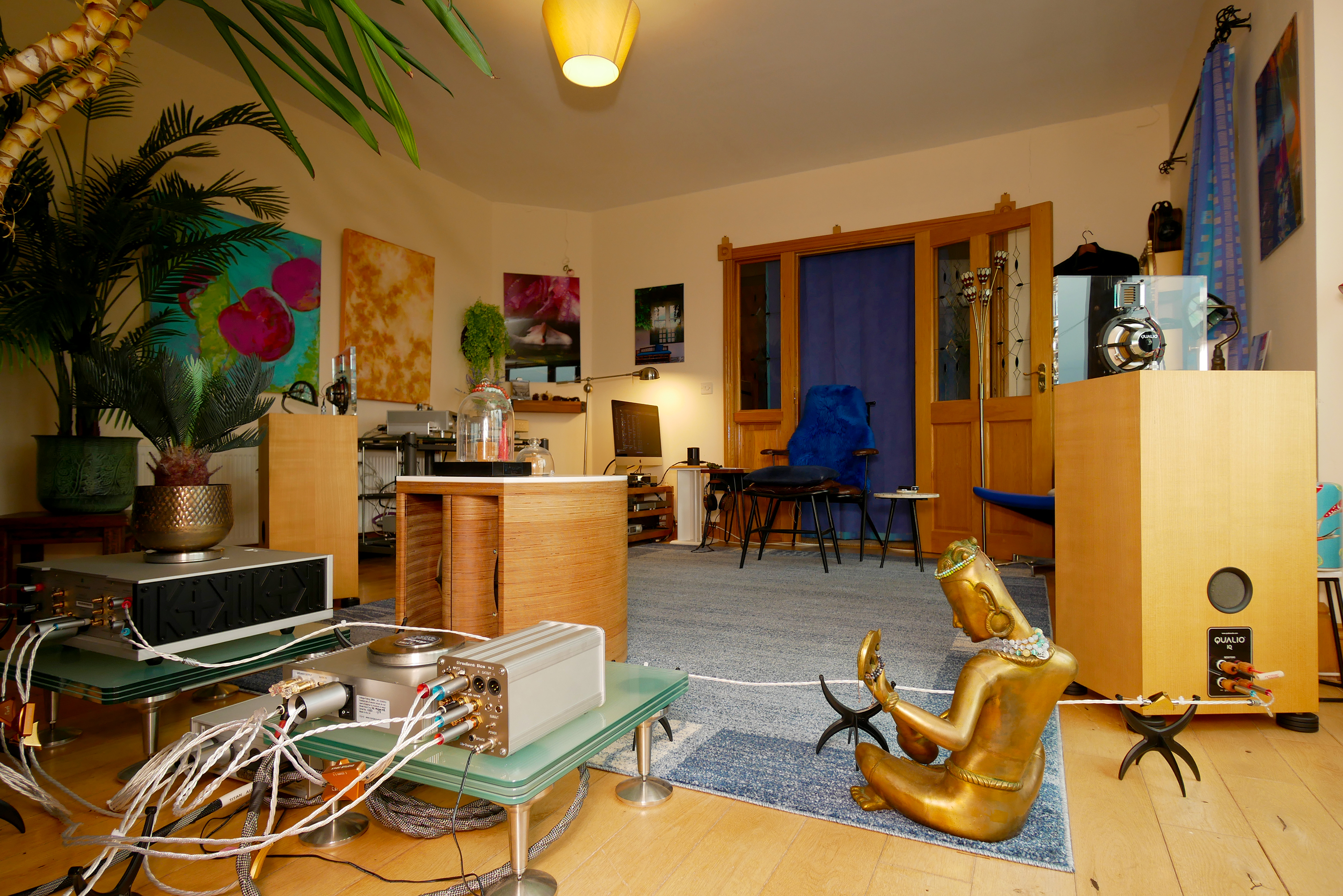
I enjoyed the added body, saturation and incarnation factor of Dazzle but an inner greed longed for still more lucid-mode intensity. I had the bigger engine. Now I needed higher-octane fuel and better tyres. Canvassing my hardware collection for options, I first tried my Vinnie Rossi L2 Signature linestage with direct-coupled WE 300B. That steered in the opposite direction. It enhanced colour temperatures and textures yet softened percussive attacks, toned down top-octave brilliance and added relaxation. Out it came and in went the icOn 4Pro. Right away I felt on the right track but it wasn't until a few hours later that all gears suddenly meshed. At that point I felt as though an invisible intensifier knob had turned sharply clockwise. Now Dazzle's greater bass weight, overall heft and impact held hands with matched lucidity and adrenaline. Signal conditioning with the voltage/current conversion of the magnetic volume control with its microprocessor-switched taps for noiseless small steps had fired up my sound's energy transmission. It's virtually the most important quality a system must have to hold my attention. However, I doubt that it's any singular quality or effect I could point to. Rather, it invigorates directness, transient speed and dynamics plus potent mass such that all of it suddenly projects forward at my seat rather than sits there at polite distance. Mind you, that described a subjective effect, not any technical mechanism responsible. Just so, this effect countered popular passive-preamp presumptions by 180°. It was the antithesis of limp, genteel, diluted or ghostly whose sum can feel like an overabundance of electrostatic qualities. Instead it worked like an accelerator and charger. The intended takeaway is this: If your passive notions thought pallid and emasculated, they might want to take the little blue pill. This underground range of British autoformer passives is all about virility and in praise of dreams was about rediscovering my tidy icOn 4Pro. It gives the sound the immediacy of a direct connection then adds more intensity and—if that's the correct way to call it—drive.

That's probably the very last thing most would expect from this component class. I'd be first to say that on paper, it looks all wrong. But my ears knew different years ago; and just remembered again. The upshot? Not all passives are created equal. AVC or TVC short for autoformer/transformer volume controls are a different breed. A number of brands make them. My best experiences have been with various Lifesaver Audio units. But they're certainly not the only ones. The by far costliest product I ever reviewed was this $60'500 Lumen transformer passive from Akustika Eterna. it might seem anachronistic tech in the face of Leedh's lossless digital attenuation code but if you actually try magnetic attenuation, you'll be surprised by just how contemporary and relevant it behaves; pretty much the polar opposite of popular presumptions. Done very well, it can cost 1/20th of the exorbitant Lumen but offer smaller volume steps and remote source switching. If you're curious to learn more, the below link can get you started…

Lifesaver Audio's website
