
Country of Origin

Reviewer: Srajan Ebaen
Financial interests: click here
 Main system: Sources: Retina 5K 27" iMac (i5, 256GB SSD, 40GB RAM, Sonoma 14), 4TB external SSD with Thunderbolt 3, Audirvana Studio, Qobuz Sublime, Singxer SU-6 USB bridge, LHY Audio SW-8 & SW-6 switch, Sonnet Pasithea, LAiV Audio Harmony; Active filter: spl Audio Crossover MkII; Power amplifiers: Vinshine/Kinki Dazzle & mono Ncore 500 Nord Acoustic amps on subwoofer; Headamp: Enleum AMP-23R; Phones: Raal 1995 Immanis; Loudspeakers: Qualio IQ [on loan] Cables: Exact Express Flame, Furutech; Power delivery: 2 x Kinki/Vinshine Tai Hang on amps and source stack, Furutech DPS-4.1 between wall and conditioners; Equipment rack: Artesanía Audio Exoteryc double-wide 3-tier with optional glass shelves, Exoteryc amp stands; Sundry accessories: Acoustic System resonators, AudioQuest FogLifters; Room: 6 x 8m with open door behind listening seat; Room treatment: 2 x PSI Audio AVAA C214 active bass traps
2nd system: Source: FiiO R7 into Soundaware D300Ref SD transport to Cen.Grand DSDAC 1.0 Deluxe with POW; Preamp/filter: Lifesaver Audio Gradient Box 2; Amplifier: Kinki Studio EX-B7 monos; Loudspeakers: ModalAkustik MusikBoxx; Subwoofer: Zu Method; Cable loom: Exact Express Earth; Power delivery: Vibex Granada/Alhambra, Akiko Audio Corelli Corundum & Castello Solo; Equipment rack: Hifistay Mythology Transform X-Frame [on extended loan]; Sundry accessories: Furutech cable lifts, Furutech NFC Clear Lines; Room: ~3.5 x 8m
2nd headfi system: DAC: Cen.Grand DSDAC 1.0 Deluxe with POW; Headamp: Cen.Grand Silver Fox; Headphones: Raal 1995 Magna, HifiMan Susvara
Desktop system: Source: HP Z2 workstation Win11/64; USB bridge: LHY UIP; Ethernet bridge: LHY EFI; Ethernet reclocker: Stack SmoothLAN; DACs: Audalytic DR701 & Gustard R26II; Headphone/preamp: FangSound Dionysus; Speaker amps: Topping B200 monos; Loudspeakers: Virtual Hifi Viper; Headphones: Final D-8000, aune SR7000, FiiO FT7
Upstairs headfi system: FiiO R7; Headphones: Meze 109 Pro, Fiio FT3
2nd upstairs speaker system: Source: FiiO R7; DAC/pre: COS D1; Amplifier: Kinki EX-M7; Loudspeakers: sound|kaos Vox3 with Dynaudio S18 subwoofer
2-channel video system: Source: Oppo BDP-105; All-in-One: Gold Note IS-1000 Deluxe; Loudspeakers: Zu Mission; Subwoofer: Zu Mission; Power delivery: Furutech eTP-8, Room: ~6x4m
 |
 |
 |
 |
 |
 |
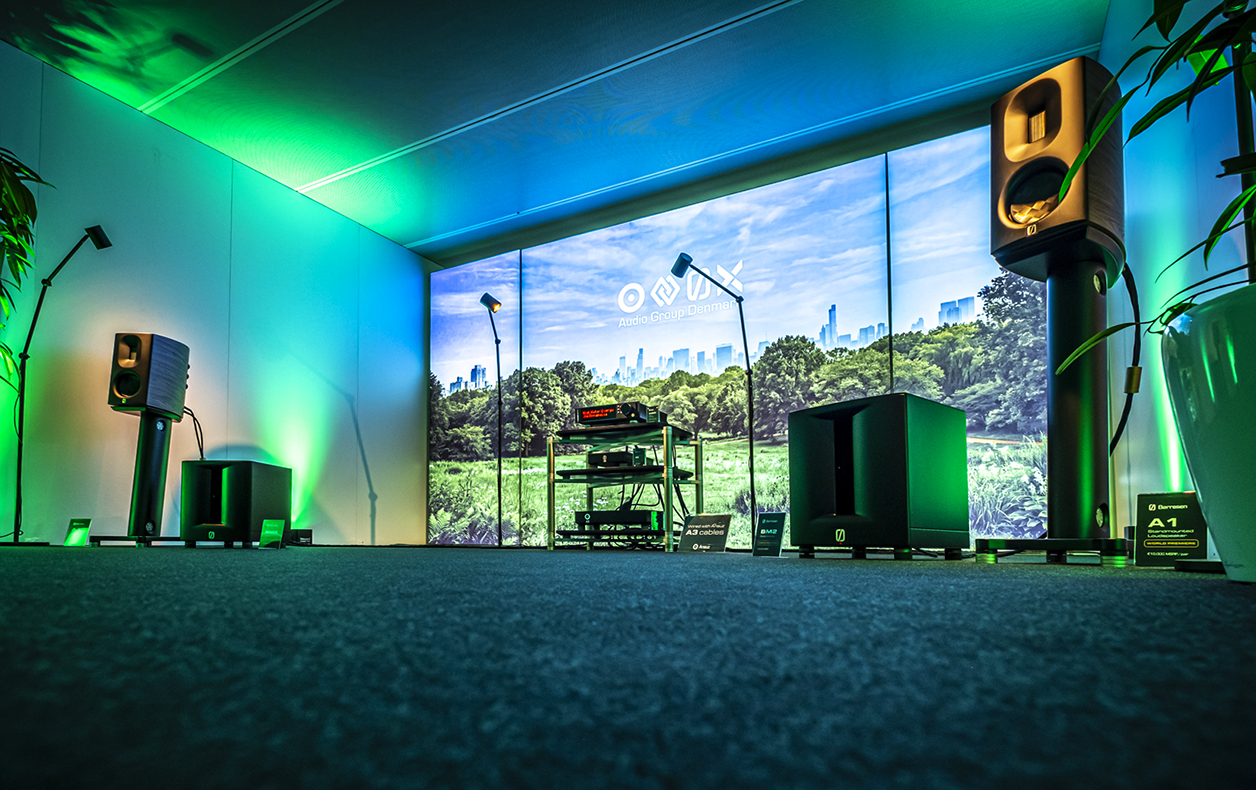
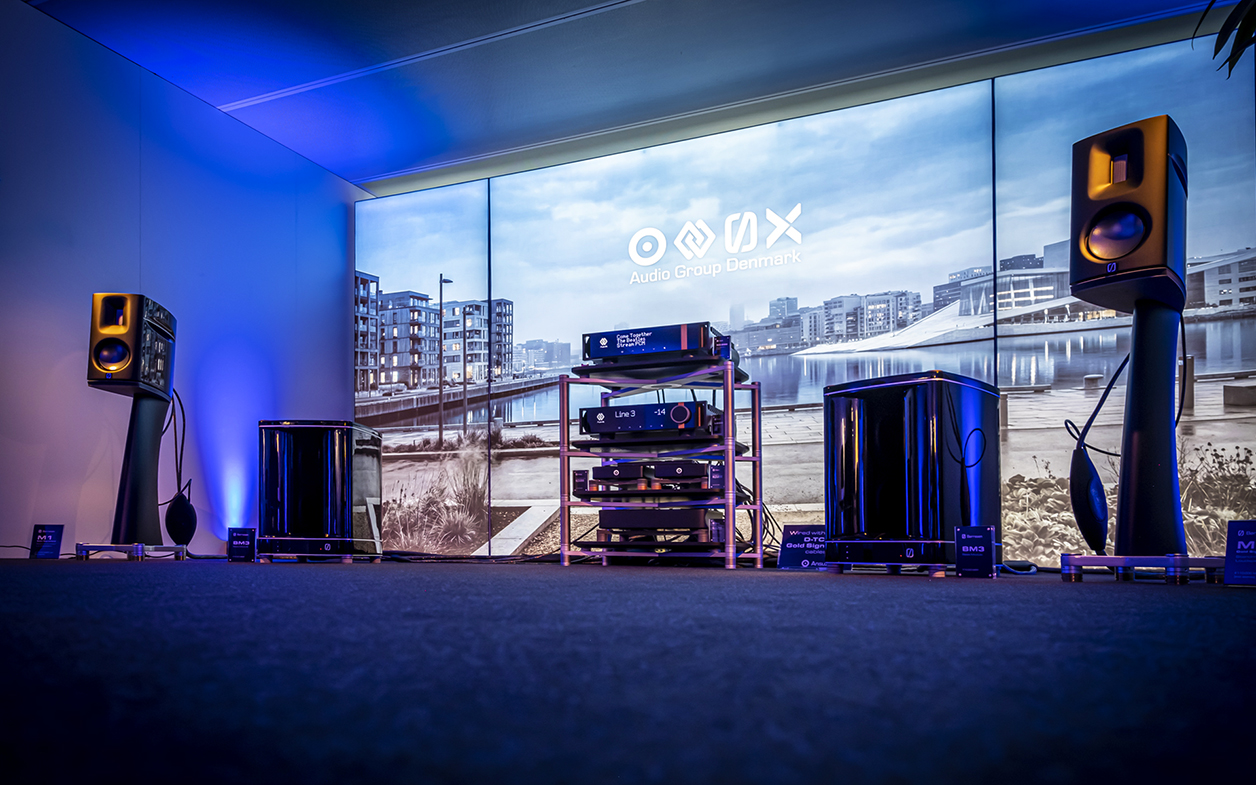
HighEnd Vienna 2006 had no shortage of bigger glossier heavier costlier passive transducers than ever. Regular Warsaw correspondent Dawid Grzyb captured two exhibits which bucked that trend with 2.2 arrays. Enter Børresen's 5" rear-ported 2-ways in two tiers accompanied in matching tiers by active RiPol subs. With most bass below 100Hz recorded mono, many households with listening lounges smaller than these would easily do with a single sub. We shall see so shortly. Which begs a fascinating question: how small is too little – as in, when does a compact visual speaker footprint depart the realm of Physics and great sound to turn cute but compromised lifestyle stunt?
Speaking from personal experience crushes theory and wishful thinking so here are four of my five systems – three of these of the 2.1 persuasion, with a fourth as main system not featured here. In this first example, a pair of solid-wood sound|kaos Vox3 three-way compacts with dual sidefiring 5" carbon woofers hand over at 40Hz/4th-order to a 15-inch Zu Method sub. Naught bigger is desired or required.
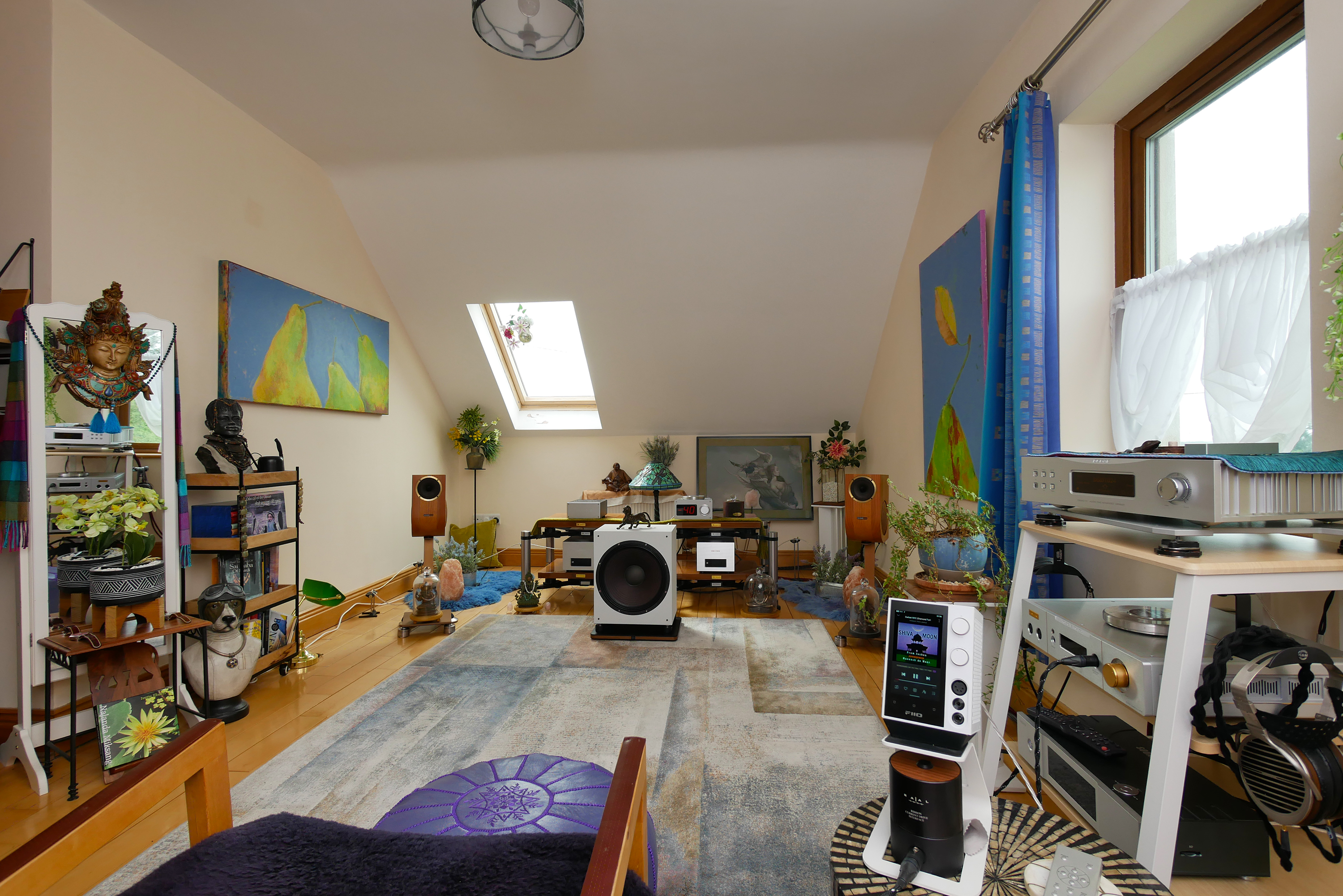
But, smaller would still be perfectly fine. Enter these MonAcoustic SuperMon Mini which laboured in the former system for a good while before going walkabout the upstairs hallway. Here their isobaric 4-inch MarkAudio Alpair widebanders run wide open to ~65Hz where a dual 9½" force-cancelling Dynaudio sub takes over. Positioned wide toed in face on and within 1.3m of my couch perch, these are essentially nearfield conditions to remove the room from the equation, cut down distance loss, maximize resolution at low levels and get loud with little amplifier strain. At such proximity, point-source behaviour is mandatory and these 1½-way minis run up to 15kHz before a micro AMT takes over.
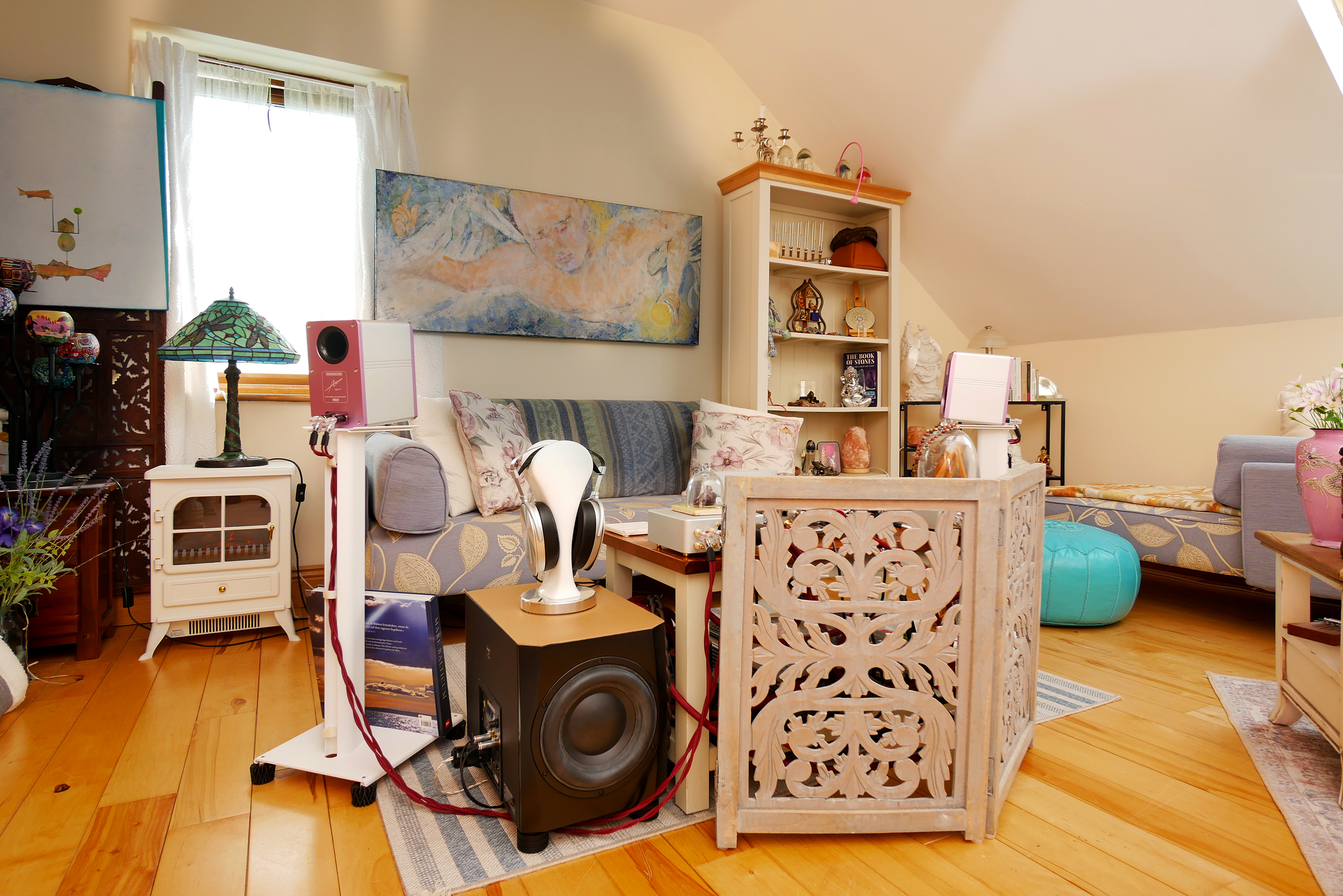
In my modest 2.1 video system, these compact sealed 2-way monitors with outboard crossovers from Germany's ModalAkustik collaborate with another Zu Method sub in a classic diagonal setup.
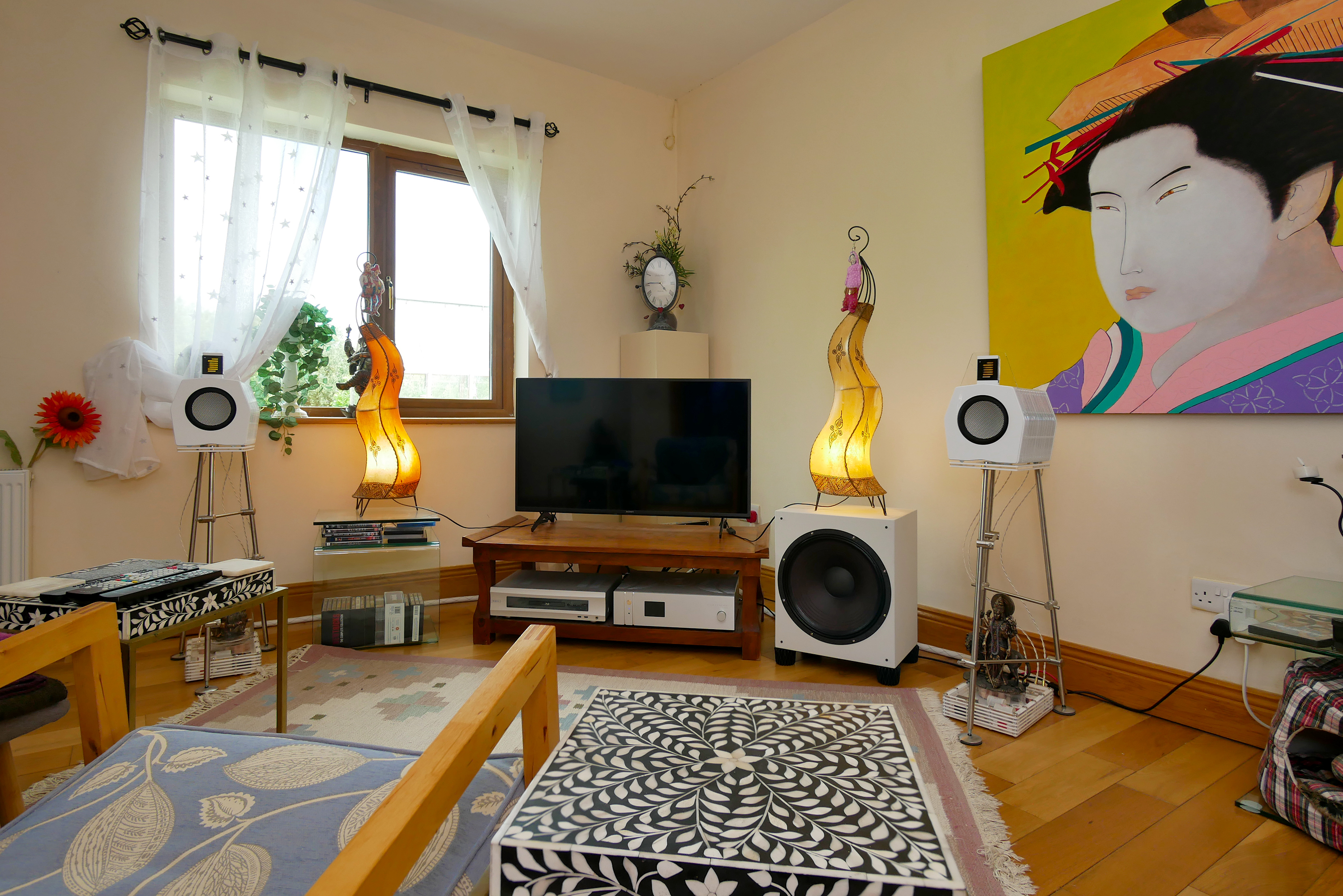
In my office a pair of Virtual Viper monitors with horizontally opposing passive radiators produce all the bass this placement needs. In fact, one of them runs through its built-in 80Hz high pass. At such closeness, bass power with both running wide open into the bottom would otherwise be too ambitious. Representing my hifi trip's status quo as of June 2006, might such speaker choices not be suggestive? They certainly reflect my hard-earned conclusion that active adjustable bass unconditionally beats fixed passive bass; that an active not passive high pass on particularly 2-ways is the best method for seamless subwoofer integration. Even if endowed with unlimited funds, I would never again pursue a conventional large passive floorstander to handle the full bandwidth. I'd instead pursue an ambitious compact from the likes of Mårten or Raidho. My ideal speaker in fact would combine a widebander to ~8kHz to avoid a passive filter anywhere near the presence region whilst reproducing even the highest fundamentals then incorporate an electronic high pass and active RiPol bass system.










Thus far I've come across exactly two such designs: Voxativ's Alberich² and the forthcoming sound|kaos Vox5. Segregation into 2.1 systems with outboard active crossovers from spl and Lifesaver Audio then was my path to generate equivalent functionality well before these two alternatives entered the market. But it allowed me to instantly recognize what they were. Ditto for Børresen's more recent shift into this segment. It's the rightful future. Behind the scenes I've heard of manufacturers who, exposed to directional RiPol bass, left deeply impressed but unprepared to rejig their existing lineups and with it undermine their decades-long promotion of classic ported or sealed omni-radiating bass. At present only team Børresen have hit the offramp of bass biz as usual to promote a superior solution for regular homes without copious room treatments that remain effective below 100Hz. For reviewers like yours truly and Dawid, the otherwise rampant sameness of most speakers isn't exactly inspiring. Yawn and cough are more like it.
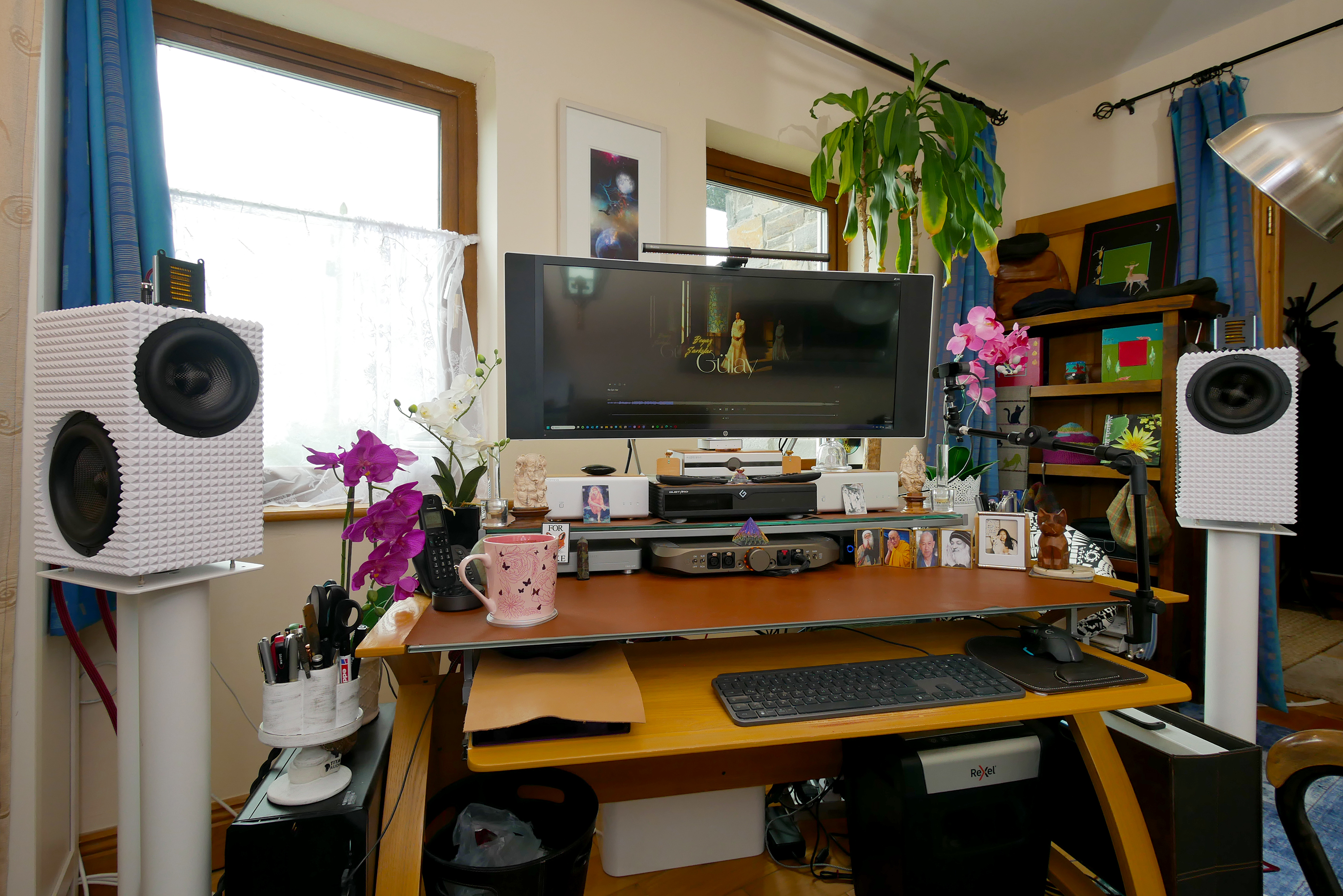
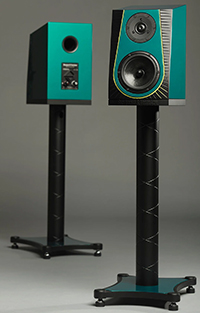 Incidentally, this isn't bad attitude or burnout. It's knowing the difference. Until more directional folded dipole subwoofers¹ pop up across all price ranges, the first step toward making better bass—which ultimately results in superior stoppage and intelligibility from less blur, bloom and boom—is to back it out of the passive main speaker and into a separate fully active dedicated LF affair which can be calibrated separately. The next step is an electronic fully analogue crossover to bypass all digital latency whilst allowing strategic adjustments to hi/lo-pass filter frequencies and slopes. This can be done with any existing sub that offers a bypass on its own plate-amp filter circuit. With proper control over the bottom 2-2½ octaves achieved, it's no longer sensible to pursue full-range passive speakers. Compacts capable of meeting our sub/s are all that's required. We can look at and spend on smaller prettier speakers with better drivers. Their costliest portion of woofer/s and associated cubic volume is gone. What that can look like the examples on this page hint at. That is today's entire purpose: to suggest an alternate way of doing high-performance hifi which sadly still gets short shrift at our industry's biggest tradeshow.
To pick up what the header asked—how small is too little—aside from my own speakers which include Zu's Method monitor, Lindemann's Move and its smaller sibling struck me as ideal candidates for no-compromise 2.1 arrays during their reviews. For significantly more cash there is Camerton's Binom-1. Given the quality of today's best mid/woofers, I should call 5¼" a perfect big-enough 2-way figure though certain 4" drivers as in my Mon minis can be sufficient. On that score, who still remembers the Platinum Solo 4" 2-way which we sold in the Santa Rosa store I worked for prior to my 6moons career? Stereophile's John Atkinson who plays electric bass couldn't get over its wicked LF performance bought by sacrificing sensitivity. An equivalent contemporary speaker priced wildly higher could be this Storgaard & Vestskov 5¼" 2-way called Frida. Also from Denmark but selling direct is Mads Buchardt whose portfolio includes ideal options; plus of course fully active monitors which represent another very credible way to peel today's hot potato. Doing bass with far bigger cone surface and a dispersion of strategic cancellation pattern is still a different experience though².
________________________
¹ Commerical RiPol subs come from Børresen (active BM2/BM3 versions at €9/18K respectively), ModalAkustik (activated MusikBass package €4K), sound|kaos (passive D12A/D15 versions at €6/11K respectively) and Voxativ (active Z/Pi-Bass versions at €4.9/18.5K respectively).
² Passive or active, all ported/sealed bass propagates omnidirectionally. That has it reflect off all our room boundaries and furnishings. Reflections travel longer than direct sound. They arrive at our ears delayed. Anything late is slow. Here it's slow bass. It's slow because it won't stop on time. It lingers beyond its recorded sell-by date. It plays snookers with our room. That blurs the time domain. Aside from creating thicker ringy bass textures, such delayed in-room LF also overlay the higher bands. Dipole bass creates lateral nulls to eliminate the sidewalls from the reflective equation. Folded dipole bass adds superior self damping, lower resonant driver frequencies and can exceed dipole's classic figure-8 radiation to approach quasi cardioid dispersion. Once you've heard it, there's no returning to ubiquitous omni bass. Kii know this. So do Bastanis, Børresen, Buchardt, Cygnus, daudio, Dutch & Dutch, EcoBox, Linkwitz, ModalAkustik, Silent Pound, sound|kaos, Voxativ; classic OB brands like Diesis, Emerald Physics, Matter, Spatial & Bros; and their full-range planar/electrostatic/ribbon sisters. In short, a better future is here already. We just must look beyond the mainstream's box speakers and their overwhelming press coverage. It's the next step after we first asked today's question to earnestly consider a stereo 2.1 or 2.2 approach. Once we've decided on it, we must pick what kind of sub we want. That's for another day…