Basics for that are here. To recap, an active preamp bundles an input selector, attenuator, one or more active gain stage/s to boost the source voltage and buffers to isolate the i/o and keep output Ω low. Passive preamps feature only a source selector and attenuator to cut the source signal. That's it. These days that's no problem. Most modern sources output sufficient voltage to drive most amps to full output without any extra gain. So passive preamps achieve the same fundamental goal with fewer means and effectively far simpler designs. The active types can take the form of expensive internally elaborate affairs with transistors, tubes, opamps, output transformers, boutique caps, massive power supplies and more. All parts contribute a sonic flavour. The passive breed minimizes the parts count so enthusiasts consider it more transparent. Baked-in minimalism becomes the main attraction. Should we want a preamp with gain to spare and an audible personality, actives fit that profile. If we desire a voiceless signal router in a compact box, passives are the ticket. But there are further differences. To execute attenuation, passives can run resistor-based stepped attenuators or magnetic/inductive parts. The latter break out into multi-tapped transformers or autoformers. To transfer electrical energy, a transformer uses two magnetically coupled electrically isolated coils called primary and secondary. An autoformer has a single winding where sections act as both primary and secondary so connect magnetically and electrically. That creates higher bandwidth, lower ringing, simpler construction and significantly less coiled wire. Autoformers also are far superior to resistive attenuators where i/o impedance is concerned. Their lack of galvanic isolation versus transformers is the only real con. In short, an AVC or autoformer volume control works by tapping different lengths of coiled wire via relays. It doesn't get more simple or elegant. It's why cognoscenti admire them. They're also very rare because top-quality such parts don't grow on trees.
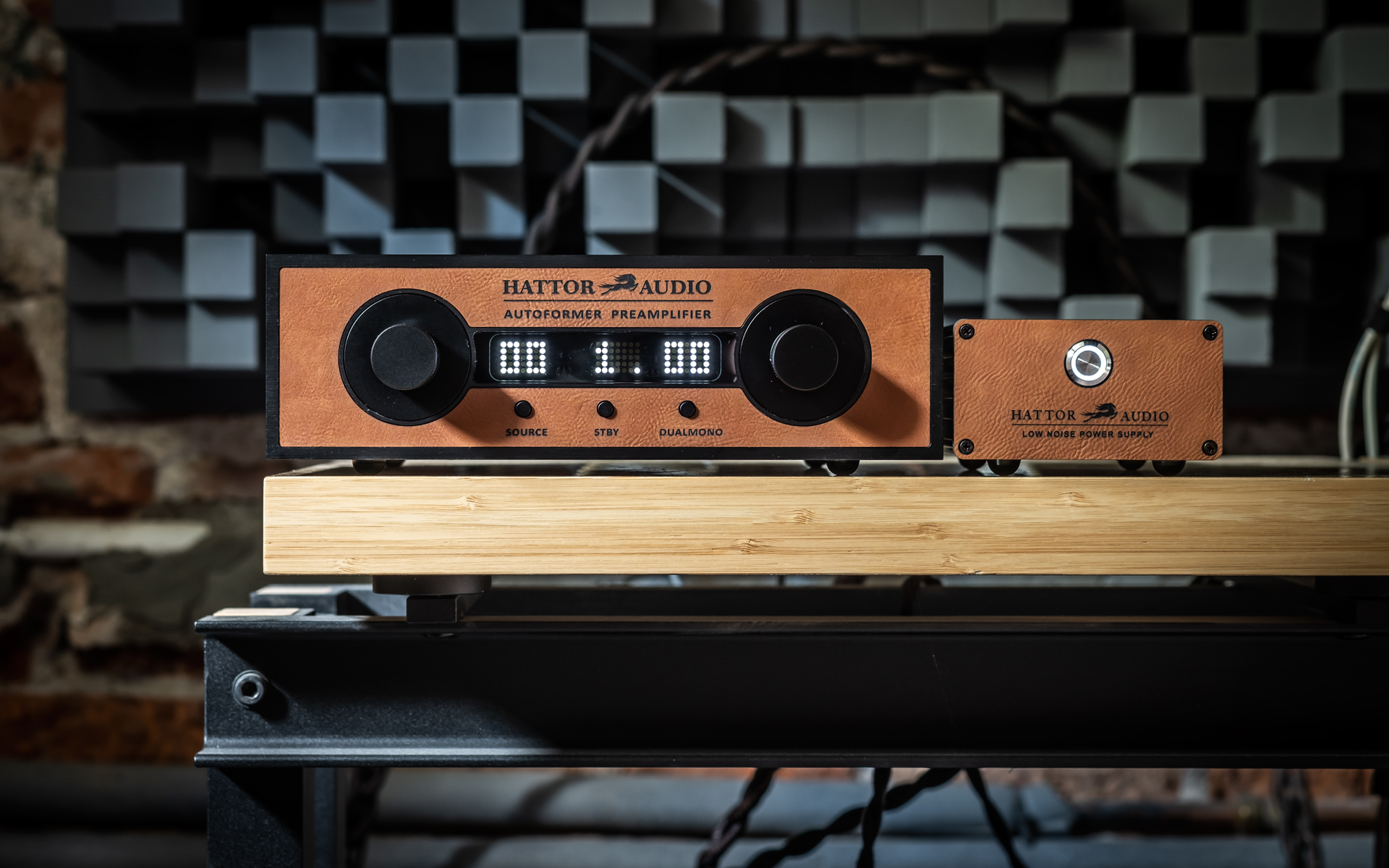
Arek's carton contained a nice branded flight case. The foam interior released the ARP, a linear PSU, a short grey umbilical cord to connect them and a high-quality aluminium remote wand. This was luxo kit. Far dearer products very rarely come this fine, let alone in today's financial ballpark. In fact I haven't seen any that come close. Kudos to Arek for going all in and the extra miles. The man is clearly a perfectionist obsessed by small things which aren't strictly necessary yet highly appreciated. The ARP lives to these high specs. It's 50 x 40 x 12cm WxDxH and weighs 6kg. It's a breeze to handle and takes up half the rack space most competitors want. Just then the website didn't yet show specs for distortion, input impedance/max voltage, bandwidth and power draw. This model was too new. What I did know of course was its dual-mono nature which can regulate both channels independently for balance control over 56 x 1dB steps and 5 x 5dB. Optionally there's a home-theatre thru-put and output selector for multi-amp scenarios. I had no such needs so my i/o were standard. Preamps with two knobs usually designate one the input selector, the other the volume control. The knurled rotaries on the ARP's CNC-milled aluminium forehead are mono attenuators. They rotate endlessly, have a nice feel and are a pleasure to use. The white dot-matrix display shows the currently selected input and left/right attenuation level. The 'source' push button below cycles through inputs, 'stby' engages standby and 'dualmono' de/couples knobs. A dot visible near the active input lets us know whether we set the knobs clutched or not. While it's a subjective thing, the leather insert on the front panel contributed to the groomed personality and gave off posh vibes. I fancied the looks and applaud Arek for expertly incorporating leather. I'm not sure whether the finned cheeks are cast steel but they sure looked it. The underside floats on four semi-spherical rubber pucks. The top is aluminium and so is the rear panel. That packs a 5-pin power inlet between four outputs (2 x RCA + 2x XLR) and five inputs (3 x XLR + 2 x RCA). Should you wonder about "Made in Spain", it's where Arek and family reside.









All in, Hattor's ARP is very well put together, offers all the features we'd expect and is instantly ready whenever we power up. While this isn't a conventional preamplifier, it very much feels and operates like one. The interface for the remote and relays runs on 5V. Purist passive preamps designed to work off grid completely offer far cruder attenuation steps and lack remote control. That nullifies two very useful niceties if not necessary utilities. Meanwhile the ARP's sleek FMJ wand powers it on/off, cycles through inputs, mutes playback, dims the display and regulates volume so does pretty much all we want. Last time I checked, convenience was important. The linear PSU is very compact and not fussy about space. Some would say that a toroid-based power supply in its own chassis adds bonus points to the product's already elevated status. Its presence instead of a standard-issue 5V wall wart is impressive, its matching leather trim even more so. All the extras poured on suggest that the ARP is a major standout for its coin and executed with extreme care. The view under the bonnet reflects it, too. Each knob connects to an optical encoder shaft inside its own aluminium compartment. That's Khozmo fare. Two autoformers per channel so one per phase feature Supermalloy cores (80% nickel content) surrounded by an army of hermetically sealed Omron relays with silver contacts and a guaranteed lifespan of 50 million cycles. While these parts need power, only their contacts are in the signal path. Now we can finally move onto sonics, ideally with our seat belts tightened.
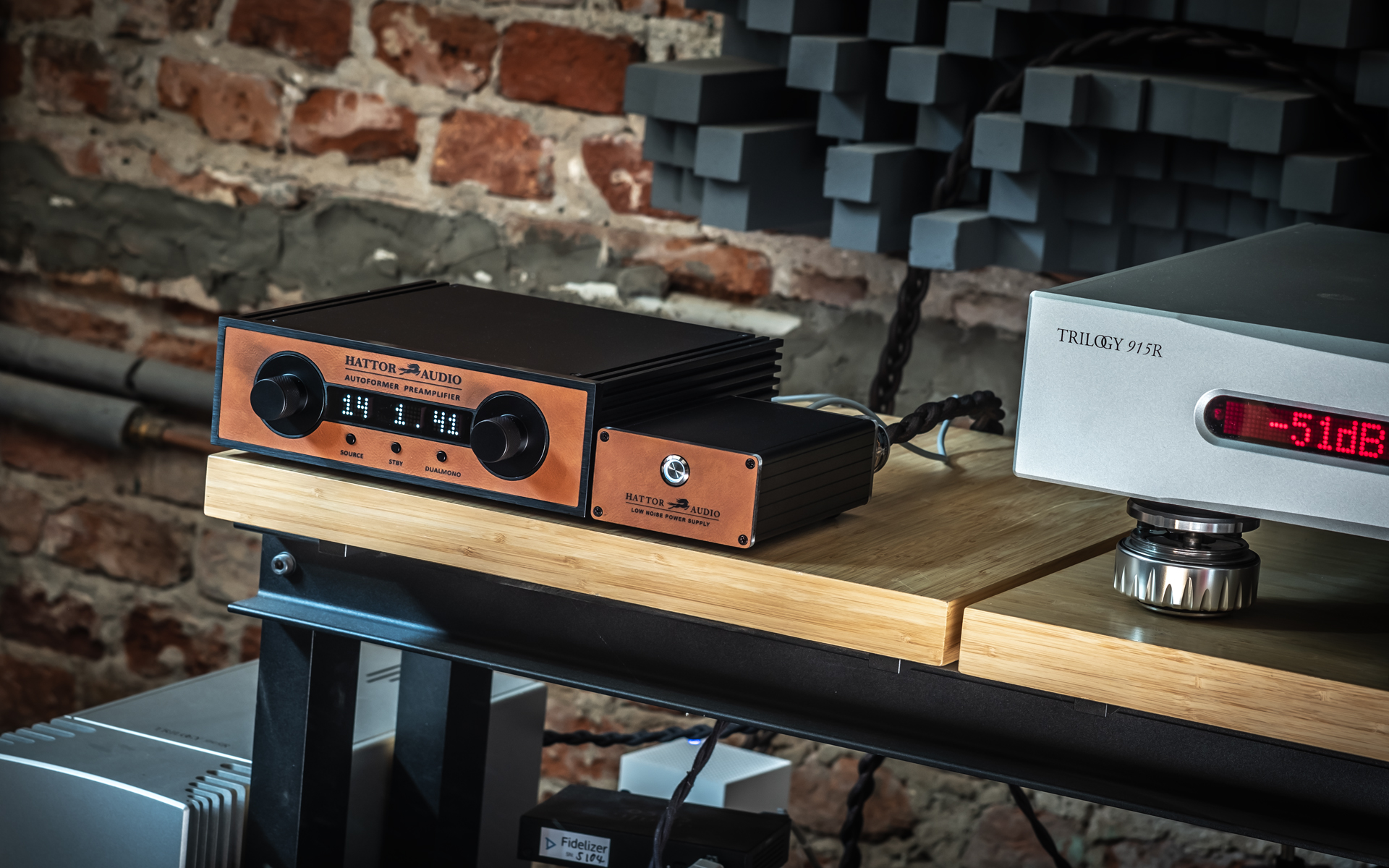
My Innuos Statement Next-Gen passed data to a LampizatOr Horizon360 DAC with its volume defeated. That forwarded converted signal to a Trilogy 915R/995R pre/power combo. From there either sound|kaos Vox 3afw monitors or Boenicke W11 SE+ floorstanders took over. The cables between DAC, pre and monos were XLR proudly home-cooked with LessLoss C-MARC wiring and Furutech ends. The juncture between DAC and 995R monos was the ARP's target where it had to battle my 6 x dearer 915R pre which currently aks €27'950. Should you think this a foregone conclusion, wait! True, Trilogy's preamp is a massive all-around sublime hybrid tank that does a lot for my system and its operation. Its TASlink interface can trigger both amps to remotely power up all three components with one button press, check tube status, set the amps to class A/AB mode on the fly and so forth. With the ARP that convenience left but its smaller footprint, significantly lower sticker, audible bass from the most whisper levels and squeaky-clean output were valuable gains. With the 915R on duty, my sensitive Vox speakers report mild background noise masked whenever music plays. With the ARP there was dead silence as though my system had unplugged. That was expected. Pál Nagy's icOn 4PRO reviewed four years ago had already been extremely quiet. The ARP confirmed this desirable behaviour for a passive AVC. To push the quiet even further by eliminating all switching noise, Pál uses ultra-fast Vishay Fets as autoformer tap selectors. The ARP's Omron relays clicked mildly but that was hardly a con.