
Country of Origin

Reviewer: Srajan Ebaen
Financial interests: click here
 Main system: Sources: Retina 5K 27" iMac (i5, 256GB SSD, 40GB RAM, Tahoe 26), 4TB external SSD with Thunderbolt 3, Audirvana Studio, Qobuz Sublime, Gustard U26 USB bridge, LHY Audio SW-8 & SW-6 switch, Sonnet Pasithea; Preamp: Hattor Audio ARP-S; Active filter: spl Audio Crossover MkII; Power amplifiers: Vinshine/Kinki Dazzle & Audiophonics NCx500 on subwoofer; Loudspeakers: Qualio IQ [on loan]; Subwoofer: sound|kaos D15; Cables: Exact Express Flame, Furutech; Power delivery: 2 x Kinki/Vinshine Tai Hang on amps and source stack, Furutech DPS-4.1 between wall and conditioners; Equipment rack: Artesanía Audio Exoteryc double-wide 3-tier with optional glass shelves, Exoteryc amp stands; Sundry accessories: Acoustic System resonators, AudioQuest FogLifters; Room: 6 x 8m with open door behind listening seat; Room treatment: 2 x PSI Audio AVAA C214 active bass traps
1st upstairs speaker system: Source: Shanling EM7 into Soundaware D300Ref SD transport to Cen.Grand DSDAC 1.0 Deluxe with POW; Preamp/filter: Lifesaver Audio iCon 4SE & Gradient Box 2; Amplifier: Kinki Studio EX-B7 monos; Loudspeakers: sound|kaos Vox3awf; Subwoofer: sound|kaos D12 on twin Nord Acoustic NC500 monos; Cable loom: Exact Express Earth; Power delivery: Vibex Granada/Alhambra, Akiko Audio Corelli Corundum & Castello Solo; Equipment rack: Hifistay Mythology Transform X-Frame [on extended loan]; Sundry accessories: Furutech cable lifts, Furutech NFC Clear Lines; Room: ~3.5 x 8m
1st upstairs headfi system: DAC: Cen.Grand DSDAC 1.0 Deluxe with POW; Headamp: Cen.Grand Silver Fox; Headphones: Raal 1995 Magna, HifiMan Susvara
Desktop system: Source: HP Z2 workstation Win11/64; USB isolator: LHY UIP; LAN distributors: LHY AS6 Pro & SW6-SFP; Ethernet reclocker: Stack SmoothLAN; DACs: Gustard R26II & Audalytic DR70; Preamp: Topping A900; Speaker amps: Topping B200 monos; Headphone amp: Enleum AMP-23R; Loudspeakers: Virtual Hifi Viper; Headphones: Final D-8000, aune SR7000, FiiO FT7, HifiMan Susvara Unveiled
2nd upstairs headfi system: Shanling EM5; Headphones: Meze 109 Pro, Fiio FT3, HifiMan HE1000 Unveiled
2nd upstairs speaker system: Source: smsl PL200T CD transport; DAC: Shanling EM7 w. 1TB microSD; Crossover: Lifesaver Audio Gradient Box II; Amplifiers: LAIV Crescendo Chorus monos; Loudspeakers: MonAcoustic SuperMon Mini with Dynaudio S18 subwoofer
2-channel video system: Source: Oppo BDP-105; All-in-One: Gold Note IS-1000 Deluxe; Loudspeakers: ModalAkustik MusikBoxx; Subwoofer: 2 x Zu Mission; Power delivery: Furutech eTP-8, Room: ~6x4m
Review component retail: €999
 |
 |
 |
 |
 |
 |
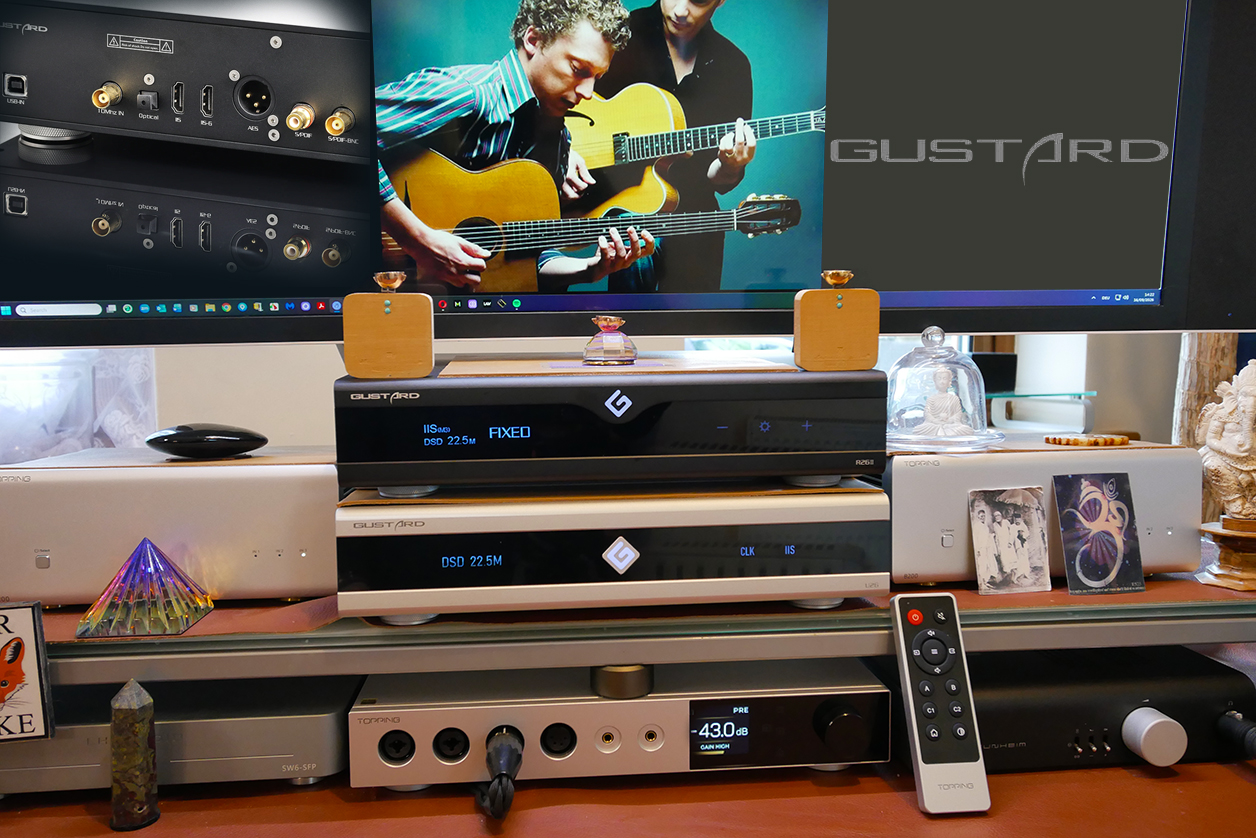
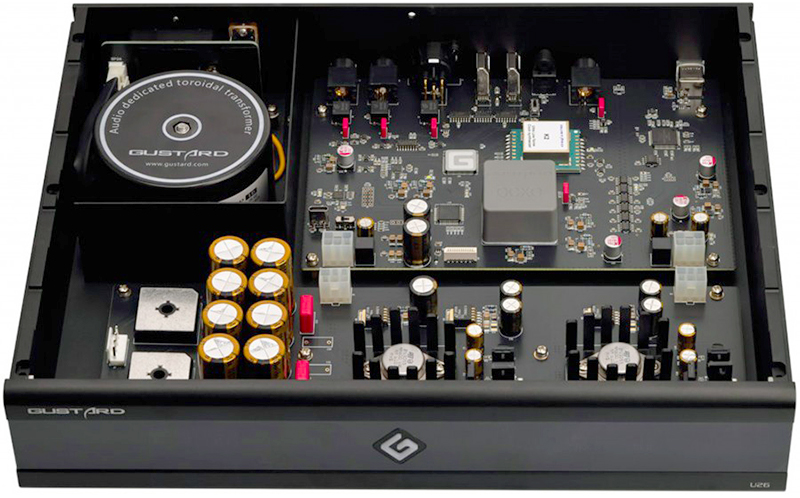
With five concurrent speaker systems—four of them with alternate headfi paths—I naturally need a harem of multiples across all component categories. With curiosity the grandmother of invention, I routinely wake up to 'what if'. That promptly moves things around just for fits and jiggles. Whenever it's a bust, all goes back to before. After all, bad ideas are a dime a dirty dozen. Unlike real-world mistakes of grave consequence, these fix easily. Now mum is the word. Occasionally though, something works out unexpectedly brilliant. That's when my share reflex kicks in. Today is mule-kick day. Gustard's U26 had worked in my main system. It built a USB bridge so isolation between my dedicated music iMac with Audirvana Studio; and a Sonnet Pasithea DAC. This particular 'what if' had started wondering about my desktop's LHY UIP aka USB isolator. What would that do when fronting Pasithea? I knew that it would expand my RAM-maxed Audirvana r8brain resampler math to 384kHz. UIP is a USB i/o proposition. With it I'd enter the Dutch DAC by USB, no longer U26's 192kHz-capped AES/EBU. Suddenly my Gustard was unemployed. So it naturally hopped onto my desktop to front its stablemate R26II DAC as shown above.
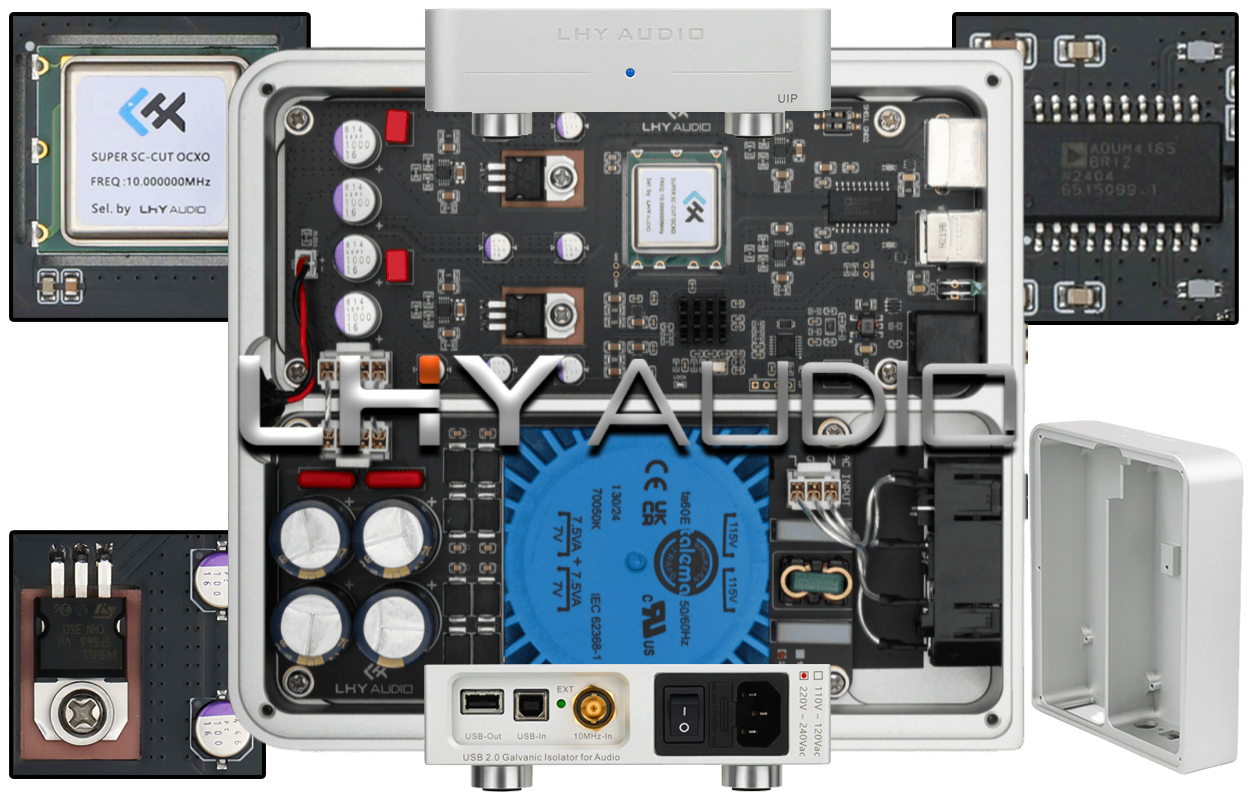
Unlike the outgoing LHY centred on a high-power isolation chip, incoming U26 was a fully fledged ambitious bridge. That meant USB in, all but USB out. Between its singular input and multi-paralleled digital outputs sit an Amanero-sanctified custom USB transceiver capable of DSD2'048; top-level clocking; jitter stripping; and noise attenuation all via latest-gen digital tech. Running Qobuz Sublime through Audirvana, I could pick between PCM768 or DSD512 up/resampling. Spotify Premium and generic YouTube routed through Win11/64 at 384kHz. Either way, the signal path was the same: workstation ⇒ USB ⇒ U26 ⇒ I²S ⇒ R26II ⇒ XLR ⇒ Topping A900 pre/headamp ⇒ XLR ⇒ Topping B200 monos ⇒ Virtual Hifi Viper monitors. Reseating my PC's USB feed between bridge and DAC then resetting output device in Windows or Audirvana conveniently A/B'd between with/out U26. With the Gustard twins clocking in at €999 + €1'650 = €2'649, I also had an original €3'249 LAiV Harmony. It too is of the discrete R2R persuasion so a direct one-box competitor to my PRC twosome. When run in pure PCM mode, R26II vs Harmony compared Golden Delicious to Fuji—classic apples to apples. You pick a favourite. Both are the same species, just different varietals. Whilst twice as costly and looking undeniably sexier yet lacking Gustard's analogue volume, native DSD and basic RJ45 streaming, the LAiV performed on the same level. Once I fed the Gustard DSD512-resampled PCM over UPnP, my ears already heard an advance. That's before today's wily donkey stamps us with a charley horse. When adding U26 bridge to R26II DAC, we hit a clearly higher level of resolution and planktonic insight. This difference splits no hairs. It kicks hard; so hard as to prompt today's redux. There are levels to digital-audio USB processing. Just like the poppycock bits 'r' bits argument, USB = USB doesn't wash. Not all USB transceivers, their firmware code and subsequent processing are created equal. Versus my earlier Singxer versions and a still active Soundaware D300Ref, Gustard's U26 clearly operates in a higher octave. Bolting on that go-faster action to a USB or I²S-enabled DAC kicks its up a few steps.










 It reminds me of the term digital infrastructure. It points at CH Precision, dCS and Wadax which offer modular digital front ends that optimize each pitstop which our jittery binary signal makes between router/disc and analogue output. It means standalone network switches or cards; USB cards; masterclocks; upsamplers; disc transports; mono DACs; outboard power supplies; and proprietary cabled protocols. In their most elaborate guises, these systems get insanely box-count heavy and super stressful on any responsible accountant. But the modular approach wherein each separate component focuses on one not multiple tasks also has adherents at far lower prices.
Lumin are working on it. Ditto Gustard whose CD26 pure disc transport and upscale C26 clock are just around the bend; who already have streamers, clocks, LAN switches, USB bridges and DACs. A duly diligent shopper with a given budget might wonder. To invest in a one-box solution that does everything; or a stack which parcels out more focused tasks to multiple cheaper components? Minimalism favours the single-box solution. But where raw performance is king, might the modular approach of individual components have advantages?
It's certainly less painful to eventually upgrade a €1K box when a decidedly superior alternative bows rather than sell off a €5K+ all-in-one to replace with an equivalent usurper. The modular path also dedicates individual power supplies to its various tasks. That gets far more limited with an all-in-one. However you rate these variables, I was surprised to hear how obviously the cheaper twin-box Gustard stack trumped the costlier one-box LAiV. That's since been superseded by a MkII replacement for whose ask we could add an external LHY master clock as I did below, sync both U26/R26II to it, operate a threesome and still pay less. Sometimes to piecemeal it could just be the strategy that sounds more winning to the ear than it reads. And it's not as though LAiV don't concur. In their portfolio we can front this Harmony DAC with the µDDC to handle the USB massage to I²S connection. In a second upgrade step we replace the µDDC's wall wart with the Crescendo Beat linear power supply. Et voilà, another ménage à trois. Once LAiV's external master clock drops in the Harmony range as teased by their Weng Fai Hoh just today, we'll be deep into an R rating so for mature audiences only.
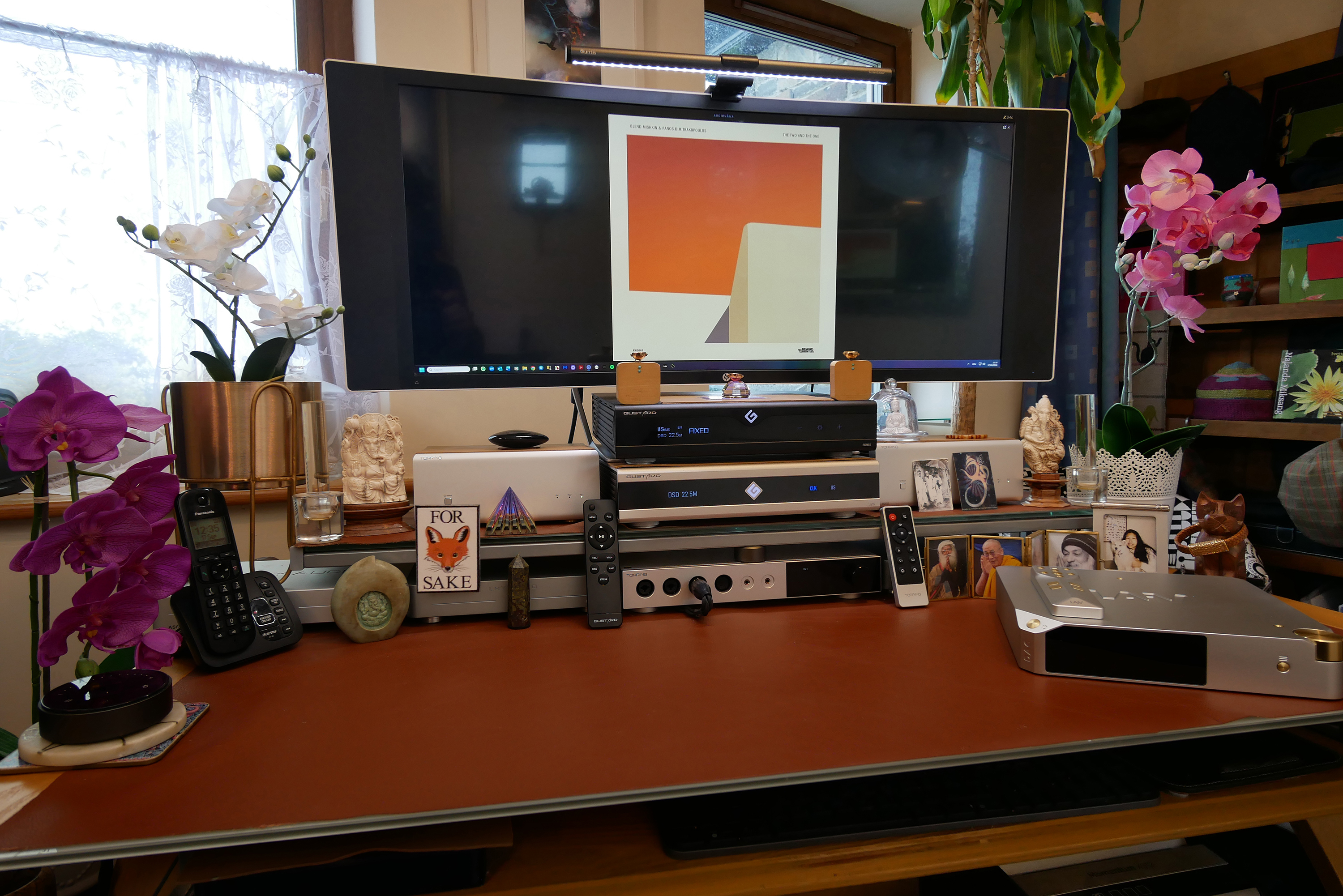
It's the old separation-for-specialization argument applied to modern digital sources. Beginners or cash-strapped buyers are better off on the path of maximal integration. Audiophile extremists meanwhile can still find solid reason to modularize their approach even on something as seemingly basic as D/A conversion. For that we simply needn't have Wadax-type resources…

Gustard's website
