What were the changes? The first one was a perceived shift in tonal balance. The system became subtly more weighted towards the midrange and lower midrange, not to euphonic excess, just enough to add some acoustical authenticity. The Navy nudged that from recording accurate towards a live balance. Cellos and violins gained greater wood and cavity contribution to define them as instruments. The second was the handling of hall acoustics. Those were a little darker than with the direct signal. So a little less overt air and a bit more instrumental envelope. When the hall was quiet, it was dead quiet, no acoustical house lights up. But when the musicians began, the hall became rich with information. As I wrote down those observations, it struck me that those exact deviations have been previously duplicated in my system with the introduction of acoustical panel damping or other passive devices to reduce various forms of systemic noise. Was the Galion Navy cleaning up noise in its capacity as buffer? Pure speculation but if so, it did rather well. In fact, noise in general was a strong suit for the Galion. Given the S/NR spec of >100dB, the noise floor was extremely low, laying the foundation for a broad dynamic palette. In fact, very broad.
My notes describe the Navy as feisty, matching source direct in dynamics and elevating them even further. This tube preamp popped low-level information out of the background and individualized it. It also had serious dynamic thrust in the bass, adding visceral mass and punch. Microdynamics plus macro kick? Normally adding the word 'tube' to those descriptions might imply lush and old-school romantic but not here. The Navy has a trick up its sleeve: transient response. Cliff-drop transient response. Galion's tube flagship was exceptionally fast on its feet, again keeping pace with the direct feed in pretty much every circumstance, its only "sin" being that modicum of additional liveliness. Solid-state versus vacuum tube a draw? I would love to see the Navy's performance on square-wave bench tests. Dynamic agility was not the only calling card. Tubes are employed here to their classic strong suits as well but enriched with this additional character trait to pump up the stakes. Highs? Virtuoso violin soared with the precision that the superior transient capability afforded but clothed it in seductive sweetness. Guitar strings leapt tangibly with eye-popping ferocity. Midrange was clean, defined and emotionally engaging. Not just acoustic fare benefitted. Electronic synthesizers had weight and texture with transients so sharp they could slice.











In the recreation of soundstage size, the Galion matched the direct feed. Imaging was of the bas-relief variety, 3D, layered in depth and delineated in the horizontal plane and slightly better focused than direct. Choirs and orchestras were individuals with pronounced inflections and proportional contributions. Holistically, every musical presentation was simply more interesting. While this cumulative effect may constitute an exaggeration of the recorded event, it's a convincing one, immersive and visceral. Welcome to the world of tube 'magic'. And there you have it. Those are my observations of the Galion Navy on its shakedown voyage through the break-in process. I deliberately avoided looking at reviews of the TS P75 preamp until after my listening session. I now see that those comments track similar character, indicating a definite house sound. If Mr. Tan's vision for the Navy was indeed a higher performance realization of the TS P75, then I suspect that goal may have been well met. I'll leave it to other golden ears with comparative ability to make that call.
What's my personal opinion? I've listened to and had in house scores of preamplifiers of various sorts, tube, transistor, FET, active, passive and always found myself torn between a quest for accuracy and pursuit of beauty. One defines truth as faithfulness to the recorded event, requiring observational precision; the other as an enhanced live experience that evokes emotional rapture. Mr. Tan's vision strikes middle ground, creating a satisfying blend of precision and engaging energy to serve the musical illusion. You can find hardware with a touch greater transparency or textbook accuracy; or alternatively, a more lush and euphonic presentation if those match your sonic disposition. But have no doubt, Mr. Tan is a master illusionist. His version of musical playback is equally compelling and in the end, probably more long-term satisfying. I could play Devil's advocate and argue otherwise but it's tough to stand in the face of a tsunami. The Navy matched or exceeded the performance of what I have encountered, either in individual parameters or on a whole. It betters the Audio Space preamp on transient ability, noise, dynamic ability and dimensionality. Then I'm going back to some golden oldies. It captures the Paragon Audio's 10 or 12 ability to create bass texture. It betters the Audio Research SP6E (rebranded 8) to differentiate layering and texture by kicking in better dimensionality. It captures the best of the Conrad Johnson line with infinitely better definition, transparency and speed. Back to more modern references, it matches the Tortuga LDR in overall dynamic ability and betters it in nuance. It matches both my direct connection and the Tortuga in absolute transient ability and throws in an exaggeration of the effect to overwhelm and punctuate. In short, it sounds 'faster' and more authoritative than source direct. From a tube preamp? As I said, my personal references are outdated but aspects haven't been bettered or matched. Until now. Thanks for the opportunity to listen.
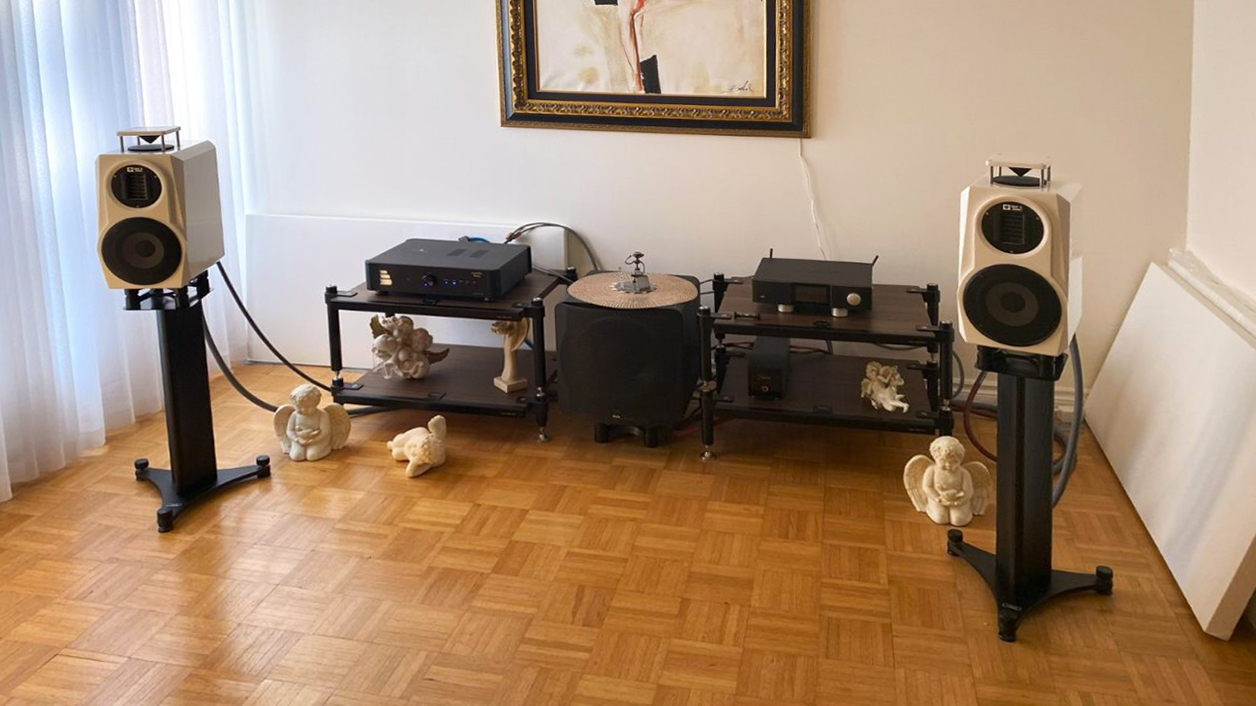
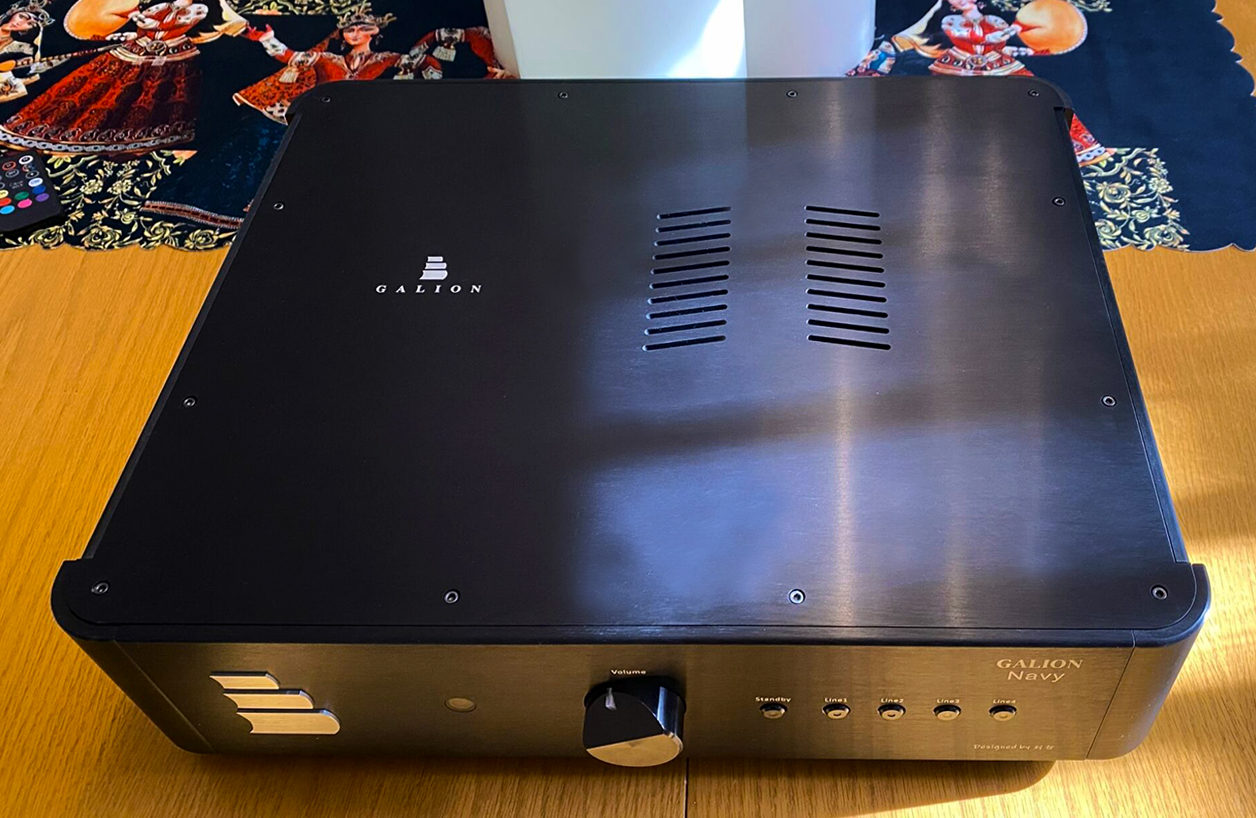
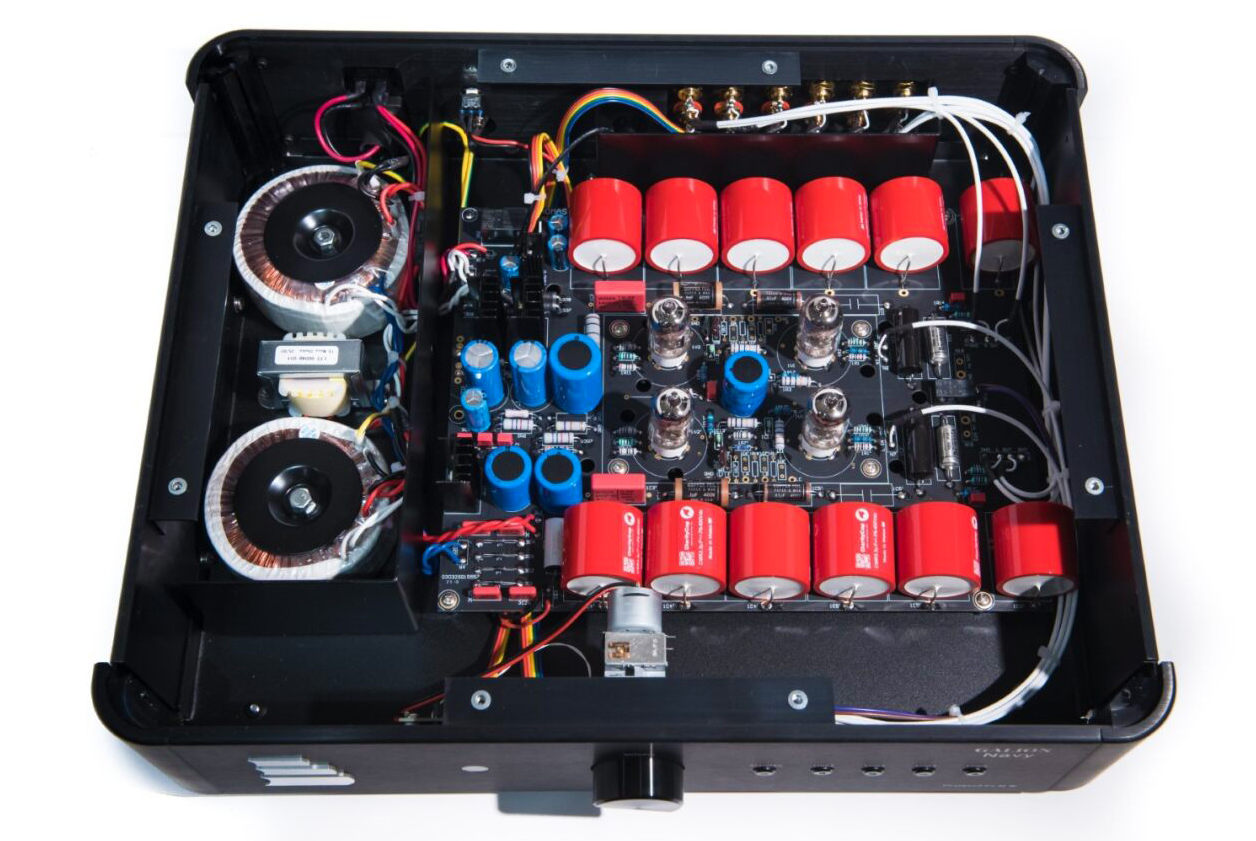
Product feature notes: The Navy has a rear panel computer-style mains rocker. The front panel has a standby button and delayed start-up to extend tube life. There's a noise reduction toggle for problematic system matches. The remote is solid, simple and has a wide angle of acceptance. As provided, the volume taper of the Navy is optimized for lower sensitivity systems. A higher sensitivity version is on the drawing board. The unit is dedicated to unbalanced (RCA) inputs/outputs only.
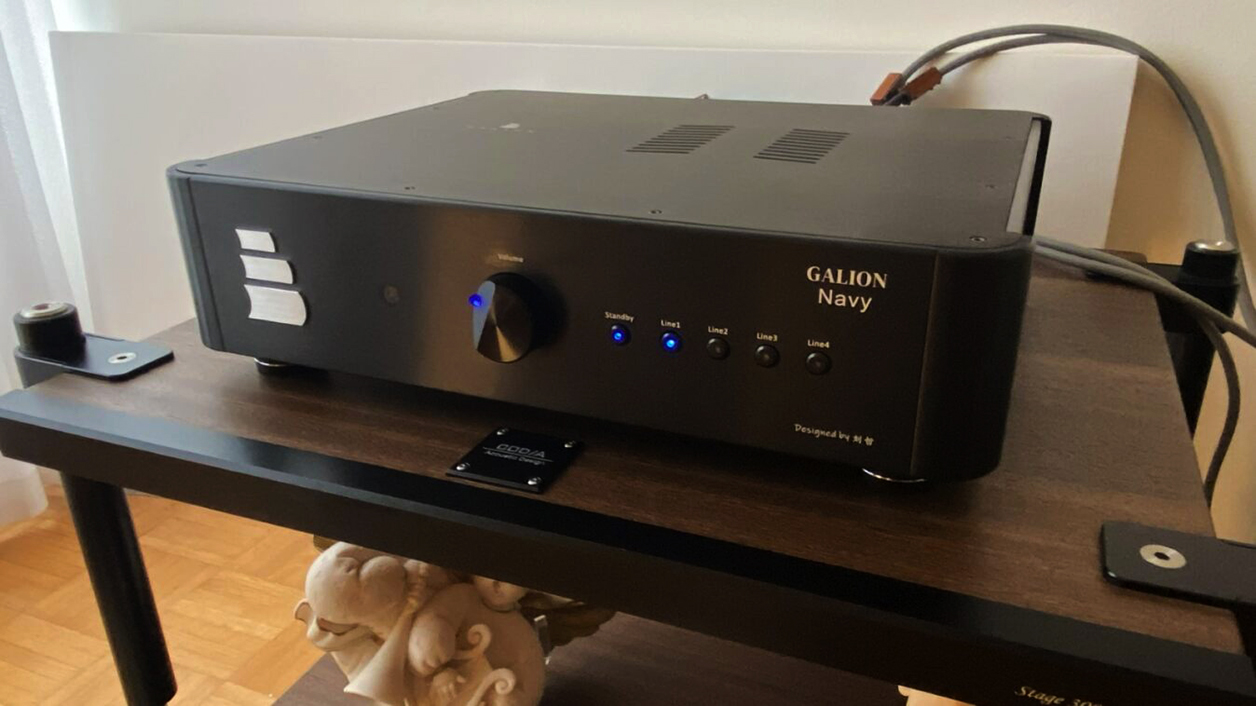
Publisher's postscript. 18 days after publishing the above, I received this. "Hello Srajan, just wanted to let you know that I'm weak and a mere mortal. With a lot of encouragement from my wife, I have enlisted in the Navy. Every audio destination, both old and new, seems fresh and exciting. Best wishes, Glen." So there is that…