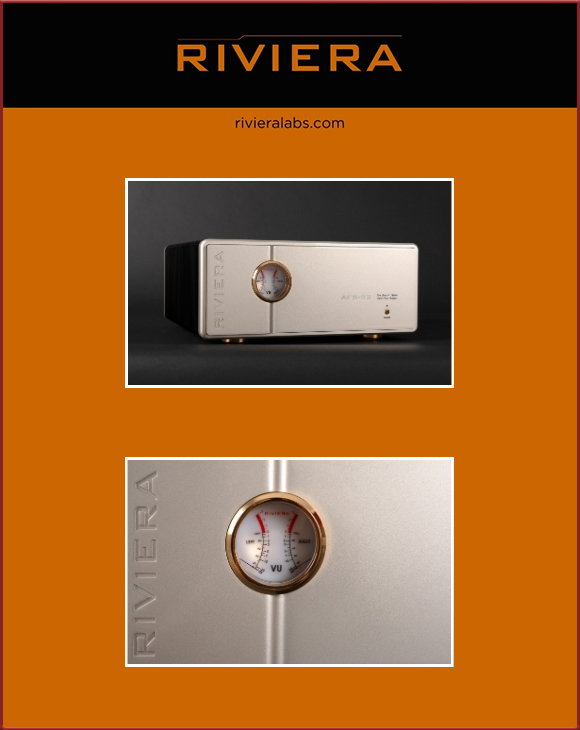
First, more off-site comments vs. the XA-60.8 using the Wilson Alexia 2. "The 60.8 just sounds a lot more solid state, still relatively warm but with relatively no bloom. Grainy and dull. The SIT5 has much more holographic depth and texture with greater precision of detail across the soundstage, left to right and front to back. There seems to be a lot more musical information getting through which makes for greater realism and ultimately, listenability. Just a magical sonic bloom. Anyone familiar with the other FirstWatt SIT amps knows their character but they have never been available with this much power. To be clear, I've been very impressed and pleased with the 60.8. While I've used the Pass XA25 as well as FirstWatt J2, F8, SIT3 & SIT4, the 60.8's power made them the best all-rounder of that group even though all FirstWatt amps share the SIT5's superior sonics vs the Pass Labs amps. The trade-off has generally been power. With Rock, Pop and Classical at elevated volumes, the other FirstWatt amps simply lacked the dynamic overhead that comes with more power. The SIT5 far more than any other FirstWatt bridges this gap and to such an extent that aside from crazy loud, the better sonics of the SIT are no longer qualified. It's better across the range with all types of music. Better mid and highs are most evident but even tonality of the bass is better. Again I cannot underscore how much more musical info gets through vs my non-SIT Class A Pass amps. It's not a small thing despite the impressive starting point of the XA-60.8." Well remembering my SIT4 sample, I could particularly relate to the quote's soundstage 'bloom' and 'holography'. Class D with switch-mode power supplies too can do extreme holography but its feel differs starkly. It's as though all remnants of noise are choked out like a blanket thrown over a burning body kills the oxygen supply to extinguish the flames. This damping action creates images that hover against an inky blackground for very high contrast ratio but the context is one of dryness. The SIT4 injected a very distinctive bloom into its holographic imaging. The closest parallel to this effect might be how dipoles with big drivers like Diesis energize more air to put greater living presence into a room than small-driver direct radiators. It's not about absence of noise but higher presence of expansive materialism. In any event, the promise of a SIT4 rerun with much higher power now really had me itch. With zero valve amps in our digs, you obviously won't get any such direct comparisons from me though prior experience with the breed can't help but intrude.
OG. Two Polish colleagues recently had their own Oh Geezus meetings, Wojciech Pacula with the €103'440 fully loaded Taiko Olympus XDMI; Dawid Grzyb with the €67'650 LampizatOr Horizon360. One is a server, the other a DAC. Both are the latest evolution of evolutions of already ambitious circuit executions. Not having heard either, I can't know for sure—or prove if I did—that in its category of monaural power amp, the SIT5 is as illustrious an affair. Like the two others, it incorporates lengthy prior design DNA spanning decades. What is sure? I'm by far the cheapest date of our trio. So what if it doesn't mean chassis/connector or copper-lining bling? When it comes to sonic excellence that stands apart, things get very interesting indeed. Let's start by spelling out the nomenclature's three letters as follows: Saturation. Intensity. Transcendence. Now we break down what I mean by each. Without the necessary 'B', saturation is my stand-in for 'bloom'. It's the first and biggest aspect of otherness from a typical transistor amp. The word 'bloom' suggests a fully opened flower, all petals luxuriating in the sun. With many species, there's even a beguiling scent in the air. The SIT5 does that to images. Rather than hard compact golf balls for tones, we get unfurled petals which seem to breathe by radiating the scent of saturated tone colours. Images big up and billow, textures don't sit stiff but vibrate. The feel of audible space as actual substance intensifies. It's why the word 'holography' lends itself to hint at this pairing of gushing bloom and spatial tacitness. This particular constellation of aural attributes transcends typical transistor sound to indeed sit far closer to tubes. But then things rather diverge in the bass which is back at intensity. Whilst it too blooms, there's nothing sloppy, soft or blurry about it. It's big and bodacious but with the unwavering control we expect of sand not glass power. That's why the SIT5 does not sound like a pure tube amp; at least not one I've come across. Just so, the blooming bit is so different from classic sand sound to have me use the 't' in SIT for transcendence. It goes beyond classic transistors. To be cute, we could have it double up as tube to correctly imply that some thermionic action is part of this picture. It's simply not all of it.








The SIT5 also is a flow-state proposition. It's not an explicit performer which parcels out bits and pieces. However, if our attention does the parcelling because we focus on say a treble event, everything is there in its harmonic fullness. Without our mind doing this separation, the SIT5 presentation is simply holistic not dissective. Hence flow state not Iron Chef knife skills which slice, dice and julienne like a kitchen surgeon. Back at the prior paragraph, the sum total of bloomy textures and spatial billowing makes for a very dense sound whilst the saturated big bass adds earthiness and a degree of darkness. Yet play a lit-up airy recording and we're not robbed of its illuminated harmonically enhanced feel. As such I didn't think that the SIT5 imposed a constant patina of beautiful lushness. Different recordings continued to differ in their mix of attributes. The amps' personality was transparent enough to pass on such distinctions. But it's equally true that the SIT5 primarily connects us with music's intrinsic beauty. The focus is more heart than head, more radiance than rationality, the design process involved to make it so clearly more artistic than scientific. These are my broad strokes to set the SIT5 table. Now we put some dishes on it to describe their taste with music samples.
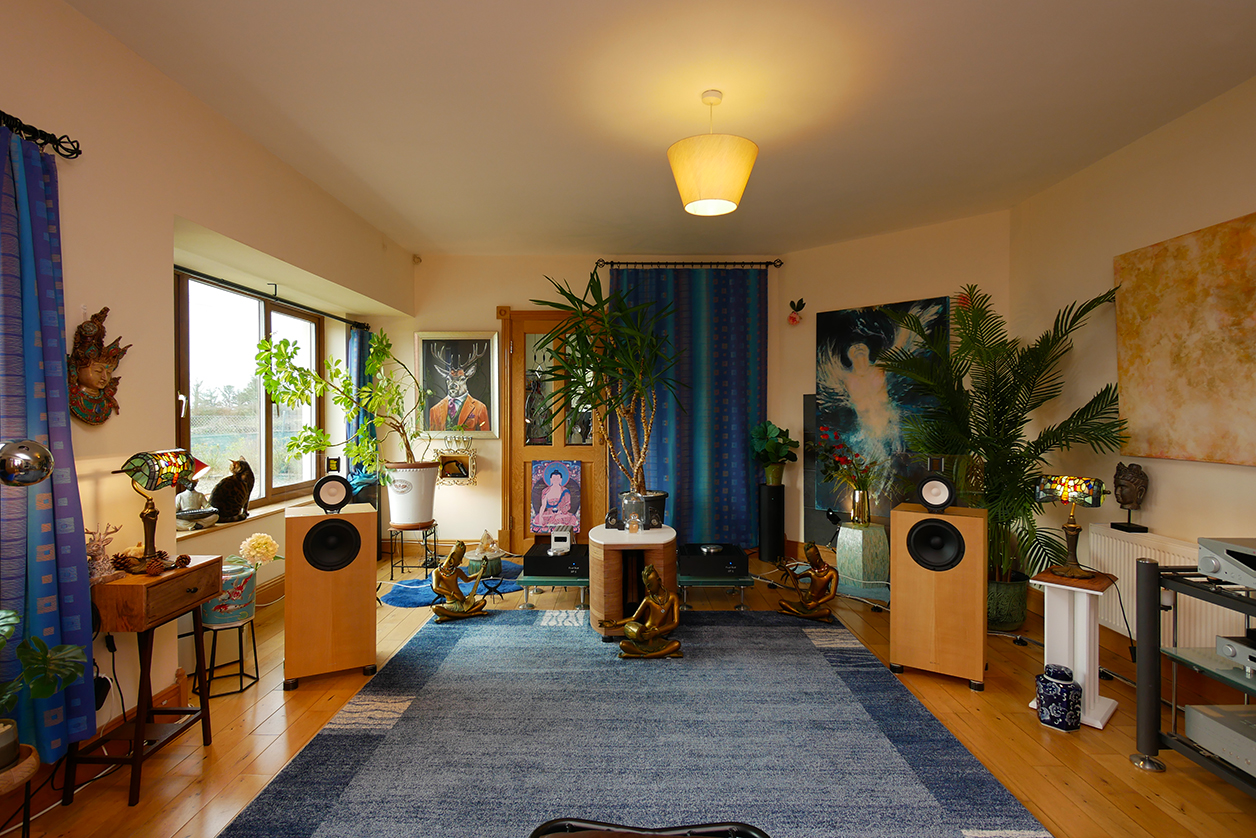
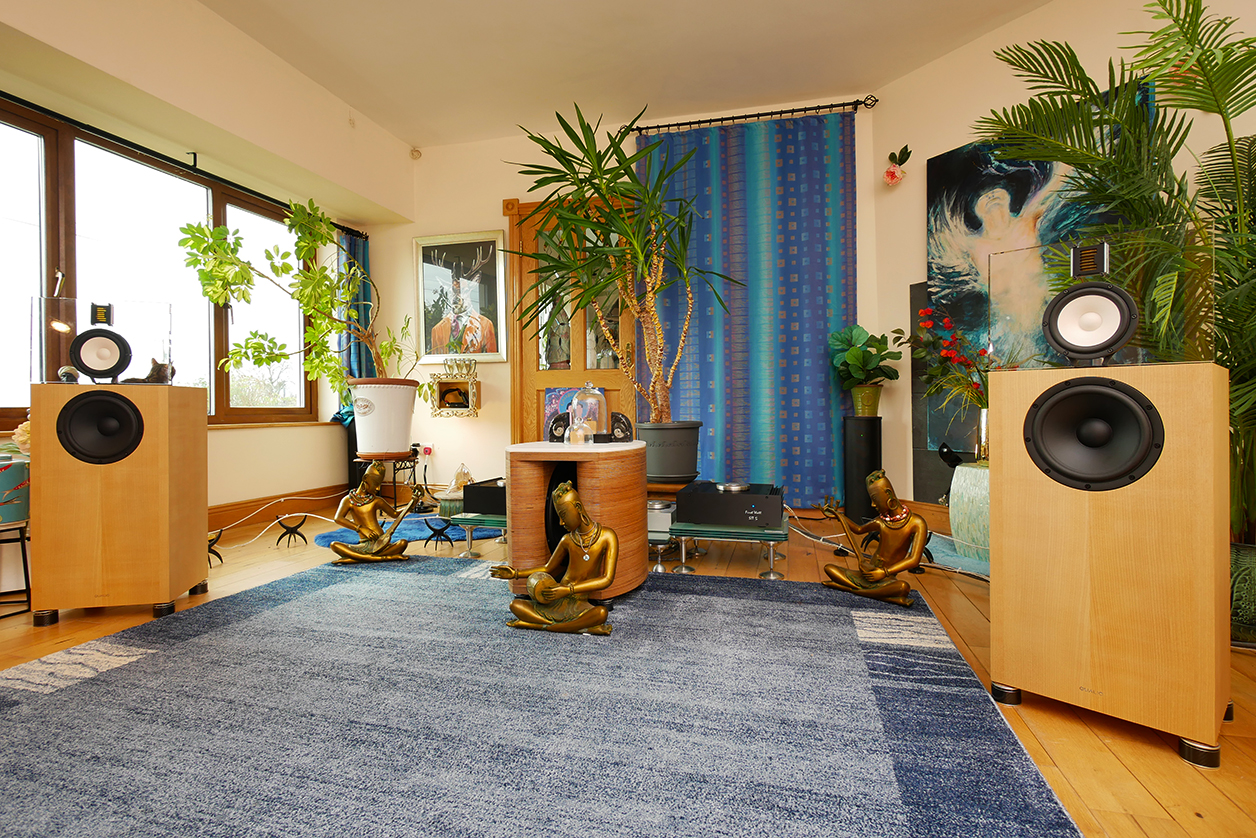
Before we do, let's get Cap'n Obvious on deck in case he jumped your ship. The amps which the 35-watt SIT5 replaced were 250-watt DC-coupled class AB monos. My speakers aren't bad power brokers. But roping in an SB Acoustics Satori 6-inch midrange for open-backed dipole duty without a suspension deliberately stiffened to compensate for the lack of box-compressed air does want more not less current control. There was nada-niente to suggest that the SIT5's much reduced paper power had any compromising effect on my performance. It confirms the Wilson Alexia 2 owner's findings. This First Watt design goes well beyond the 1st, 10th or 20th watt. Into 4Ω it exceeds 50 watts. As authentic Pass watts confined to tight distortion specs, we could probably double those figures quite easily if we relaxed the 0.1% spec to 1%. Hello 'normal' speakers. Only the voltage gain was noticeably lower than that of my Kinki monos. So I simply compensated with a heavier foot on the gas but never came close to maxing out my DAC's 4V-max unity gain.