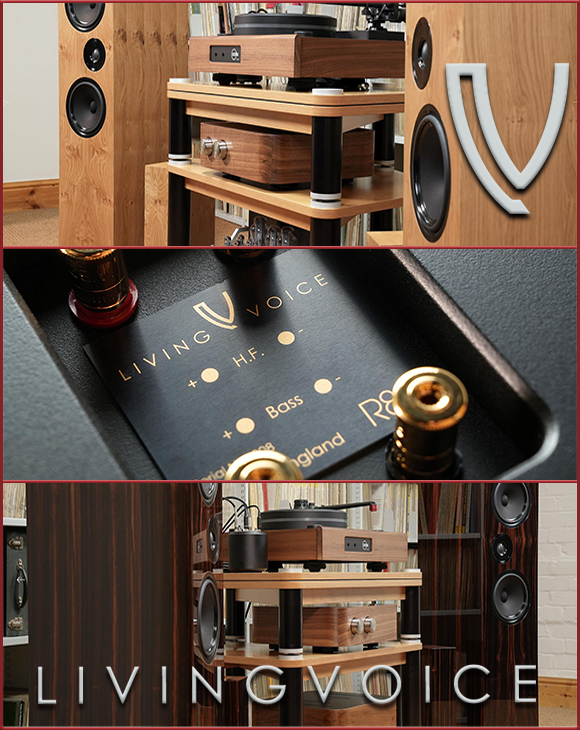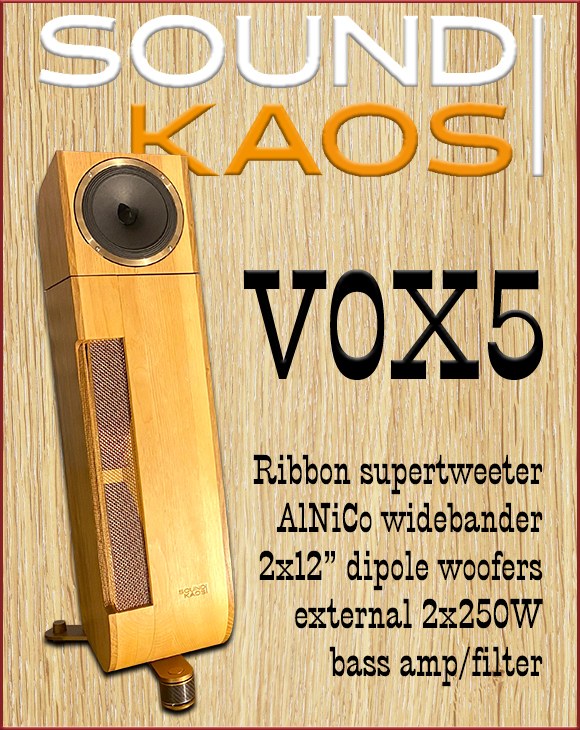
Take 2 on the SIT5. Here we see the County Clare landing place. Since my review of the SAEQ Armageddon which shows below atop the 2×15" sub, the Cen.Grand DSDAC 1.0 Deluxe on the sidewall replaced with Sonnet's Pasithea of variable reference voltage on its R2R ladders for no-loss volume control from the seat. This signal path starts with local or cloud files. The latter isolate off the router via two series-connected Lhy LAN distributors. The former live on a 4TB SSD. Either way Audirvana Studio on a 27" dedicated music iMac handles signal routing and upsampling to bypass MacOS' core audio. A Singxer SU-6 ultra-cap powered USB bridge buffers and reclocks the signal. From there AES/EBU connects the DAC. Its XLR drive a Lifesaver Audio Gradient Box II active analogue precision crossover. Hi/lo-pass outputs sit at 100Hz/4th order. The high-pass signal hits a pair of 250-watt 2.5MHz direct-coupled Kinki Studio EX-B7 monos. The low-pass signal hits a pair of bridged Pascal-based Gold Note PA-10 Evo. The speakers are Qualio IQ, the sub is a sound|kaos Gravitas 15. All cabling is Exact Express. The active xover features a remote-triggered 'bypass'. That can send the incoming full-range signal straight to the speakers for easy with/out sub A/B from the seat. Two active bass traps from Switzerland's PSI Audio complete the 'room treatment' embedded in the dipole bandwidth of the speakers. That continues with the sub's cardioid dispersion active across my 35/70Hz room modes. The 6-inch papyrus midrange cones from SB Acoustic's Satori range aren't specifically made for dipole use. They  worship higher amplifier damping to compensate their lack of restorative force from trapped air compressing in a box. It's where the Kinki monos really work for their living. At $3'698/pr, these class AB amps with lateral Exicon Mosfets are from China. They consume 30 watts at idle, not a SIT5's 200 watts. At full power of course, they scale up to 600W/ea. whilst a SIT5 stays steady at 200W. On the books then, this would be a juxtaposition of class of operation; of raw output power; and of circuit complexity i.e. number of gain stages and type/number of output devices. The SIT5 would represent very atypical simplicity, the EX-B7 typical complexity. Could simpler be better? Would it just be different? Was a big comeuppance¹ inbound?
______________________
¹ Already the SIT4 was but its special-app power limit had me refrain from doubling up on Dawid's award. Knowing that SIT5 were around the bend, I decided to hold back an award for broader usability. This was contingent only on the FirstWatt monos impressing likewise by putting the kind of significant distance to my own Kinki monos which triggers personal lust as explained in this linked Year-End feature.

To wrap up my intro necessities, a brief word on class A and yours truly. I still own a pure class A Pass Labs XA-30.8 and pair of original SIT1. The monos' low power doesn't suit these speakers so remains reserved for high-efficiency widebanders. The XA-30.8 has long been sidelined because of my changed tastes. Today I find its personality a bit thick and lazy, its resolution a bit coarse, its voicing not sufficiently energetic. It's entirely immaterial to the bigger picture of course and not meant as a generalized read on class A. Still, all my current amplifiers are class AB except for class D subwoofer amps. Whatever that means if anything, in today's context it seems a fair mention. Likewise for the two best amps I've reviewed which beat my own: the €22.9K/pr class A push/pull LinnenberG Georg Friedrich Händel monos with switch-mode power supply; and the £19.5K class AB Electrocompaniet AW800M stereo amp. 'Beat' meant at my normal and lower SPL into my blue-collar loads, not being able to play an oligarch's rave with half-tonne towers of power in a palatial ball room. Regular needs not excess. For the SIT5's operating conditions, "it's current biased by a negative 60V supply rail through a P-channel Mosfet of 500V, 40A and 890W. This arrangement is unique in that the SIT is given a single-ended Class A bias current by the P-channel Mosfet which is allowed to make a smaller output contribution, typically about 20%, where the output goes through two sets of power resistors and capacitors. By adjusting the ratios of these power resistors through the two output capacitors, I can trim the load line of the SIT so that it dominates the output character, adds a little to the output power but mostly gives a consistent character across a population of SIT devices." The design process of the SIT5 began in 2020. Late 2024 birthed the first production run. The SIT5 is clearly from California's slow-cooking retro movement. It leaves fast food to the big chains.









 "The comparison between SIT4 and SIT5 is not simply about power although there is a significant difference there. The SIT4 has the SIT operate in Common-Source mode where it supplies both voltage and current gain. The SIT5 operates it in Common-Drain mode where it only has to follow a voltage, giving it an advantage in measured distortion, bandwidth and output impedance. You should not expect them to sound the same.
"My experience is that people who like 5- or 10-watt triode tube amps driving efficient/high-impedance loudspeakers will have an appreciation for the SIT4 that is different than the SIT5 designed with higher power around less efficient/low-impedance loudspeakers."
From an actual buyer, "… right out of the box the SIT5 monos are simply far more musical than the XA60.8 they replaced." This gent's system starts with a Linn LP12 40th Anniversary Klimax turntable with Kandid cart or a dCS Rossini Apex for digital then goes through a Pass Labs XS preamp, with all cabling Nordost Valhalla. His speakers are Wilson Alexia 2. [His photo is from this Whatsbestforum thread and shows the SIT5 in silver not black.]
As their name indicates, the Pass Labs XA-60.8 are 60W monos in Class A which rate 120W into 4Ω². The Alexia 2 is a rear-ported 4-driver 3-way. In its Stereophile review, John Atkinson's measurements show 91.2dB sensitivity, 1.96Ω impedance at 86Hz and a combination of 3.1Ω and -43° phase angle at 54Hz to be called "a current-hungry design". Despite FirstWatt's established stomping grounds being easier loads, this anecdotal evidence suggests that it's not merely the SIT5's power rating which breaks the mould. Its ability to drive more challenging low-Ω loads shouldn't be underestimated either. Minus the $10K, it kinda sorta makes the SIT5 into a Volksamp so FirstWatt for all.
Finally, the SIT5's load line on its single output device is set for a fixed amount of the negative-phase 2nd harmonic based on user feedback from the original SIT1's adjustable bias. It affected "the second harmonic distortion of the device, ranging from a relatively large amount of positive phase second harmonic through a null point with no second harmonic to large negative phase second-harmonic distortion. The negative-phase second harmonic tends to expand the perception of front-to-back soundstage space, separating images a bit. Positive phase does the opposite, putting things subjectively closer and 'in your face'." With a clear user preference for the negative-phase THD profile in the SIT1, all fixed-bias SIT models have used it since. "This power supply is single-ended but here that's not of interest. Any conventional voltage gain stage for a front end will 'work'. The interesting thing is the complementary circuit biasing the output SIT. The trick is the value of the output networks where we can vary the contributions of the SIT and P-channel Mosfet." It's what like the SIT3 but not 1, 2 and 4 nets the SIT5 the S/M designation on the brand's website to show its output device as SIT and Mosfet since as set by this circuit, the latter contributes by about 1/5th. This description suggests two spigots of different flavour, will Nelson in control over the flow rate of each. To do so, he first had to design the control mechanism itself. The precise 'how' is his IP, leading to lively guesses and proposed schematics on a SIT5 forum thread. In the published simplified schematic, the full mix of transistors involved in the circuit is one each Mosfet, Bipolar, JFet and SIT. Now we'll leave reverse-engineering simulations from here to Nelson's trusty crew of savvy DIYers and focus on subjective sonic commentary.
___________________________
² With the Pass Labs custom of underrating power specs, Stereophile measured the XA60.8's 1% THD power delivery as 150w/8Ω, 240w/4Ω and 380w/2Ω so more than twice what's advertised. Does the same math carry over to FirstWatt specs? If not, the above setup beating the XA60.8 could strike believers in raw power as a real shock. Also, if the SIT5 were single-ended triode amps, we'd expect their power specs to reference 3% even 5% THD, not 1%. Relax the tolerance, rate more power. It's how numbers can lie; both ways.