
Country of Origin

Reviewer: Srajan Ebaen
Financial interests: click here
 Main system: Sources: Retina 5K 27" iMac (i5, 256GB SSD, 40GB RAM, Sonoma 14), 4TB external SSD with Thunderbolt 3, Audirvana Studio, Qobuz Sublime, Singxer SU-6 USB bridge, LHY Audio SW-8 & SW-6 switch, Sonnet Pasithea, LAiV Audio Harmony; Active filter: spl Audio Crossover MkII; Power amplifiers: Vinshine/Kinki Dazzle & mono Ncore 500 Nord Acoustic amps on subwoofer; Headamp: Enleum AMP-23R; Phones: Raal 1995 Immanis; Loudspeakers: Qualio IQ [on loan] Cables: Exact Express Flame, Furutech; Power delivery: 2 x Kinki/Vinshine Tai Hang on amps and source stack, Furutech DPS-4.1 between wall and conditioners; Equipment rack: Artesanía Audio Exoteryc double-wide 3-tier with optional glass shelves, Exoteryc amp stands; Sundry accessories: Acoustic System resonators, AudioQuest FogLifters; Room: 6 x 8m with open door behind listening seat; Room treatment: 2 x PSI Audio AVAA C214 active bass traps
2nd system: Source: FiiO R7 into Soundaware D300Ref SD transport to Cen.Grand DSDAC 1.0 Deluxe with POW; Preamp/filter: Lifesaver Audio Gradient Box 2; Amplifier: Kinki Studio EX-B7 monos; Loudspeakers: ModalAkustik MusikBoxx; Subwoofer: Zu Method; Cable loom: Exact Express Earth; Power delivery: Vibex Granada/Alhambra, Akiko Audio Corelli Corundum & Castello Solo; Equipment rack: Hifistay Mythology Transform X-Frame [on extended loan]; Sundry accessories: Furutech cable lifts, Furutech NFC Clear Lines; Room: ~3.5 x 8m
2nd headfi system: DAC: Cen.Grand DSDAC 1.0 Deluxe with POW; Headamp: Cen.Grand Silver Fox; Headphones: Raal 1995 Magna, HifiMan Susvara
Desktop system: Source: HP Z2 workstation Win11/64; USB bridge: LHY UIP; Ethernet bridge: LHY EFI; Ethernet reclocker: Stack SmoothLAN; DACs: Audalytic DR701 & Gustard R26II; Headphone/preamp: FangSound Dionysus; Speaker amps: Topping B200 monos; Loudspeakers: Virtual Hifi Viper; Headphones: Final D-8000, aune SR7000, FiiO FT7
Upstairs headfi system: FiiO R7; Headphones: Meze 109 Pro, Fiio FT3
2nd upstairs speaker system: Source: FiiO R7; DAC/pre: COS D1; Amplifier: Kinki EX-M7; Loudspeakers: sound|kaos Vox3 with Dynaudio S18 subwoofer
2-channel video system: Source: Oppo BDP-105; All-in-One: Gold Note IS-1000 Deluxe; Loudspeakers: Zu Mission; Subwoofer: Zu Mission; Power delivery: Furutech eTP-8, Room: ~6x4m
Review component retail: €379
 |
 |
 |
 |
 |
 |
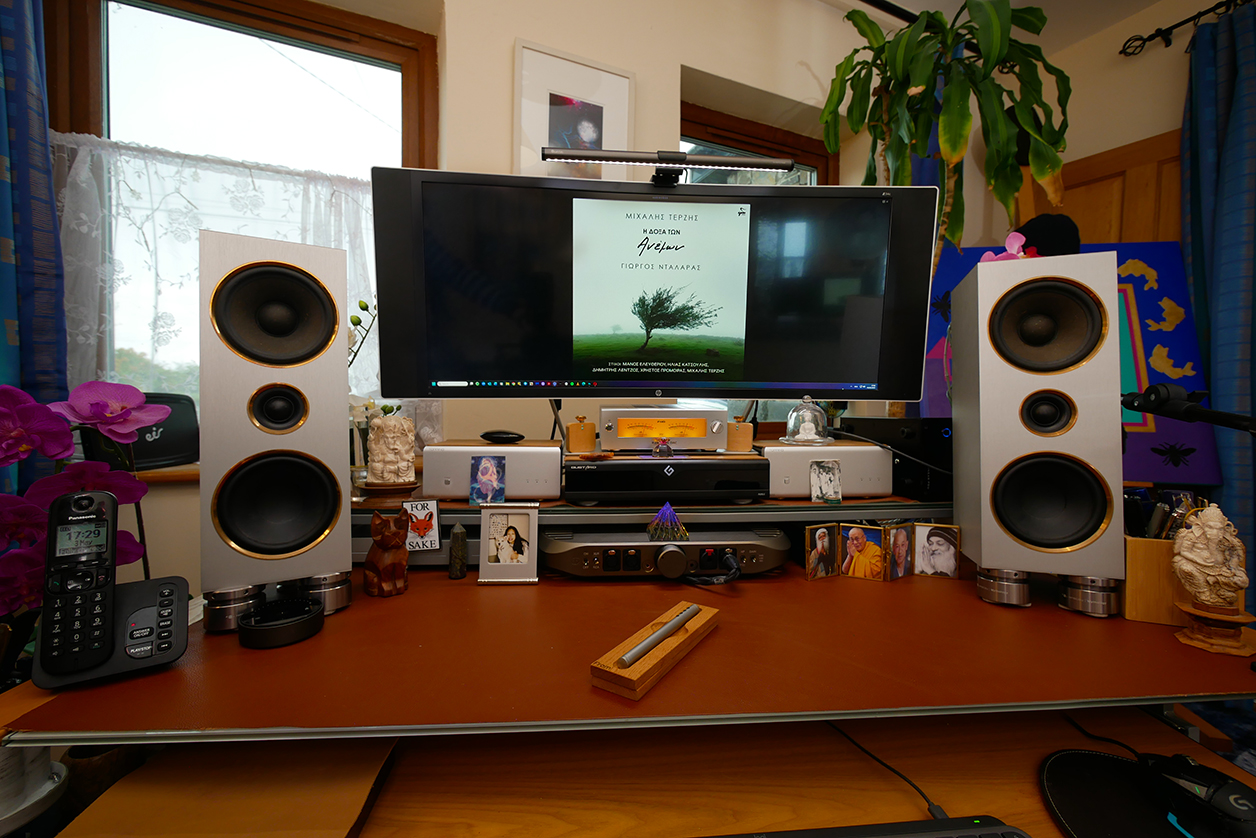
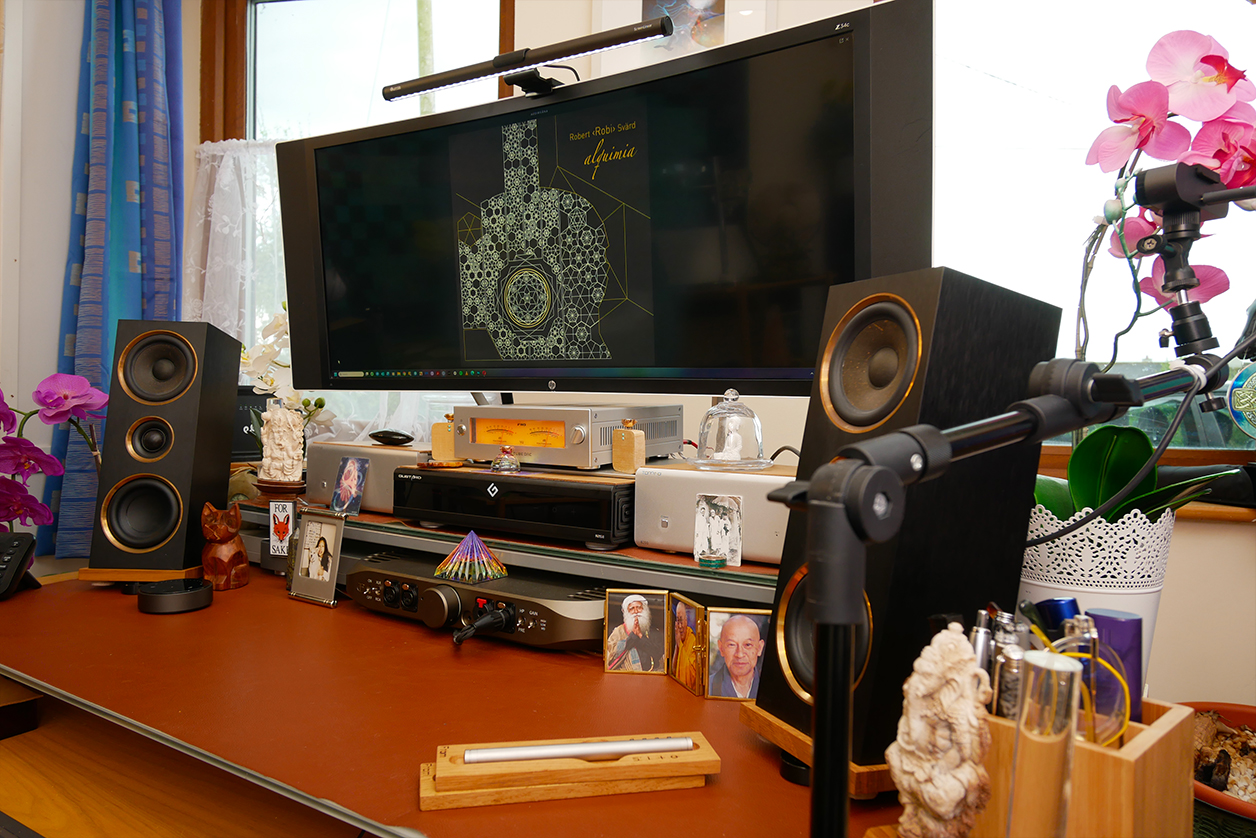
From global warning to harmonic warming. Finding myself with a weekend between gigs—one was published and repacked, the next loaner still in the air— I wondered. Might not FiiO's Warmer DAC enjoy a second dance with a partner especially chosen to complement its tube-buffered somewhat opaque voice? Frostier ancillaries plus thermionic padding could just add up nicely. I perused my well-stocked hifi bleachers where things go to await future turns. There I chanced upon a pair of Fram Audio active monitors fitted with very modest internal class D. I even had a 24V/5A LHY linear power supply to upgrade their stock laptop-style switching brick. Add analogue inputs and remote volume. The above is that very setup. As it turned out, even in the active speaker's most fat-free mode—there are three preset tunings selected by recessed rear switch—twin passive radiators per channel summed too heavy and bassy hence thick when fronted by FiiO's first tube DAC with its looser low end. Just so, I felt on the right track. Out came the active Fram monitors, in went the active Fram monitors; but now a smaller size so of inherently less LF and lighter overall tonal balance.









 Once again set to its most neutral tuning, now I was cooking with gas. Tonal fullness or chunkiness which such small drivers naturally don't prioritize had received a lovely filler injection without overegging. Being quickly impressed by this pairing, I cued up Mozart 1791, a Pierre Génisson album of original or re-arranged works for period clarinets—B-flat, basset clarinet in A and basset horn in G—plus orchestra. A particularly lovely arrangement is the closer, the "Lacrimosa" of Wolfgang Amadeus' famous Requiem in D Minor, here set for multiple clarinets, organ and Fender Rhodes. Despite looking wrong on paper, my ears call its cocktail of carefully blended timbres very tasty. Rather than prioritize separation from high resolution to parse the bigger tracks' orchestral forces, this simple system of Win 11/64 w. Audirvana + Qobuz ⇒ Warmer ⇒ Fram leaned into more autumnal hues for a gentler sonic massage. This wasn't an Iron Chef demo of knife skills on how to expeditiously feather, skin and debone my aural pheasant. This was closer to a slightly impressionist photo accomplished with a softening filter then post processing with Photoshop's vibrance, saturation and edge-feathering commands. As such it put up serious battle with expectation bias where basic class D, redundant A/D conversion and small if quality drivers plus €379 DAC all point in a rather different direction.
All it took to arrive was a deliberate lowering of standards hence demands/hopes which my usual hardware imposes despite best mental efforts to compensate. With my feature review already two months old by then, I managed to look at FiiO's budget tube deck with different ears. Or rather, the grey stuff between them weighed it on a modified scale. Same ears, same results but different context. Appropriate context is always key to best match a component with its ideal audience. What had arguably handicapped my first attempt was a competing DAC priced just €20 more which, between high-resolution ancillaries of taller ambitions than the Warmer DAC, had simply bedded in better. Even more ideal playmates than the above compacts would have been Andrew Startsev's active DMAX speakers which are tightly groomed for top time-domain performance so ultra clean, quick and highly linear. Their and FiiO's lack of attenuator simply require a preamp. That would have confused my self-imposed mandate to keep this brief Revisited feature basic. I still think that FiiO missed a trick by not fitting their Warmer DAC with a ladder-on-a-chip analog attenuator. Just so, many active speakers like my Polish stand-ins have their own volume control.
 From global to harmonic warming. Unlike the former, the latter has no widespread consequences for all life on this blue planet. Within our own four walls, we get to play harmless God and shape our constant sonic climate to taste. With FiiO's discrete R2R DAC, we can dial up tone colours and image weight should our present hifi assemblage fall short and its overall resolution hasn't yet outgrown where a €379 valve DAC voiced to be warmer can rightly play.
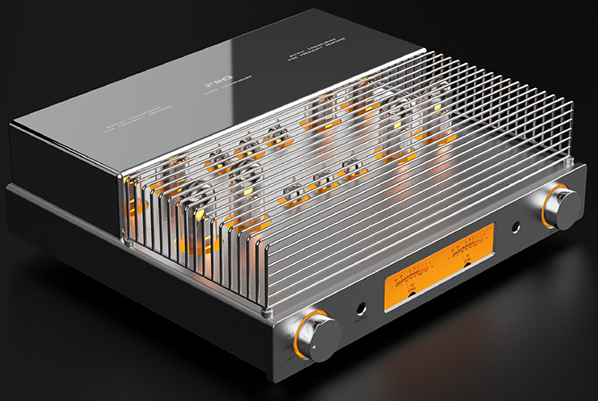
It's a fine place to confirm that the Warmer's valve adoption was merely the beginning of FiiO's commitment to retro models. Already on their books is this EA13, a 28wpc stereo integrated with NOS Sylvania PCF80/9A8 inputs driving EL34 outputs biased in pure class A. There are four RCA line inputs and a 6.3mm headphone output plus obvious VU meters.
If we forward our clock to 2030 to imagine what FiiO's current entry into the valve-audio sector will have done by then, we'll look back at 2026 when the Warmer DAC kicked off this adventure of introducing a younger streaming audience to vacuum tubes at very friendly pricing. As the first of FiiO's tube-audio crop, the Warmer DAC is surprisingly accomplished when slotted into appropriate hardware context and approached with correct expectations and just as importantly, needs. It does leave a clear sonic fingerprint like a constant action. If that's where our hifi falls short to welcome help, the Warmer is rather effective for a sticker only FiiO and Schiit seem currently capable of.
That demands respect and warrants acknowledgement.
Done!

FiiO's website
