 PP. In musical notation it means pianissimo. In audio chat it's push/pull. On this page it means parallel performance. Whilst I nursed a clear domestic preference, I imagine that an audience might still split. So I'll call this a sideways affair mostly on the level but not the same. The two chief divergences were incarnation factor—in-room presence and weight—and dynamic cresting. On both the thrice-powered Dazzle had the advantage. In contrast to its burlier demeanour and greater saturation from deeper black values, the AMP-54's lither tuning suggested greater transparency. Though it meant no deeper detail excavation, perception swayed by relative values would still think the Enleum more lucid and quick. Those into a more Nordic than American sound could give that the nod. In integrated mode so with its own attenuator offset to pad down the extra 13dB linestage gain, Dazzle would be less resolved because that gain stage remains in the signal path. To subtract its extra warmth and resolution loss, I bypass it to handle attenuation upstream. Even at the lower 23dB voltage gain, I still operate 20-30dB below my DAC's 4Vrms output. In that hookup the AMP-54R had no resolution advantage. Its lesser sonic mass simply suggested it. To the ear that amounts to fact not fiction¹. Still, I found it sobering that the Enleum didn't breach a new league; and reassuring that my recent Dazzle investment proved this airtight to attack by a thrice-priced very serious challenger. Though it should be redundant, the AMP-54R's control over the Qualio IQ speaker was obviously superior to its 25wpc stablemate. There's no question that the 4+ times higher power didn't corrupt the existing Enleum aesthetic though I do believe that the last degrees of airiness and top-end sheen were sacrificed at the polyamorous altar of driving far more varied loads. Having naught else on hand that would compete, let's now focus on the AMP-54R on its own merits.
_______________________
¹ I'm bemused by the insecure contingent claiming that our ears can be tricked to require measured proof for certainty. We're not listening through measurement gear but ears connected to a brain that parses data according to our individual neural wiring, habits and acquired listening skills. If that brain says that the treble shifted because we added a sub, then the treble did shift even though our treble from the very same tweeter measures exactly the same as before. In playback matters, perception is reality.
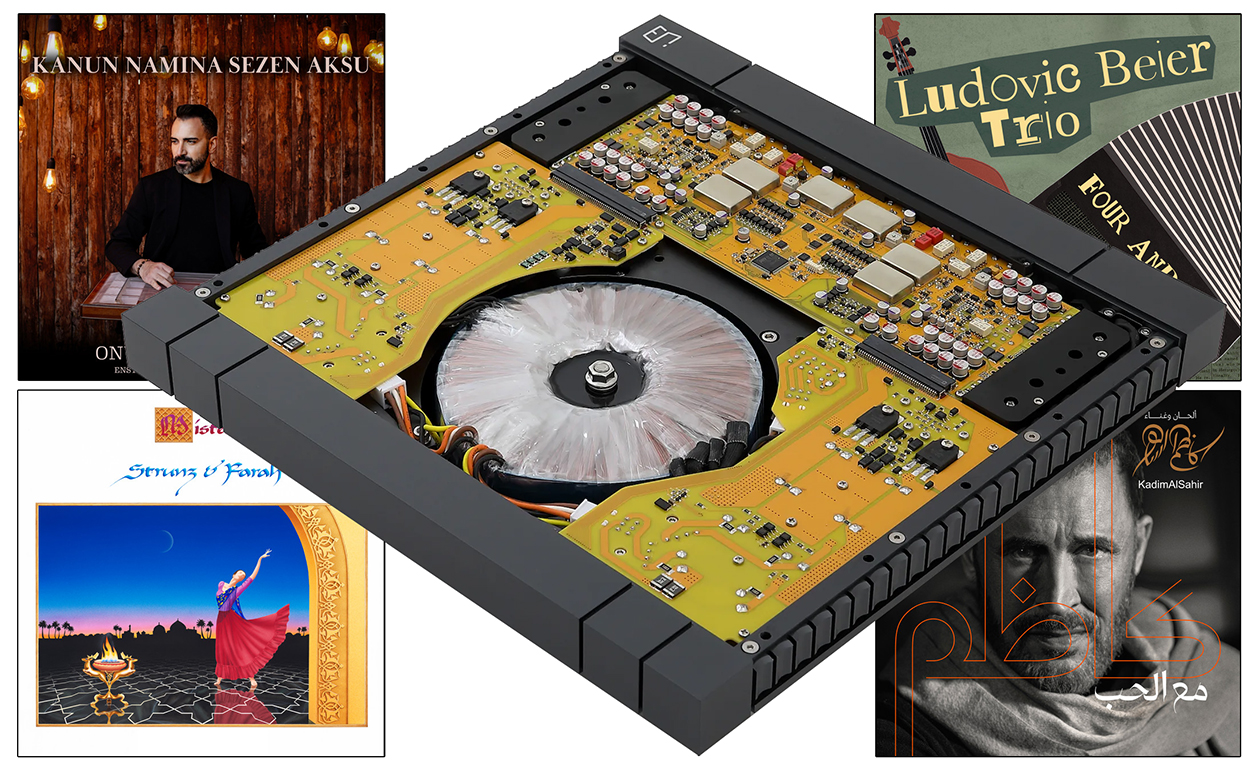
Long-time readers already connected dots. My prior amps—Kinki Studio's 250W EX-B7 monos—were quite close to how the AMP-54R bedded in somewhere between them and Dazzle. To my ears, whenever we lighten in-room substance, what takes its space is greater apparent separation. With it imaging feels more quasi-holographic. Once our inner eye calls image density more corporeal, it sheds its ghostly aspect of seeing right through it just as in real life, we don't see through solid objects which simply block what's behind them. To me separation and density sit on a teeter totter like children on a playground. As one goes up, the other comes down. This spills over into perceived speed. Less mass feels quicker. These observations had the AMP-54R feel inherently aspirated, quicksilvery, highly resolved and endowed with a heightened sense of 3D. That allows our inner eye to inspect a clearly mapped layered soundstage like walking a city quarter's many meandering criss-crossing back alleys. We can stop wherever we like, enter a café, look around, back track. Playback's visual aspects feel developed. With this amplifier fans of precise imaging and accurately laid-out soundstages should feel right at home. Horn freaks who like wind surfers pray for big waves could prefer more power and/or lower output impedance for greater current flow and with it, scaled-up breakers. This isn't about achieving high SPL. It's about the relative violence of peaking swells versus the calm patches. Here the focus is more on S-L ripples than XXL macro crests. To notice it takes coming down from something bigger. As that reference recedes, we forget it. My first auditions called the AMP-54R's inherent brief a plain success: to retain Enleum's house sound but scale power up by a factor of four. That was the brief. That's what the AMP-54R delivers.









 Let go. It's a proper woman's demand when held by the wrist. It's also what speaker cabs are supposed to do; let go of the signal. It reads like an obvious task but doesn't guarantee. Here dipoles like my IQ excel because there's no box talk. It also applies to amplifiers. Those to let go quickest express the best timing where nothing smears, ponders or lingers. Transients rise steeply. Gaps between rapid staccato sounds are as open as a clean blade-comb's teeth show perfect gaps without gunk. Decays remain intelligibly attached to their origins to not congeal. The AMP-54R rules that parameter. Listeners keenly attuned to timing and phrasing will quickly notice. But not everyone twitches on the topic. Many worship at the altar of phase shift, box talk and late-arriving bass to call that warmer blurrier thicker milieu more musical. They might find Enleum's diction too precisely enunciated. They could prefer more of a brogue to prioritize charm over intelligibility. All is fair in love. We must identify hardware which best meets our sonic and musical tastes. Will a Jazz drummer and singer of Schubert lieder trigger to the same stimuli? If curated
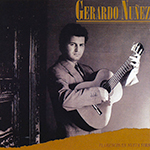
  deliberately not inherited, won't their systems express differing viewpoints? On the timing score I imagine a Jazz drummer very happy with the AMP-54R's let-go quickness. Likewise for a masterful Flamenco guitarist executing finger-picked tremolo. Learn about the technique here. A guitarist will have practiced manual dexterity for years to play such rapid quintuplets with impeccable precision. To hear them fully, our amp's speed and cleanliness must operate at an equally elite level when our transducers of electrical impulses to mechanical motion called loudspeakers inject their own limitations. For an example with tremolo passages in a solo granaína from Gerardo Nuñez, click on his album. The best part comes at the end. If you adore such fare as do I—the Turkish qanun celebrates its own tremolo whilst the Romanian cimbalom mirrors the effect with rapid mallet work— Enleum have your number and address. Best open the door when that bell rings.
 Here's a truth to cause angrily slammed doors if phrased poorly. Recordings strongly compressed into a wall of sound, musical styles of modest demands and examples of low artistry benefit far less. That doesn't make for bad music just an appropriate tool for the job; and what's overkill. It's not that the AMP-54R is too good for thrash metal or electronica. There's no entrance exam to ace before it powers up; no promissory note to sign that we'll only feed it elitist fare to exercise its particular skill set. It's more like questioning an expensive car's acceleration and top speed when neither our roads, laws nor driving skills can exploit them. Certain tasks don't demand specialized skills. A dishwasher doesn't need a doctorate. That's not snobbery, just calm reason. Playback comes in all shapes and sizes whose practitioners apply vastly different skills and expectations. The AMP-54R isn't just priced high or styled hard. It's about advanced sound well beyond casual needs. Digging into its deeper layers is best done with music and recordings that tax it with demands. We already covered aspects I shall put in the drawer labelled 'speed' as long as we're clear that it won't play a 3'57" tune in 3'45". Speed is about timing, prompt starts and proper stoppages. How that matters, this next video shows.