The entire last page was about difference. Depending on sonic preferences, tables can turn to put the lighter lither Kinki flavor forward. Calling it an advantage just means we favor it. It's how any list of attributes includes its own flipflop. That just wasn't the aim when I asked whether my monos held any unambiguous advantage other than represent the sound I'm used to and elected based on budget and what I knew. But there was one area where I'd possibly give the Kinkis an unequivocal nod: low SPL. Whenever we increase volume, 'better' is instantaneous. Going the other way takes adjustment time. First we notice a certain loss of density, saturation and intensity. But in seconds or minutes, our ear/brain will adapt to restore it. Doing this in successive steps can be most instructive. Just how far can we throttle back our SPL and still feel musically connected? This exercise can become a kind of meditation that sharpens our hearing. We must be really present to keep all distractions at bay. Once we get to whisper levels, our thoughts could seem louder than the music. Unless we can relinquish thinking, now we may have to give up and turn the volume back up until it again crosses our sensitivity threshold. I enjoy doing this late at night when Ivette is upstairs reading in bed or possibly falling asleep. It's not full-frontal physical listening at all. Instead it's a form of very active daydreaming. It's very fine and fragile, purely internal, super intentional and often an entry into the higher mind which doesn't think but just sees in quietude into vast spaces and strange feelings. For such quasi-cerebral listening I find top separation and transparency key. That's because rather than solid sheets of sound, now it's gossamer veils and vapor trails I travel through. Here the comparatively more light-filled less earthy monos maintained my connection farther down so into lower SPL than thicker denser Nemo. Did this mean that Nemo came on song later on the dial? I'm not bullish on that idea. Someone into more physical listening could feel the opposite. They might explain that being denser and heavier, Nemo allowed them earlier entry into the SPL elevator. So perhaps this point too isn't unequivocal at all but just another measure of difference rather than better or worse?
That's not woke equivocating. Like Orxan Musayev does so skilfully with varying reeds in this happy tune, it's putting myself into other shoes. Of course I still bring myself to make that a rather limited exercise. Just so, I have more than one listening mode. That makes it easier to feel certain of many more which aren't part of my vocabulary. Let's now segue into tone for which this track too makes an obvious statement. The very same musician can blow quite different horns to elicit a variety of timbres.
If there is such a thing as an amplifier's tone i.e. its default weighting of harmonics, the transient-bloom-sustain trinity and relative amounts of air vs substance, what was Nemo's?










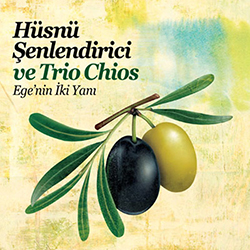 This question netted very definitive answers; from the kitchen. Here olives arrive either pitted or not, green or black, plump or wrinkled, glossy or matte, juicy or dry. Now think of individual tones as enormous olives. In that scheme, Nemo's were jet black not green, filled with their original pits, very plump, smooth and matte. Tunings of more airiness and upper-register energy can direct more of our attention to the outside of tones. Now they glisten with sheen, even sparkle with gloss. Black olives delivered in oil have exactly such gloss. Nemo's tonal equivalent didn't. In that sense its tonality was a dry olive. [The brilliant album at right uses a paired green and black olive on the same branch to indicate gorgeous unity between its Turkish and Greek musicians; highly recommended!]
What stepped forward instead was a sense of tones having internal centers or fill. They weren't hollow. The pits were still in to give an aural equivalent to that delightful resistance one feels when biting into any firm bulging fruit. Surface textures were smooth not slightly suede as class A with 2nd-order THD elements can exhibit. The upper-bass/lower-mid transition felt especially powerful which added gravitas to pull away from any explicit treble. This was back to being more hung than floating. It differed from a number of ultra-bandwidth direct-coupled amps which are more illuminated from the top down thus feel subjectively quicker. This lower center of gravity pooled into the already mentioned quality of relaxed unhurried majesty. It also explained how that blackness in the bass informed the higher ranges; and how that built a rich earthy yet clearly differentiated sound so very easy to love. Even though Nemo contributed to a highly resolved properly mapped and sorted reading, the core impression wasn't about 'seeing' and prioritizing micro-detail inspection. The core impression was rich comfortably dry tonality, potent rhythmic certainty from very developed upper bass and an easefully robust in-room presence of a most materialized sound. That never bared its teeth to bite or blister. Any effects that rely on a tipped-up tonality or more turned-on top end to materialize didn't come to the fore, be it close-mic'd plucked arpeggios, bowed violin flageolet, hoarse power vocals or crashing cymbals. None of it had Nemo give up any composure whatsoever. Neither did it fall asleep on mellow but saucy fare like this "Gülistan Tango" with its unusual mix of primas violin, cymbalom, bass and Turkish vocals. This would be lovely live music in a typical Vienna coffeehouse, Apfelstrudel far from optional.
On matters of weighting between transient, bloom and decay, I thought Nemo perfectly centered. It neither front-loaded the attack nor elongated trailing edges like some single-ended valve amps can. I didn't hear what I'd think of as dominant 3rd-order THD which gives a more piquant incisive character. Taking note, I realized that I'd subliminally expected its presence to factor. So its absence registered as surprise. It meant that even more trying fare like some of my high-speed Balkan stuff didn't wear out its welcome; that thinner Azerbaijani studio productions with Korg synths not real pianos were more agreeable to let me enjoy them for their peculiar vocal stylings.