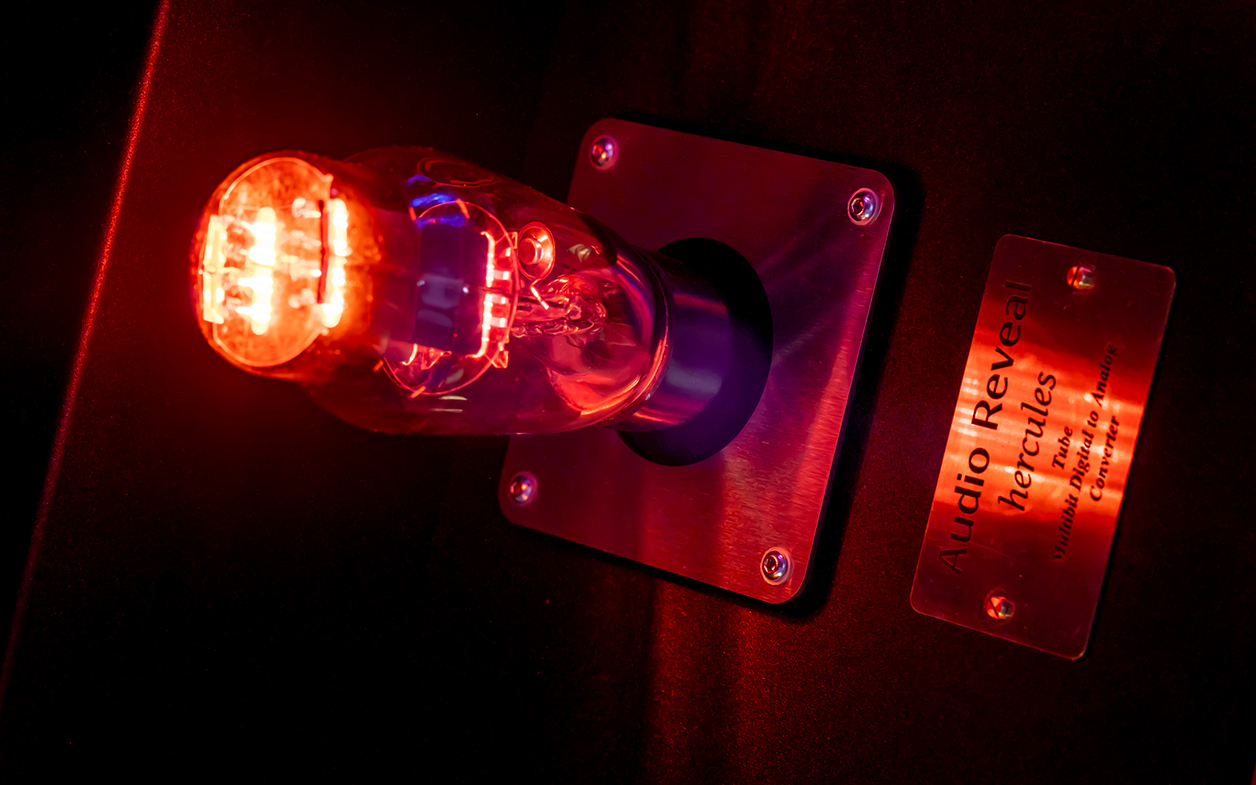
It is said that stock DAC tubes are mere placeholders for fancier equivalents. With Hercules I'd postpone any such changes because its stock tube set marvellously supports its inherent multi-bit traits. When I transferred my own rectifier and 300B to Hercules, it sounded noticeably faster, more firm, illuminated, energetic, expansive and open. It also moved images closer, expanded dynamically and slammed harder. The scales tipped toward increased clarity, momentum, flexibility and spatial presence with a stronger sense of motion so athletic clearly sporty qualities without any compromises to high-class timbre, euphony or smoothness. Hercules seemingly gained extra horsepower but also grew a touch leaner. Hence a bit of its fetching atmospheric heaviness and darkness evaporated. I mention this to emphasize that as so often, this was no case of exclusive gains. Hercules with its stock tubes sounded so engaging and endearing that for most of its stay I didn't bother swapping them. When that day finally came, Michal's DAC got closer to the Pacific's profile yet still retained a fair share of its multi-bit charm. Just to be clear, our pick of DHT makes quite an impact. Rolling them is a major adventure on its own. I highly recommend doing so just not before getting properly accustomed to today's starter tubes.
There is no shortage of very good affordable DACs. Denafrips, Laiv and Holo stress that point very well. Against their kind Audio Reveal's Hercules may seem like a painfully expensive, functionally sparse niche relic without justification in today's world. No matter. This affair neither competes with current trends nor is it obliged to. It was designed to execute just one task with character, class and rare means. That parks it outside the digital mainstream, a mission the Audio Reveal Hercules accomplishes masterfully. It stands tall and fantastic where it matters. It's luxurious, unique and priced to match what it represents and delivers. As a fan of the breed, I'm very glad that it was made and very impressed by it. If you are big on rare DHT-infused twists in the digital domain, you will be too.
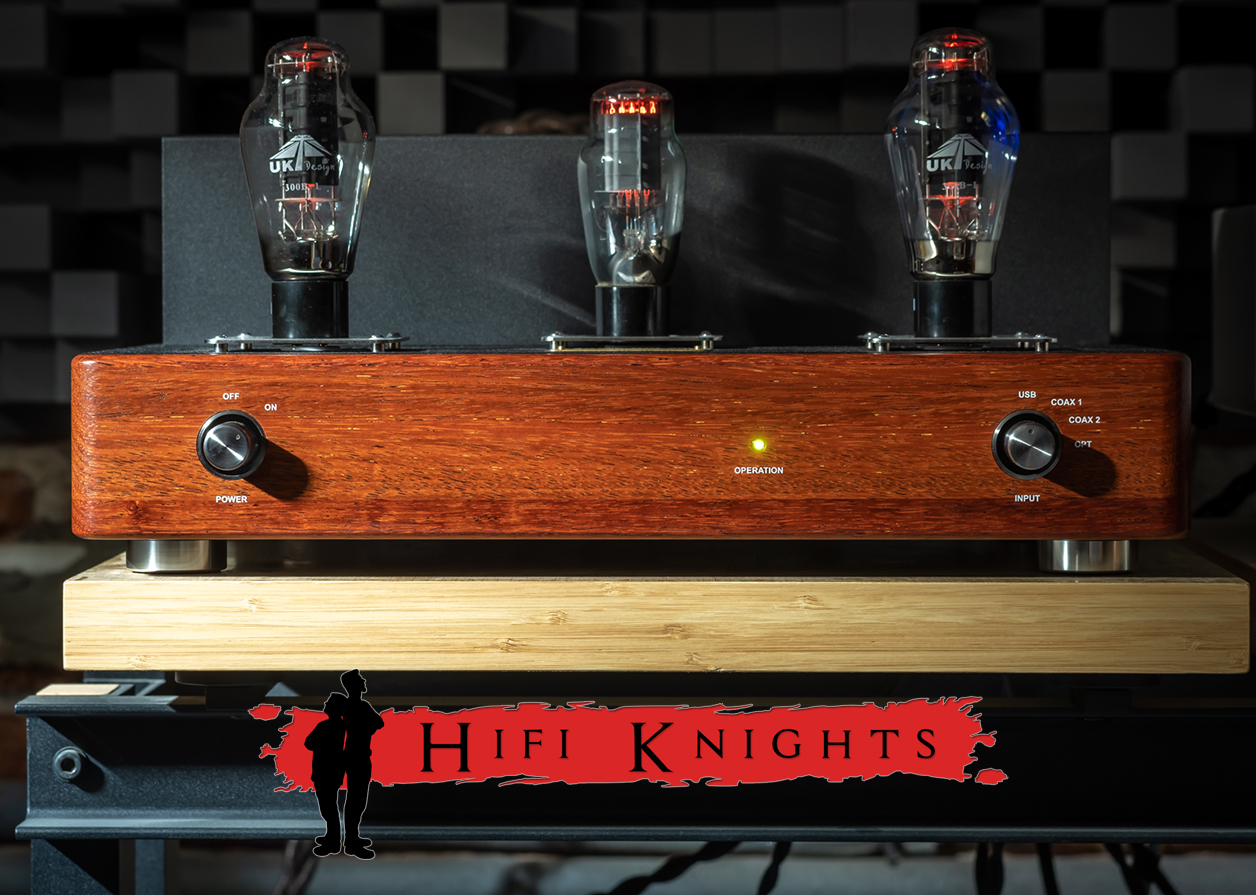










Postscript. By mid December Michal Posiewka not only was ready with the ΣΔ module but had already installed it in several units. One awaited me at his local dealer some 10km from my listening den. It's identical to the R2R version other than the converter board so runs the same Amanero USB transceiver, power supply, output stage and enclosure. Only the writing on the plaque changes as does a small sticker on the rear. And of course this version does native DSD. This is one of the key reasons for its existence. The second is as different sonic profile. So the choice between versions should theoretically narrow down to the music we imbibe most. Those who listen only to DSD have just the one option. Although I appreciate DSD for its sound quality, at the end of the day the format accounts for less than 5% of my streaming's entire musical warehouse. If my DAC couldn't play native DSD, I'd lose no sleep. Onto the A/B. I found it extremely interesting to directly contrast two virtually identical very expensive DACs. Such opportunities don't come around a lot. To level my playing field, the second Hercules carried the same tubes and more than 100 hours of playback under its bonnet. The two connected to the same power distributor via identical power cords then interconnects to my preamp. Switching from one DAC to the other remotely changed an input and reseated a USB cable. Most importantly, both decks remained powered up and after each swap my streamer instantly shook hands with the new Amanero input.
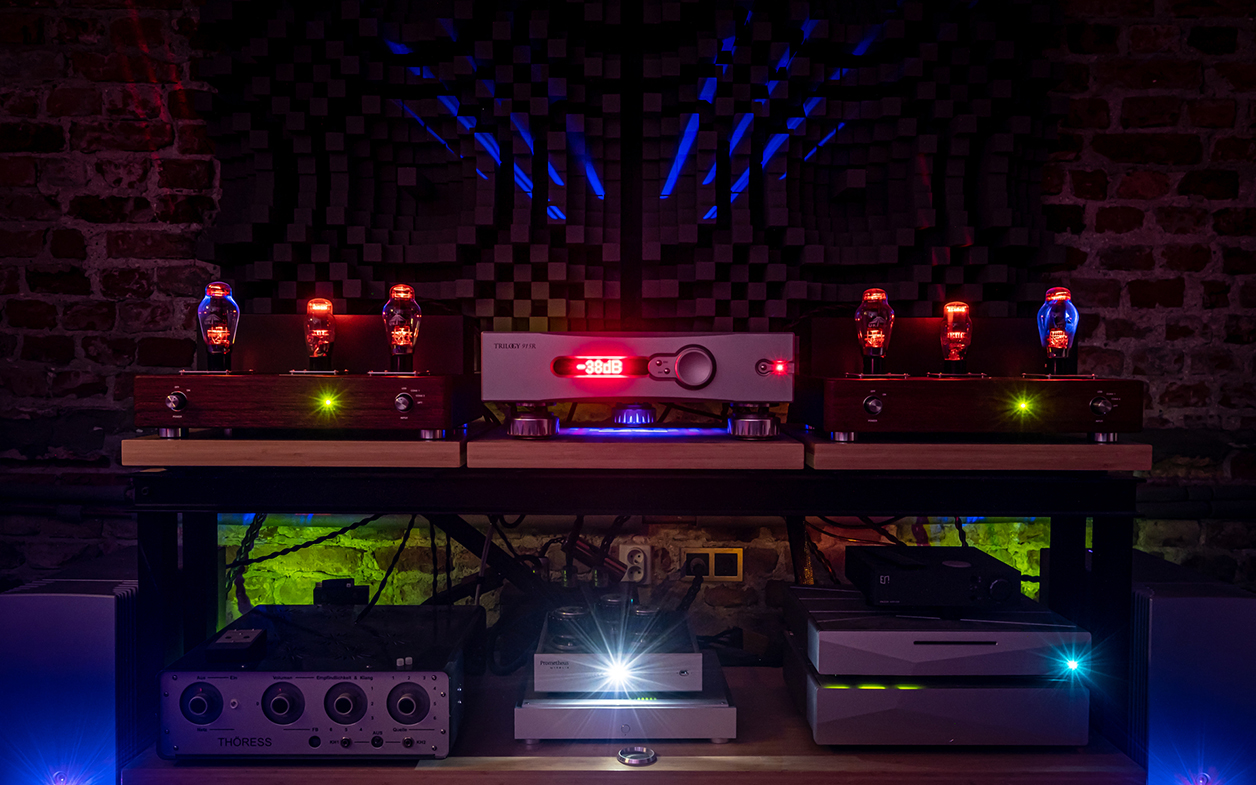
A mere second after the first swap I chuckled. I thought of deniers who still think that all digital sounds the same whilst imagining their reactions upon observing my experiment. That would have been hilarious. I entered this comparison expecting the ΣΔ version to be quicker, leaner, snappier, more defined, direct and spatially open. That wasn't the case to the point that I may actually revise my stance on any R2R 'house sound'. The ΣΔ DAC proved geared mainly for relaxation, smoothness and linearity. It checked all the boxes to a high standard so neither behaved exceptionally gifted nor lacklustre on any specific point. All in I'd call it more transparent. It did well but its personality struck me as a fair bit more tame to leave more room for my system's other components to flaunt their own character. In the context of the ΣΔ Hercules, its R2R version felt superior on dynamics, spaciousness, agility, heft, authority, directness and overall impact. It slammed harder, closer and struck me as significantly more intense. As such it brilliantly slotted itself into the DHT-infused DAC profile I so dearly enjoy. The ΣΔ Hercules did this far less. That's the general lay of the land and my takeaway. I'm not calling the ΣΔ version inferior on high RPM counts like speed, articulation or happiness to rock out. It does that job well but still felt rather calmer, less articulate and tuned to please by sublimation not sonic stunts. Systems which already are plenty fast and intense may find this very useful. If DSD is most of what they do, that's even more true. As a devout sucker for the usual DHT DAC voicing built upon immediacy, intensity and a sort of wickedness meanwhile, I'd go for the R2R Hercules, hands down.
Publisher's comment: Dawid's review also spawned this very brief industry feature.