 Our Italian amplifier proved exceptionally potent in the bass. Nicolas Jaar's "Colomb" let it demonstrate all its power with bass lines that were solid and resolute. Massive Attack's "Angel" was similarly impressive, with the very lowest frequencies really moving my woofers. Compared to my ~€7K Norma PA-150 or €11.5K Chord Ultima Integrated, the Maestro 2.0 felt even more confident to push the sub bass harder. The Norma validated itself with a smoother softer take whilst the Chord promoted more jagged angularity and clarity in trade for being slimmer. The midrange of the Audio Analogue was a highlight and created almost ghostly transparency with a high level of neutrality. Voices like those of Jacintha or Erica de Casier shone crystal clear, an effect particularly evident on Jacintha's "Danny Boy" from her Here's to Ben album. I rarely heard her sexy voice so clear and present, rarely so gently embedded in the overall scene. When the band starts, it surrounds the voice like a warm summer rain, allowing it to glow rather than obscure. Perfect! This transparency had me effortlessly perceive the nuanced overtones of string instruments without the sound ever seeming analytical. A slight prioritization of transparent openness over richer opacity felt like a conscious tuning decision to portray the midrange with strong realism. In the HF, the amplifier was a chameleon: smooth as silk when the music called for gentleness, crystal clear and down to the bone where it counted. The Italian amp elegantly danced on the fine line between restraint and precision, demonstrating an impressive ability to adapt to any musical material. Whether it were delicate violins, silvery glittering cymbals or cutting synthesizers, the Maestro 2.0 remained confident without ever getting intrusive, shrill or annoying. Instead, it gave my tweeter an honest brilliance that never tired.
 So the Audio Analogue definitely succeeds at fine detail on the highest level even if not explicitly so. Instead of counting peas and making us hear the grass grow, the Italian master elegantly integrates micro information across the bandwidth into one coherent picture. A great example of this is "Elephant" by Tame Impala as a track that bursts with nuance. The 2.0 preserved the character of each instrument. Its elaboration of background textures felt effortless. When so much happens at once, there is a risk to overload the soundstage especially when a developer elevates ostentatious detail over naturalness. Here the Maestro 2.0 gave the all-clear. It proved that true mastery lies in proper balance whereby wealth of detail never becomes an end onto itself but remains subservient to the overall musical presentation. The fact that it succeeds was probably due to the proverbial blackground. Such a rich 'nothing' is truly rare and reminded me of a fully upgraded ASR Emitter with battery power supply. Regardless of whether it were the finest dynamic nuances or brute outbursts of power, the Maestro 2.0 was up to either. Yet macrodynamics were particularly impressive. With large orchestral works such as
  Gustav Holst's The Planets: "Mars, the Bringer of War", the amp showed real verve and gusto. It conveyed the orchestral force with a power and scale that made my Norma amp look a little embarrassed. At the same time, the Maestro 2.0 controlled its impulsiveness rather than indulge in boastful displays of mayhem. Fine dynamic detail remained clearly present even if the compatriots from Cremona looked a little more closely at the minimal volume fluctuations of Chilly Gonzalez's piano on the album Room 29 to celebrate them with a little more devotion. The Maestro 2.0 showed in a wonderfully unpretentious fashion just how essential impulses and transients are for realistic playback. The interplay between rises and decays was particularly impressive but again unobtrusively so. The Maestro 2.0 reproduced every beat, every percussive note cleanly without splashiness but very natural decay. The shimmering and clacking sounds in "Bubbles" on Yoshi Horikawa's album Wandering virtually jumped from my speakers without feeling self referential. Compared to the fast-paced Chord Ultima Integrated, the Maestro 2.0 may seem a little less spectacular but for it, more mature.






The soundstage of the Audio Analogue Maestro 2.0 is as impressive as it is flexible. In terms of width, the stage ends just next to the speakers and creates a natural not overly inflated impression of venue. In terms of depth depending on the music material, the sound either unfolds far behind the speakers or approaches the listener well in front of the speakers. Gershwin's Rhapsody in Blue demonstrated this ability. All instruments were precisely positioned in crystallized outlines and the stage unfurled deeper behind the speakers than with most amps I know of, including my own. The QSound effects on Nitin Sawhney's album Broken Skin floated freely as they should. The Maestro 2.0 obviously delivers excellent phase coherence to ensure that each recording retains its specific spatial character rather than paint them with the same brush.
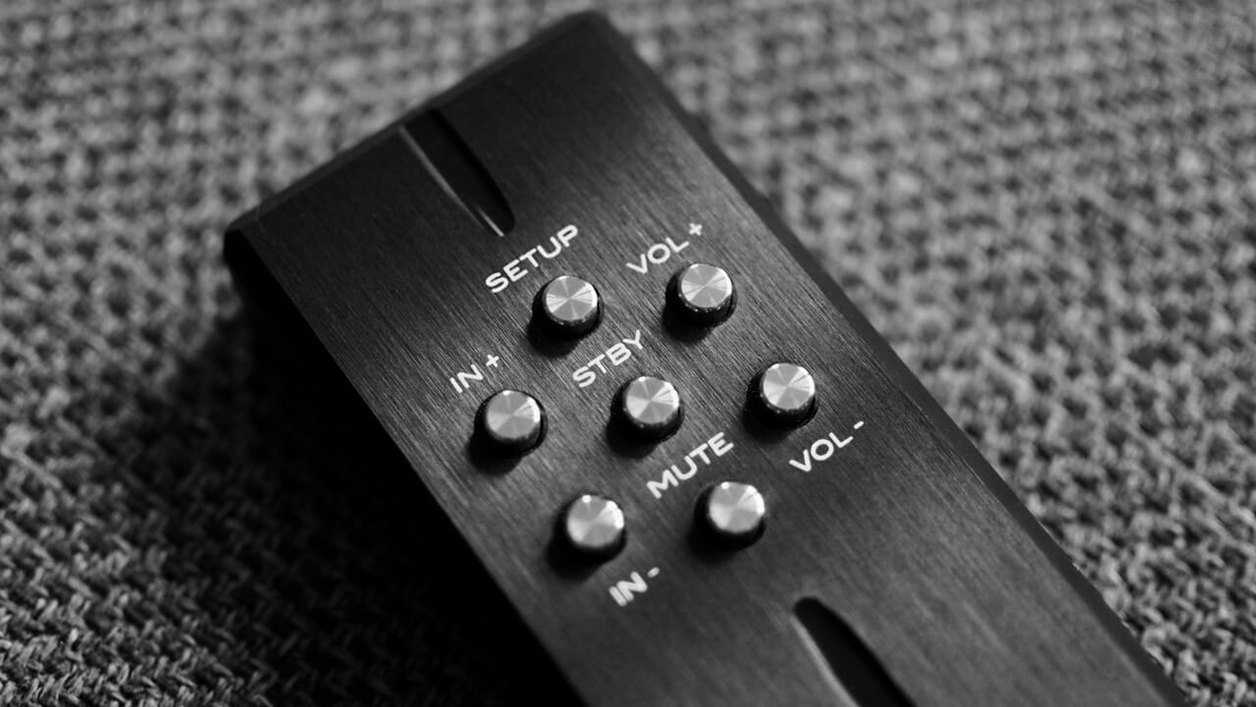
So the Audio Analogue Maestro 2.0 lived up to its name. With great workmanship and what despite its raw mass remains an unobtrusive appearance, the sound felt as neutral as it was natural. It should convince demanding music lovers who already are past their Sturm 'n' Drang phase. The Maestro 2.0 is a confident argument for a high-quality integrated amplifier perfect for extended listening sessions. The strikingly pure sound is exceptionally pleasing, the much-vaunted black background against which everything arises extremely clean and clear. The focus on unspectacular natural sound combined with potent drive compatible with temperamental loudspeakers makes this an exciting option for purists looking for a definitive solution. Our speakers shouldn't be too bass-heavy as otherwise the raw energy of the Maestro 2.0 could get too much of a good thing in the lowest bass.
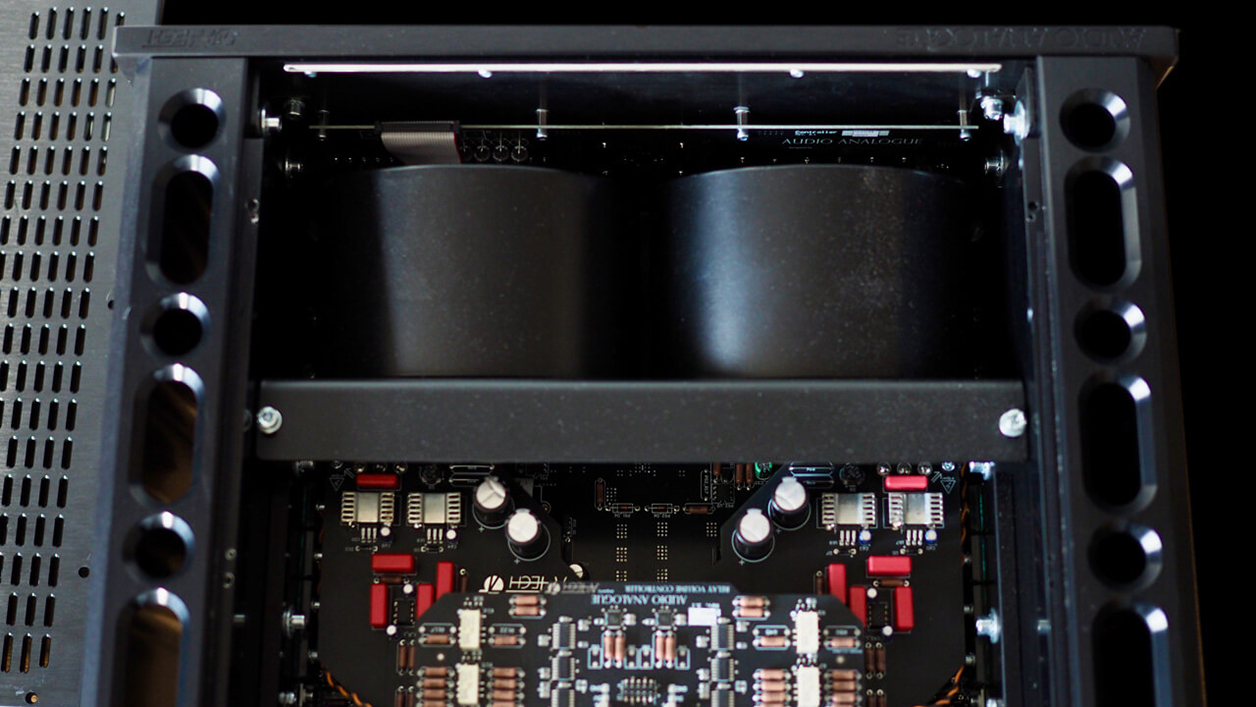
The Tuscan all-rounder is perfect for Jazz and Classical, sheer poetry with sophisticated electronica and not put off by harder genres like Rock or Metal. For a do-it-all integrated amplifier with no frilly airs or graces sitting atop the mountain for workmanship and sound, the Maestro 2.0 may not be cheap in everyday terms but is worth its ask.