Next I put the A5 on the desk. Its confident bass creates more warmth and even stronger macrodynamic impact which I immediately rated as plus points. Nevertheless I'd not prefer the A5 over the A4 primarily because of its more mature bass but because of its tonally more balanced less present tuning. Voices and guitars sound a bit more sonorous. The overtones of snare hits seem a bit toned down by contrast and the entire treble gives up the A4's relative cheek. I still hear a slight increase in loudness to mellow the midband out a bit. The improvement in midrange representation and shift from a somewhat intense to a more mature sound outweighs the sheer increase in bass power. For other sound criteria, what I already described for the A4 basically applies to the A5. The similarity is clearly audible. The A5 is particularly pleasing on agile dynamics, high resolution with only slightly reduced subtlety and respectable level stability. Whilst I would never swap my costlier Abacus or Elac for the A4, I could romance the A5. The Elac have a great design and look fab on my walnut desk but are inferior to the A5's sound. However, I am only too happily charmed by the fragrant subtlety, the even more coherent spatiality and great yellow finish of my Abacus although experienced pleasure listeners may find its unadorned linear bass which naturally doesn't rock all that much in such a small box to be too fleshy. So I'll stick with my analogue Abacus as the clearly more audiophile version. At €2'690 with the Keces DAC doubling as a great headphone driver, that's simply a Goliath on coin. Argon's David acquits itself well and comes with its own streamer which my desktop happens to not really need. Depending on taste, even demanding keen listeners on a tight budget can be happy with the A5 in an office. Let's now move into my 30m² room, place the speakers farther than a meter from each wall and check how the Argon family performs at 2-3m.

Obviously the A55 produce the strongest bass. But they also sound the most neutral on tonal balance. I'd no longer call this a loudness tuning. True, vocals could still be a bit more colourful, sonorous, delicate with even more organic flair but that's almost presumptuous considering price. It's more due to the fact that I daily deal with system configurations where cables cost more than the entire A55 system. So Herr Dames, relax. With both feet back on terra firma, I'm actually certain that listeners shopping for a speaker in this price range would be particularly impressed by the vocal reproduction. That's provided they prefer a crisp fresh midrange over a particularly full-bodied, warm and sumptuous one. The whole thing sounds a bit warmer via the analogue input but again not quite as crisp and precise. With the A55 I thought this more matter of taste to prefer entering digital.











 The A55 Wifi has the same resolution as the monitors so isn't particularly airy but very good at its core. A feature that I see as a character trait not something to critique especially with the A55? It plays to the point and sounds transparent, lively and uncomplicated. As long as you don't count yourself among warm soft listeners, the A55 are suitable for long-term use as they sound sufficiently clean. Even pretty scratchy home-studio recordings like John Frusciante's Going Inside—probably the rockiest song ever written about meditation—remain fun to not get too bright, harsh or thin as long as you use proper power cords. The A55 were finally subtle enough to show me the differences between my local Melco N50-S38 hard-drive library and Qobuz cloud files. The Melco was less grey, more silky and ultimately more organic. Despite all this, the A55 produces a beautifully lively sound which sums the very responsive dynamic behaviour and extremely good imaging with great performer localization and instrument manifestation. The A55 is really brilliant at staging and dynamics! Only vertically does the virtual venue not extend too far beyond the 85cm short columns.
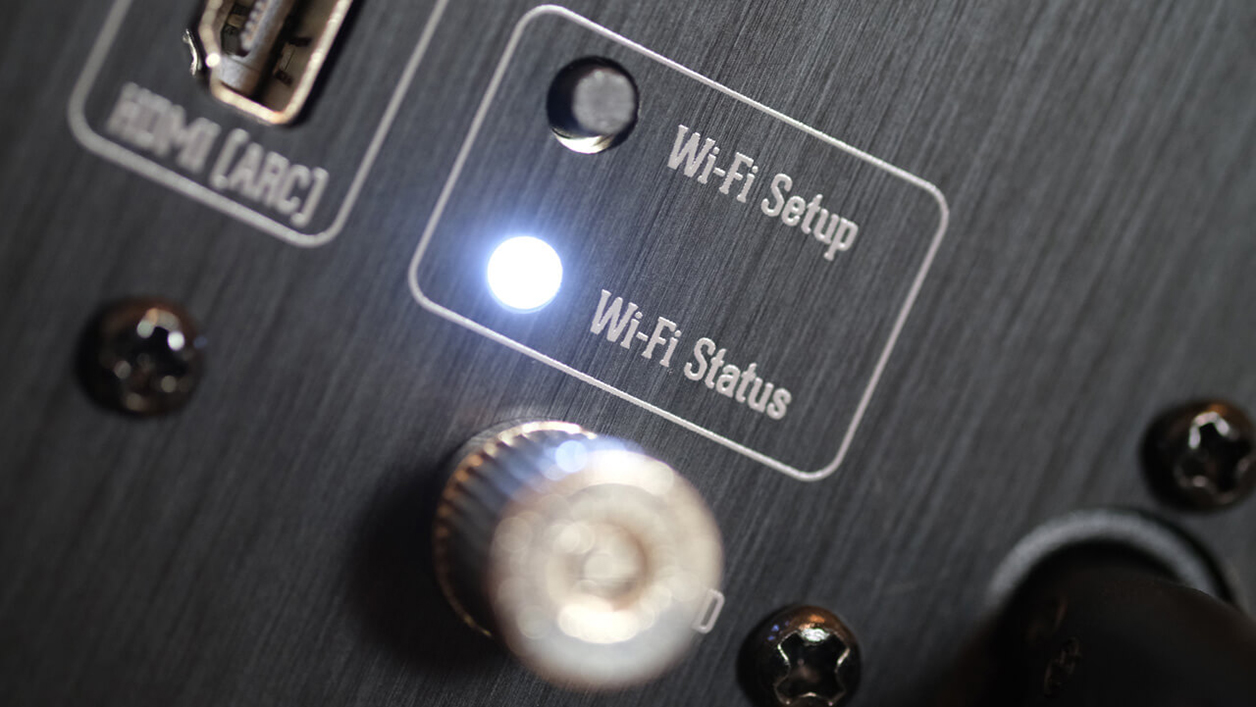
The A55 also stands tall for its absence of bass boom. Again I'd describe the tuning as neutral with minimal irregularities in the upper midrange and at the most microscopically lifted LF. The Argon towers impress with a bass tuning that's astonishingly mature yet not at all hyped. Almost every type of listener should appreciate that. The bass reproduction is the highlight not only in view of the compact size. It's perfectly integrated, well contoured without any blur or bloat and only a little less textured and differentiated than more expensive speakers. It could flood my 30m² room with 3.3m ceilings without a problem. The bass is so well adjusted that it should hardly overwhelm even smaller spaces but nevertheless fills larger rooms so well that you inevitably think of larger speakers. The small columns also surprised on SPL. The A55 is more than enough to get in trouble with civilized apartment neighbours and almost suitable for real parties. Even at whisper levels it sounds surprisingly full especially when micro adjustments are just a click away with the very good remote. The only nit is that when fed analogue, the auto-off threshold can kick in at low SPL.