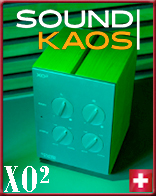
The I-880 packed all of these traits to perfection. Yet my reference set biased deep into 55/200wpc class A/AB sounded radically different. My sound|kaos Vox 3afw stand mounts demonstrated how far apart these amplifiers were. The tall British hulks were calmer, less impactful, rounder and bloomier. Their imaging was lazier and slightly hooded particularly on rambunctious fare. Rapid synth bass pulses felt denser and more anchored but also blurrier. Not only was the overall milieu noticeably darker and heavier, speaker/room interactions spoke louder. This wasn't surprising. I'd seen it coming from a mile away. The Swiss monitors on the I-880 produced very different results. They behaved leaner, more illuminated, outlined and energized, spatially grander so less intimate and cast more focused compact images. The Aavik stripped back some meatiness and felt spatially larger and more distant. Fellow enthusiast Tomek visited during my first comparative session. Although the I-880 had him impressed, he clearly fancied the Vox fronted by the beefier rounder Trilogy set. What's more, he was puzzled by the disparity between these amps. Both were class A so their vastly different profiles on the same load he couldn't quite wrap his head around. He wondered where all of class A's usual density went when the Aavik played. So I explained damping factor as ratio of load to source impedance. The higher the amplifier's output impedance, the lower the damping factor. That tends to sacrifice speaker control. To simplify, lower damping increases bass quantity but softens response which routinely telegraphs as more round, bloomy and dense. Conversely, high damping factor means less amplitude but more authoritative, defined and impactful bass.
Most speakers prefer large woofer membranes under max control. My sound|kaos minis diverge. When their rather small force-cancelling twin woofers are damped too much, they diminish in reach and mass. Hence the Swiss work best with zero-feedback high-Ω amps which won't belittle their low end. Aavik's output impedance was likely too low for the Vox to manage ideally grounded bass. Of course most speakers react in the opposite way which the I-880 correctly anticipates. It's one reason why it works so brilliantly with Børresen speakers. As a niche type, the sound|kaos benefits most from unusual companions like Trilogy's monos with their nearly SET-like resistance. At least that's become my conclusion after living with this speaker for three years. Although many would find the 995R more synergistic with the Vox, it didn't make the Aavik inferior. Systems make our final sound, not individual components. In this context the Vox was electrically happier with the Trilogy amps but that was about to drastically change and escalate into a sound I'll remember for a long time.










I fully understood why my colleague fancied the Trilogy/Vox combo more. Larger images, intense colors, warmth, density and sweet treble dominate his priority list over ripped outlines, speed, articulation and slam. Tomek's playlist and mine rarely overlap. My daily diet includes unplugged instrumentals and vocals as well as genres heavy with synthetic bass beats. Even though the I-880/Swiss combo was fairly lean and shy on sub bass, my ears heard a few items bettering my own set particularly on edgy fare at high SPL. Although on power the Dane was clear overkill, my compact monitor immediately tapped those reserves for noticeably quicker, more impactful, energetic and potent upper bass. This was obvious on Tool's "Jambi" and "Feel Good Hit of the Summer" by Queens of the Stone Age. The British set portrayed the front row close and personal so images within that space were rather tall and pushed forward to increase intimacy. The Aavik introduced some distance to maintain more realistic proportions. That developed the soundscape uniformly left to right and to my great surprise superbly on depth. Still, the main difference between amps was how the Vox responded. With the 995R the feel was round, soft and relaxed if a touch lazy so with some delay while the Aavik's spatial propagation was wilder, quicker and dynamically more boisterous. At this point Tomek and I had a firm idea how the I-880 went about its thing so moved to a speaker far more tailored to it. As far as synergy goes, this second load proved quite ideal.
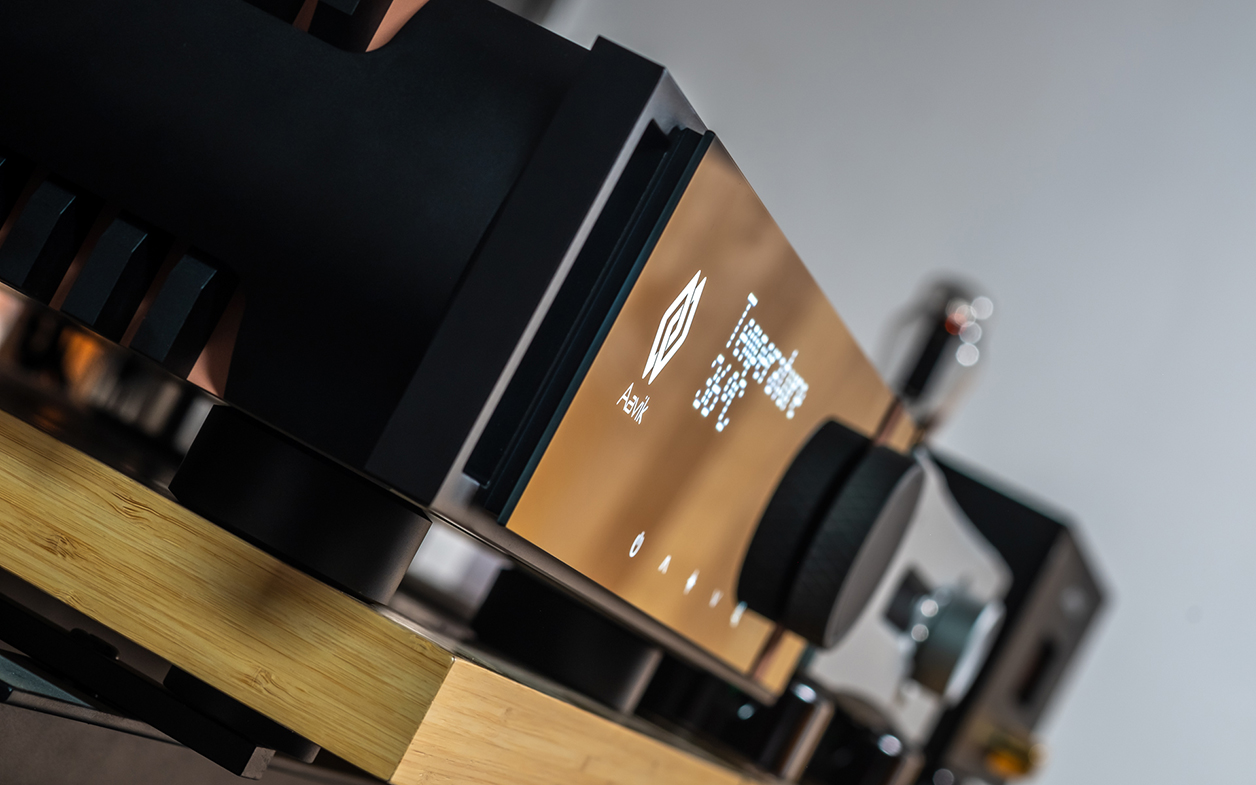
Where in my room the sound|kaos are most happy with low power and damping factor, Boenicke's W11 SE+ floorstanders make the opposite demands. They thrive on power with loads of damping. When these criteria are met, this fairly large Swiss sounds its very best. To put that in perspective, the W11 SE+ can adjust its bass from -1 to +2dB in 1dB steps via autoformer taps. With my Trilogy monos I get to 0dB at best and still net limited reach plus room talk¹ of mild smear and resonance. With the Aavik these floorstanders set to +2dB boost decompressed in my listening space without any blur and dug sensibly deeper. This drastic difference naturally informed the W11 SE+'s entire low end. The I-800 had it internally juicy, cleanly outlined, enjoyably energetic, instantaneous, powerful – in short, brilliant. For my taste that kind of bass was as good as it gets. It was so clean and authoritative that you couldn't tell its vented nature. My monos were boomier, fuzzier, slower and less extended. This transformation stunned Tomek. I smiled. Although the Aavik introduced itself as a muscle amp of high horsepower, its skillset went significantly beyond. It also provided excellence of tone. Textural fill with all instruments and voices was complex, colour intense and saturated. With my Trilogy set, attention instantly shifts to its upper bass and lower midrange because that's where it parks the tonal centre of gravity. The Aavik moved it up into the real centre without detectable bumps and dips which atop reference-level saturation contributed to perceiving its sound as more balanced and coherent. This integrated did everything on a commensurably high level to not draw attention to any specific aspect. Meanwhile its awesome agility and spunk were handy wrappers for it all. Actually, sheer speed and associated immediacy of even the most complex musical passages were the two true standouts. Since there's no such a thing as excessive dynamics, I have nothing against such sporty highly caffeinated behaviour.
_________________________
¹ This obviously wasn't actual room talk since Aavik's improvement happened in the very same room. But it makes an excellent point. Minor even major boominess suggestive of room interactions can in fact be lack of driver control. If so, a better-matched amp can make all the difference. And there's a second aspect. The typical saddle in the impedance response of a ported speaker can compound the issue when at the twin impedance peaks, an amplifier's control relaxes too much. It's why Børresen's ported speakers take pains to minimize the magnitude of their impedance peaks which supports better amp control hence less 'room' boom. – Ed.