
Product-related news items of general interest should be accompanied by a formal press release with basic descriptions, finish options, pricing, a photo 598px or wider and a valid web link. Event news should have venue, date, ticket and registration information plus a logo and website link. We only publish product news on items you can actually buy now. We won't publish product news about items a manufacturer promises to build if enough people pre-pay (crowd funding).
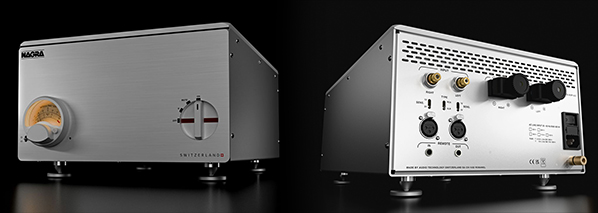
II-S – It's the suffix of Nagra's latest amp in their Series II, succeeding 2015's Classic AMP. "At the heart of the AMP II-S is a new linear 800VA power supply. Output power is 120wpc/8Ω with the first 10 watts in class A from a single Mosfet pair per channel. The new input board derives from our Reference AMP. A new massive CNC-machined heatsink provides exceptional thermal inertia while minimizing unwanted vibrations. A specially designed transformer suspension further reduces the transmission of mechanical vibrations."
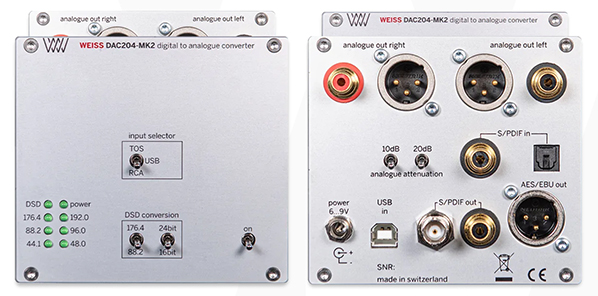
Whiter than Weiss – It's the Swiss brand's Mk2 version of the DAC 204 featuring a new ESS9028Pro engine, new analog output stage, nearly zero-Ω output impedance and optimized PLL clocking "to deliver a fuller, rounder tonal balance".
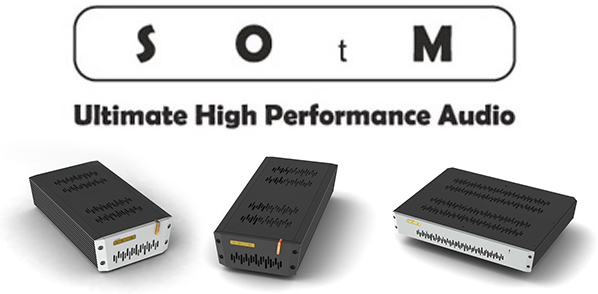
Korea's new SOtM trio – Soul Of the Music bow their new sMS-500, sPS-550 and sCLK-OCX10ultra in the brand's usual cap-sensitive nomenclature. Respectively those are a "next-gen network music player, high-performance power supply and master clock generator. More than an upgrade to the sMS-200 series, the sMS-500 features entirely new hardware architecture redesigned from the motherboard upward. Our Eunhasu OS has been optimized for stable operation and flexible support for Roon Ready, UPnP/DLNA, MPD, Diretta Host and Target, Qobuz Connect, HQPlayer Embedded and HQPlayer NAA with a dedicated audio-grade USB output. The sPS-550 offers eight selectable DC output voltages—5, 7, 9, 10, 12, 15, 17 and 19V—and maximum output power of 80 watts with built-in protection against over-current, overtemperature and output short circuits. The new 10MHz reference clock with 10 isolated BNC outputs improves upon its predecessors with ~5dB less phase noise at ~10Hz and temperature stability."
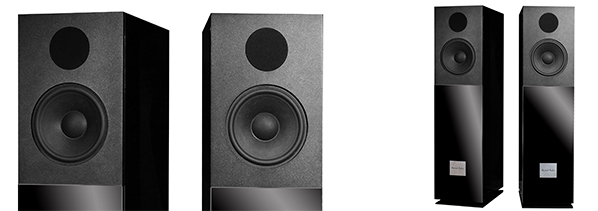
Ancient synergy – Synergy; it's a hifi separates concept as ancient as the hobby itself. But today it's a new speaker from Poland's Ancient Audio called Synergy [€10K/pr]. Its cabinet uses constrained-layer damping via tempered glass, aluminium and wood, with the former ingredient the outer scratch-resistant gloss black surface. Efficiency is 90dB/4Ω, the drivers are from SB Acoustics and a 1" soft dome tweeter and 7" paper-cone mid/woofer crossed at 2kHz "with a complex filter to control both time and amplitude". Dimensions are 83x21x31cm HxWxD, weight is 30kg/ea. The current descriptions still lack a bandwidth spec and whether the speaker is ported or sealed.
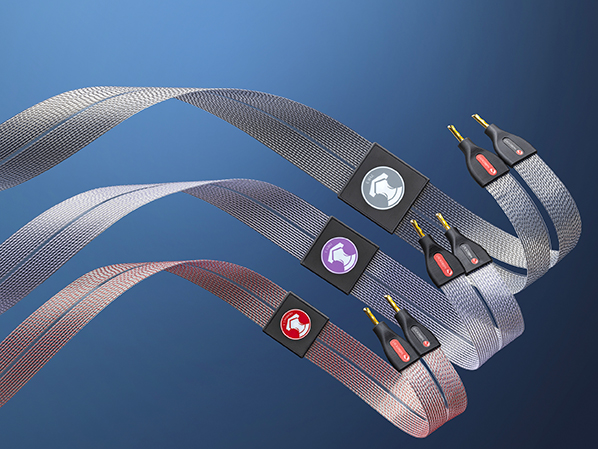
The 3rd norseman – It's the new Nordost Norse 3 product family of Heimdall 3, Frey 3 and Tyr 3 each comprising power cords, analog interconnects and speaker cables. "The Norse 3 power cords introduce optimized shielding for our signature mono-filament technology, solid-core silver-plated OFC conductors and mechanically tuned conductor lengths. Suggested retails for 1m cords are $1K Heimdall 3, $2.7K Frey 3 and $4.5K Tyr 3. Norse 3 analog interconnects are twisted-pair designs with dual mono-filament tech and comprehensive dual shielding. Suggested retail pricing for 1m pairs is $1.7K Heimdall 3, $2.6K Frey 3 and $4.4K Tyr 3. Norse 3 speaker cables combine flat geometry with micro mono-filament technology, FEP insulation and mechanically tuned lengths. Purpose-built gold-plated beryllium copper connectors, ultrasonic welding and static-dissipating ESD materials contribute to consistent high-integrity connections. Suggested retail pricing for 1m pairs of Norse 3 speaker cable is $2'450 Heimdall 3, $4.6K Frey 3 and $8K Tyr 3."
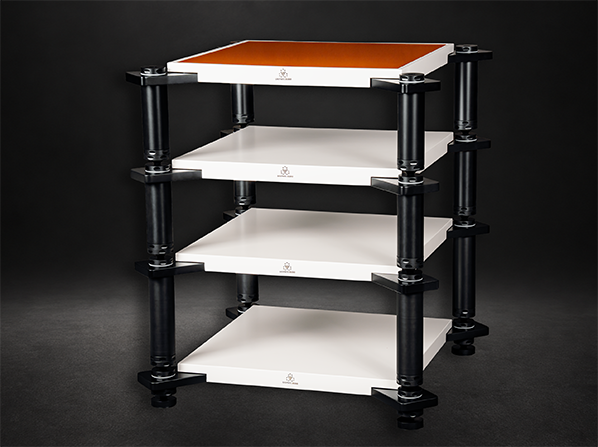
Enso – It's the new rack from Graphite Audio's Szymon Rutkowski and "100% non-metallic and non-magnetic. Traditional rack designs often rely on metal parts and ceramic bearings which can introduce subtle ringing or store unwanted kinetic energy. By entirely eliminating metal, Enso maintains a vanishingly low noise floor." Its X-frame structure and platforms utilize premium Plywood of "meticulously bonded 0.5mm micro veneers". An upgrade path goes to shelves of the brand's proprietary polymer. Each standard shelf accommodates up to 100kg.

Sneaky taping? – "I'm Victor, an independent developer in Switzerland. I made Tapelark, a Mac app for keeping what you listen to. Tapelark records the sound of an app digitally, inside the Mac, with no extra audio driver or cables, then saves as Apple Lossless or FLAC at 16 or 24-bit, as WAV or AAC. Long recordings split into tracks while they record. Where the player announces a new song, the cut is lined up with the silence before it. Each track gets its name, tags and cover. The library trims without touching the original then exports to a folder or USB stick. Internet radio records from the station's own stream, in the station's own format, one file per song. Tapelark Pro adds window video, one window's picture with its app's sound, and Isolate Voice keeps the speaking voice and removes music and noise. Tapelark is for private use, never gets around copy protection and keeps everything on the Mac. It runs on macOS 14.4 or later. Try it free for 14 days, Pro features included. Until you buy, each recording stops after 10 minutes. Until October 31st, Tapelark costs CHF29 instead of CHF39, paid once for all your Macs. On the legal side it's a matter of copyright and each service's terms. Tapelark doesn't decide what's allowed; the law where you live and the terms of the service you listen to do. In many European countries the law allows a copy for your own private use, usually paid for by a levy on devices and blank media; elsewhere that exception is narrower or doesn't exist. Subscription streaming services usually license their catalogue for listening in their own apps so keeping copies from them is a question for their terms. I'm no lawyer and the site and Tapelark's terms say the same thing: recordings are for your own private use, within the law where you live and the terms of the services you use. What Tapelark does is limited on purpose. It records only the sound the Mac is already playing after you press record, using macOS's own documented audio capture much like a cassette deck recording from an amplifier's tape out. It never decrypts, intercepts or downloads a protected stream and never gets around copy protection. Where macOS protects something as with streaming video, Tapelark stops recording and says why. Recordings stay on the Mac. Tapelark can't upload, share or stream them and has no account or telemetry. Where it's most at home is internet radio recorded straight from the station's own stream, one file per song along with podcasts, live sessions and specialist shows that are only online for a while."
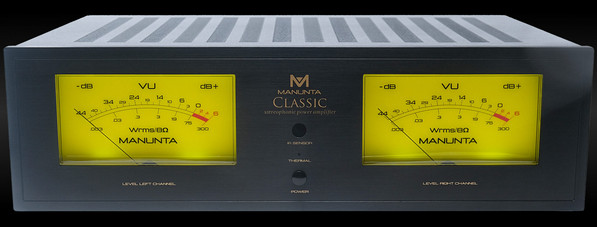
A classic? – The Manunta power amplifier [€5'100] in their Classic range wants to be one. At 75/100wpc into 8/4Ω with a 320VA power supply and fitted with two remote-dimmable VU meters, it's no brute but does offer RCA and XLR inputs. It's natural-born companion is the Classic Preamplifier [€6'300]. Both pieces take pride in being made in Italy.

Red Orpheus – It's the new Verseo 2½-way floorstander with twin rear-ported 6" SB Acoustics mid/woofers and a soft-dome tweeter. At just 92.5cm tall and a footprint of 20×32.5cm WxD, Orfeu is a compact floorstander for its 35Hz 4Ω reach of 88dB sensitivity.
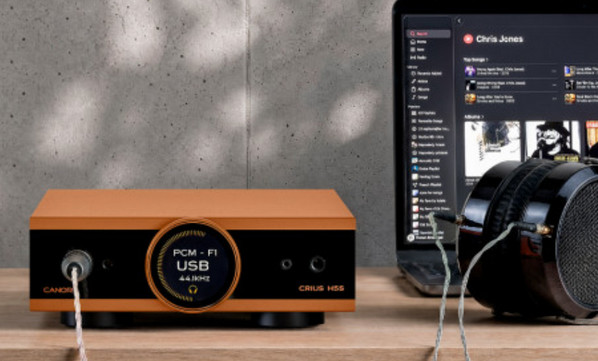
Can? – It's half a Canor; as in the new Crius H5S [€1'990], a half-width fully discrete DC-coupled DAC, pre and headamp so 3-in-1. It pairs dual-mono ES9039Q2M converter chips with a 1.8-inch touch display embedded in the master controller; 4wpc/30Ω balanced headfi power; XLR4, 3.5, 4.4 and 6.3mm ports; three gain settings of up to +5/+11dB on RCA/XLR out; USB-C, Toslink and coaxial digital inputs; RCA/XLR analog inputs; balance control; built-in linear power; and three finish options of black, silver and bronze. There's even a set of XLR bypass outputs for pure preamp mode where bandwidth is 2Hz-150kHz. Dimensions are 21×32.5×7.5cm WxDxH, weight is 4kg.
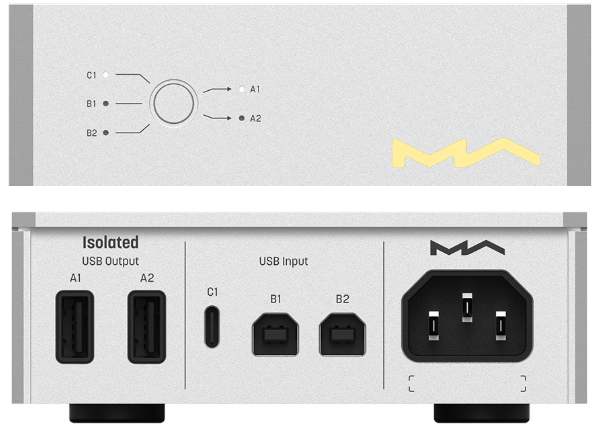
Enter the matrix – With the Matrix SU-1 [$659], you can three ways then exit two – USB that is. This galvanic USB isolator with linear power supply sports 1 x USB-C and 2 x USB-B inputs and 2 x USB-A outputs all switchable with a short or long press of the single front control. Wish to do isolation for your LAN? The same-priced SI-1 performs internal conversion to fiber-optics and back on its single 1GB RJ45 i/o and adds an LED bypass switch. Dimensions are 12x20x4.4cm WxDxH, weight is 1'580g.
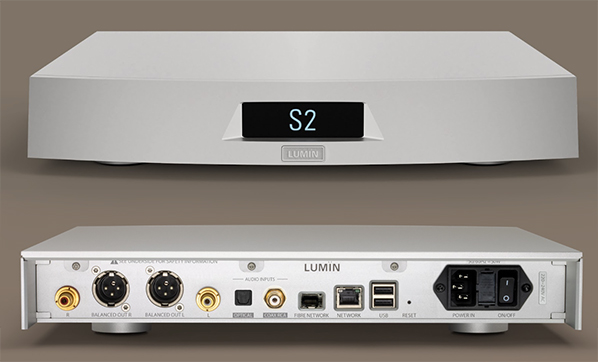
New Lumin S-class – The new S2 [€9'990] "delivers the sound quality of our flagship X1 within the self-contained footprint of the T3X chassis. By adapting the X1's reference ultra-low-noise power supply to fit directly into the main housing with custom shielding, we eliminated the external power supply." The digital engine is the same twin ES9038Pro configuration with dual-mono transformer-coupled analog outputs on RCA and XLR. The S2 also gets coaxial and Toslink inputs and of course an SFP port for fibre-optic networking. Data support is PCM384, DSD512 and MQA. The Lumin app integrates Tidal Connect/Max, Qobuz, Spotify Connect, KKbox, Amazon Music, AirPlay, Roon Ready, JPlay and Audirvana.
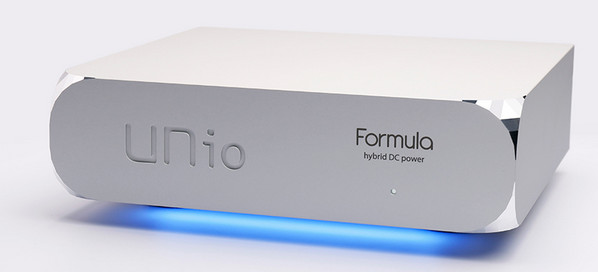
Formula 1 + 11 – It's ungnoi's UNio Formula 12 [€699], a hybrid 2 x 12VDC/12A so 144W power supply from Hong Kong which precedes its power-output stage with a 50/60Hz 100-240VAC magnetic block before applying constant-voltage regulator transistors and multi-stage LC filter circuits. Included are two locking 1m umbilical cables with 2.1mm plugs. Dimensions are 18 x 17.5 x 6.9cm WxDxH, weight is 2kg.
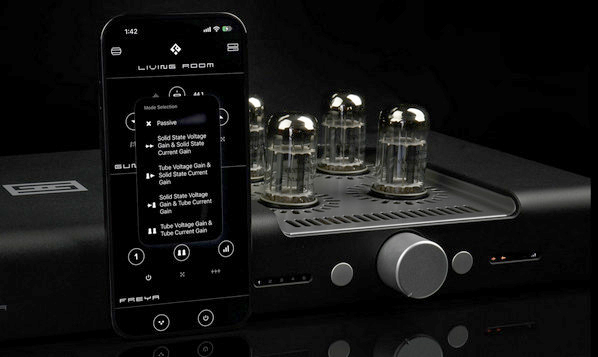
Into the fray with the Freya 2 – It's Schiit's new quad-tube balanced preamp [$999 black, $1'049 silver] whose class A differential circuit can alternately run on depletion-mode Mosfets; or two-way mixed. The two octal pairs of 6SN7/5692 handle voltage gain and output buffering, respectively. The user selects which pair/s to use; or none at all. That gives us a choice of all transistor, all tubes, tubes front/transistor rear or vice versa. The fifth mode eliminates all gain stages to run purely passive. In all other modes the 0/12dB toggle adjusts voltage gain and a 128 x 0.625dB relay-switched stepped attenuator handles volume. The Forkbeard app bakes in standard as does a ladder-shifting balance control. A set of current-production tubes includes, too. There are 3:2 RCA/XLR inputs and 2:1 RCA/XLR outputs. There's even an IR remote. In short, a real Schiit show.
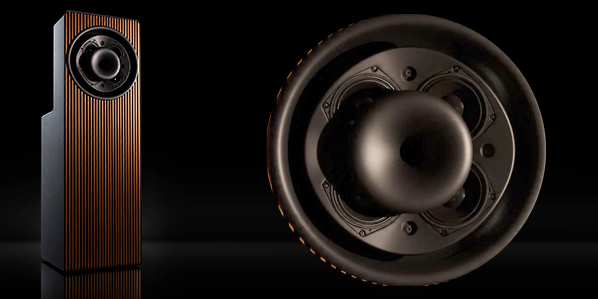
Parallax – It's the new flagship 3-way speaker from Lithuania's Silent Pound. It combines a controlled-directivity compound coaxial array of 4 x 5¼" midranges in a shallow dish surrounding a central horn-loaded compression tweeter with 4 x 15" woofers in a folded dipole bass system reminiscent of a stacked RiPol. That would imply two pairs of face-on woofers rotated 90° then slot-loaded front and rear to exploit lateral dipole cancellation for reduced room involvement. Børresen's flagship model exploits the concept with smaller mass-paralleled woofers whilst the new sound|kaos Vox5 executes it with two stacked 12" woofers. Switchable bi-wire terminals on the Parallax allow for bi-amping which can give the user separate control over bass amplitude whilst the decorative wooden staves neatly conceal the LF system. With the speaker's first public reveal at the upcoming Warsaw show, detailed specs and pricing remain TBA.
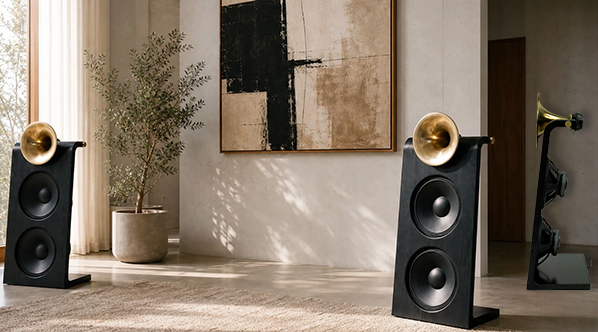
OB1 Bombard not Kenobi – It's a new open-baffle fully active speaker from Belgium with 370W bi-amped class D per side, 24/192 processing, I²S over HDMI transmission from one speaker to the other; a cast-brass tweeter horn; and carbonized solid-oak baffle.
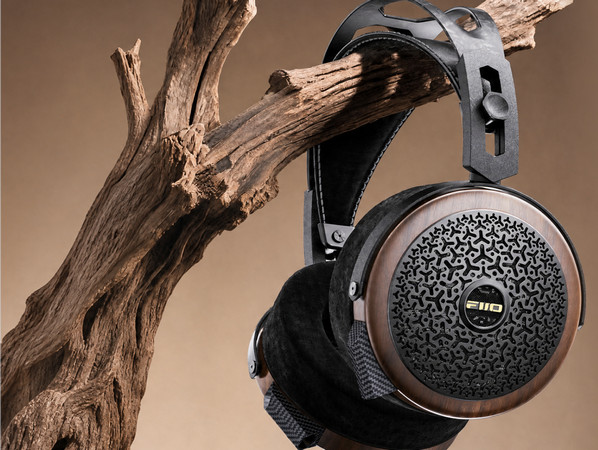
800 – That's the nano-metre so sub 1 micron thinness of FiiO's new 95dB/mW FT15 open-backed planarmagnetic headphone's 101mm diamond-coated membrane. It's driven in balanced so dual-sided motor mode via 28nm "chip-grade" silver/alu-alloy traces applied via vacuum electroplating for better adhesion. There are American walnut cups, two different pads, 425g weight, a 4.4mm balanced 1.5m cable with adapters and a cloth-covered hard carrying bag. Basic specs are 24Ω, 111dB/Vrms sensitivity and a €499 sticker.
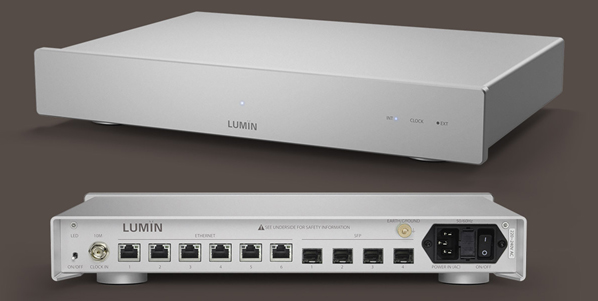
New one; or network first? – Either way it means Lumin's N1 network switch with six Gigabit copper and four matching fibre-optic ports plus 10MHz external clock link for use with Lumin's own U2X or another masterclock. The linear power supply is internal, there is zero router configuration involved and finish options are the brand's usual black and silver. The chassis measures 36x24x6cm WxDxH and weighs 2.5kg. A toggle switch can defeat the RJ45 LEDs but there seems to be no provision to defeat unused ports and their ongoing link pulses looking for a connection.
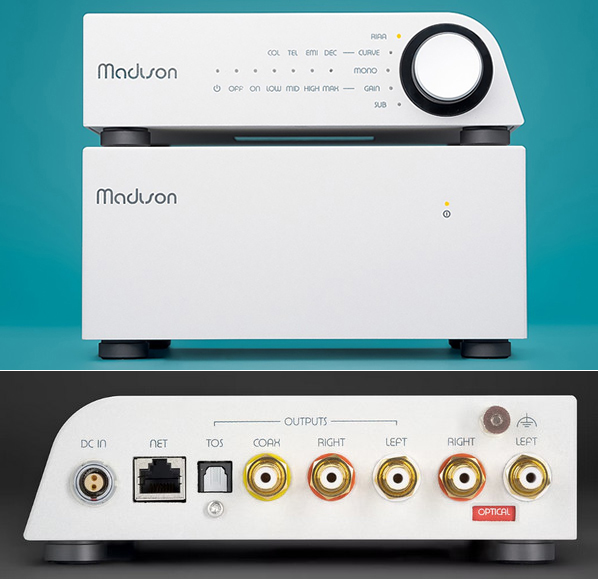
Not mad but Madison – It's Wattson Audio's new Madison Phono [€5'240] here shown with the optional Madison Power S external linear power supply. The phono stage can pack voltage and current inputs for MC, MM or a special input for DS Audio optical cartridges. Then it gets mad with 32/384 conversion to digital; and coax/Toslink digital outputs for external DACs. This removes critical phono equalization from the analog domain.
"RIAA, Columbia, Teldec, EMI and Decca curves can be applied with ±0.1dB accuracy. Network connectivity supports firmware updates and remote control."
The standard power supply is an external 5VDC affair. MM gain is 34/40dB, MC 54/60dB, A-weighted noise -134dBu/10Ω termination. The user-selectable subsonic filter sits at 15Hz/1st-order. Analog inputs are on RCA as are the analog 2Vrms outputs. The method behind Madison Phono's A/D madness is RIAA equalization far more precise than is possible to achieve with analog parts.
Given Wattson's newer home at CH Precision, that doesn't sound like a frilly claim when CH have one of the world's most advanced multi-chassis digital source systems in their catalogue. By implication, modern A/D/A conversion has become so non-lossy as to no longer be an argument against using it in a phono stage. Will the prim 'n' proppa purists agree?

7th Moon podcast episode 5 – In this installment Dawid and Srajan chat with Martin Gateley of Swiss speaker boutique sound|kaos about his latest design, the Vox5.
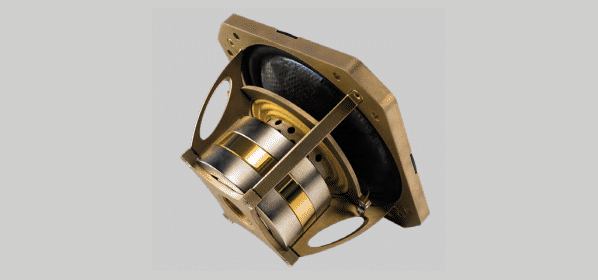
Danish gold rush – Børresen just kicked it off with the Gold Signature versions of their M1 – M6 speaker models. Upgrades include new stainless-steel driver baskets cryo treated then coated in their most advanced surface skins. The four-layer driver membranes apply spread-tow carbon-fibre skins around an aramid honeycomb core then add an external Signature-treated titanium layer. The motor system gained a new copper, silver and gold pole ring for further inductance reduction. The internal hookup wiring has become Ansuz Gold Signature. All of these upgrades are also available to existing M-Series owners.
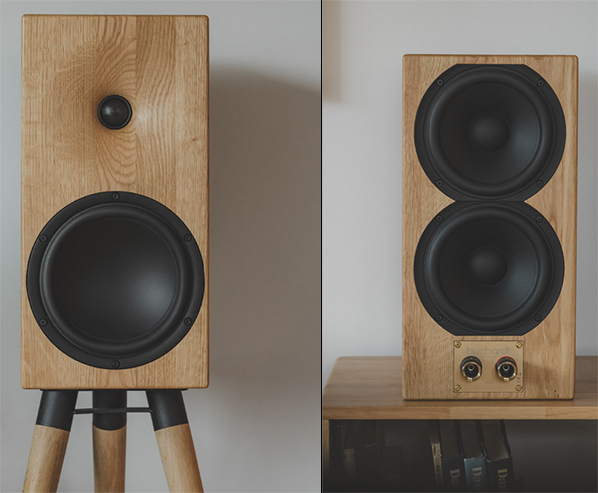
Buchardt S-Class – The E50-S [€4.3K/pr] is "a new addition to the E Series and a different interpretation of the E50. At its heart is a new custom-developed 7½" SB Acoustics Satori mid/woofer featuring a thin-ply carbon diaphragm and neodymium motor. Combined with its larger cone area, the new driver provides considerably higher sensitivity than the Purifi woofer of the E50 while retaining high excursion and output. The result is a speaker significantly easier to drive with amplifiers ranging from small 15wpc tube designs to powerful solid-state amplifiers. In-room sensitivity is 91dB and impedance never lower than 4Ω. Where the original E50 offers exceptionally deep bass and a relaxed, rich and slightly laid-back presentation, the E50-S places greater emphasis on midrange presence, speed, clarity and spatial information. Bass extension is deliberately lighter to be particularly well suited to smaller rooms, placement closer to walls, systems where excessive bass energy can become problematic or listeners who prefer greater focus on midrange texture and clarity. The E50 remains the choice for listeners looking for exceptionally deep bass and the distinctive relaxed character of its paper-cone woofer. The E50-S xover is free from all resistors and uses Jantzen Audio components including Superior Z-Cap capacitors and 14-gauge copper-foil cross coils mounted on high-quality PCs with heavy copper tracks. Internal wiring includes solid-core silver-plated copper as well as Duelund Coherent Audio oil/cotton-insulated copper cable for the tweeter. The E50-S is manufactured in our own Danish facilities and the cabinets are solid European wood with traditional finger-joint construction and a substantial 28mm solid-wood front baffle. The E50-S uses two extended-stroke 6" passive radiators on the rear and measures 395×200×284mm with a weight of approximately 9 kg per speaker." The in-room F3 is a stated 38Hz so far from bass shy; just not as hung as the Purifi-fitted less efficient version.
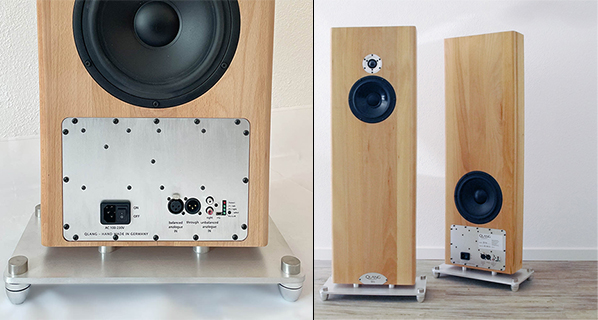
Seefluth – A new day, a new speaker brand. This one is from Germany's Michael Seefluth. His Qlang M4 [€9'990/pr intro price] is a 125wpc Hypex Fusion-powered 2-way floorstander with rear-firing passive radiator and DSP crossover. The wide shallow enclosure is crafted of solid well-braced Beech, the floor interfaces are integral ball-bearing decouplers. The soft-dome tweeter is a Morel Premium, the mid/woofer a 7" Seas unit. Dimensions are 120x45x40cm HxWxD, weight is 25kg. Bandwidth specs aren't published yet.

Episode 4 – The latest 7th Moon podcast calls 'true to the recording' in question then spins out from there. Already booked for early September is our first 3-headed chat with guest Martin Gateley of sound|kaos. Future guests who already expressed interest without a fixed date yet include Theo Stack of Stack Audio, Aleksandar Radisavljević of Raal 1995, Grzegorz Rulka of Virtual Hifi and Kevin Scott of Living Voice.
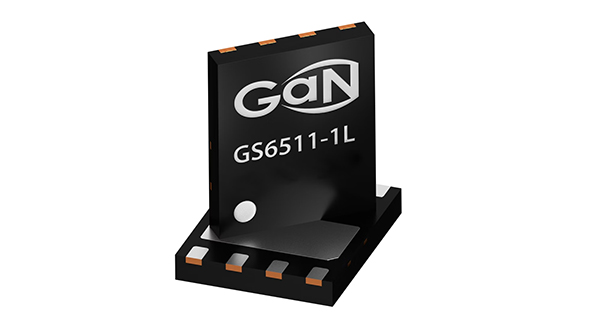
Going GaNgster – GaN is going German automotive. According to the linked article, Porsche and Burmester are launching "the first automotive audio application with GaN in the Burmester 3D high-end surround sound system. According to Porsche, a GaN-based high-performance chip handles the voltage conversion required to power the 400-watt subwoofer amplifier. The technology that will make the amplifier lighter, more compact and more efficient is scheduled to make its production debut in a future Porsche vehicle in 2027."
