Country of Origin

Reviewer: Srajan Ebaen
Financial interests: click here
 Main system: Sources: Retina 5K 27" iMac (i5, 256GB SSD, 40GB RAM, Tahoe 26), 4TB external SSD with Thunderbolt 3, Audirvana Studio, Qobuz Sublime, Gustard U26 USB bridge, LHY Audio SW-8 & SW-6 switch, Sonnet Pasithea; Preamp: Hattor Audio ARP-S; Active filter: spl Audio Crossover MkII; Power amplifiers: Vinshine/Kinki Dazzle & Audiophonics NCx500 on subwoofer; Loudspeakers: Qualio IQ [on loan]; Subwoofer: sound|kaos D15; Cables: Exact Express Flame, Furutech; Power delivery: 2 x Kinki/Vinshine Tai Hang on amps and source stack, Furutech DPS-4.1 between wall and conditioners; Equipment rack: Artesanía Audio Exoteryc double-wide 3-tier with optional glass shelves, Exoteryc amp stands; Sundry accessories: Acoustic System resonators, AudioQuest FogLifters; Room: 6 x 8m with open door behind listening seat; Room treatment: 2 x PSI Audio AVAA C214 active bass traps
1st upstairs speaker system: Source: Shanling EM7 into Soundaware D300Ref SD transport to Cen.Grand DSDAC 1.0 Deluxe with POW; Preamp/filter: Lifesaver Audio iCon 4SE & Gradient Box 2; Amplifier: Kinki Studio EX-B7 monos; Loudspeakers: sound|kaos Vox3awf; Subwoofer: sound|kaos D12 on twin Nord Acoustic NC500 monos; Cable loom: Exact Express Earth; Power delivery: Vibex Granada/Alhambra, Akiko Audio Corelli Corundum & Castello Solo; Equipment rack: Hifistay Mythology Transform X-Frame [on extended loan]; Sundry accessories: Furutech cable lifts, Furutech NFC Clear Lines; Room: ~3.5 x 8m
1st upstairs headfi system: DAC: Cen.Grand DSDAC 1.0 Deluxe with POW; Headamp: Cen.Grand Silver Fox; Headphones: Raal 1995 Magna, HifiMan Susvara
Desktop system: Source: HP Z2 workstation Win11/64; USB isolator: LHY UIP; LAN distributors: LHY AS6 Pro & SW6-SFP; Ethernet reclocker: Stack SmoothLAN; DACs: Gustard R26II & Audalytic DR70; Preamp: Topping A900; Speaker amps: Topping B200 monos; Headphone amp: Enleum AMP-23R; Loudspeakers: Virtual Hifi Viper; Headphones: Final D-8000, aune SR7000, FiiO FT7, HifiMan Susvara Unveiled
2nd upstairs headfi system: Shanling EM5; Headphones: Meze 109 Pro, Fiio FT3, HifiMan HE1000 Unveiled
2nd upstairs speaker system: Source: smsl PL200T CD transport; DAC: Shanling EM7 w. 1TB microSD; Crossover: Lifesaver Audio Gradient Box II; Amplifiers: LAIV Crescendo Chorus monos; Loudspeakers: MonAcoustic SuperMon Mini with Dynaudio S18 subwoofer
2-channel video system: Source: Oppo BDP-105; All-in-One: Gold Note IS-1000 Deluxe; Loudspeakers: ModalAkustik MusikBoxx; Subwoofer: 2 x Zu Mission; Power delivery: Furutech eTP-8, Room: ~6x4m
Review component retail: $494
 |
 |
 |
 |
 |
 |
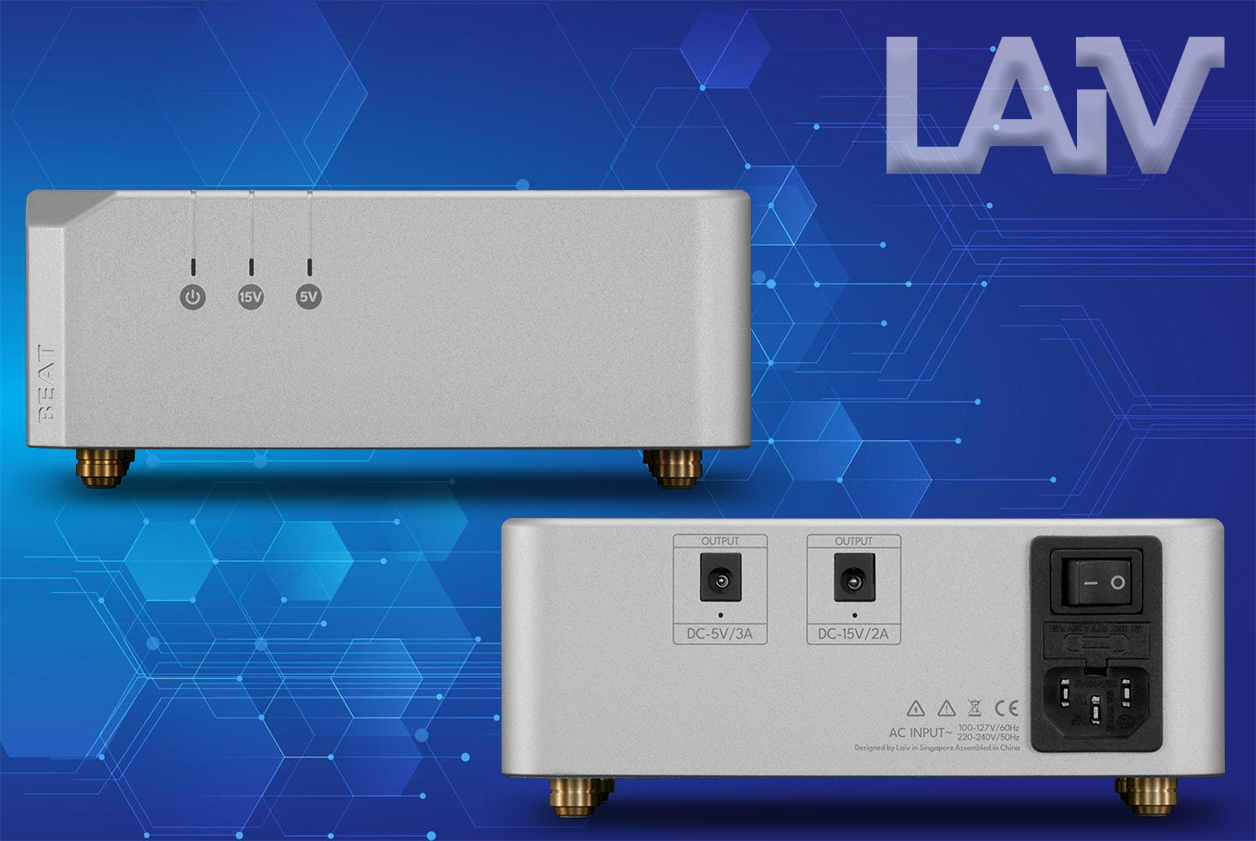
Beathoven? As Ludwig van would say, close but no cigar. Likewise for audiophile pilgrims and switching wall warts. They might actually call them a few cigars short. To them only linear power is the full box. Case closed? Not without specificity. Cohiba or Montecristo? Arturo Fuente or Davidoff? The voltage ratings of small hifi gear's DC inputs vary broadly. 5V. 9V. 12V. 15V. The list goes on. Getting a match wrong with voltage too high could cause smoke of the acrid sort. Too low and the cigar may not light at all. It's why ferrum made their Hypsos infinitely adjustable. One external DC source to rule 'em all. LAiV decided different. Their Crescendo Beat offers 5V/3A + 15V/2A parallel ports. Each gets rectified separately then regulated twice. Hello optimized 2-in-1. A quick look at LAiV's portfolio explains these voltages. Their µDAC and Verse both take 15V, the µDDC 5V. Many compact Raspberry Pi-based streamers live on 5V. Ditto small master clocks or network switches. It's how competitors can fling it with Beat without renting a by-the-hour dive. Just look at this chic pressed-alu chassis. Enter my 15V Audalytic HP70 discrete pre/headamp looking for action. Fully loaded so driving two connected components, Beat promises <50µV output noise. That's a whopping 92dB (!) down from a 2V reference like a standard DAC's RCA output. It's reflected in >82dB ripple rejection off a 70V toroidal transformer and 17'990µF filter capacitance. No paper-thin walls in this establishment to hear all next-door ruckus. And, checking in gets us two keys by way of 60cm DC umbilicals. From cigars to trysts, this one-paragraph intro already exhausted my total simile allowance. Now we're back on proper hifi lingo. Let's see how LAiV apply it.
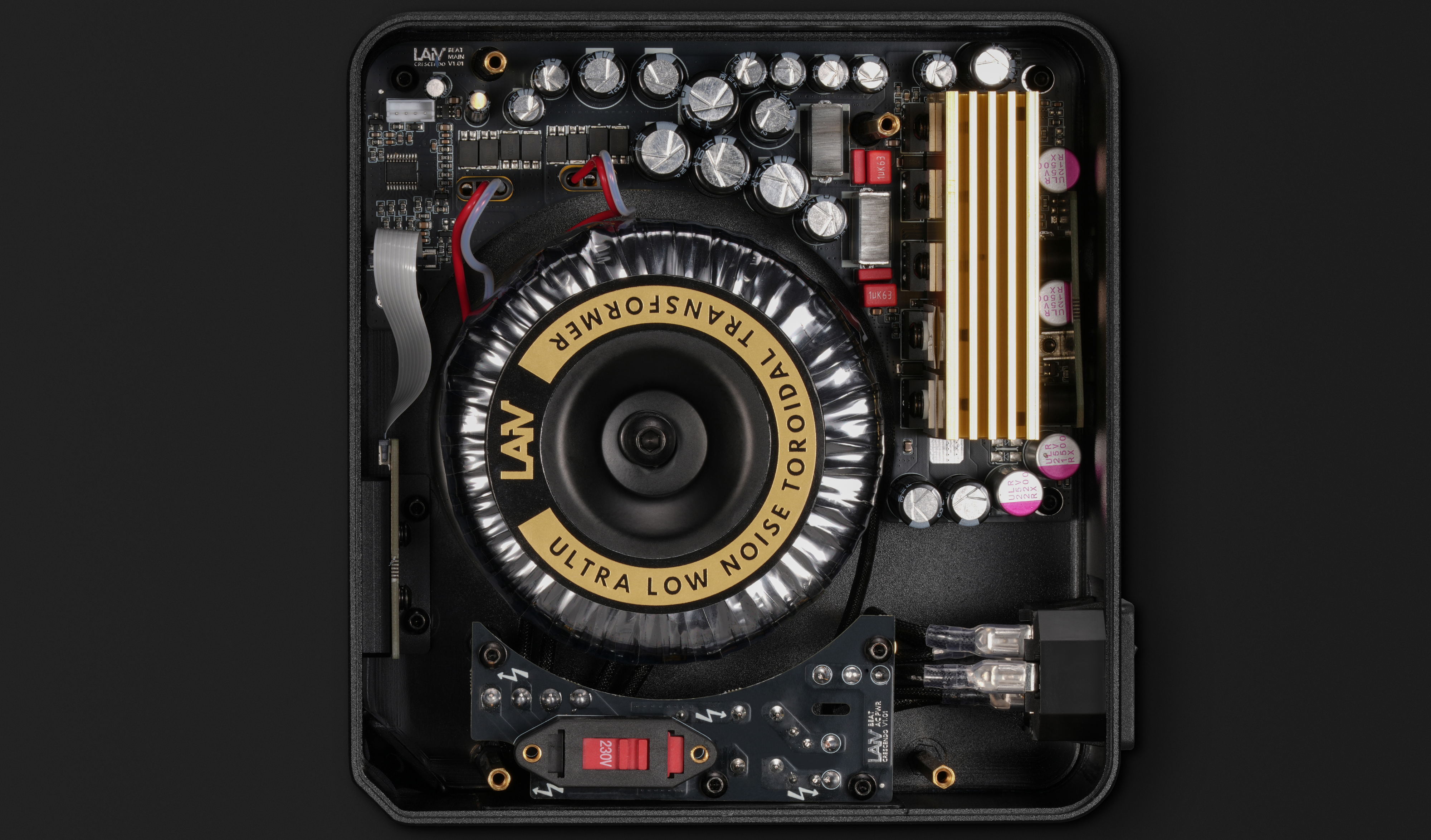
 Their promo material has these crafty sentences I wish I had come up with:
♦ regulated twice so noise never arrives once
♦ two rails both always on
♦ the quiet heartbeat of your system
♦ sometimes the biggest upgrade is the one you cannot hear
That really covers it. What else to say about so prosaic a hifi-something as a small external PSU? That prosaic needn't equal puny purpose or purely perfunctory performance should be what the following paragraphs are on about. That prosaic needn't mean pathetic physicality we've already seen. Even in black this isn't the proverbial lame folded then bolt-headed sheet-metal box to be hidden behind a rack. It's a stylish nicely compact addition one enjoys looking at without building an enormous hifi altar. There's also the promise of no flatulence. Cheap wall warts are not only suspected of injecting UHF switching noise into the circuits they front. The same noise can go retrograde, enter our AC loom, migrate then pollute other gear like second-hand smoke. So the benefits of quieter power needn't be monogamous. They can spread around. Multiply Mormon style. Pay a good deed forward. Who'd not want that? For those suffering limited power sockets, being able to power two components off a single AC port counts as another attraction.
Beathaufen: quite the pile of pulsating positivity? Let's find out.








 LAiV's core argument for Beat is simple. "A linear power supply is quieter than a switch-mode adapter because it never chops the mains at high frequency in the first place. Switch-mode adapters are everywhere because they're cheap, not because they're quiet." The operative word is adapter. Purpose-designed internal switch-mode supplies like those which power LAiV's own Harmony GaNM mono and Crescendo Chorus bridgeable stereo amps go through great lengths to contain radiated noise and routinely run quieter and with faster recovery times than classic linear variants. It's why top brands Aavik, Chord, CH Precision, Constellation, LinnenberG, Nagra, Soulution and Vinnie Rossi even use them with classic Class A or AB outputs. This includes pure tube circuits at Acuhorn and Manley Labs. This brief aside felt necessary to not lump all switch-mode power into the reject bin before being heroically saved by linear power.
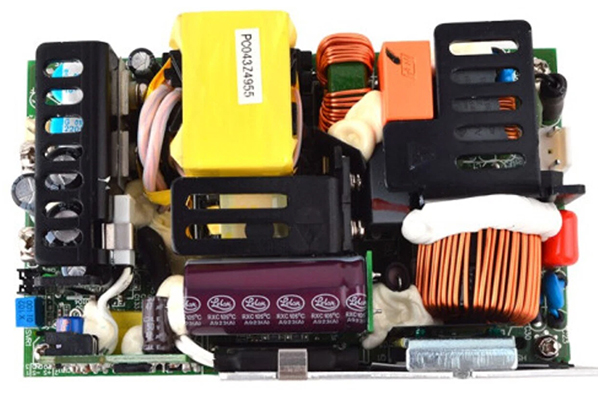
According to LAiV, Beat aims specifically at so-called wall warts. As Google AI tells us, if we crack open a typical 15V/2A wall wart, we will find a densely packed PCB for a flyback converter design split into a high-voltage primary and low-voltage secondary side physically separated by an isolation barrier. The primary side takes our 100-240V wall AC and preps it. Right next to where the metal wall prongs connect will sit a tiny fuse wrapped in black heat shrink and a varistor to protect against power surges. A small ferrite ring and plastic X-capacitor act as EMI filter. A small four-legged bridge-rectifier chip or four individual diodes convert the wall AC into raw DC. The largest component on this side is a ~400V electrolytic capacitor to smooth the bumpy rectified DC into a steady high-voltage DC signal.
 Then a silicon chip chops this DC on/off 50'000-100'000 times per second. Between the two sides sits a yellow tape-wrapped flyback isolation transformer. Since the Mosfet chip chopped the incoming power into high-frequency pulses, this transformer can be very small compared to the heavy iron used decades ago. It transfers the energy safely across the boundary using magnetic fields. The low-voltage secondary on the transformer's other side then uses a Schottky diode to rectify the high-frequency AC from the transformer back into DC.
This meets medium-sized electrolytic capacitors with a small inductor to filter out remaining high-frequency ripple. A small 4-legged optocoupler bridges the primary and secondary gap in a feedback loop so that if the output voltage falls below its rating, it tells the controller to pulse faster; or to slow down if the load drops. The underside of the PCB will have many surface-mount resistors and capacitors whilst chunks of thick white or grey silastic glue damp larger caps and the transformer to prevent a high-pitched whine from critical parts vibrating freely. Above we just saw a stand-in from Taiwan's MeanWell.
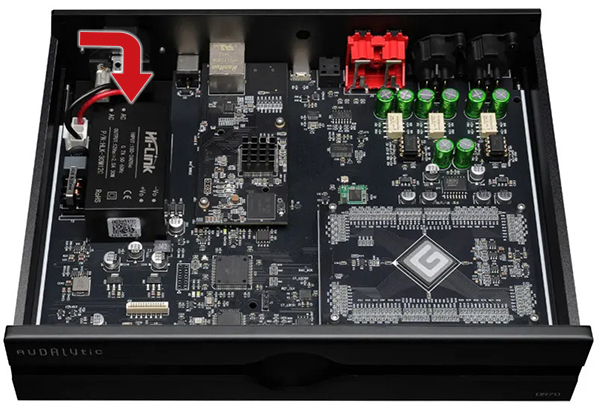
My half-width Audalytic twins integrate their respective Hi-Link SMPS on the motherboard to then feature a DC input which automatically bypasses it without a physical switch. As shown, that internal 'wall wart' is the size of a matchbox; 4.75×2.8×2.2 in centimetres. The DAC only wants 12VDC. The pre/headamp accepts from 15-18V. That was my designated driver. The photos show how a LAiV-style linear supply wouldn't fit Audalytic's chassis without growing to full width then asking for a lower wider power toroid. For more easy math, Amazon just then had 12VDC Hi-Link versions for €4/ea. At bulk wholesale, how much would they cost Gustard? It's back at "switch-mode adapters are everywhere because they're cheap." Now we're clear on just how cheap.