
Not An Audiophile Andrew Hutchinson from Down Under had attended Vienna HighEnd 2026. In its aftermath he contacted me from Italy to suggest that we tape another podcast. So we did. Once it goes live, the 7th Moon page will have the link. During our conversation he mentioned his favourite show exhibit tainted by vexation because the subject of his affections had been a whizzer-fitted 8" widebander. That troubled his mind when the show had various blingy speakers with diamond tweeters, diamond midranges and sundry variations on hi-tech nano-coated membranes. How could his ears proclaim that paper-based vintage tech beat them all? To be sure, the crew from Düsseldorf who'd hosted said exhibit had gone way off-script on the vintage angle. They'd employed active DSP drive and below 80Hz, a separate quad-woofer bass system. Just so, Andrew couldn't quite wrap his head around the success of this unusual recipe because, what did it say about real progress in the speaker sector when his ears told him that mid last-century tech outshone the latest 'n' greatest?
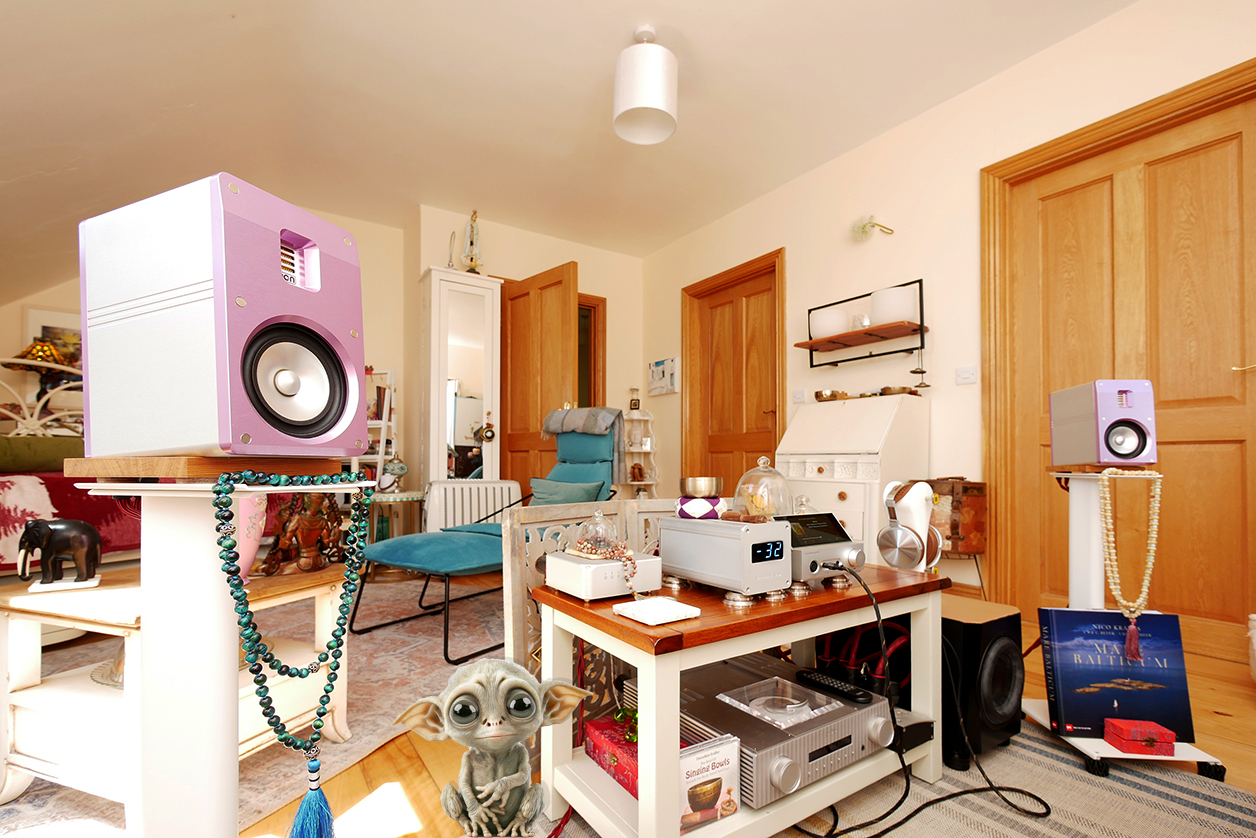
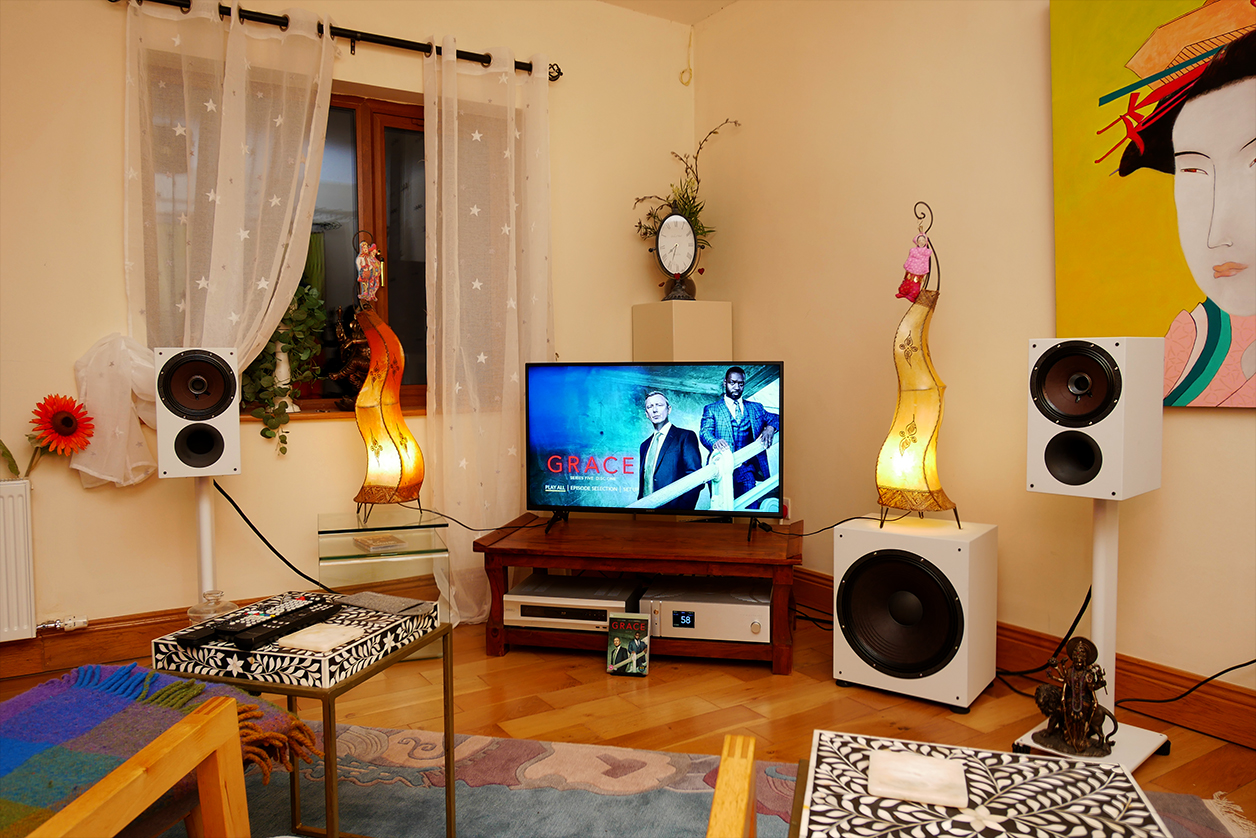
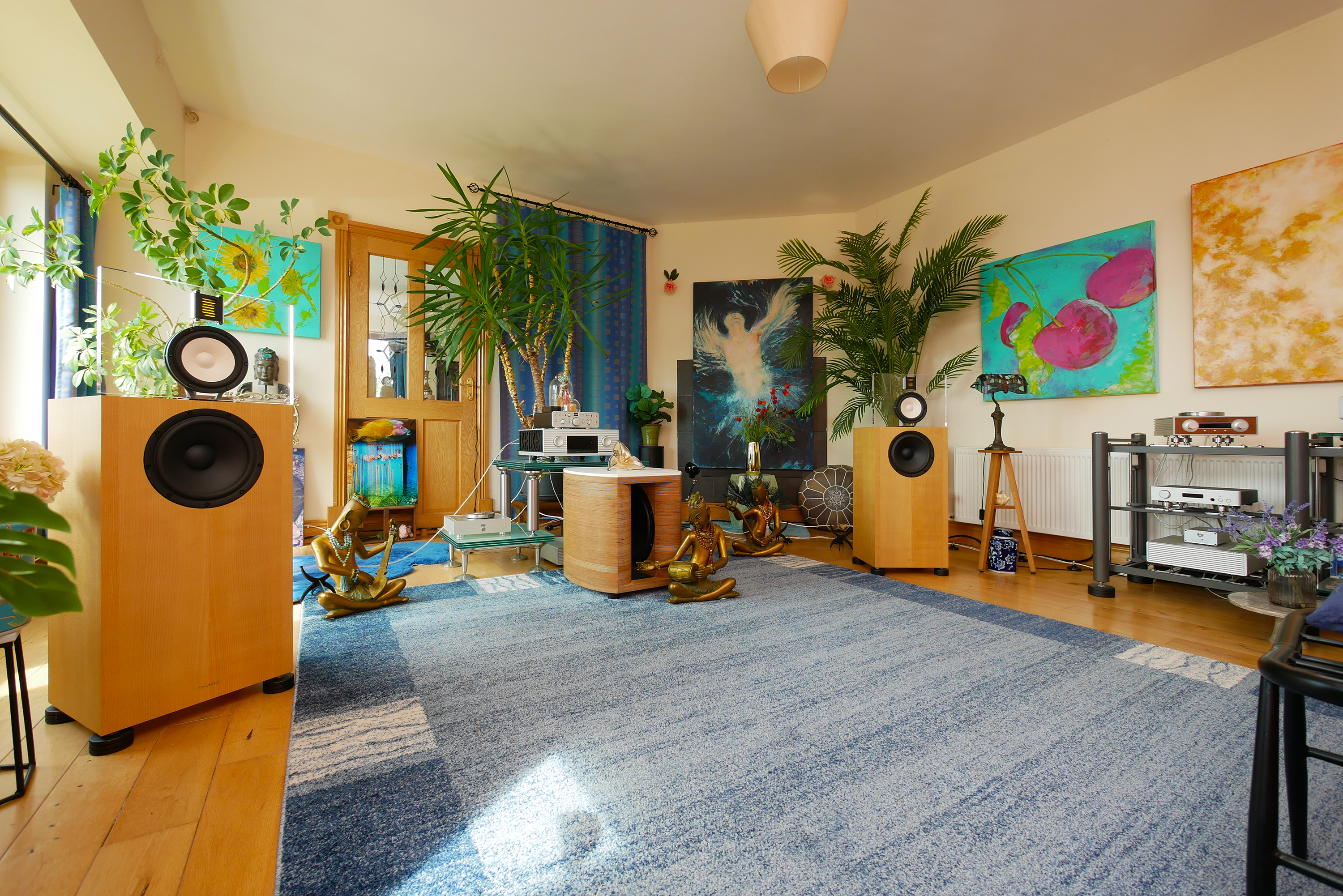
His admission and related questions had me flash on my own audiophile evolution which, about 30 years ago, had begun with a used pair of Vandersteen 2ce speakers I bought in Sausalito's Music by Design boutique. Was it their 1st-order time-aligned concept that had put me on a path sensitized to the time domain? Was it my musical upbringing and conservatory training that had recognized it in the first place? Whatever the case, today my house hosts five speaker systems. Four of them feature augmented widebanders. MonAcoustic's SuperMon Mini above pairs MarkAudio's Alpair spiderless 4" widebander in a rear-ported isobaric config, then kicks in a mini AMT at 15kHz for some extra brilliance and air. At 120Hz, a 4th-order active high/low-pass segues in a dual 9½" force-cancelling Dynaudio 18S sub. In the driver's seat are LAiV Crescendo Chorus GaNFet monos. On the same floor down a 5-metre corridor features another widebander from Switzerland's sound|kaos augmented on top by a Raal ribbon, on the bottom by horizontally opposed 5¼" carbon woofers and below 40Hz by another 4th-order hi/lo-pass with a sealed 15" Zu Method sub.
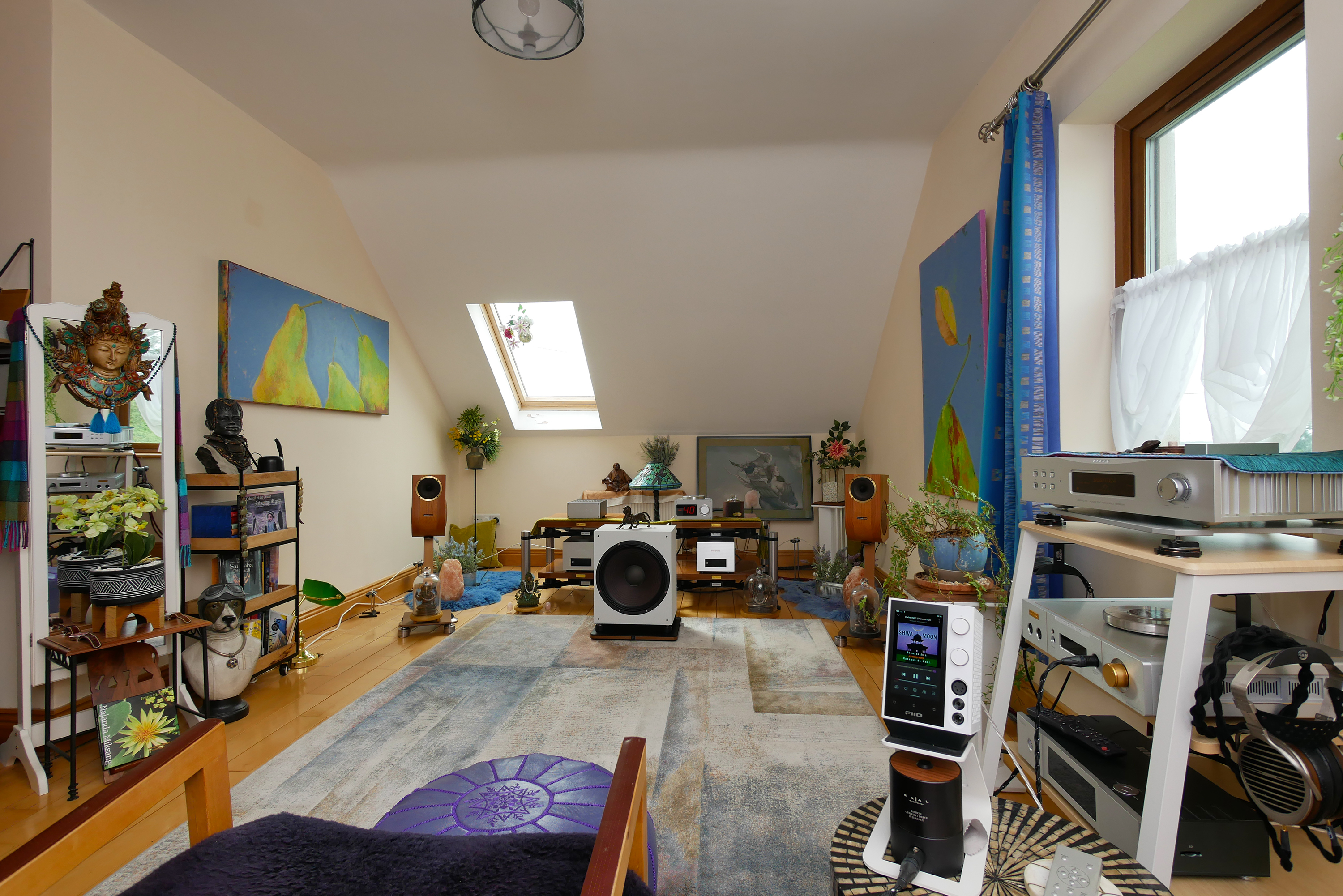
A pair of matching Zu Method monitors trade downstairs places with a 6" 2-way from Germany's ModalAkustik augmented with another Zu Method sub. Zu's monitors combine an 8" widebander with a coaxial throat tweeter brought in very high. Meanwhile the main system exploits an SB Acoustic 6" papyrus-cone Satori midrange as a dipole widebander to 8kHz before crossing to a dipole Mundorf AMT. None of my speakers are purist single-driver efforts like Voxativ's original Ampeggio was which I reviewed a year prior to Art Dudley. Even with large rear horns, my ears don't call single drivers up to the task of modern bass demands particularly when active subwoofers tell us the difference. However, all of mine avoid a 1-3kHz crossover. Their add-on tweeters sneak in between 8-15kHz. That's the land of pure upper harmonics. Acoustic music's highest fundamentals of violin and piano occur at ±4kHz.
When all of that comes off a single cone without running through an energy-absorbing phase-shifting filter, something fundamental shifts. I believe it's down to demonstrably higher time fidelity. Noticing, appreciating and finally favouring it seems contingent on a listener's sensitivity to this aspect. For whatever reason, here most audiophiles seem rather inured. It explains the preponderance of multi-way speakers with complex higher-order networks across the presence region. They represent the status quo and make the majority sound.
Yet vintage-inspired paper-based widebanders remain in the running. Think Cube to Voxativ, Rethm to Zu, Bastanis to sound|kaos and their pater familias, Lowther. Andrew's impromptu meet with an actively driven DSP-corrected 8-inch whizzer cone was a novel wrinkle in the same base recipe. What is that recipe? Avoid a filter anywhere near the presence region where human hearing is keenest. If your widebander needs low-down help, go to an active filter and keep it below 100Hz. If it can't make 20kHz, patch in an extra 1st-order tweeter for the top octave. It's also what Norbert Lindemann does with his Move/Move Mini. It reads astonishingly basic. That explains why Andrew felt a bit rattled when elsewhere the same show had championed hi-tech composite drivers including glass-based diaphragms. We're so brainwashed by the belief in constant progress that it's easy to overlook how last century's ancients had gotten certain things brilliantly right already. That doesn't disqualify current experiments with new materials, software modelling and processes. But neither need it overwrite very real accomplishments of the past. Andrew's discovery in Vienna actually showed how they can coexist by marrying the latest in class D and DSP code to vintage bi-cone paper drivers like those of Voxativ's Alberich² below…

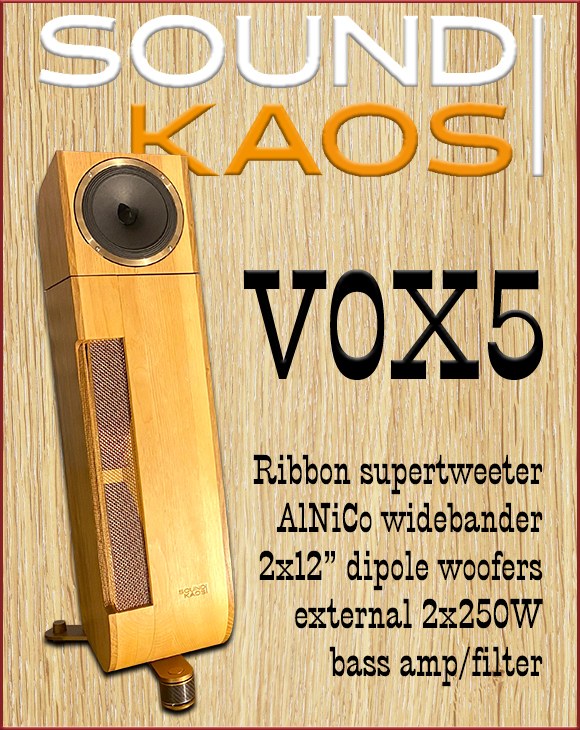
Postscript. "Hi Srajan, great stuff on your new 7th Moon podcast with Dawid. Keep it up. I'm certainly up for participating once I get the Vox5 out there. Also saw your podcast with Andrew and your follow-up feature "Nothing new under the hifi sun". I'd already found FS Musical Systems on the web and their widebander looked familiar. So I asked Armin. It is indeed his 21cm Envieé. So nothing new as you say; apart from price. They want €89'000/pr just for the DSP-corrected monitors." That was the maker of my Vox3 who knows an Armin Galm widebander when he sees one. Now we too know the brand name of Andrew's Vienna discovery; and its mystery whizzer-coned driver…