

Country of Origin

Reviewer: Frederic Beudot
Digital Source: Aurender A10 streamer, Denafrips Pontus DAC, LHY SW6 Ethernet switch, Jay's Audio CDT2 Mk2, Holo Audio Cyan 2 [on loan], Mola Mola Tambaqui [on loan], Volumio Rivo+ [on loan]
Analog Source: VPI Scout 1.1, Zu-DL103 MkII, Genesis Phono Gold, Kitsune KTE LCR-1 Mk5 phono [on loan]
Amplifier: Triode Labs 2A3i, Enleum Amp 23R
Speakers: Ocellia Calliope .21 Twin Signature, Rogers LS 3/5a, Zu Essence
Cables: Zu Varial, Ocellia RCA cables, Zu Event mkII speaker cables, Absolute Fidelity custom XLR to RCA interconnects, Furutech USB and interconnects
Power Cords: Zu Mother, Ocellia power cables, Absolute Fidelity power cable
Powerline conditioning: Isotek Nova, Furutech
Sundry accessories: Isolpads under electronics, GIK Audio room treatment
Music playlist: Tidal only
Room size: 18'x14'x10' (music room)
Review component retail: $'5500
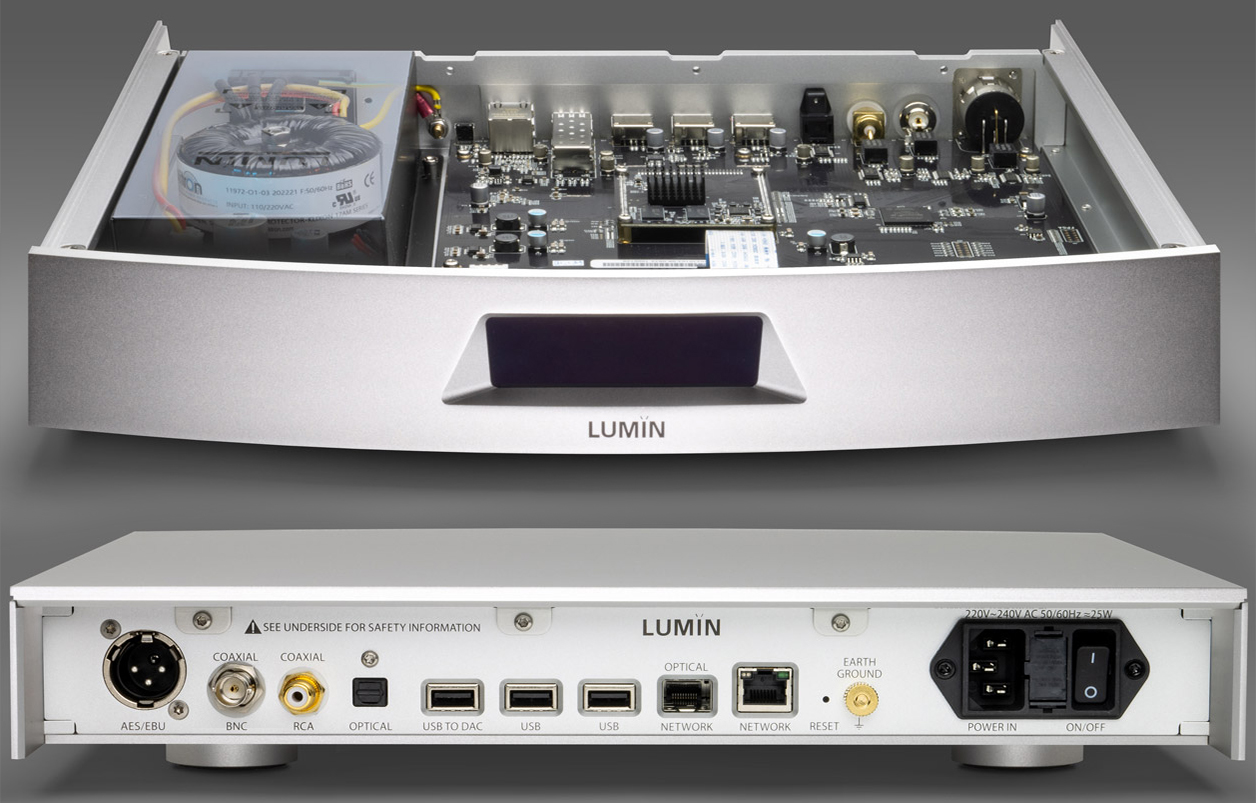
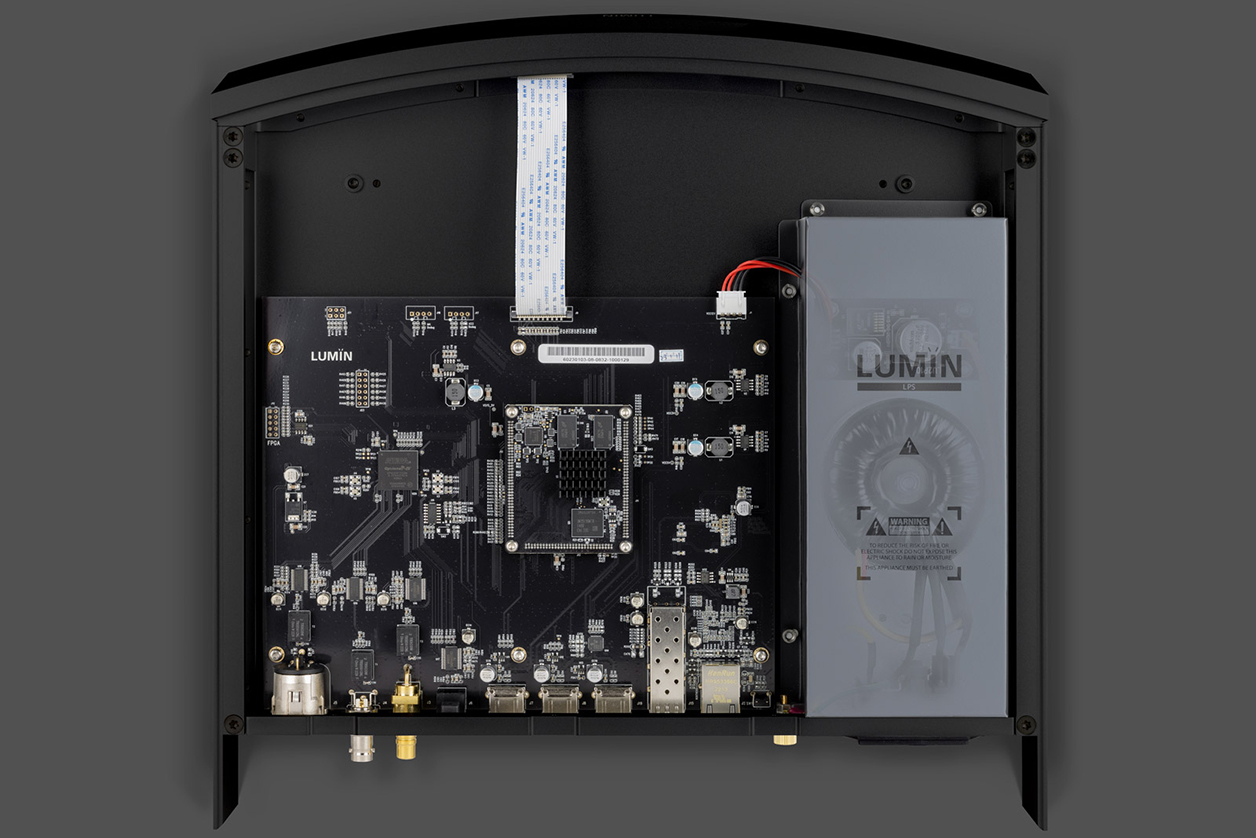
There are two ways to improve digital playback. One adds—features, processing, cleverness. The other subtracts until what remains is less a machine than conduit, more music and less sound. The Lumin U2 belongs unapologetically to the second camp. If its smaller sibling U2 Mini courts relevance through cost sensitivity and its bigger brother U2X pursues ultimate expression, the U2 occupies an interesting middle ground: restraint with intent. Not the absence of ambition but its distillation. Where many modern streamers behave like Swiss Army knives, the U2 is a scalpel. It doesn't want to impress. It wants to disappear; so much so that I bought one months ago as my new reference with no real intention of writing it up. But as it stands, the U2 is the sweet spot amongst Lumin streamers so I had to talk about it. The core idea behind the U2 is deceptively simple: reduce electrical uncertainty before it mutates into sonic ambiguity. To that end, Lumin assembled a toolkit which, in lesser contexts, might feel like overkill although they don't push each element to its ultimate expression like with their flagship U2X. Some of the electrical-gremlin taming choices comprise a proper linear power supply with toroidal transformer, independent digital output stages, fibre-optic network isolation to sever ground noise, precision clocking far beyond commodity streaming boards and a machined aluminium body to add mechanical inertia and reduce vibrations. The recipe is well known but like with every great chef, the choice of ingredients and execution make all the difference. The result isn't a feature set but hierarchy of priorities. Everything serves timing integrity and noise suppression. In typical Lumin fashion, the U2 doesn't process music. It protects it. Compared to the U2 Mini's switching supply and simpler isolation, the U2's internal architecture behaves and performs more like an ever so slightly scaled-down U2X. Not identical but sonic brethren, with U2 the esquisse, U2X the ultimate chef-d'oeuvre. The U2 does not audition well in the conventional sense. It won't dazzle in the first minutes with hyper detail or spot-lit transients. Instead it changes the behaviour of time, a trait both addictive and insidious. Music flows with fewer micro hesitations. Notes seem less triggered, more inevitable. The ear stops parsing artifacts and begins following intent. This is where reproduction crosses into plausibility, where one stops hearing recordings but live instruments instead, assuming the rest of the system and room are up to it. Below are listening impressions grounded in recordings I have added to my ever-growing list of reference tracks where familiarity exposes not differences in sound but also differences in meaning and emotions.














 This track is less about guitar than tension—strings stretched across expectation. Through lesser transports like the Rivo+, the leading edges can feel slightly hyped as though the instrument outlined in ink. The U2 removes that outline. What replaces it is wood under tension, fingers under pressure and air displaced in real time. Transient attacks soften—not by blurring but by integrating into the harmonic body. The result is paradoxical: less edge, more immediacy. Audience cues—the faint cough, the micro shifts of presence—settle into the acoustic rather than floating above it. The stage isn't just wider; it's more believable.
This tests spatial honesty. Many systems exaggerate the halo around Rebecca's voice to create an illusion of intimacy. The U2 resists that temptation. Instead it places her voice slightly farther back with greater corporeal density. The image gains weight. The double bass often reduced to a tonal suggestion develops a wooden core. Each pluck carries not mere pitch but mass. The decay trails extend into a darker background, suggesting that silence itself has been cleaned. What emerges is not a prettier picture but a more truthful one—less spotlight, more presence.
 On "Liberty" the U2 reveals its relationship with silence. Askvik's voice floats in a vast dimly lit space. On lesser transports that space can feel like a digital construct—black but flat. With the U2 the darkness acquires gradation. It becomes layered absence. Her voice doesn't emerge from silence so much as condenses out of it. The reverb tails are not just longer but more textured, revealing the geometry of the recording venue. This is where the U2's noise suppression pays dividends: not in louder details but in quieter truths.
 "No Sanctuary here" is a test of rhythmic authority and bass control. The opening beats often tempt systems into exaggeration—more slam, more drama. The U2 takes the opposite approach. It tightens the envelope. The bass doesn't bloom; it locks. Rhythmic interplay becomes more intelligible. The groove shifts from something you hear to something you follow. Jones' voice, gravelly and grounded, gains articulation without added edge. The track feels less like a studio construct and more like a performance anchored in physical space.
 This final one is the stress test: scale, dynamics, emotional escalation. The U2 doesn't inflate the crowd or spotlights Masekela's trumpet. Instead, it organizes the chaos. Layers separate without disintegrating the whole. As the track builds, the system's composure becomes evident. Where lesser transports begin to harden under pressure, the U2 maintains elasticity. The trumpet pierces but without glare. The crowd swells but without smear. The narrative arc remains intact. This is not about detail retrieval. It's about structural coherence under load. At this point it should be obvious that the U2 hits all my sensibilities of music playback but there is no hiding from the fact that $5'500 is no pocket change for a box that pulls digits from the Internet to hand them off to a DAC hopefully without adding any of its own flavour to the bits. In Lumin's own line the U2 Mini costs half and whilst that's clean and commendably transparent, it sketches where the U2 paints. The U2 adds density, darker silence and more stable imaging. Notes feel less like events and more like consequences. Tonally the Mini sounds a touch warmer primarily due to more rounded transients and lesser control in the lower midrange; it's clearly been designed to be friendlier to DACs with more bite and edge but with the Tambaqui DAC it comes across as a bit muted.
At the other end of the price range, the U2X completes the illusion. It adds a final degree of dimensionality and timing inevitability that make even the U2 seem slightly less real by comparison. But the gap is one of refinement, not philosophy. The U2 already speaks the same language. Anything beyond it gets brutally checked by the reality of diminishing returns. The Volumio Rivo+ is energetic, configurable and alive but operates with more audible effort. The U2 by contrast sounds composed. It doesn't project resolution; it assumes it. Where the Rivo+ presents recorded music, the U2 allows the texture of live instruments to come through. To sum it all up, the Lumin U2 is not a device that adds flavour. It removes interference. In doing so, it shifts the listener's attention away from the mechanics of playback and toward the intent of performance. This is not the kind of upgrade that impresses in a showroom demo. It is the kind that quietly rewrites long-term listening. It may seem like I'm damming with faint praise but the Lumin U2 won me over not because it sounds better. It won me over because it sounds less like anything at all. Up to now, that feeling had been reserved for streamers costing over $10K, sometimes way over. So yes, the Lumin U2 is the sweet spot not just in the Lumin range but amongst streamers that are able to simply disappear.

Lumin's website
