Country of Origin

Reviewer: Srajan Ebaen
Financial interests: click here
 Main system: Sources: Retina 5K 27" iMac (i5, 256GB SSD, 40GB RAM, Sonoma 14), 4TB external SSD with Thunderbolt 3, Audirvana Studio, Qobuz Sublime, Singxer SU-6 USB bridge, LHY Audio SW-8 & SW-6 switch, Sonnet Pasithea, LAiV Audio Harmony; Active filter: spl Audio Crossover MkII; Power amplifiers: Vinshine/Kinki Dazzle & mono Ncore 500 Nord Acoustic amps on subwoofer; Headamp: Enleum AMP-23R; Phones: Raal 1995 Immanis; Loudspeakers: Qualio IQ [on loan] Cables: Exact Express Flame, Furutech; Power delivery: 2 x Kinki/Vinshine Tai Hang on amps and source stack, Furutech DPS-4.1 between wall and conditioners; Equipment rack: Artesanía Audio Exoteryc double-wide 3-tier with optional glass shelves, Exoteryc amp stands; Sundry accessories: Acoustic System resonators, AudioQuest FogLifters; Room: 6 x 8m with open door behind listening seat; Room treatment: 2 x PSI Audio AVAA C214 active bass traps
2nd system: Source: FiiO R7 into Soundaware D300Ref SD transport to Cen.Grand DSDAC 1.0 Deluxe with POW; Preamp/filter: Lifesaver Audio Gradient Box 2; Amplifier: Kinki Studio EX-B7 monos; Loudspeakers: ModalAkustik MusikBoxx; Subwoofer: Zu Method; Cable loom: Exact Express Earth; Power delivery: Vibex Granada/Alhambra, Akiko Audio Corelli Corundum & Castello Solo; Equipment rack: Hifistay Mythology Transform X-Frame [on extended loan]; Sundry accessories: Furutech cable lifts, Furutech NFC Clear Lines; Room: ~3.5 x 8m
2nd headfi system: DAC: Cen.Grand DSDAC 1.0 Deluxe with POW; Headamp: Cen.Grand Silver Fox; Headphones: Raal 1995 Magna, HifiMan Susvara
Desktop system: Source: HP Z2 workstation Win11/64; USB bridge: LHY UIP; Ethernet bridge: LHY EFI; Ethernet reclocker: Stack SmoothLAN; DACs: Audalytic DR701 & Gustard R26II; Headphone/preamp: FangSound Dionysus; Speaker amps: Topping B200 monos; Loudspeakers: Virtual Hifi Viper; Headphones: Final D-8000, aune SR7000, FiiO FT7
Upstairs headfi system: FiiO R7; Headphones: Meze 109 Pro, Fiio FT3
2nd upstairs speaker system: Source: FiiO R7; DAC/pre: COS D1; Amplifier: Kinki EX-M7; Loudspeakers: sound|kaos Vox3 with Dynaudio S18 subwoofer
2-channel video system: Source: Oppo BDP-105; All-in-One: Gold Note IS-1000 Deluxe; Loudspeakers: Zu Mission; Subwoofer: Zu Mission; Power delivery: Furutech eTP-8, Room: ~6x4m
Review component retail: €990
 |
 |
 |
 |
 |
 |
'phile servers. Think ambitious models from Antipodes, Aurender, Innuos, Lumin & Bros. These are stripped-back computers disguised in home-hifi chassis optimized for pure audio. On the hardware side they handle Ethernet/USB isolation, RAM and SSD. On the software side they manage access and file routing. The all-important GUI could mean custom apps or established stalwarts like Audirvana and Roon which embed all or most popular music-streaming clients. Audiophiles averse to operating a Mac/PC in their listening lounge prefer such all-in-one specialty servers for their turnkey appeal. The non-averse like your scribe continue with legacy PCfi. To sonically optimize our kind's computer-based music playback requires pre/post add-ons.
♦ 'Pre' means isolation between router and network card.
♦ 'Post' means isolation between the computer's USB output and our DAC's USB input.
♦ To bypass Windows or MAC sound processing, dedicated software players handle bit-perfect or up/resampled routing of diverse sample-rate files.
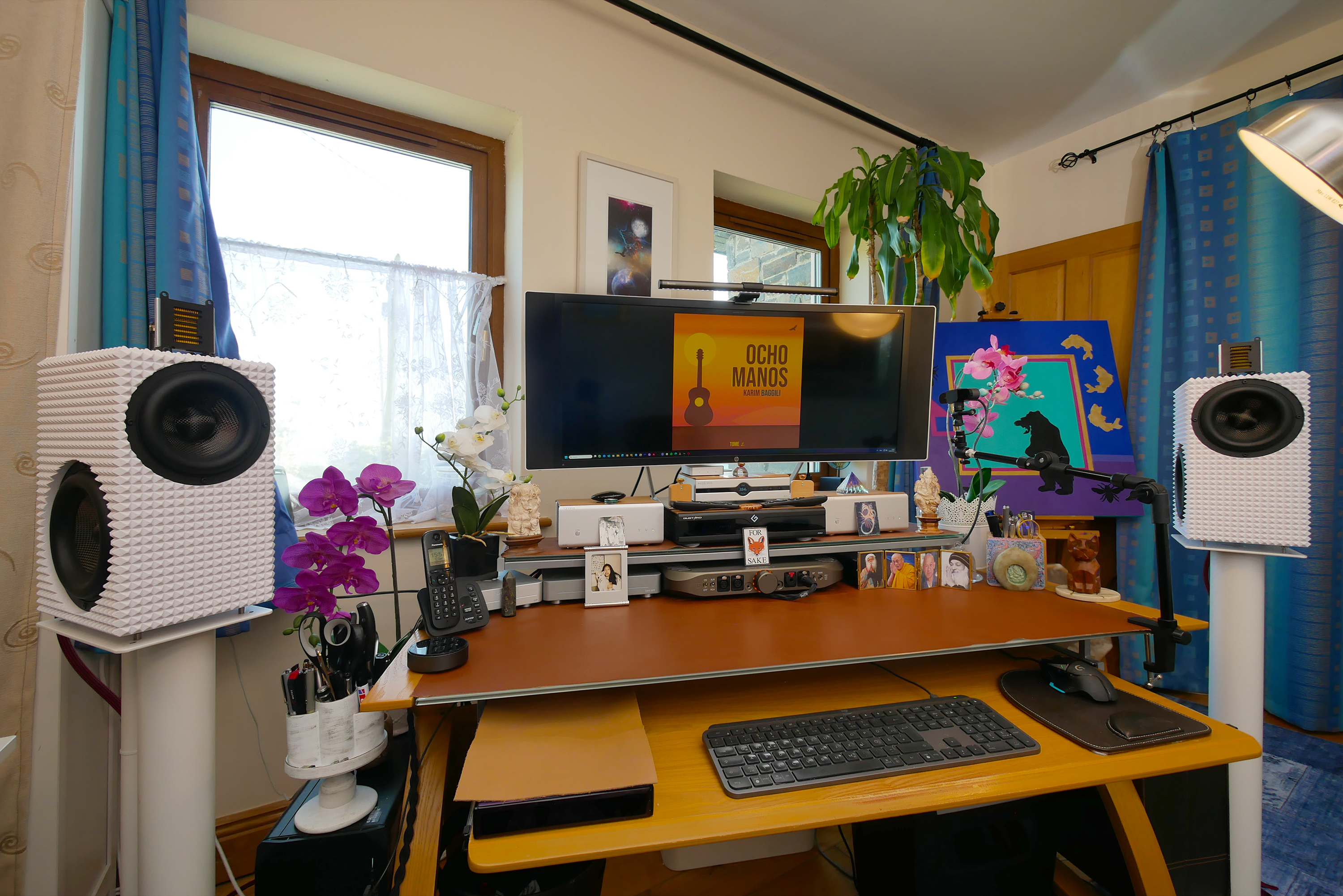
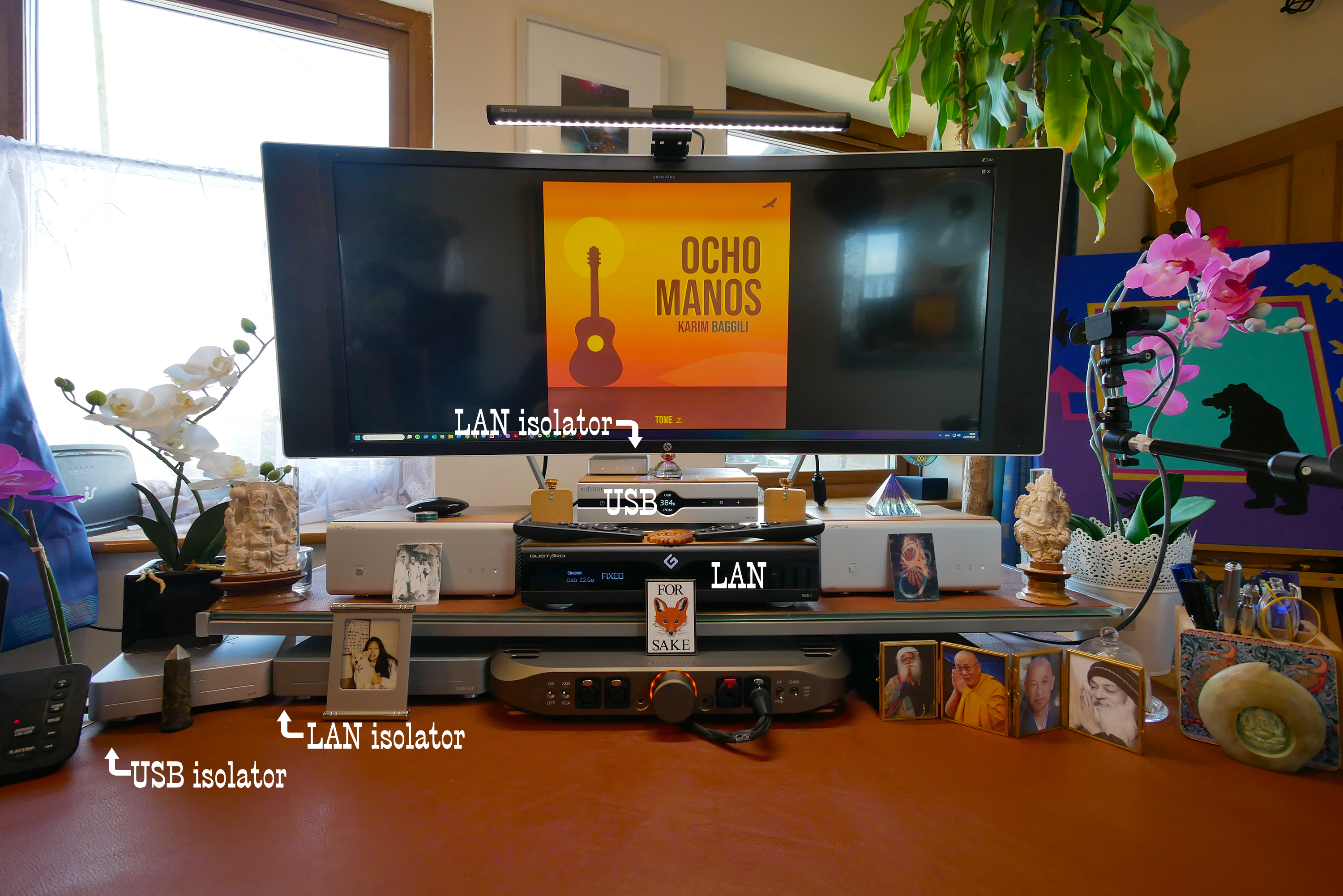
For my office desktop system, the signal flow for cloud files has been as follows:
♦ Router ⇒ LHY EFI ⇒ HP Z2 Win11/64 workstation's network card ⇒ LHY UIP ⇒ USB ⇒ Audalytic DR70 ⇒ FangSound Dionysus ⇒ Topping B200 ⇒ Virtual Hifi Viper speakers.
♦ The parallel path: Audirvana Studio with embedded Qobuz Sublime subscription ⇒ LHY EFI ⇒ router ⇒ Stack SmoothLAN ⇒ CAT7a ⇒ Gustard R26II ⇒ FangSound Dionysus ⇒ Topping B200 ⇒ Virtual Hifi Viper.
If we unpack this confusing alphabet soup, EFI is a single i/o LAN purifier with built-in copper-optical-copper conversion. UIP is a single i/o USB isolator, SmoothLAN another LAN purifier and reclocker. Dionysus is a 40wpc/32Ω headphone amp with full preamp functionality. Now we near today's subject. Both DR70 and R26II are Gustard's discrete R2R DACs with native DSD. Because Audirvana can't integrate my Spotify Premium subscription or YouTube, such content runs through the Windows upsampler to hit my Audalytic DR70 DAC as USB 384. For local files and Qobuz, Audirvana's r8brain sample-rate engine converts all PCM to DSD512. Fed via reclocked Ethernet, the Gustard R26II then processes it as native 22.5MHz DSD. Switching the preamp's XLR/RCA inputs instantly selects between both converters. A linear LHY PSU powers the Audalytic in lieu of its internal SMPS. Happy days. Sun all around.








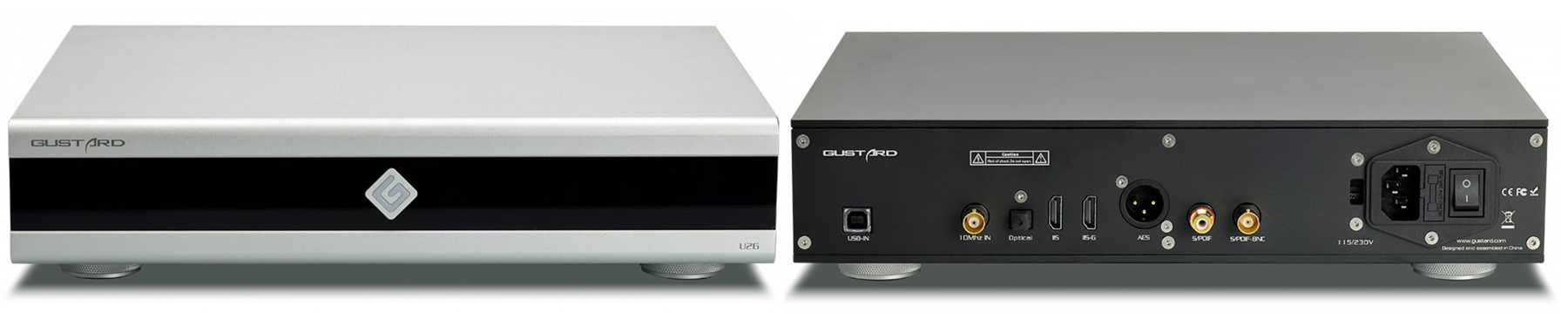
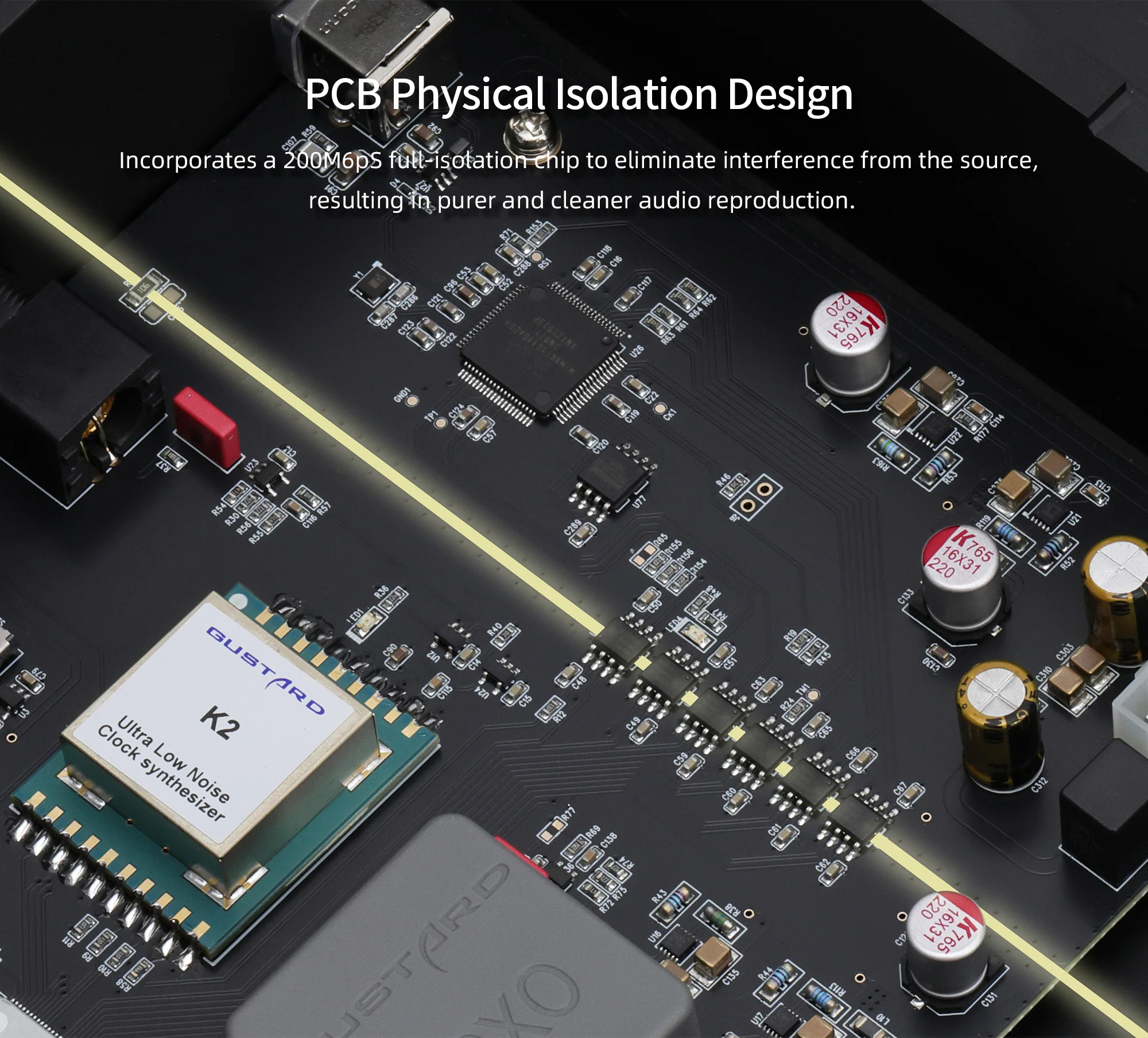
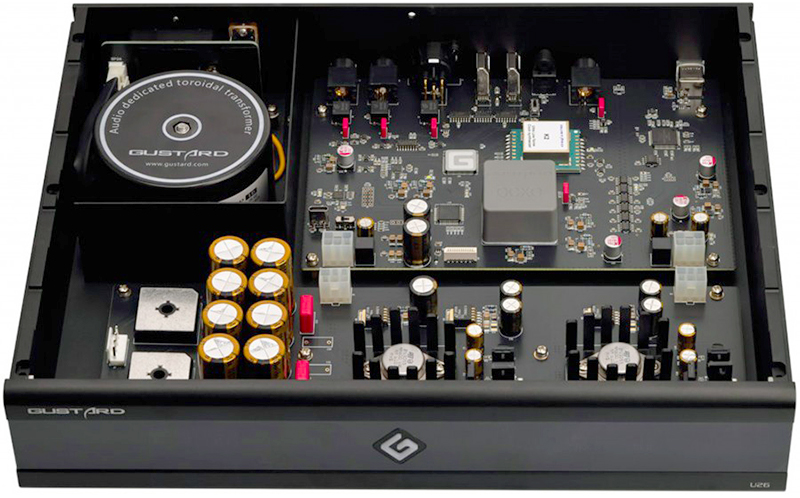
Cue a what-if cloud. What if Gustard's R26II instead processed I²S at PCM1'536 or DSD2'048? Enter the DAC's U26 companion. It's a USB bridge co-developed with Amanero Technologies. It's fitted with a linear power supply and upscale temperature-controlled oscillator. Instead of LHY's USB isolator, my computer's outgoing USB signal would now hit an ARM Cortex-M7 processor loaded with custom code. It generates a reclocked I²S output besides classic coax, BNC, Toslink and AES/EBU. Yet before any of that can happen, the signal entering the U26 must first traverse the below array of six 8-legged digital isolator chips. And to really roast our onions, the U26 still adds a 10MHz clock input. So does the R26II. Digital extremists have a potential upgrade path by syncing two digital processors to one shared clock. My fall-back rack of standby gear had a 6-port LHY clock with 3 x 50Ω sinewave and 3 x 50Ω squarewave feeds to explore just that.
 To be clear: if you already own an ambitious 'phile server or networking DAC, I don't think that you should need any add-ons like today's USB bridge. If the U26 could still improve a costly premium deck, I'd be mightily miffed. I'd expect all such signal mollycoddling to already be handled, period. Otherwise what did I spend the long green on? A screen bigger than my curved HP Z34c or iMac's 27"? Hardly. Instead I might get pawned off on a WiFi tablet or smartphone remote to cause me headaches; and some antique 3rd-party user interface which lacks Lumin's coding chops. Of course the vast majority of users not allergic to WiFi can't relate. And to be sure, neither small hifi boutiques nor big multinationals can afford to cater to outliers. It's up to our kind to find workarounds. For me it means hardwiring; Ethernet and USB bridges; Audirvana 30200; resampling to hi-rate DSD in high-power software not on-chip SRC. These are my assistants to shine up PCfi to the max. It's why after all these years, I still haven't felt the twitch to transition to a 'phile server. I save money, enjoy far larger displays and banish WiFi. Would Gustard's latest USB bridge—or call it a digital-to-digital converter—put even more elbow grease into my max-wax job? That was my first question. The next would look at its effect when replacing a Soundaware D300Ref USB bridge in my bigger upstairs system. That runs Cen.Grand's DSDAC 1.0 Deluxe/POW which resamples all to DSD1'024. My last question would be answered when the US26 replaced a Singxer SU-6 USB bridge in my main system feeding a Sonnet Pasithea DAC. Three scenarios, three chances to shine. Or would it do no more than my resident competition?