

Country of Origin

 This review first appeared in December 2025 on fairaudio.de. By request of the manufacturer and permission of the author, it is hereby syndicated from the German original to reach a broader English audience. Ed.
Reviewer: Jochen Reinecke
Analog sources: Drive: SME Model 15 Tonearm: SME 309 Cartridge: MC: Denon DL-103R, Dynavector DV-20X2 H, Transrotor Figaro; MM: Shelter 201 Other: Flux-HiFi (stylus cleaner), Stack Audio Serene Mat & Stabiliser, VPI HW-16.5 (record washer)
Digital Sources: D/A Converter: Rockna Wavelight+ Music Server: Antipodes K22 G4 Other: Network Acoustics Eno2 (Ethernet Filter), Pink Faun LAN Isolator, Silent Angel Bonn N8 (Switch)
Preamplifiers: Line level: Electrocompaniet EC 4.8 MKII Phono amplifier: BMC Audio MCCI Signature ULN
Power amplifiers: Electrocompaniet AW 800 M
Speaker: Acapella High BassoNobile MK2
Headphones: Audeze LCD-2, Beyerdynamic DT-990, Sennheiser HD 800 S, Sony MDR-1000X, Teufel Supreme In
All-In-One: Ruark Audio R4
Cables: Speaker cable: Dyrholm Audio Phoenix, fis Audio Studioline NF cable: Dyrholm Audio Phoenix XLR, Boaacoustic Blueberry Signal.xlr, fis Audio Livetime (RCA), Vovox and others Digital cables: Audioquest Cinnamon (Toslink), Audioquest Vodka 48 (HDMI/I2S), Boaacoustic Silver Digital Xeno (USB), fis Audio Magic (LAN cable), Wireworld Series 7 Starlight Gold (S/PDIF coaxial) Power cable: fis Audio Blackmagic, fis Audio Studioline Power strip: fis Audio Blackmagic
Rack: Creaktiv Trend 3 (rack) standing on bFly Audio b.DISC (spike mounts), Stack Audio Auva EQ (device decoupling feet)
Accessories: Power filter: Audes ST-3000 Power Conditioner (isolation transformer)
Size of the listening room: Floor area: 40m² Height: 2.45m
Review component retail: €12'950/pr
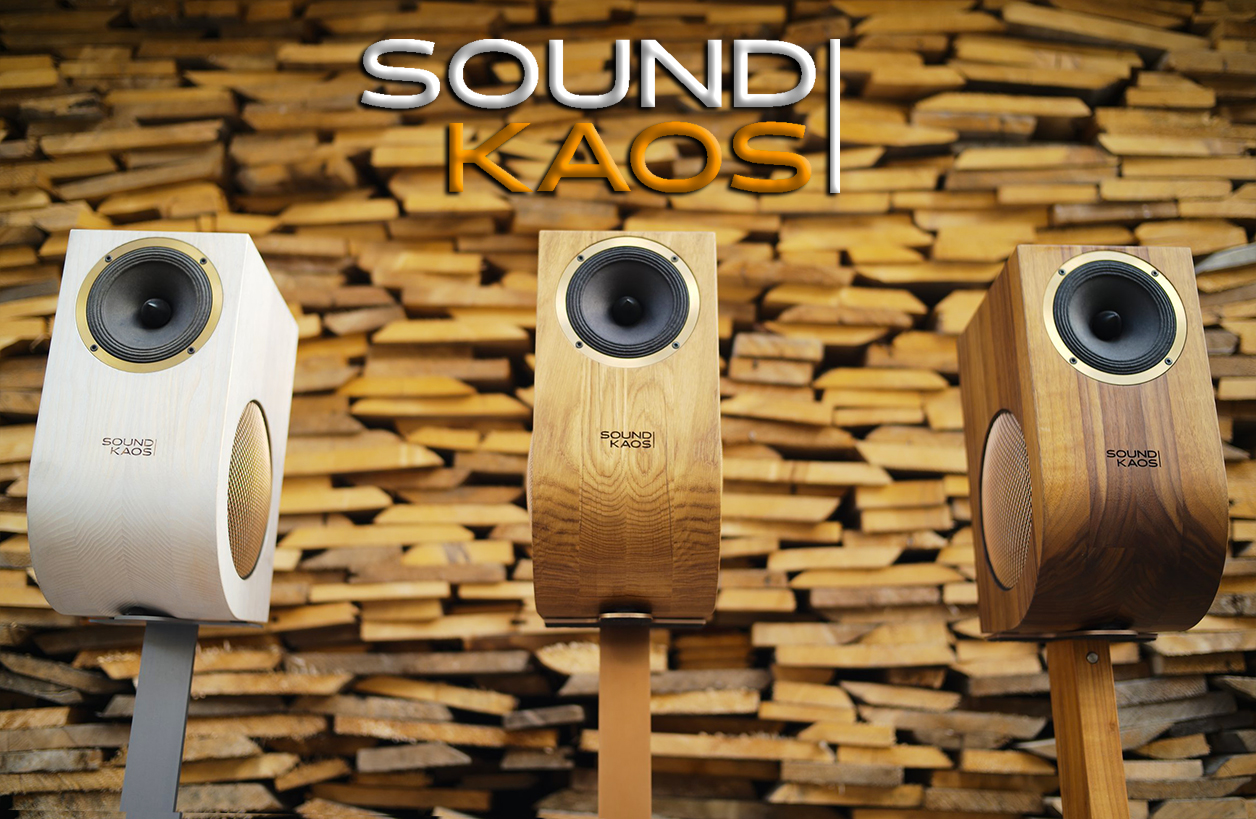
Publisher's prologue: More makes merrier. Yours truly and Warsaw contributor Dawid Grzyb have reviewed and own the Vox3 with built-in LessLoss Firewall module. You can find those reviews in our archives. Why one more review? Because this speaker remains very much current; and because multiple opinions particularly on transducers are valuable to document how they rate not only to different ears and tastes but behave in very different rooms. Adding intel to our hobby's global data base is what reviews are all about. In our pages, here then comes the 3rd opinion on this compact Swiss 3-way speaker. – Ed
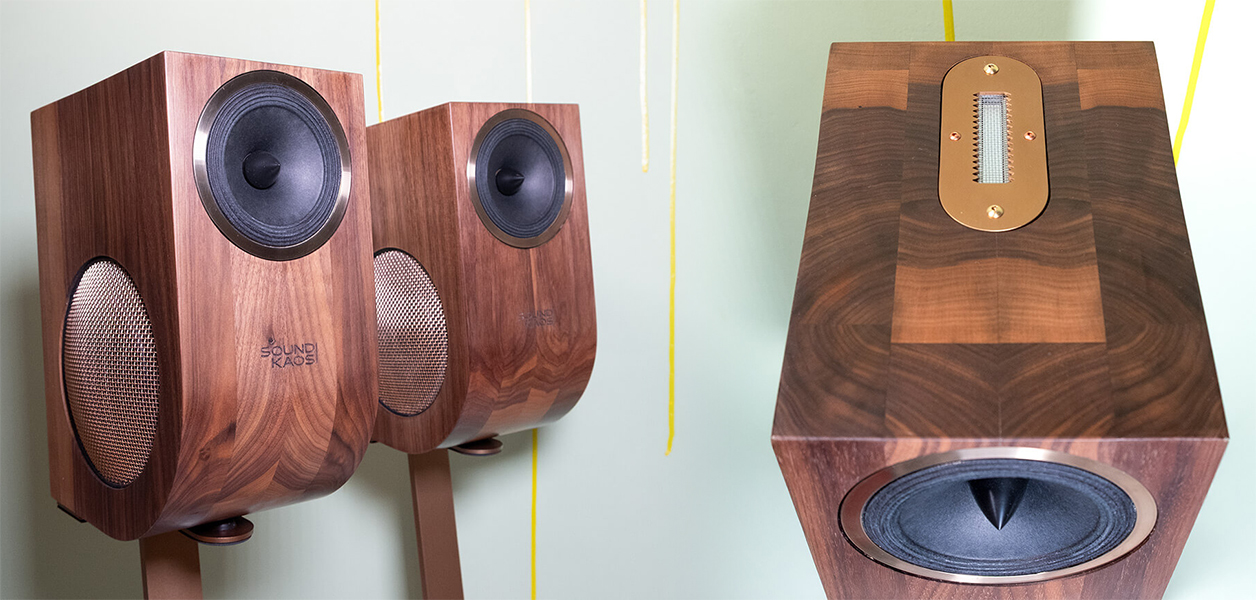
You know the old saying: “Only a small mind keeps order. Genius controls chaos”. As much as this sounds like tasseomancy aka fortune telling from Turkish coffee grounds or tired office humour, there may be a grain of truth to it. And there really is a bit of genius about him, our Swiss Confederate Martin Gateley, head and chief developer of the small sound|kaos boutique. Otherwise he probably wouldn't be able—or have thought of—to cram a four-driver three-way system into a bonsai housing and manage an end result that doesn't equal sonic chaos but is rather excellent and special in the best sense of the word. But let's not get ahead of ourselves. First things first. His portfolio is small, fine and atypical. Gateley has four speaker models of which the smallest Vox 3 can be had in several versions. A duo of woofers, a widebander and ribbon super tweeter make music in a truly cute 17x24x34cm WxDxH solid wood housing. Given these dimensions, even laypeople realize that these four drivers couldn't possibly all fit onto one and the same baffle. And that's how it goes. The central role based on bandwidth is a widebander aimed at the listener. In the €8'450/pr Vox 3F variant, that's sourced from Taiwanese supplier Tang Band beloved by DIYers and in business 30 years next year. Their team are clearly doing something right and are said to offer incredible value.
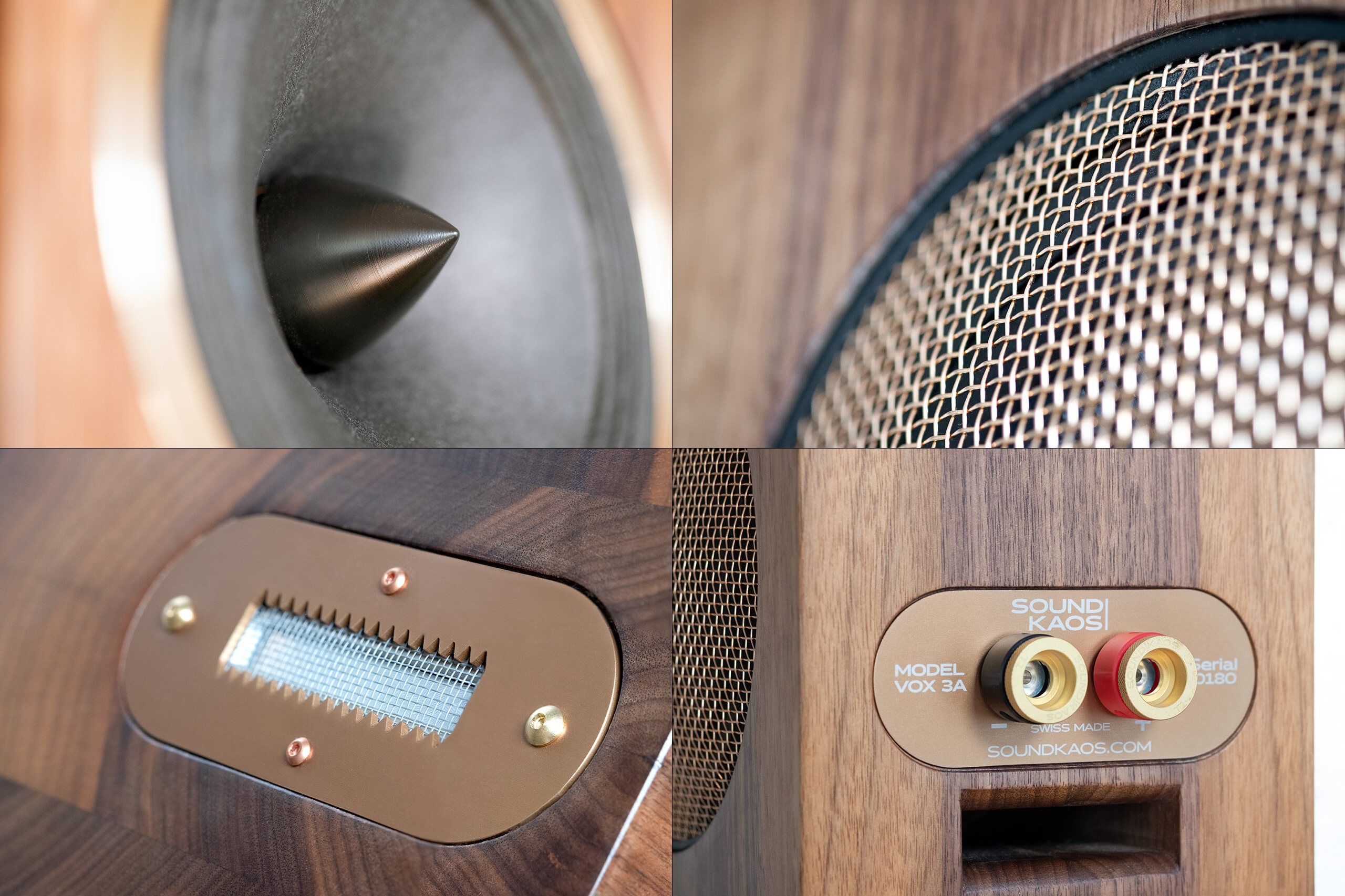
But today that's of no concern. We're dealing with the €12'950/pr A version whose widebander isn't from the Far East but Baden-Württemberg-based Galm Audio to not just help supply-chain stability. True cognoscenti know Galm Audio as a true insider's tip because they develop special drivers for Joachim Gerhard's Süßkind Audio, Odeon and Backes & Müller among others and apparently do so well to not even think of needing their own homepage. Respect! Armin Galm's 11cm cone is custom-made for sound|kaos and packs a bronze basket, French cellulose membrane, pleated paper surround and AlNiCo motor. Above all else, Martin Gateley champions this mix of materials and their allocation for its extraordinarily low natural resonances and above-average detail. The bandwidth of this driver is an astonishing 200Hz to 18kHz. Two horizontally opposed so sidefiring force-cancelling 13cm woofers also from Galm mate carbon-fibre cones to neodymium motors. They enter on a 2nd-order slope. This could be enough given that the Vox 3A now already covers 37Hz to 18kHz. But there's more because it ain't bragging if true. Say hello to a Serbian Raal ribbon which enters very late at 15kHz and attaches to the housing's top for broad dispersion and to relieve the widebander of high treble. It also looks cool even if a recent visitor who shan't be named opined that someone had mounted an ashtray atop the speaker. Cretin!










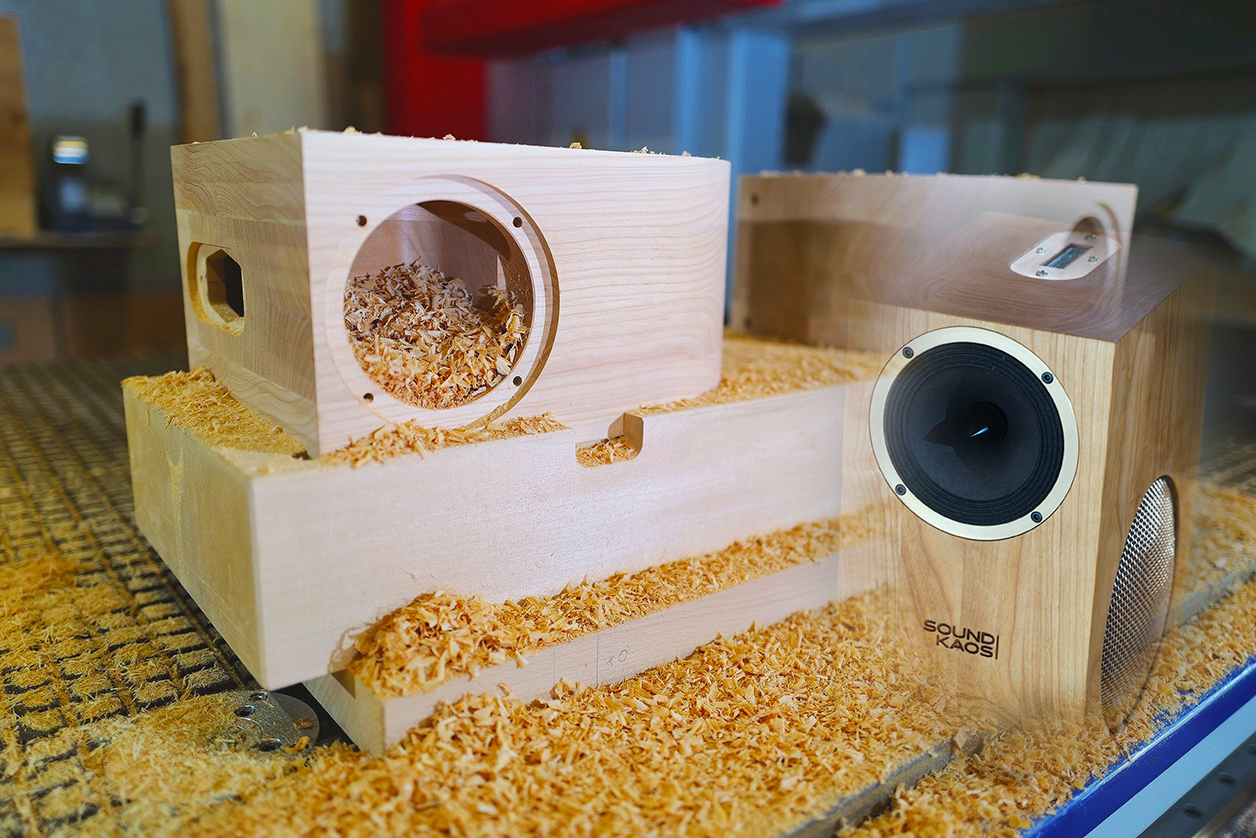
Technically and conceptually we're on most unusual turf already. But there's more. Just look at the photos. The form factor has the lower third follow a very clean curve to the bottom which eliminates standard stands from safe contention. But of course sound|kaos have their own solution in wood or metal. These stands are super easy to assemble and quite clever. A T-bracket on top sports a rubbery nub in the front to decouple and angle the small speaker up so the widebander aims at ear level despite the assembly's shortness. Two bolts in rubber sleeves complete the tri-point mounting with more decoupling. Unlike much of the competition, sound|kaos shun MDF even HDF to prefer solid wood. It's partly genetic since over the phone Martin explained that woodworking runs in the family. His grandfather operated a sawmill, his uncle a carpentry shop. What's more, Martin finds that solid wood is far quicker to release any input resonances. For example, a 25mm² Spruce cube contains more than 3'000'000 nano pores which release vibrations far more efficiently than denser saw-dust composites where resonances break down more slowly. It's one reason why violin and guitar tops often use Spruce. Enter the trouble of choices. sound|kaos offer four wood species so walnut, cherry, ash and oak and the latter two may be had in different stains. Add workmanship. As we'd expect at this price, it is spectacularly good. The housing is a clamshell affair milled from four bonded planks of solid into which the driver and terminal holes are bored from the outside. This requires special expertise, experience and machinery. Martin is probably quite safe from copycats to enjoy the exclusive on this compact but incredibly refined sonic sculpture.
And these were just the main talking points. For all the details, I could go on for pages whilst you're probably ready for sonic impressions now. So I refer you to Srajan's reviews of the Vox 3A and F which cover more genesis and background data. But before we go sonic, one last hard fact. There's still a 3rd variant of this model called the Vox 3AFW [€14'950] equipped with a very special tweak, LessLoss C-MARC hookup wiring and their passive inline FireWall noise filter. One could easily write a separate review on that very unusual and possibly somewhat esoteric filter. Martin Gateley kindly supplied me with the external version so I could bolt it on and convert my 3A to 3AWF (with FireWall) status. I'll get to its effect at the end of today's test.
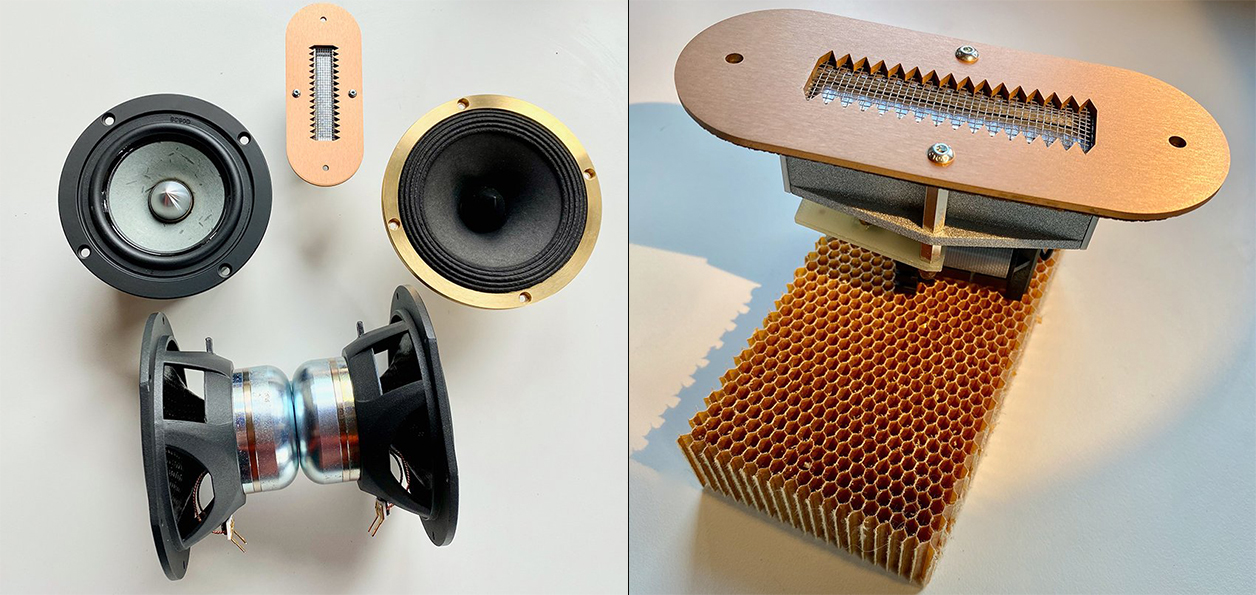 This honey-comb diffuser disrupts internal air turbulence.
Now ears on. You'll already be crystal that this is no do-it-all, doesn't pretend at it or even desires to. As Martin shrugs off unperturbed, he neither wants to nor can afford to battle the large-scale speaker houses which release classic shoebox 2-ways twice a year. He aimed at an exquisite aural experience and heirloom object. If you thrive on big bass attacks and that thunderous hit in the pit of your gut, stop reading. Once we eclipse room volumes, that's beyond today's scope. But the great news is, it can do lots of other stuff – seductive and fascinating stuff. Here I'll kick off with a discipline which at fairaudio.de usually factors later in a review: soundstaging. With a conscience unblemished by exaggeration, I shall simply call it spectacular; if you make the effort to set them up correctly. They already sound most capable in nearly any conceivable setup but once we nail just the right spots, transform to downright magical. The little Swiss then even add a somewhat unusual wrinkle. Normally soundstage width broadens as we move the speakers apart. Too far and we risk losing centre fill or focus. With the Vox 3A it can definitely be advantageous not to move them too far apart. In fact, depth of field may increase if we place them a bit closer. I ended up with 1.5 metres between them and 2.5 metres to the chair.

12
