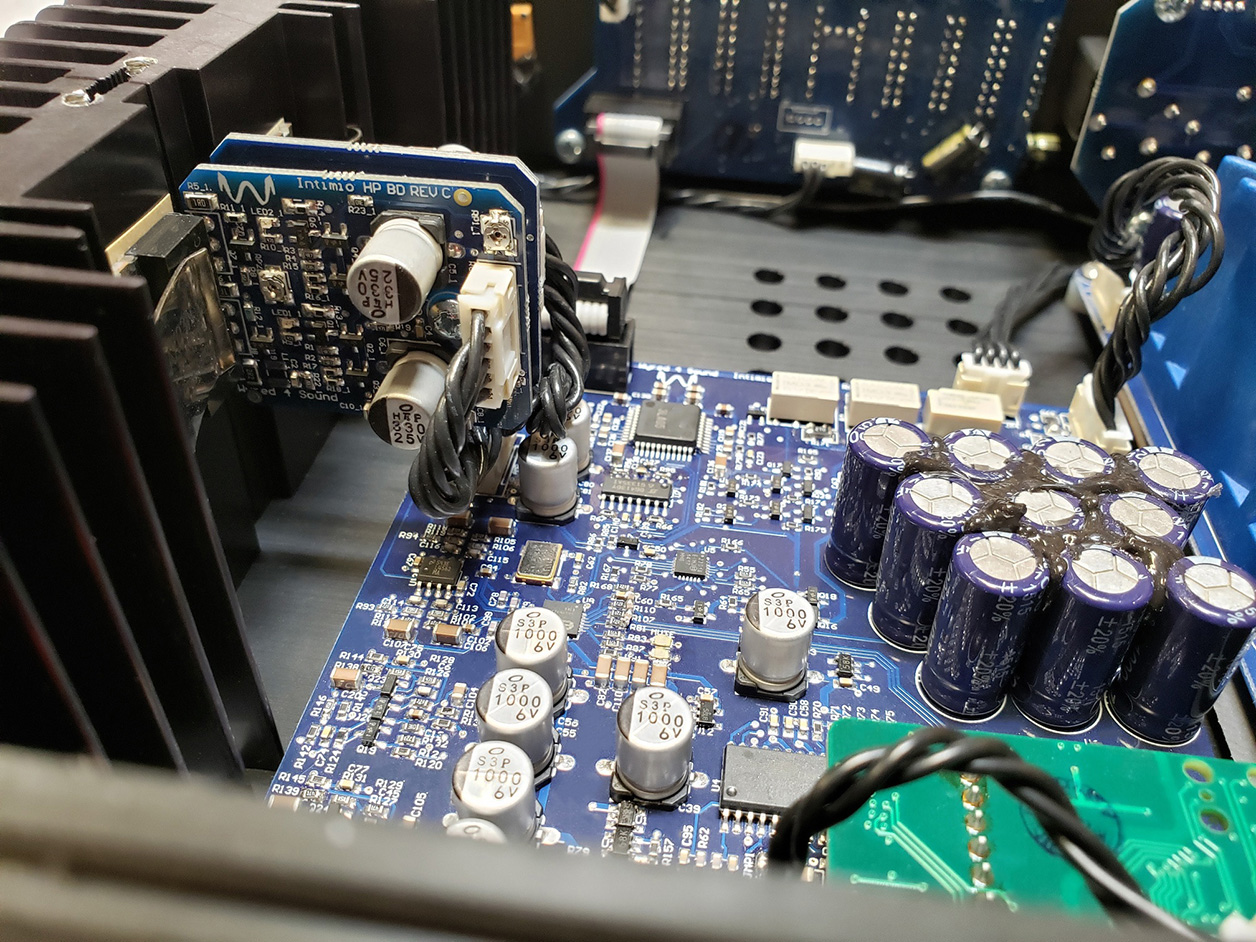
This closeup shows one of the power transistors in its clip holder fronting the front-facing output board. As a class A design, there's just one always-on output device per channel.
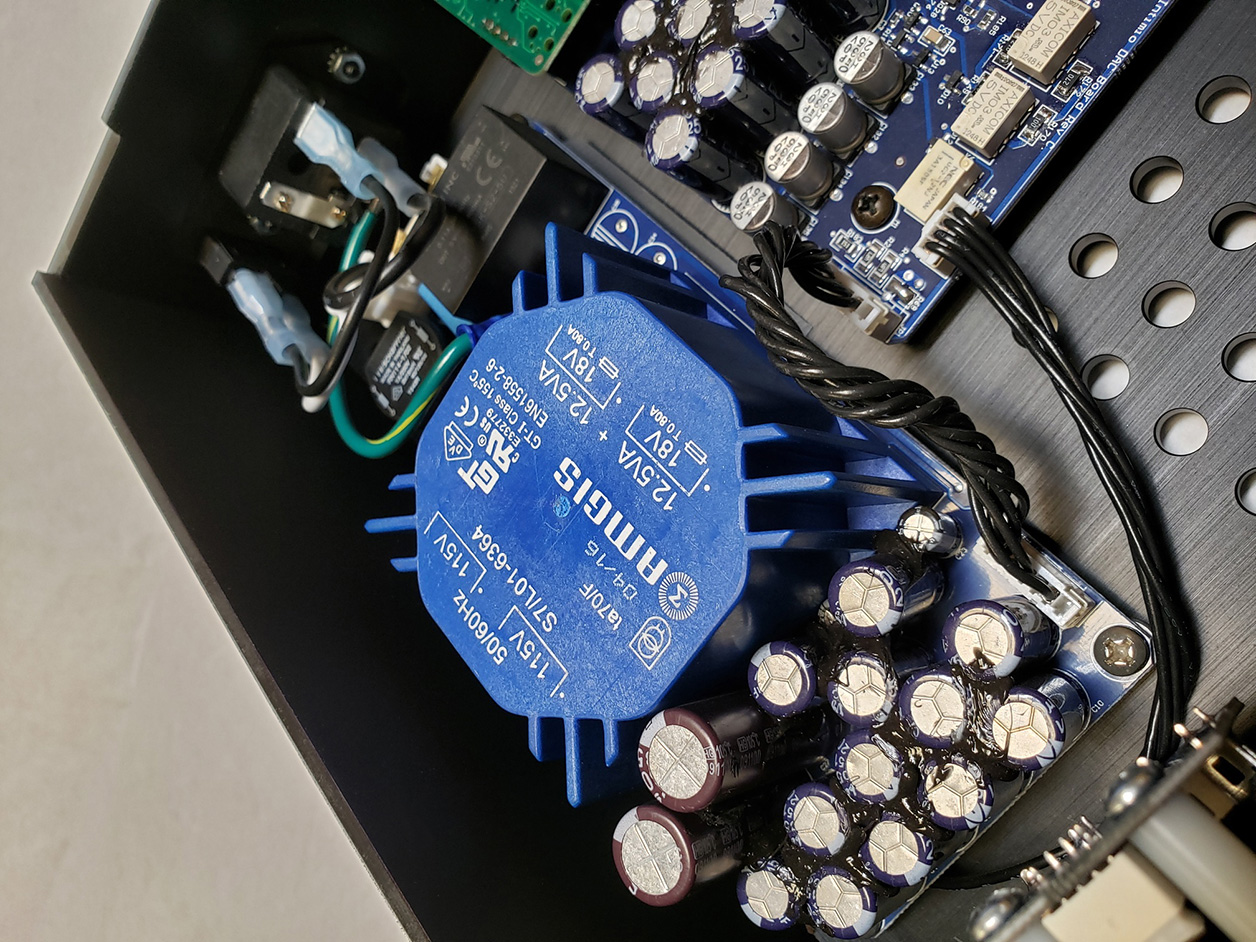
The encapsulated Amgis power transformer is a 25VA type with 18V secondaries.
And that's all she said on that score.







 "What's your beef?" she'll ask next.
To which your happy answer will be, "loads".
As soon as you jack into íntimo, you'll have sudden recall. Big amps make small speakers unusually hung. And we don't mean the hanging of wallpaper. So íntimo plays even smaller phones like the Meze Neo Classic seriously bottom up, ballsy and propulsive.
Whilst it reads adolescent or macho even, it's like a powerful big engine with plenty of torque strapped to a denuded frame hitting the drag strip. The effect of big power and current kicking in fast and furious is unmistakable.
Especially after my desktop's Swiss Eversound Essence coax actives with Gordon Rankin-designed Sabre DAC, analog pre, 50wpc ICEpower and 3.5mm headfi port—these cast aluminium boxers in their fine powder coat rebranded to Feniks to sell direct—hearing a more compact lightweight sound with its focus on speed and transparency transform into a far weightier warmer read with bigger dynamic reach and fatter tone was impressive.
This also held versus the COS Engineering H1 DAC/headphone machine from Taiwan with its switching power supply and op-amp based balanced drivers. That too was voiced different.
First impressions with deliberately modest albeit quality headphones thus laid it on thick. íntimo mirrored our class A XA-30.8 Pass Labs speaker amp on toneful chunkiness and a rich bass-first slant. This means long-term comfort with enhanced scaling of endless dynamic arcs and cracking bass power.
Whilst doing Bruckner with headfi is folly—70 orchestral players in 20cm of skull width stand no chance at any remotely believable illusion—on dynamic reserves and tracking of orgasmic peaks, you actually could with íntimo. High SPL at this proximity are dangerous so big orchestral of the romantic period does not really belong, again, but the point is made.
The rest is up to you.
(I'd recommend Sergiu Celibidache with the Munich Philharmonic.)