 Once I developed this point of view, I quickly concluded that Angus Leung's achievement quite differed from others that had crossed my path in the last 20 years. He bundles a particular concentrate of qualities rarely found amongst even the best brands. He reminds us that we can be excessively clean and neutral yet simultaneously supremely attractive and efficient. On Sera una Noche's latest album Otra Noche, these dynamics and pin-point soundstage mapping surprised me. The latter quality is highly sought after in Asia where listeners demand to very precisely localize each instrument and sound in time and space. On "La Yumba" the Angus set was incredibly attentive to this. Then came timbe quality allied to a global softness which lent real authenticity to instruments and voices like the polyphonic nuances on "Golondrinas". Its little atmospheric details emerged better than over my reference amps. This reading no longer suggested background information but equal validity for an even-tiered sonic imagery rather than a superposition of various layers defined with unequal focus.
Thus far only the Bel Canto Black system had managed equivalent nuance.
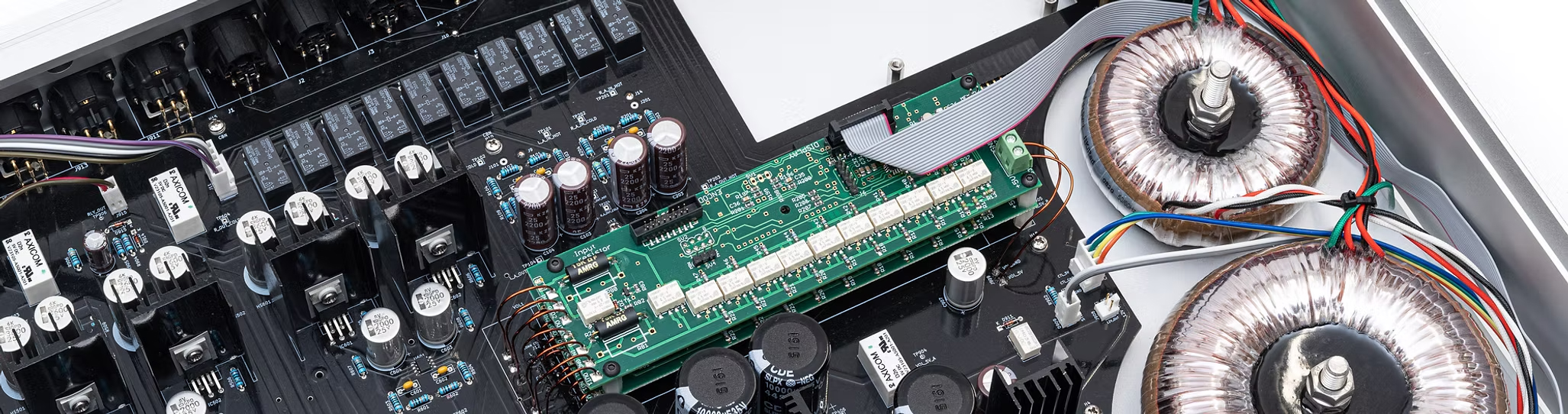
 The Symphonic Dances by Rachmaninov for two pianos performed by Dong Hyek Lim and Martha Argerich are remarkable in terms of profusion of detail, sense of nuance, with the WestminsterLab trio easily seen as highly dynamic, even its pianissimo passages teeming with detail. Bass response was incredible. The Hong Kong set allowed me to access all the dramatic intensity stirred up by these two master performers. When I swapped back to my Esoteric S-05, the first impression was of a different tonal balance. I heard a lot more treble with my Japanese class A stereo amp. This ultimately made the comparison more difficult because these readings diverged too far to establish an absolute hierarchy. The Rei monos were gentler to downplay the treble. The Esoteric emphasized clarity even if in certain moments seeming crude even uncomfortable by contrast. The Rei were the vocally more emotive to actually improve separation. They also retrieved more small
  details like the clicking of wind-instrument keys, string friction, the decay of percussion or piano. My Esoteric was drier so less sonorous on male or female voices. Yet the biggest difference came when I fronted the Esoteric with the Quest preamp which clearly added great value over what my N-05XD player integrates.
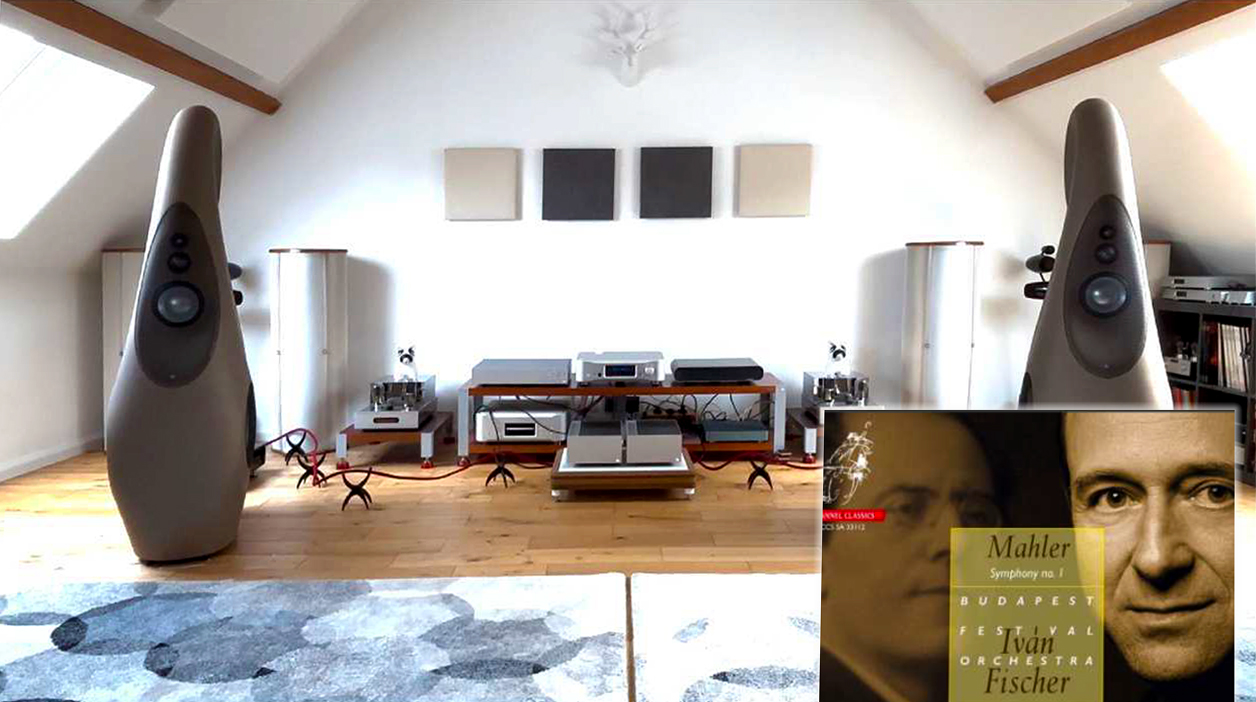
Listening to the 2nd Violin Sonata by César Franck with violinist Maria Solozobova and pianist Martha Argerich, new information revealed: notably the separation between right and left hand of the Argentinian pianist, undoubtedly the result of better definition of bass and upper bass. The violin too sounded a little less acidic so more midrange-focused. On the finale of the Mahler's 1st Symphony, a DSD master of the Budapest Festival Orchestra under by Ivan Fischer, the Rei monos showed off their strong power, demonstrating incredible stability across all transients regardless of pitch. It was in such circumstances that I understood that whilst not needing a lot of power to go loud, my Vivid G1S speakers still perform better with more abundant top-quality watts. Bass definition in particular improved and the tympani hits as well as massed tuttis showed more clarity. Once again I was impressed by a soundstage which extended unbroken rather than assembling a few individual image snapshots. Already I was amazed by the operational silence of these amplifiers. I could detect no residual noise from my Vivid Audio G1S. This silence was absolute and in my experience quite rate even amongst top-class components.










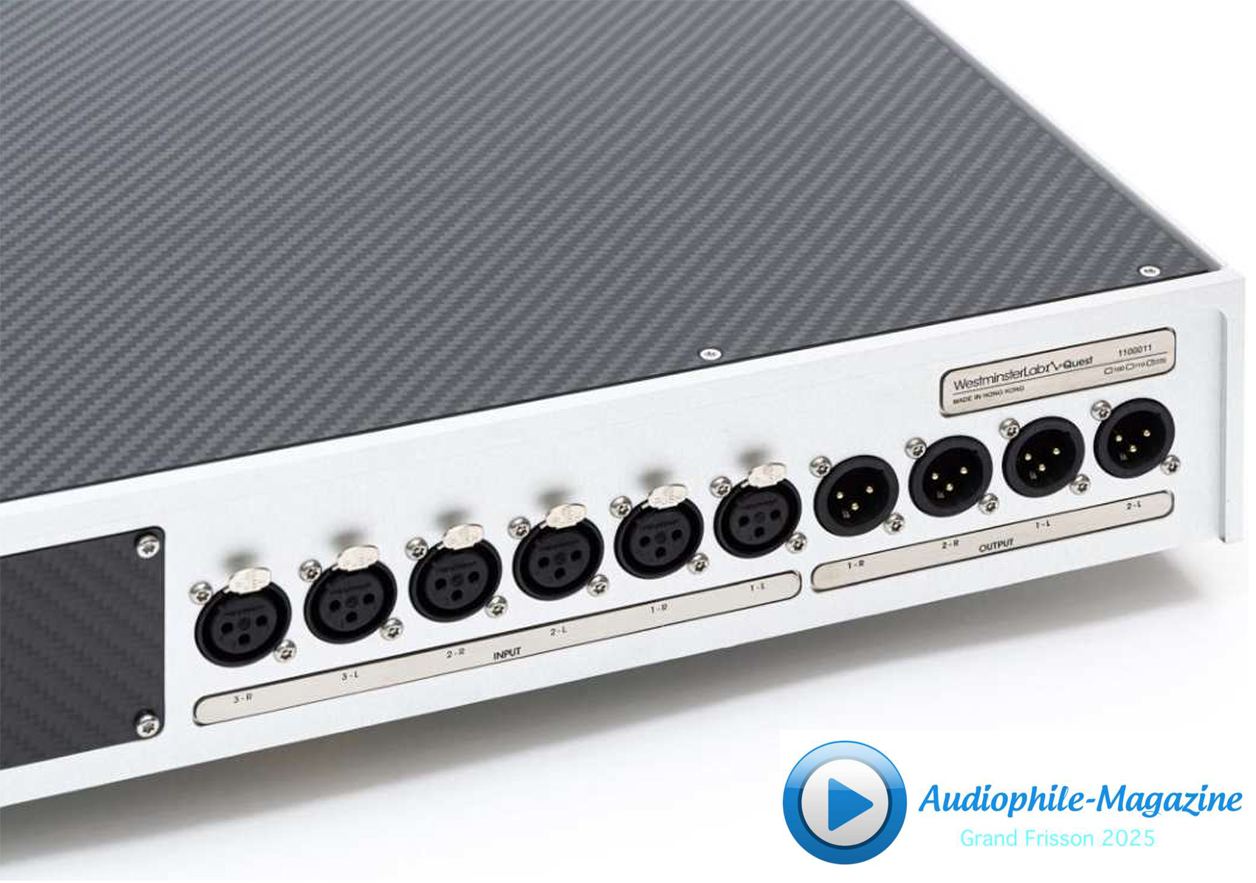
But as soon as the music commenced, adding the Quest preamp brought a touch of liveliness, presence, fluidity and clarity superior to other preamps in my experience. I've often championed the importance of a premium preamplifier. Whilst supposedly in charge of naught but volume control and source selection, it really represents a system's soul. Angus Leung seemingly agrees and states that he wanted to put this question back on the table regardless of the sophistication of the latest digital volume implementations. Truth told, I had finally arrived at the conclusion myself that at present, handling volume in the digital domain with the French Leedh algorithm as implemented by Lumin is just as effective. This had sent some large preamps like Robert Koda's packing. My very good but ultimately quite noisy 101D valve pre from Coincident Speaker Technology followed. Now the Quest repositioned the purely analogue preamplifier all the way at the very top of my hierarchy again; and in stark relief. Yet in no way did it modify my system's tonal balance upon insertion. I encountered exactly the same colour palette via my N-05XD's variable outputs as its fixed outputs run through the Quest. Yet simultaneously, everything felt very different. We move from a restitution which suddenly sounds almost emaciated to a sound far more liquid and natural, more present, alive and direct. Without doubt, this was the crown jewel of this set, its user experience just as excellent, with the dot-matrix volume display most legible, remote access flawless. The Quest/Rei proposition obviously aims at a very restricted circle of well-off audiophiles. Add the uncompromising decision for pure symmetrical signal processing and the potential clientele becomes even more limited. The amplifiers also do require warm-up despite any promised acceleration with iBias. After a while, the heatsinks expand slightly to emit a characteristic clink. Again, this very exclusive trio is fully oriented towards a quintessence of transparency; and particularly convincing and successful at it.
Beyond doubt is the level of aural pleasure it generated by removing all remaining dross, slag and artifacts. How relative so-called loyalty is as a concept. Far more absolute felt the great thrill experienced throughout my time with this ambitious system. I can therefore recommend it without any reservations.