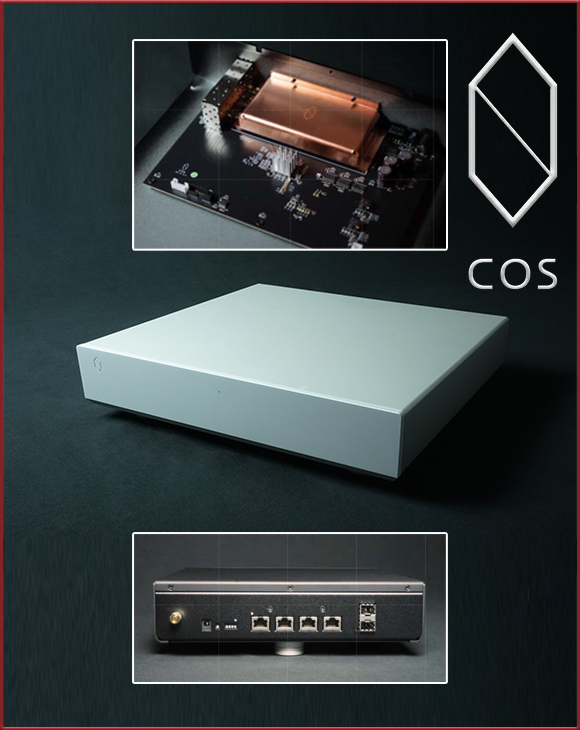
In their context Kraftwerk-10 is a traditional filter design built to remove high-frequency AC noise and DC offset, power up to 10 devices and provide surge/over-voltage/lightning protection. While this is rather useful utility, it's fair to ask the total cost we pay for in sonics. More about that shortly. The key differences between Kraftwerk-10 and Silk don't involve the original circuit. Lukasz explained that the feedback from dozens of Silk customers was wholly positive so he saw no need to change anything in that regard. The new housing measures 440 x 505 x 180mm WxDxH which makes it the largest I've seen in such a product. It also shows 10/11kg on the scale with black/copper bonnet so is enjoyably light. At my place it ran cool under load so I guess that the heavy perforations on the cheeks and hood are mostly cosmetic. The front panel with its analog voltage and amperage meters looks rather vintage while the business end with a rarely seen C19 inlet allows Kraftwerk-10 to withstand up to 100A (!) peak currents whilst each of its 10 inlets rates up to 10A and 2.3kW. Four filtered sockets neighbour a second filtered quad additionally coupled to a DC blocker while the remaining two outlets remain unfiltered but DC blocked. These options invite experiments with connecting our gear to various outlets. There's more to this. Many even far more expensive power distributors have one common output type, some two usually for digital/analog and high/low-draw electronics. Three specialized outlet groups are rare and one of Kraftwerk-10's main attractions.
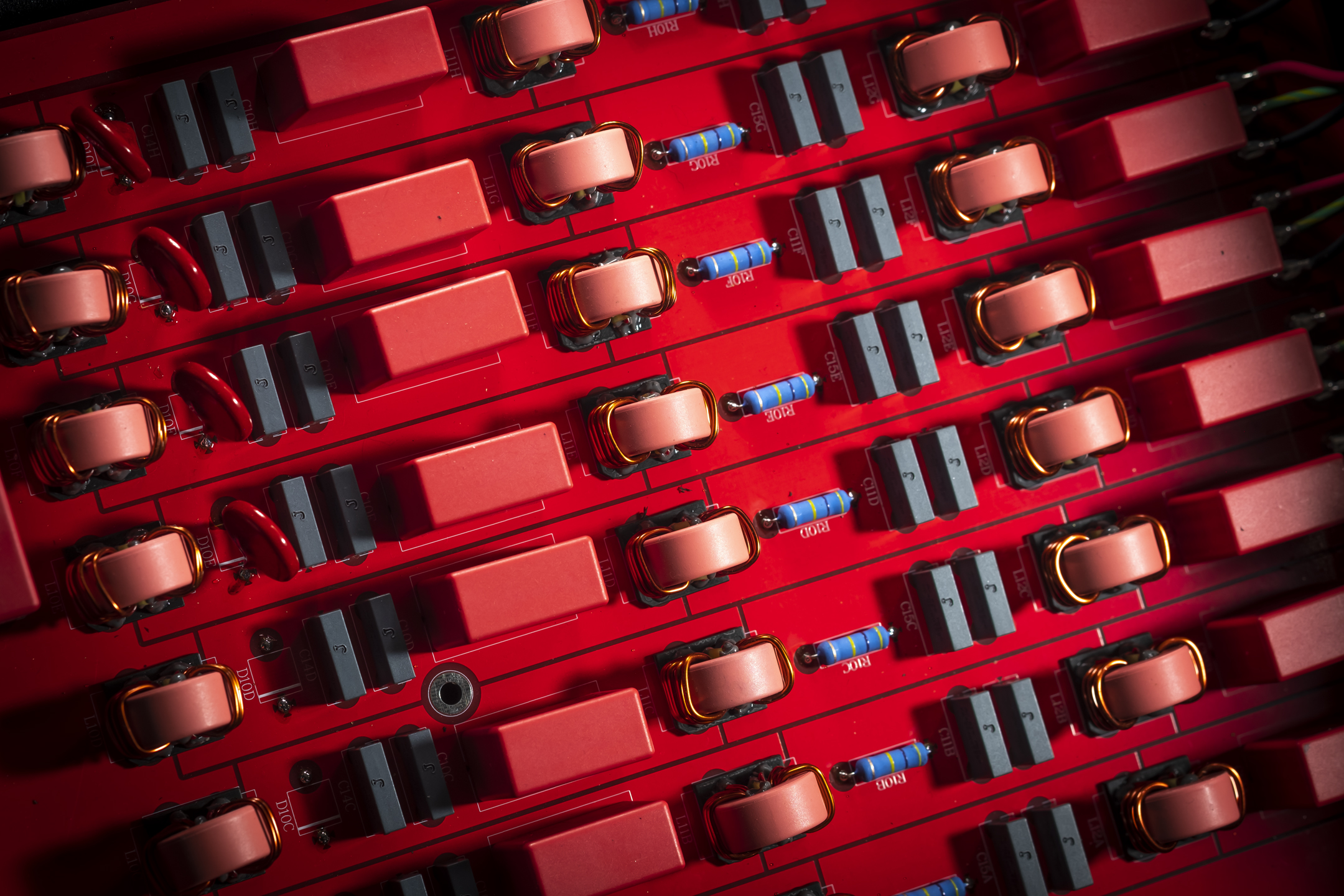
Its internals sit on one massive PCB packed with two large DC-blocking caps and eight separate filter blocks. Each circuit comprises three independent filters designed to engage at ~100kHz and overlap to provide continuous noise attenuation far into the bat realm. The small protection module piggy-backed onto the motherboard is based on varistors which sacrifice themselves upon encountering a voltage spike. When that happens, new parts must be installed. To save time and make the process easy, LampizatOr simply replace the protection modules. Lastly, Kraftwerk-10 dressed in all black sells for €4'000 which seems oddly affordable considering the brand's usual stickers. I'm fairly lucky with product comparisons in that usually I sample hardware that doesn't require a lot of swaps. But when power products such as Kraftwerk-10 are on the menu, downtime and multiple cable moves are the routine. The Polish power distributor connected to the wall duplex via its provided C19-terminated power cord, the other mains socket saw a LessLoss Entropic C-MARC power cable that went into the companion LessLoss Power Distributor. For each swap I had to power off six devices (my streamer, DAC, linear PSU and analog kit), reconnect as many C-MARC power cords, turn everything back on, wait for about two minutes then listen. Rinse and repeat as required. Here I should mention that my full power loom runs the LessLoss box in series with the equivalent Boenicke Power Gate for twice the filter capacity. Alas, using this posh stack against today's effort wouldn't be fair. Mapping what the Kraftwerk-10 loaner could do against a similarly priced competitor was the goal. The first power cord that goes between power distributor/strip and wall is critical for the entire system's performance. Ideally the same AC cable should have fed the LessLoss and LampizatOr. Not today courtesy of the latter's C19 inlet that didn't accept the C13 plugs on the C-MARC power cords at my disposal.









The last time a proper power filter sat in my system was several years ago. Since then I learnt what quite a few colleagues have known far longer. Our kind generally agrees that high-tiered purist passive AC distributors beat active power filters on articulation, imaging and particularly quickness and dynamics. These designs score higher largely because of what they don't have inside, namely the usual current-obstructing filter and protection parts. If we accept this status quo, the trade-off is painfully obvious. Now it's on us to decide whether the safety of our components is worth sacrificing sound quality for. I'm against it for two reasons. One, in my inner-city environs I don't see the need for additional protection between my powerline's high-grade circuit breaker and fused electronic kit. Two, I want my system to sound its best. If skipping one safety layer is the price to pay, so be it. Your mileage may vary. If your electric installation has a track record of causing costly faults, a conditioner capable of preventing them isn't a bad idea. Sound quality is also a matter of perspective. If your system is plenty quick, dynamic and outlined but also bright or hollow, anaemic or pale, a touch more body, warmth and calmness baked into a typical power conditioner may offset these downsides.
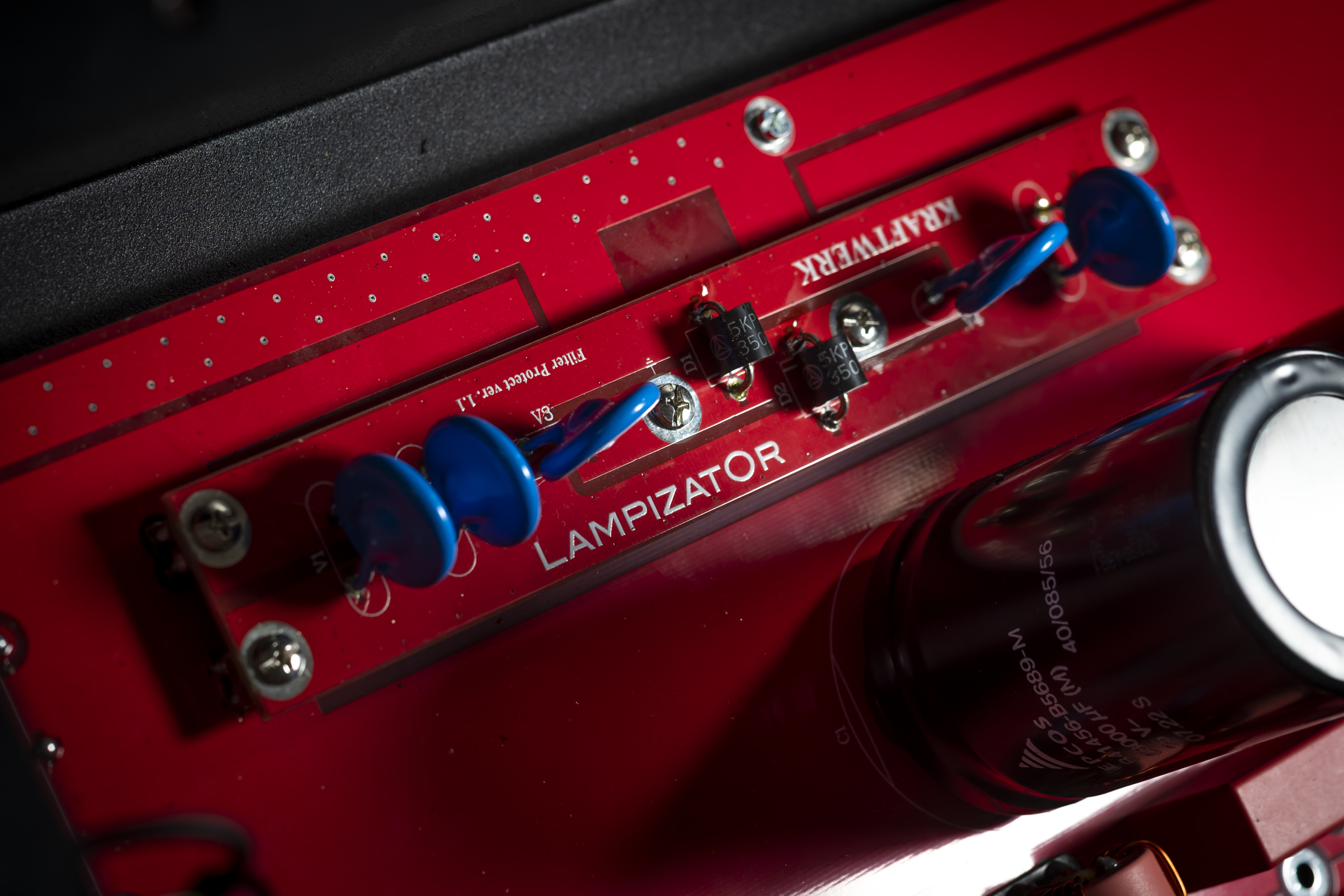 Surge protection MOV.
My question was, would Kraftwerk-10 behave like a conventional AC filter? While such designs still manage a dynamic lively sound compared to standard-issue power bars, experience tells me that purist passive affairs from Ansuz or LessLoss have the clear advantage. This is one key reason why I've been using the Lithuanian product. For some extra context, in its review I wrote that "…it behaved in a predictable manner. Being geared for extensive noise rejection translated into deep background blackness upon which moisture, resolution and aural space blossomed. Listeners not familiar with such action will find it a bit eerie at first because speakers, DACs and amps voiced to sound thick, syrupy and round can't be well-illuminated resolved spacious types. Although usually the balance slides between these two opposite traits, highly effective power components are subject to different laws that can blend them. Their darkish overall aesthetic from potent noise trimming not only removes excess fuzz, bloom, grain and veil but also accelerates the sonic MO to become more open, vigorous and alive. In other words, products such as the LessLoss distributor know how to sound juicy, texturally generous, propulsive, informational and spatially unrestricted at the same time. That makes them as special and desirable as they are extremely universal." Then there's this: "There's no question that the LessLoss' attractive dark round bloomy anchored sound makes a nice first focal point. Once that early sensation settles, the product introduces itself as a resolution fiend capable of casting enormously large soundscapes busy with easily served details and pinpoint-accurate finely outlined images. The ability to behave so velvety, smooth, atmospheric, elastic and keen on extracting the tiniest particles is highly admirable. Performance this all-encompassing comes across as superbly balanced and free from obvious trade-offs. As such the LessLoss won't steer a system's general gestalt in any particular direction. Instead it'll gracefully elevate what's already there. It won't carry out plastic surgery. Rather, it's an expert makeup artist with the skill to emphasize a system's very best assets. Above all, the LessLoss renders music substantially more flowing and digestible which I see as its primary attractor and most critical task. This highly universal and accomplished product will audibly improve every setup I can imagine no matter its core flavour."