
Country of Origin

Reviewer: Srajan Ebaen
Financial interests: click here
 Main system: Sources: Retina 5K 27" iMac (i5, 256GB SSD, 40GB RAM, Sonoma 14), 4TB external SSD with Thunderbolt 3, Audirvana Studio, Qobuz Sublime, Singxer SU-6 USB bridge, LHY Audio SW-8 & SW-6 switch, Sonnet Pasithea, LAiV Audio Harmony; Active filter: spl Audio Crossover MkII; Power amplifiers: Vinshine/Kinki Dazzle & mono Ncore 500 Nord Acoustic amps on subwoofer; Headamp: Enleum AMP-23R; Phones: Raal 1995 Immanis; Loudspeakers: Qualio IQ [on loan] Cables: Exact Express Flame, Furutech; Power delivery: 2 x Kinki/Vinshine Tai Hang on amps and source stack, Furutech DPS-4.1 between wall and conditioners; Equipment rack: Artesanía Audio Exoteryc double-wide 3-tier with optional glass shelves, Exoteryc amp stands; Sundry accessories: Acoustic System resonators, AudioQuest FogLifters; Room: 6 x 8m with open door behind listening seat; Room treatment: 2 x PSI Audio AVAA C214 active bass traps
2nd system: Source: FiiO R7 into Soundaware D300Ref SD transport to Cen.Grand DSDAC 1.0 Deluxe with POW; Preamp/filter: Lifesaver Audio Gradient Box 2; Amplifier: Kinki Studio EX-B7 monos; Loudspeakers: ModalAkustik MusikBoxx; Subwoofer: Zu Method; Cable loom: Exact Express Earth; Power delivery: Vibex Granada/Alhambra, Akiko Audio Corelli Corundum & Castello Solo; Equipment rack: Hifistay Mythology Transform X-Frame [on extended loan]; Sundry accessories: Furutech cable lifts, Furutech NFC Clear Lines; Room: ~3.5 x 8m
2nd headfi system: DAC: Cen.Grand DSDAC 1.0 Deluxe with POW; Headamp: Cen.Grand Silver Fox; Headphones: Raal 1995 Magna, HifiMan Susvara
Desktop system: Source: HP Z2 workstation Win11/64; USB bridge: LHY UIP; Ethernet bridge: LHY EFI; Ethernet reclocker: Stack SmoothLAN; DACs: Audalytic DR701 & Gustard R26II; Headphone/preamp: FangSound Dionysus; Speaker amps: Topping B200 monos; Loudspeakers: Virtual Hifi Viper; Headphones: Final D-8000, aune SR7000, FiiO FT7
Upstairs headfi system: FiiO R7; Headphones: Meze 109 Pro, Fiio FT3
2nd upstairs speaker system: Source: FiiO R7; DAC/pre: COS D1; Amplifier: Kinki EX-M7; Loudspeakers: sound|kaos Vox3 with Dynaudio S18 subwoofer
2-channel video system: Source: Oppo BDP-105; All-in-One: Gold Note IS-1000 Deluxe; Loudspeakers: Zu Mission; Subwoofer: Zu Mission; Power delivery: Furutech eTP-8, Room: ~6x4m
Review component retail incl. 23% VAT: €790/1, €730ea./2, €663ea./3, €622ea./4. €598ea/5+ all for lengths up to 1.8m
 |
 |
 |
 |
 |
 |
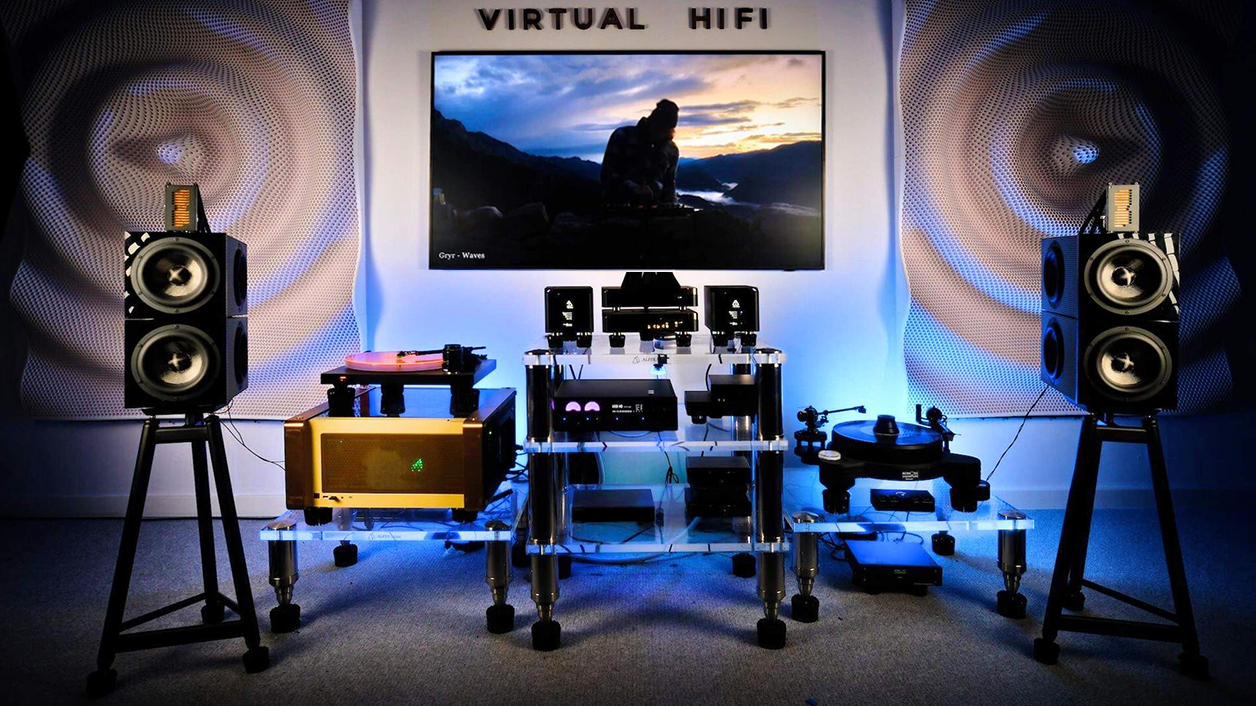 The previous concentric-ripples panels still in place – also laboriously 3D printed by Grzegorz.
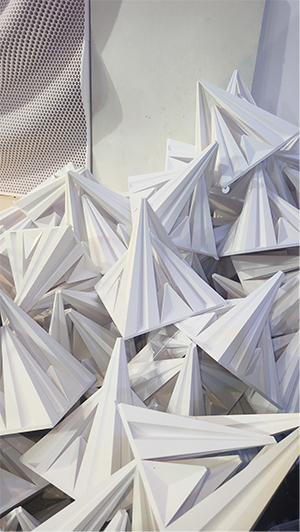 "I'll premiere my new Vermillion power cords next week. These are unique. After testing various conductors and topologies, I decided on solid cores for each positive and negative leg terminated with silver-plated pure copper Viborg plugs. They match the existing Vermillion line very well and with impressive results. Compared to stranded wires, these provide a punchier more present sound with significantly less blur and excellent rhythmic pace. Would you be interested in featuring these in your system for testing?" That was Polish wunderkind Grzegorz Rulka of Cube, Qualio and Virtual Hifi here soliciting for his own brand. I'd already reviewed his 3D-printed Viper and Cobra monitors, the 3D-printed Vibron isolation footers, Vermillion interconnects and speaker cables. Following up with AC wires was the obvious next step. Deep familiarity—my main speakers are the hybrid-dipole IQ he also had a hand in—is what calls him a wunderkind. Like Parisian auteur cum polymath Franck Tchang of acoustic resonator fame (and Liveline cables, Duevel-style omni speakers and an amplifier collab with Karan Acoustics), Greg operates well outside the box. To that he adds fabulous resourcefulness and work ethics. Those manifest said creativity at a surprising clip. I'm still under gag orders for two more upcoming projects. But already, "for over two months now I've run my 3D printers non-stop to complete new acoustic panels for my studio's front wall. These are crazy hollow pyramids capable of diffusing 350Hz – 20kHz. I need about 100 more to cover the entire wall."
Doodled onto beer-stained paper napkins in pubs around the world, crazy ideas are a dime a dozen. Crazy ideas materialized with personal ingenuity are another matter. Or as the simple version has it, talk is cheap. By extension, those who can, do. Those who can't become teachers. Those who can't teach become critics; what our space calls reviewers. As such, our helpless kind has endless questions. "For acoustic panels there are modelling tools used in architectural acoustics which can simulate how surfaces scatter sound. Programs like Ease, Odeon or Comsol can give a pretty good idea on how different geometries behave and what frequency range they might influence. So they definitely help reduce the amount of blind prototyping. But in reality it's never pure software exercise. Once geometry becomes strongly three-dimensional and multi-scale, simulations quickly get very complex and computation heavy. At that point I still rely a lot on prototypes and listening. The nice thing with 3D printing is that I can change the geometry in CAD and have a physical prototype the next day. The iteration cycle is very fast compared to traditional manufacturing.
"The underlying physics are fairly straightforward. The maximum depth of a structure gives you a rough idea where diffusion begins because it creates different reflection path lengths. With a depth of about 240mm, the lower limit of meaningful diffusion starts at ~350Hz. Above that point the surface increasingly breaks up reflections instead of behaving like a simple flat reflector. What makes this particular panel interesting is that the geometry behaves like several diffusers combined into one structure. Because of the cavities between layers and the recessed shapes inside each arm, you effectively get multiple scales working at once. The overall depth of the panel handles the lower part of the diffusion range. The midrange is influenced by the larger structural features. The higher frequencies scatter with the narrowing arms tapering from roughly 80mm down to about 3mm. On top of that there's additional multidimensional diffraction created by the alternating arrangement of the arms which rotate 90° relative to each other.
"The empty space between those arms forms a small internal cavity where reflections bounce around before leaving the structure again. Together with the grooves in the arms this creates a lot of different scatter paths. Instead of behaving like a single periodic diffuser, this produces a much more complex distribution of reflections across the mid and high frequencies. Another important point is that shapes like this are basically only practical due to 3D printing. Many of my designs rely on internal cavities, undercuts and layered structures which would be very difficult or extremely expensive to produce with traditional CNC machining or woodworking. With additive manufacturing these kinds of geometries become easy to build and even easier to experiment with. And to be honest, there was also a more visual motivation behind it. I simply like geometric patterns. With these 3D panels and some ambient light in the room, the cast shadows become a kind of wall theatre. The whole surface starts to look almost like those crystalline landscapes on Superman's home planet—like a wall made of Kryptonite crystals. That interplay between acoustics and light was very much part of the idea. So in the end it's really a mix of basic acoustic theory, some modelling where it makes sense, a lot of rapid prototyping and a bit of design curiosity. The ability to print new geometries overnight makes exploring these ideas much more practical than it used to be." Well, put that way, anyone can do it. Right.
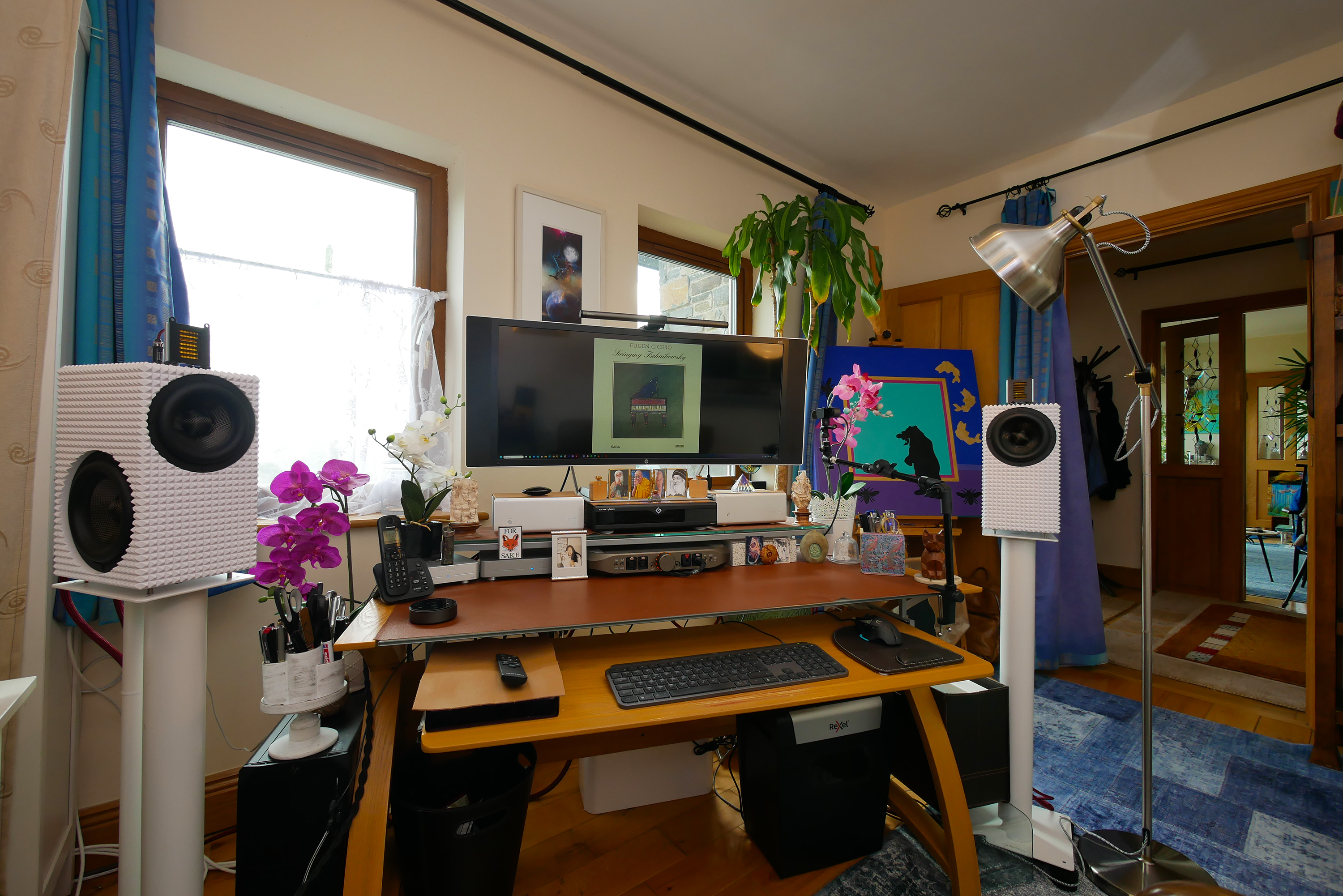
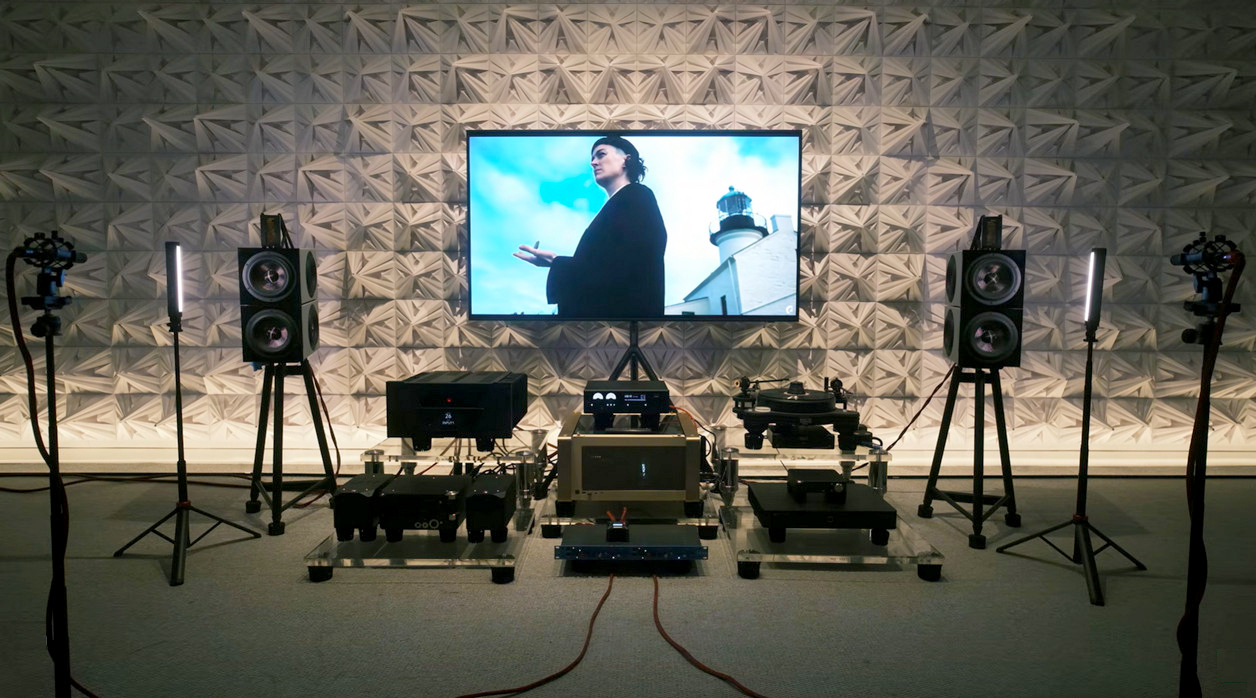 The end result of three dissimilar 3D tiles scattered randomly but mirror-imaged left and right across a total of 350 units.






Power cords. Some people stick with the generics that came with their electronics. Anything more couldn't possibly matter. Others disagree from politely to vehemently. They pursue aftermarket cords which can run the gamut from slinky to excessively bulky, from affordable to very much not. Some make no special claims. Shunyata specimens carry tags like transverse axial polarizer, QR/BB™ and kinetic phase-inversion process. Stealth tout special geometries, Siltech proprietary mono-crystal silver conductors. Choices abound. So do theories and explanations. The only certain conclusion 2½ decades on this beat fostered in me is that I favour one-brand looms simply because they establish consistency of design, material choices and sonic aims. Seeing how my desktop already had Vermillion signal cables plus Viper monitors, I asked for 1m Vermillion power links to outfit DAC, preamp and USB/Ethernet bridges since the amps use C7 plugs on their external power supplies. Soon I'd see all red when in keeping with their names, these wires sheath in an attractive red/black weave. Well, I would see red if I stood behind my desk. In the usual orientation facing its screen, the only cables I see just a bit of are the speaker cables where they depart from behind the stands' uprights. It's why my eyes roll up when cable dress code gets too posh. But I do appreciate customers who, like car enthusiasts loving finessed engine details which only show when the bonnet is popped, want immaculate hifi jewelry standards applied also to their wires. That's just not me. Though when we conflate personal preference with everyone else's as the linked 'matter' feature explores, we really lose the plot. Personal preference matters very much; to us. How much transfers to others we can't know.
When Grzegorz confirmed dispatch of 4 x 1m cords, my office and the below nearfield systems could slurp their AC through Vermillion straws without confusing the issue with competing means. I had a plan. Even my lounge leopard Chai Baba the Bengal was in.