
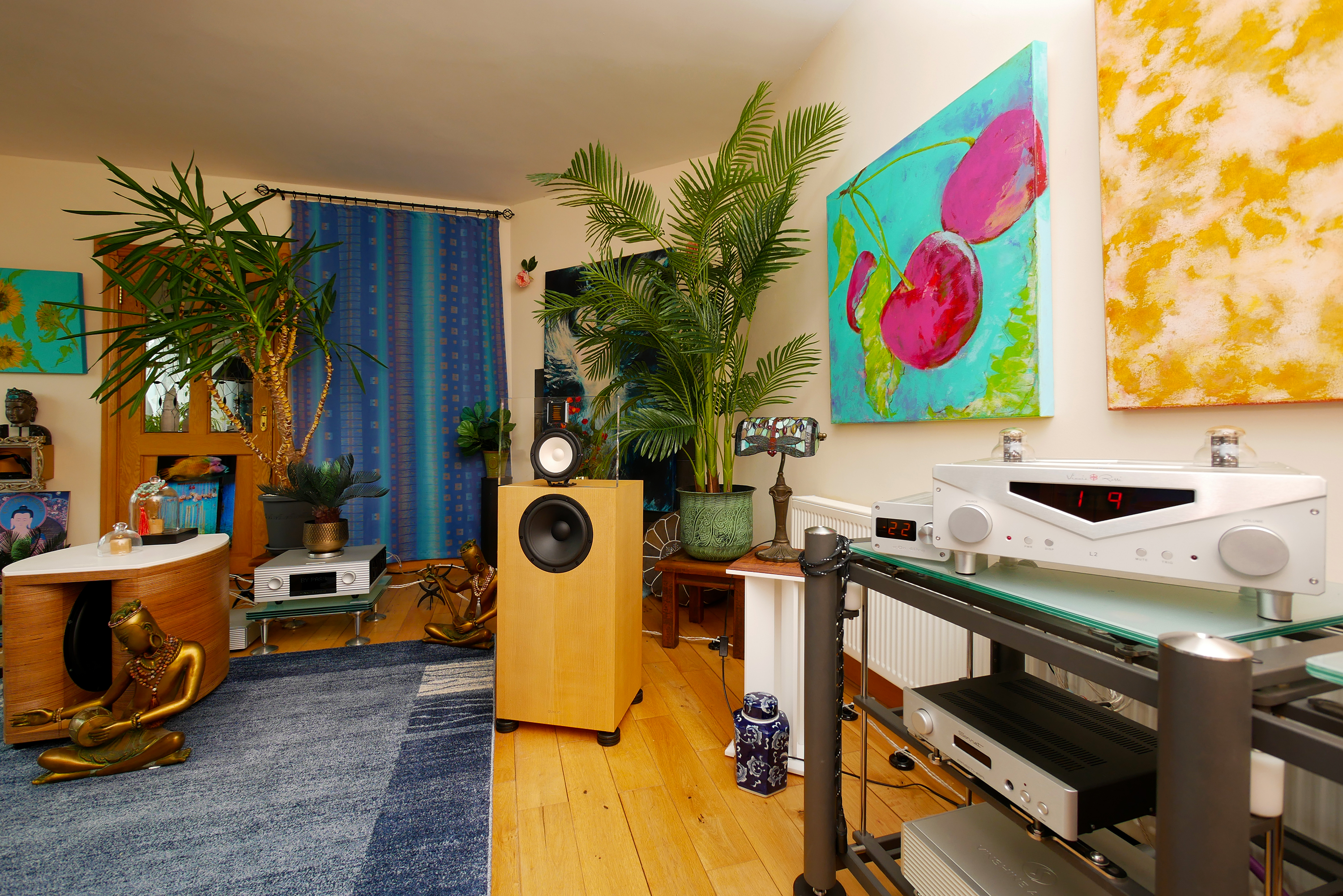
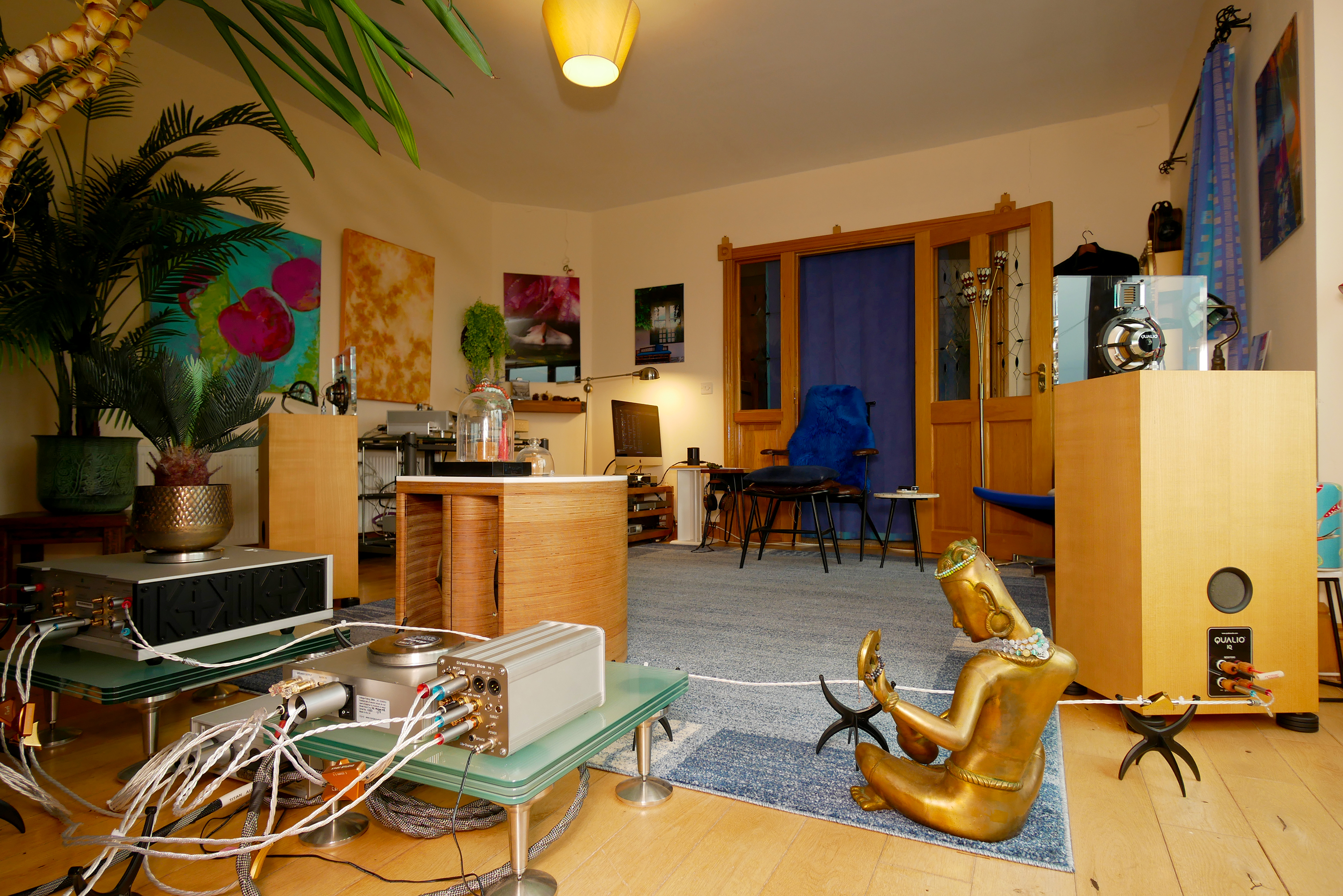
Six degrees of separation. A butterfly flaps its wings. Popular lore contains memorable turns of phrase which stress the interconnectedness of it all. Why would our hifi hobby be exempt? My main system had been quite stable for a while. But it recently underwent a change with VinshineX/Kinki Studio's Dazzle integrated replacing Kinki's EX-B7 monos. Dazzle's bypass feature can circumvent its preamp stage with 13dB of voltage gain and precision attenuator. Now it operates as a classic dual-mono stereo amp of 23dB voltage gain. In integrated mode, attenuator fixed at ~65/100, we're at unity gain. Hello alternate 'power amp' mode when preceded by a variable source, preamp or crossover. My stereo 2.1 setup with a dual 15-inch Ripol subwoofer involves an external crossover to execute a mirror-imaged 4th-order hi/lo-pass. Set to 100Hz, the semi-cardioid radiation pattern of the sub plus dual active PSI Audio bass traps in the front corners cover my 35/70Hz room modes. This avoids riding their ringing resonance and amplitude peaks in standard stereo 2.0 mode whence bass behaves omnidirectional. The sub's primary purpose thus isn't to add but subtract bass; or rather, its reflections colloquially known as room gain but practically causing linearity losses in the time and amplitude domains.

With plenty of free time around the holidays when all review loans delivered had wrapped, I did many experiments to optimize how exactly Dazzle beds into my big system. Once you have a hifi which properly reflects your tastes at a very high level of magnification power, any change telegraphs without fail. Enter my Rule of SfS. It's short for 'something for something' as opposed to, 'something for nothing'. In the later phases of system maturity, SfN disappears. Now there's nothing whose addition doesn't prompt an immediate counter reaction. Tuck here and cause a nip there. Dazzle's tuning from likely richer class A bias and other refinements had added body and density over my monos. Bypassing its built-in preamp stage lightened up those extras by more than restoring my former top-end lucidity. Usually I control volume with the variable reference voltage on my Sonnet Pasithea DAC's R2R ladders; or the resistive attenuator of my crossover. For shits and giggles I now tried a Vinnie Rossi L2 Signature linestage with direct-coupled Western Electric 300B. Without any treble roll-off, the glowing glass still diminished some HF sheen like going from polished chrome's gleam to a silver turned slightly matte from oxidation. Flamenco palmas and foot stomps softened their percussive violence. Space grew thicker. Tone modulations were less differentiated but colour saturation and hues clearly enhanced. Less desired shifts accompanied appreciated wins. Tom's gain was Jerry's loss. Any silly hope of a free lunch proved magical thinking: illusory. Then a lightbulb moment. Replacing the direct-heated triodes with multi-tapped autoformers by way of Pál Nagy's icOn Pro4 completely reset the scene though it took a few hours to kick in. Space quickened. So did percussive incisiveness. Tone modulations broadened their hues. The top end was smoother than going DAC⇒crossover. Most of all, intensity transmission had gone up. Right then I had met my ideal match.
When we're starting out, anything is better than nothing. That's always a plain win. With growing exposure, we recognize then fix clear shortcomings. In that phase, something for nothing still dominates. Once a particular tuning has achieved a base level of competence, that stops. Now the madness of disregarding the new order of things begins. At a show, dealer or friend's, we get exposed to a different tuning where certain qualities overshadow our own to create desire to add them. Though initial excitement may be high, it will be short-lived once we recognize what this addition diminished. We might be reasonable and call it a fair trade. We might be unhappy and pursue corrective action which is bound to fail for the same reason. The only cure I see is to either have multiple systems to satisfy our appetite for sushi one day, risotto the next and a burger the following day; or adaptive components or features. Those could mean tube or op-amp rolling; selectable paths of tubes or transistors; adjustable negative feedback; multi-stage gain; clearly voiced cable sets; resampling PCM to high-rate DSD. For example, an Esoteric preamp I once owned had 0/12/24dB gain settings. They sounded sufficiently different to shift performance values. As I wrote in my Dazzle review, "add tone weight. In its shadow enters an injection of darkness. Add density. Watch transparency as the ability to see through complex mixes obscure. I think that our perception has a very hard time not to equate more of one with less of the other."
An example I've used before to explain this dates back to when I first met my future wife. I gifted her with a large reproduction of an Eyvind Earle painting which I had framed in a local Santa Rosa shoppe. Deciding on the colour of the frame and mat showed me how their proximity to the actual painting shifted its colour values. Blue next to green makes the green look different than against red. Since I didn't change the painting, surrounding it with many different frame and paper samples demonstrated conclusively how subjective perception overrides factual invariability; what in audio we say measures the same. To me the painting very clearly looked different depending on what surrounded it. I had to decide by trial 'n' error against personal taste which frame and mat to go with and display this painting to what I thought was it best effect to present to my beloved. In hifi, we know from super tweeters and subwoofers how their addition has effects well beyond their actual bandwidth. Logic might protest that a super tweeter could affect the bass whilst our ear/brain is certain of it. Now only lovers of the abstract would side with logic. Pragmatists acknowledge that in these matters, perception is reality. Part of this reality is that we can't have it all.
Certain audio qualities are mutually exclusive when we're after their maximum expressions. Acoustic bass sounds fundamentally different from electric bass. A Baroque period ensemble requires a very different touch than Death Metal. So we prioritize and set our intricate deeply layered balance to the best of our ability, budget and majority musical diet and SPL. What guides us is personal taste. To proceed successfully, we ought to first have fully developed personal taste. But we can't earn that without experience. It implies endless trial 'n' error, maximum sampling, open-ended curiosity. We don't know what we don't know until confronted by something beyond our ken. Aha, that too is possible. I had no idea but really like it. How to duplicate it in my room, with my current hardware and budget? Since nobody except us has any of it including our particular taste, nobody can fundamentally help us. Like in marriage—unless pleasing our parents is more important—with our decisions we're on our own. After going on three decades of intense immersion in hifi, I view my Rule of SfS as virtually inviolable. Having all of the possible sonic qualities at their peak, simultaneously, is impossible. Never mind the hardware or budget. How our perception of interconnected relativity works won't allow it in the first place. The sooner we accept that, the sooner we can allow ourselves to settle into what we have and enjoy it as just one of very many possibilities; simply the one we actually settled down with.
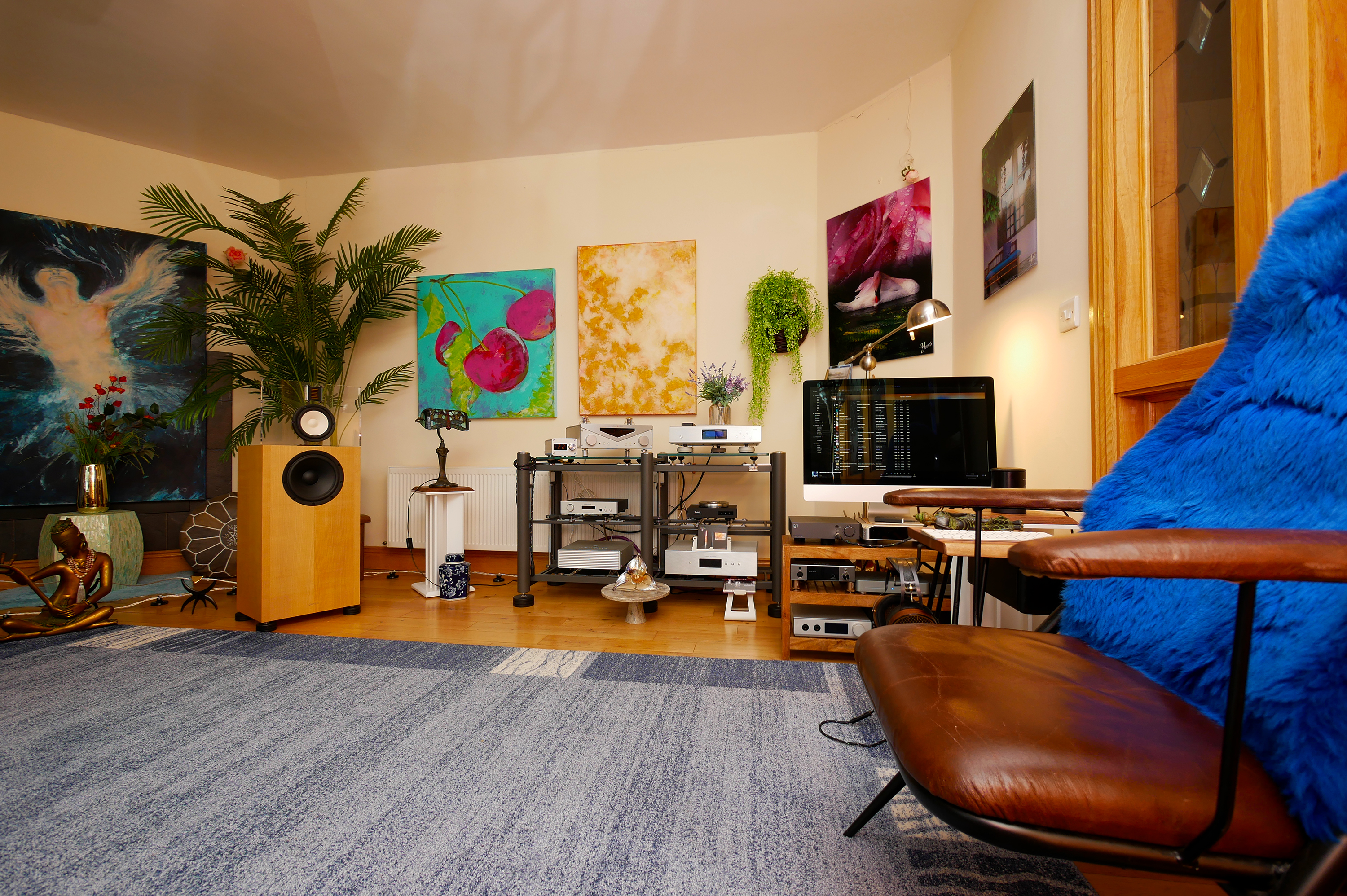
Being a nutter who turned personal curiosity into a full-time job, my substantial hardware collection affords me many virtual levers and dials to change the sound in many different directions. Five active speaker systems and an equal number of headphone stations reflect my madness justified by helping me do better reviews; and enjoying said job far beyond being work to keep a roof over my head and that of the cat. As it turns out, the unwritten definition of my ideal sound is quite narrow and ultra specific. Some inner mechanism protests very quickly when things diverge too much. Having a clearly established taste in hifi matters and being able to articulate it are key to realizing it in hardware. If we don't have a cognitive map, we could spend the proverbial 40 years in the wilderness running in frustrating circles. In any event, thinking on some type of useful 'message' as 2025 draws to a close, the notion of 'something for something not nothing' presented itself. With that out of my system, I could go back to futzing with this one when not if the itch resurfaces. So far I feel well ahead without having sacrificed much in trade other than whisper brilliance and a certain transparency. As per my rule, it couldn't be a pure advance across all parameters. A bit of three steps forward, half a step back still was in play. In my world, that's how progress works. And, I'm still curious how Takatsuki 2A3 might do in the Vinnie Rossi preamp. Perhaps in 2026 I'll take that gamble? Live 'n' learn must include the occasional bust. That's another rule of absolute certainty. So is curiosity and the cat. Cheers to that. Happy hollydaze!