|
This review page is supported in part by the sponsors whose ad banners are displayed below
|
|||||||||||||||
 |
|||||||||||||||
 |
|||||||||||||||
Negative Feedback and Higher Order Harmonics Years ago Peter Baxandall pointed out that while negative feedback reduces distortion, it creates additional higher-order harmonics in the process. Others have confirmed this phenomenon experimentally and in computer simulations. I found Figure 10 on the internet, attributed to John Linsley-Hood: |
|||||||||||||||
|
| |||||||||||||||
Here we see that as low feedback figures are applied to a single gain stage the 2nd harmonic declines linearly with feedback but increased amounts of higher order harmonics are created. As feedback increases above about 15dB or so, all these forms of distortion decline in proportion to increased feedback. Negative loop feedback creates higher order distortion harmonics and there seems to be an implication that you might want to use lots of feedback if you plan on using any at all. Some designers look at it this way, others use feedback sparingly and some refuse to use it at all. I performed my own version of the experiment, using a power Mosfet in a single-ended Class A gain stage driving 1 watt into an 8-ohm load: |
|||||||||||||||
 |
|||||||||||||||
Figure 11 clearly shows the increase in higher order harmonics with the application of negative feedback. In this graphic, the amplitudes are expressed in dB, and the frequency of each curve was slightly offset for clarity. So it's pretty clear that while lowering the total amount of distortion, negative feedback does increase the distortion complexity. Wait! There's More... We have seen that distortion complexity results when you pass a simple signal through a gain stage with high-order nonlinearities, as in the example of the distortion spectrum of a Class A versus Class B output stage (Figure 5). We have also seen that distortion complexity results when a complex signal is passed through a gain stage with relatively simple low-order nonlinearities (Figure 8). And finally we have seen that distortion complexity is increased whenever you use negative feedback (Figure 11). I can think of one more source of distortion complexity, that which results from passing a signal through successive gain stages. This is quite common because it is popular to use multiple stages in an amplifier in an effort to generate enough open loop gain so as to have plenty of feedback. Paradoxically, you can visualize instances of feedback pyramid schemes, in which more gain stages are added to generate more feedback to partially correct for the distortions generated by the additional gain stage. Figure 12 illustrates the result of cascading multiple stages. Here there are four stages, each having a 1% coefficient of 2nd and 3rd harmonic amplifying a single tone: |
|||||||||||||||
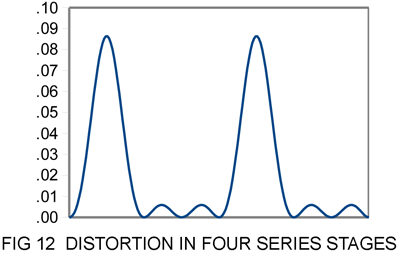 |
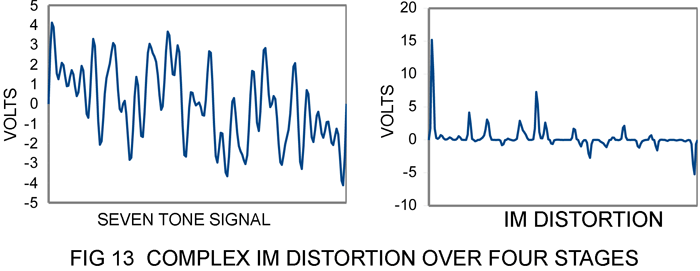
The window of figure 12 represents 1 sinusoidal cycle and you can see the 9th harmonic components at the bottom of the graph. You can also see that much of the distortion is concentrated into large peaks. You will recall the complex IM example of figure 8 in which seven tones were passed through a single stage. Fig 13 shows what they look like passing through the four gain stages of figure 12, with the same 1% coefficients for 2nd and 3rd harmonic: |
||||||||||||||
 |
|||||||||||||||
Hmmm. The distortion just keeps getting worse. It might take a lot of feedback to get this down to a reasonable level. The RMS value of this distortion is very much lower than the peaks - on the order of 100%. There is approximately as much distortion as original signal. So now we have four scenarios by which distortion is made more complex, and they can all be experienced with an ordinary audio amplifier. We have seen that these complex distortions can be concentrated into intense peaks, far more powerful than the average values that we might measure with a voltmeter. Conclusion Time flies and there is still much to learn. I haven't really touched on what these pictures mean to an audiophile, perhaps not what Srajan had in mind when he asked for this piece. In fact, apart from assuming the preference for low amounts of simple forms of distortion, we haven't discussed the listener at all. Nevertheless, I am trying to make a point that relates strongly to the apparent disconnect between subjective experience and simple measurements of distortion. We have seen that nonlinear distortion becomes larger and more complex depending on the nonlinear characteristic of the stages, the number of cascaded stages and the number of spectral elements in the music. |
|||||||||||||||
 |
|||||||||||||||
|
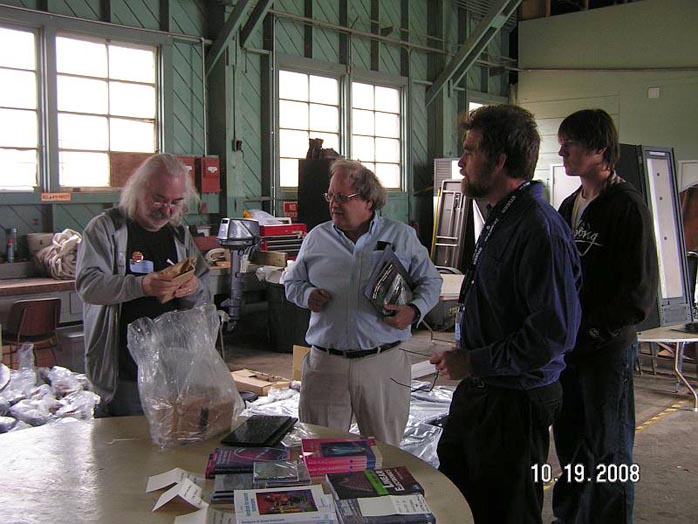
Nelson Pass at the Burning Amp Festival 2008 - photo courtesy of DIYAudio.Com
|
|||||||||||||||
Negative feedback can reduce the total quantity of distortion, but it adds new components on its own and tempts the designer to use more cascaded gain stages in search of better numbers, accompanied by greater feedback frequency stability issues. The resulting complexity creates distortion which is unlike the simple harmonics associated with musical instruments, and we see that these complex waves can gather to create the occasional tsunami of distortion, peaking at values far above those imagined by the distortion specifications. If you want the peak distortion of the circuit of figure 13 to remain below .1% with a complex signal, then you need to reduce it by a factor of about 3000. 70dB of feedback would do it, but that does seem like a lot. By contrast, it appears that if you can make a single stage operate at .01% 2nd harmonic with a single tone without feedback, you could also achieve the .1% peak in the complex IM test. |
|||||||||||||||
| I like to think the latter would sound better. © Nelson Pass, 2008 |
 |
||||||||||||||
|
| |||||||||||||||
 |
|||||||||||||||
 |
|||||||||||||||
 |
|||||||||||||||