This review page is supported in part by the sponsors whose ad banners are displayed below |
 |
 |
The bottom end of the large planars was extremely punchy and dynamic for very tight control. From top to bottom, dynamics were stunningly coherent. Sometime I had the sensation of distinguishing small details that were blurred by the A1. But most of the time, I had the sensation of listening to a different recording due to this higher accuracy of tone colour. To the cynics who’d claim without personal experience that Pixel Magic Systems have mostly produced a little upgrade for lip service to a trendier chip set whilst asking a lot of money in exchange, I’d say that the concomitant sonic achievements are anything but minor.
|
 |
Let’s now discuss DSD128 vs. DSD64 as a new functionality for the S1 flagship. Before going further, I must admit to the scarce availability of such high-resolution DSD files which makes any such comparison more theoretical than of practical interest. It’s impossible to predict what the new standard of high-resolution audio files might be within the next two years. The possibility of the S1 to stream 5.6MHz DSD files was merely an advance opportunity to make such a comparison today.
As previously mentioned, the main benefit of DSD128 over 64 is to further push up ultrasonic noise for simpler output filters. The Swedish Opus 3 label’s downloads enable such a comparison and according to my A/B between both DSD resolution levels of the same recording, I must admit that the difference was more than obvious.
|
|
|
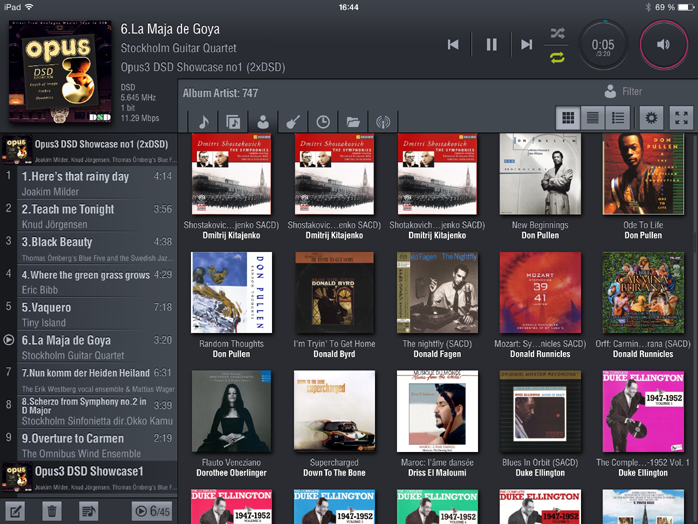
To my ears DSD128 was softer and more resolved compared to the greater forwardness and roughness of DSD64. The benefits of this ultra definition were easily highlighted on each track of the first Opus3 Showcase sampler. The wind and string instruments had more harmonics and tonal richness with DSD128. On the first track "Here’s that rainy day" which is supposed to have been recorded in a medium-sized Jazz club which might represent the saxophone in full dynamic resolution, the DSD64 version provided an impressive sensation of presence and the saxophone materialized in front of my speakers. On the 5.6MHz version, the sax sounded sweeter and remained behind the speaker. There was a kind of sweetness that finally made the instrument closer to how it would actually sound inside a Jazz club. The piano on the left side also sounded far more resolved in DSD128 whilst feeling a bit harsh on the DSD 2.8MHz version. The drums were more subtle and small brush events more accurate and realistic for DSD128.
|
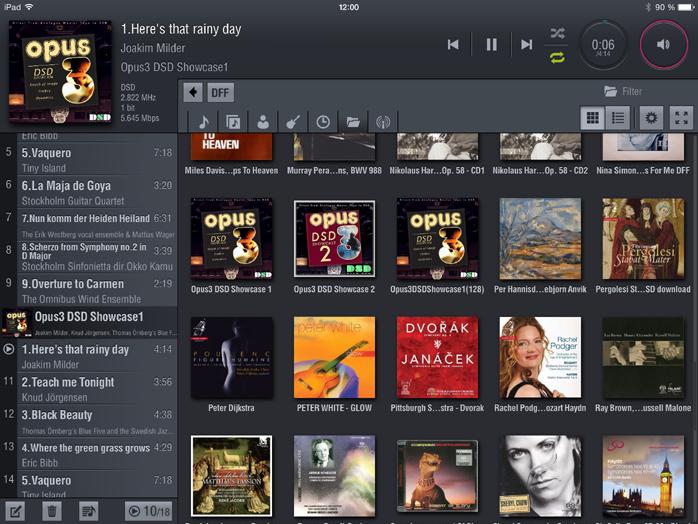 |
On "Black Beauty" (Thomas Ornberg’s Blue Five & the Swedish Jazz Kings), timbres were slightly more accurate in DSD 128. The banjo’s sound was more distinctive whilst at 2.8MHz it was closer to a guitar. Of course these were small details but represented to my ears a significant upgrade over what a change of interconnects would produce. On "La Maja de Goya" (Stockholm Guitar Quartet), the higher resolution provided a darker background for greater ambient information. The plucked strings were more precise and the performers’ touch was highlighted in a more graduated way from the most delicate caressing of the strings to the most violent attacks. The DSD64 version exhibited a more forward sound with less relief and depth.
|
 |
It appeared to me that DSD128 brought out more small ambient detail, greater accuracy of tone, a better separation of each instruments and more depth. Depending on the quality of the recording and mastering processes, this DSD128 experience in my A/B comparison totally convinced me. Even if the list of available recordings remains a bad joke today, the Lumïn S1 is an open door towards still more resolved high-resolution formats.
|
|
|
|
Conclusion. Summing up, the new flagship from the house of Lumïn strikes me as a real achievement and perfect example of hifi pragmatism. Because its presentation is ultimately quite different from the original A1, I understand this move to be a complementary proposal for Pixel Magic’s growing line-up of network players. The A1 remains a highly desirable product. The S1 just gives you more on most criteria within a different arguably more accurate tonal balance that might raise the usual matter of taste issue. The price increase is significant but in line with the performance gains.
|
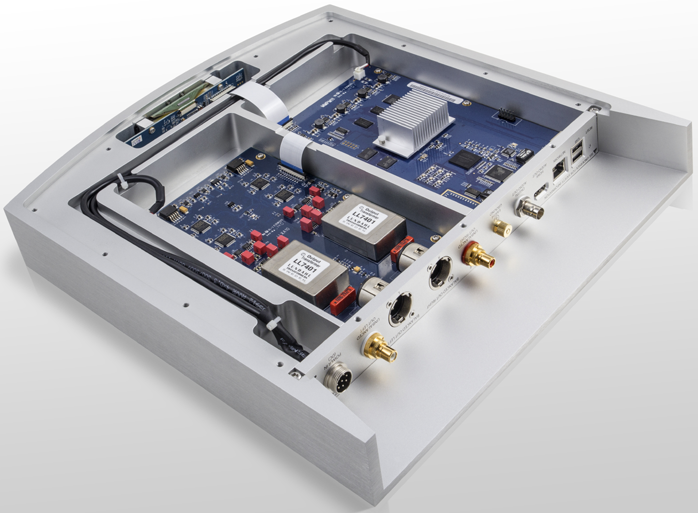 |
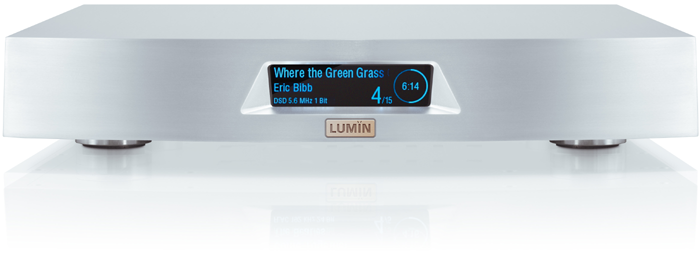
Having played in my room for a long time with both, I must admit how it’s difficult to go back to the A1. The S1 now competes directly with heavyweights like the Ayon S5 or TotalDAC Dual server + Dac whilst perhaps delivering a less romantic presentation. I am not fond of romance in audio playback. The small signs or characteristics which contribute to a kind of sonic fingerprint seemed to my ears completely absent with the Lumïn S1. Its soundstaging and imaging capabilities surpass anything I have heard in the digital domain. At the same time the Lumïn S1 delivers an enormously appealing and involving musical presentation which will become my new reference as a still affordable digital front-end to consequently demand a Blue Moon award.
|
 |
 |
For more Joël Chevassus and if you read French, click here.
|
 |
 |
|
 |