This review page is supported in part by the sponsors whose ad banners are displayed below |
 |
 |
Dynamics seem to have been enhanced as well to where I believe that the S1 delivers its sound a bit more forward than the A1 which tended to move the soundstage behind the speakers. The S1 in comparison is more immersive to feel more natural and involving. With DSD, the improvements were not as impressive as the advances for the PCM format. Yet the S1 performance was still higher than the A1’s. The main achievement for DSD streaming are the more differentiated tones and level of detail. There is also a different sonic signature between the Sabre and Wolfson silicon. With DSD the Wolfson chip has a kind of natural fluidity to sound slightly dark side compared to my Esoteric K-03 SACD player which sounds brighter to sometime give the impression of more saturation in the upper midrange.
|
 |
The S1 to my ears appeared to split this difference for the most neutral tonal balance amongst these three. But due to these differences, I can also imagine that some might prefer the original A1’s take on DSD. Still, if you listen to the S1 for a while, you’d have to admit that the S1’s DSD capabilities are superior. I’d parallel this to the difference between a Pass150 integrated vs a Naim Supernait. Both are addictive proposals but one is definitely more high-end.
|
|
|
|
 |
What’s interesting about the two Lumïn streamers is the fact that they house two different sonic identities within the same box. Both streamers have their own personality and interest. If you try the S1 after the A1, it will be difficult however to go back to the original. To me the S1 is one of the most attractive one-box digital contender I've had opportunity to hear. I don’t have sufficient exposure to compare directly a two-box solution like the TotalDAC combo reviewed in Audiophile Magazine and then syndicated in these pages with the S1 but my impression is that the differences (if any) should be rather small. The S1 sound is immensely appealing, its soundstage is impressively big and detailed with tremendous clarity and transparency, making instrument and their surrounding acoustics a closer facsimile to what we hear it in real life.
The perhaps greatest strength of the S1 resides in a kind of sonic and functional coherence that I do not find with potential competitors. It’s not just a kind of musical rightness but the absence of any obvious weakness. That’s the main point. I have noticed in many digital high flyers some small clues that they might not be completely versatile or that they will work better in one scenario than another. For instance, I have always preferred the lifelike transients of delta-sigma DACs over any R2R realizations. At the same time the silence and authenticity of timbre of the latter always seemed more genuine. Nothing is perfect in audio and digital is no exception. The S1 might not be the ultimate digital player to fit the one-million dollar audio setup but it sounds mostly balanced and demonstrates outstanding results in every aspect. That’s a very impressive achievement. |
|
|
|
|
|
Getting back to the improvements over the A1, I would not say that each device offers a completely different presentation. Neither takes the road of crystalline transparency. Both remain very organic. On the other hand, the new Lumïn S1 has neither the earthy LP-like sonic identity of my previous A1 nor what I remember of the TotalDAC Dual from previous listening sessions. Where the S1 soundly trounces the A1 is on its sheer realism with vocals. The S1 adds far more presence and immediacy. Vocals seem more vivid and alive, small breath work of singers and musicians is more palpable. One has the impression of greater data density without being too analytical or forward. In fact, the sound remains relaxed and engaging despite a very high level of dynamics. The Lumïn S1 to my ears combines the rare ability of sounding pristine, precise, warm and rhythmically involving all at once.
|
 |
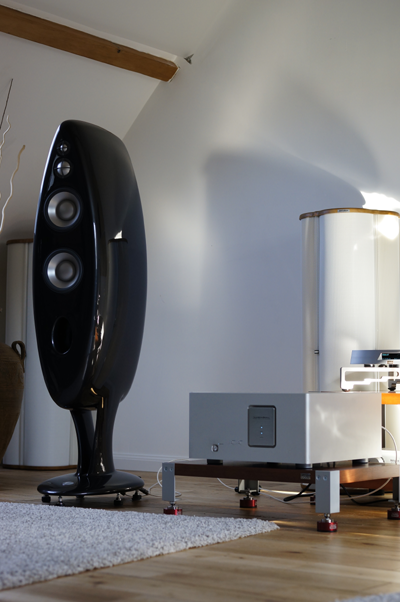
In terms of scale and depending upon the recording, the S1 delivered a huge image over my Vivid Audio K1. It’s generally a good sign when music expands so freely from the acoustic transmitters. I would have frankly thought this result to be more linked to changes in amplification than digital sources but must admit than the greatest increase of scale was delivered by this change of network player. With the S1, the K1 speakers contributed to the expansive sound as fine spatial cues in the back of the soundstage which were rendered with great clarity. Switching to the Magnepan 20.7, the S1 impact on scale was less obvious because the big Maggies’ soundstage is already a colossal achievement per se. Since the 20.7 also deliver the most detailed nuanced palette of timbres, the difference between the darker A1 and shinier S1 was even more obvious.
|
 |
  |
 |
|