This review page is supported in part by the sponsors whose ad banners are displayed below |
 |
 |
Let’s be clear however - the Trishna is not washed out or lean by any means. We are not dealing with one of those overpriced Japanese marvels that forget anything below 300Hz, then try to sell you on the idea that you really don’t need music below 300Hz. The Trishna is well endowed but compared to the Zu of a clearly lighter touch. As much as I found the Trishna advantage overwhelming in the upper midrange, I suspect that the Maarga would be closer to my taste in the lower end of that range. This was very obvious when listening to Bryn Terfel’s Vagabond. He sounded just a bit winded, a touch lighter than usual, with less of that projection power or presence I mentioned earlier. The difference was subtle but such are the nuances I am paid the big bucks to report on.
|
 |
|
| That said, a somewhat leaner lower midrange is a welcome quality when talking bass integration. Here I believe Jacob George has truly blown away any competition. When set up properly, the lower midrange flows into the upper bass and deep bass without a hint of discontinuity. Quite amazing. It is important to note though that like with the Maarga and perhaps even more so here, this continuity plus the indirect nature of Rethm’s bass loading reduce significantly the physicality and impact of the bass. Drums don’t hit, explosions don’t bang. This says nothing about bass depth. Depth is truly excellent as can be judged on Garcia Fons’ Légendes. While the Zu has more weight and gusto, it goes no lower. |
|
|
|
|
 |
This difference is about air coupling. The Essence does explosions and drums quite well especially when mated to the First Watt F5 for some power headroom. This was most welcome on action movies and cartoons. Remember all’rounder versus specialized instrument? Here it played again. The Zu will do Rock, Hollywood movies, blue grass and anything with any kind of bass equally and reasonably well. The Rethm will outshine the Zu on subtle cellos or even exuberant double bass but won’t do Japanese taiko drums at all (don’t try), the latest Harry Potter or even the drums in Saint-Saens’ Organ Symphony.
|
|
|
|
|
|
|
 |
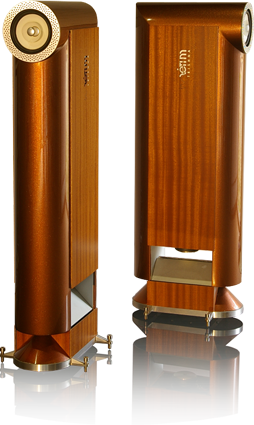
Finishing with large orchestral works, here the Trishna performed quite well even on a 2-watt diet where the Zu won’t manage (it will on 10 or 20 watts). The Trishna advantage stems from its uncanny visual capabilities of soundstaging and imaging. The orchestra spreads out in front of you, instruments are clearly identified, soloists stand in front of the orchestra well separated from their peers, dynamics are excellent and the upper midrange illumination allows you a view into the set like none other.
|
|
|
|
 |
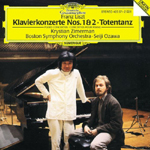
Obviously where mass and impact are required, things can become a little truncated. The 1812 Overture sounds more like a BB gun than cannons (I exaggerate but you get the drift). Massive dynamics in a piano’s lower range get scaled back like in Krystian Zimmerman’s recording of Liszt’s Totentanz with its huge physicality and sucker-punch bass attacks. Anytime a piano or large drums were used for deliberate physical impact the Trishna simply could not deliver.
The piano was actually the sole instrument which I felt the Trishna did not completely master regardless of the dynamic range involved. I like to hear the complexity of resonance and harmonics that blooms beyond the initial hammer impact. Here I found the Trishna lacking. It did the initial impact quite well as long as the left hand did not get too heavily involved. But the harmonics fell short. My only reserve when it comes to acoustic instruments would thus be someone whose primary musical diet consists of piano music. In that case I would turn my attention towards the Maarga. That said, somebody currently listening to piano music on small stand-mounted monitors would likely find even the Trishna a huge improvement. It all depends on your expectations.
Similarly somebody truly hooked on the Zu sound with its trademark density and richness who is obviously willing to then sacrifice resolution for those qualities might find it difficult to truly enjoy the more open lither Rethm aroma. If you are into meat and potatoes loaded with gravy, a lime and pineapple chicken dish may not be your favorite. The Zu and Rethm aesthetics are that different. Both have strong characters and are suited to different situations and listener tastes. |
|
|
|
|
In the end even though the Trishna was not perfectly suited for my current system which provides double duty for audio and video and must support all musical styles from my wife’s punk rock to the movie Rio for my daughter, when it comes to acoustic music the Trishnas are stunners and a phenomenal value.
|
|
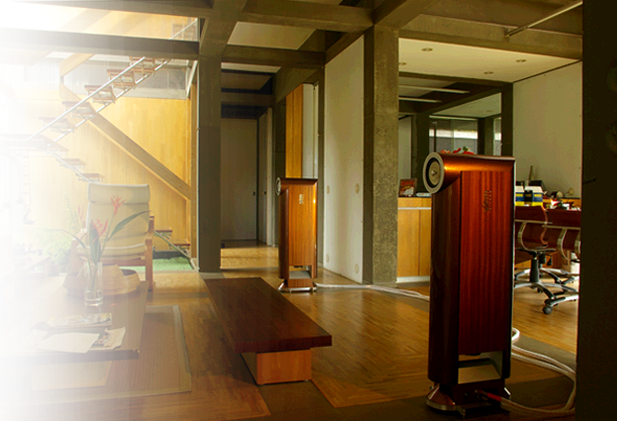
Trishna in the designer's home
|
| If one wanted to merely approach their imaging qualities, midrange resolution and tonal truthfulness, one would have to spend at least $5,000 on a pair of stand-mount monitors of very high quality. Those simply would not thrive on a 2-watt triode like the Trishna. Nor would they offer the same high speed, extreme articulation and full-range bass. Jacob George has thus upheld his end of the bargain – of cutting the price of his award-winning Maarga by 40% whilst keeping almost all its musical qualities save for a little tonal density in the lower midrange, some harmonic richness in the upper bass and some level of punch. Although five grand aren’t cheap by any account, his Trishna offers all of those qualities in a small-room friendly and living-room compatible package that you can even audition at retail stores around the world.
Hence I am granting the Trishna a Realsization award - not only because it offers so much for its price but because it is refreshing to identify a designer who has worked so hard at keeping his creation accessible to the largest number while sacrificing so little to the pressure of cost constraints. Doing all that and being able to get by with a happy 2 watts is the cherry on top. |
|
 |
 |
 |
|
 |