This review page is supported in part by the sponsors whose ad banners are displayed below |
 |
 |
|
 |
The conclusion of this more detailed than usual setup intro is that the Trishna is both extremely transparent to change and extremely rewarding to optimization. In short, it’s not a speaker that you will just drop down somewhere and enjoy. If you aren’t ready to finely tune, tweak and invest time and effort, you will likely never get what all the fuss is about.
And fuss there should be aplenty. Let me put this in plain terms. While Zu’s Essence is a great all’rounder, the Trishna is a phenomenal musical immersion instrument, albeit with a few real-world limitations. I can’t start talking about the Trishna’s sound without writing about its midrange first. The upper midrange is absolutely stunning. For three months this lover of mezzo sopranos lived in complete heaven. As I related elsewhere, I have heard Joyce DiDonato on multiple occasions in front and behind the curtain. |
|
|
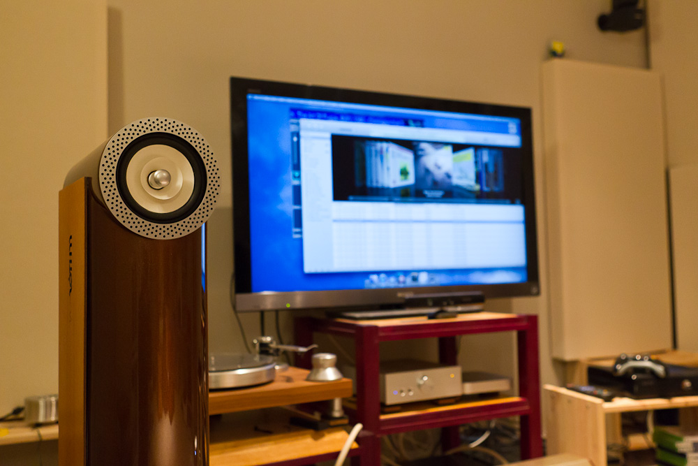 |
Hers is one of the voices I know best. There is a specific harmonic texture to it that can be heard when she sings, speaks or laughs - especially when she laughs. For the very first time I heard this very texture in my room. It took the Yamamoto, Trishna and full Ocellia cable loom to get there.
I simply don’t know how to convince people that some elements of music reproduction are not fully understood. It takes the random collision of occasionally esoteric components to chance upon something new and revelatory. Why else would I finally manage to suspend that disbelief which eluded me for years whilst pairing an antiquated 2-watt triode with a set of esoteric silver cables relying on an unproven theory for their design and a boutique widebander when systems in the hundreds of thousands of dollars have never managed to come remotely close to the intimacy I finally experienced on Joyce’s Furore?
|
|
|
|
 |
To make sure this was no one-time fluke, I spent hours with Cecilia Bartoli’s Heroines and Marilyn Horne’s Carmen before moving to sopranos with Patricia Petibon’s Amoureuses all with the same impression: Their presence had been significantly heightened by greater transparency, more realistic micro inflections and a sense of timing that just felt truer.
As I spent hours listening to the greatest female voices I have on record adding Gill Manly, Ella Fitzgerald and Musica Nuda, it became obvious that Rethm’s superiority was not only due to greater transparency in that range than my Zu but far lower coloration from the enclosure. |
|
|
One might ridicule Jacob’s tubular PVC constructions but the resultant sound is freer from coloration than any other widebander I’ve ever heard. Now it becomes important to restate that even though the upper midrange showed none of the Lowther-type peakiness which other widebanders suffer as well; but retained all of their aliveness and microdynamics... it is possible to move this range more forward than it should simply by choosing the wrong ancillaries or pushing levels beyond reasonable.
|
 |
One of the greatest qualities of the Trishna are its low-level resolution and dynamics—far better than what I get from the toned-down 10-incher in the Essence—but the flip side is that the Rethms do not endure being pushed hard like the Zu. As stated earlier, the Americans are all’rounders. That includes a rave party or two when you’re in the mood. The Trishna won’t take you to that dance. It’ll make your introspective sessions far richer however. Pick your compromise. |
|
|
|
 |
|
|
|
|
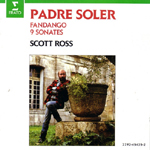 |
Leaving human voice for strings, again the Rethm proved vastly superior to the Zu by providing far greater textures and heightened instrumental detail. If you don’t listen attentively you probably won’t notice how the Zu glosses over the lowest-level details but if you listen closely, the Rethm reveals a whole new world of nuance. Similarly harpsichord recordings took on a new life, showcasing a wealth of harmonic complexity I did not know was there. Consider for example Padre Soler’s Fandango by Scott Ross, a long-time favorite I never suspected holds such tonal diversity. |
|
|
|
Moving down the range to male voices and alto violins, strengths and weaknesses began to even out. The Indian speaker retained the resolution and microdynamic advantage but started to show the limits of a five-inch driver versus the ten-incher of the Zu particularly when it came to tonal richness and projection (meant here in a good way like the projection of a baritone on stage which gives you the feeling of power or rage depending on the emotion intended). This is an area where Jacob, quite objectively in his comments on the qualities of his various models, admits that the six-inch driver of the Maarga goes farther than the version in the Trishna. I indeed often wished I had a ‘density’ dial to add a touch of black and saturation to the lower midrange.
|
 |
  |
 |