|
This review page is supported in part by the sponsors whose ad banners are displayed below
|
|||||||||||||||
 |
|||||||||||||||
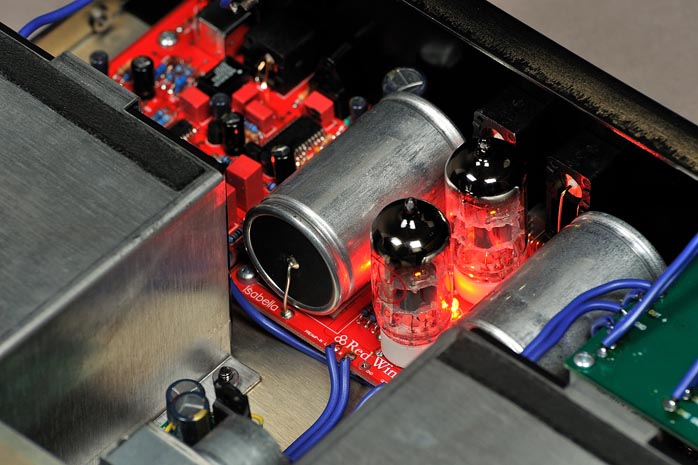
As preamplifier. Saving the best for last, the preamplifier performance of the Isabella is quite astonishing. Running it into either the Signature 30.2 or FirstWatt F5 via ASI Liveline interconnects, I switched out the Isabella against my ModWright LS/PS 36.5 double decker with GZ34 Mullard rectifiers. You'll remember that I entered this assignment suspicious that Mr. Rossi's triumphant enthusiasm for the Isabella lacked necessary context. I also questioned why -- if SLA batteries were really such a hot (and minimalist) ticket -- had none of the big boys in preamplifier-dom abandoned their complex AC power supplies to save themselves redundant parts, filtering, isolation and regulation complexity. |
|||||||||||||||
 |
|||||||||||||||
After all, one half of my ModWright is pure, beautifully built power supply in its very own heavy chassis. That should count for niggling something over those null-acht-fuffzehn battery blocks, shouldn't it? That's German by the way for every-day ordinary. 0815 those batteries may be in and of themselves but they proved very capable in the listening seat. Compared to the 2+ times priced ModWright, the Isabella was more dynamic, robust, substantial and weighty. |
|||||||||||||||
|
| |||||||||||||||
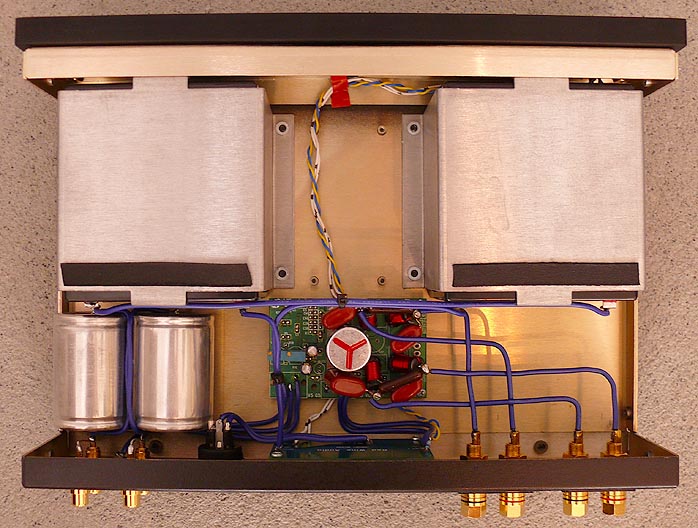
I was grudgingly willing to concede some special synergy advantage points to the matchup with the Signature 30.2 stable mate. I was quite ill-prepared to find the same advantage points cashed in over the ultra-resolution Nelson Pass amp. But there it was. The only area where the ModWright arguably had the upper hand was in airiness starting in the upper midrange. Concho Buika's very distinctive pipes [Nina del Fuego] are surrounded by plenty of breathy hoarse harmonics like El Cigala's. The 6H30s of the ModWright rendered those with a mistier corona. Ditto for cymbals, triangles, violin flageolet and such. When it came to scaling dynamic peaks; to fleshy dimensional images of performers; to deeply resonant low piano registers however; the Isabella had more oomph. The 36.5 was more subdued -- more filigreed too -- but returning to it invariably took away more than it added. Looking back, I should have granted the sealed-lead-acid blocks more anticipatory applause. After all, dense dynamic displacement is exactly what Vinnie's present amps major in. But I didn't connect the dots until the actual encounter. If robust current delivery without heavy AC noise regulation was audible with high-level signals, didn't it stand to reason that it'd do the same if not more for low-level circuits? |
|||||||||||||||
 |
|||||||||||||||
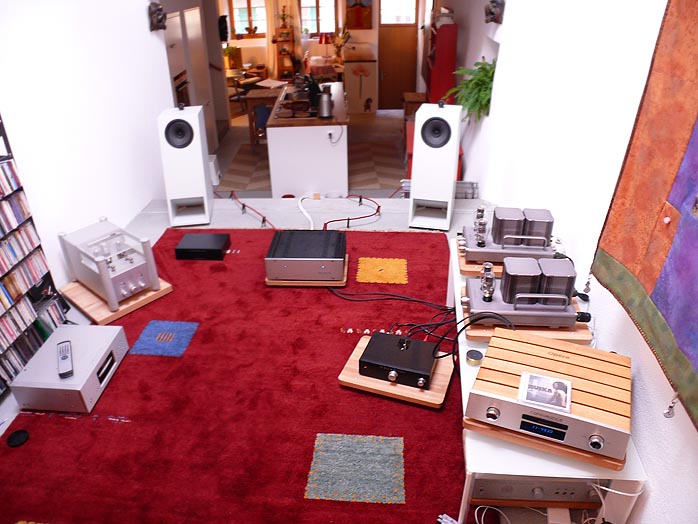
In happy hindsight, that train of thought would have been the rational one to board. Doubt was more attractive though. As it turns out, the Isabella is cut from the same cloth at its amp siblings. The only real criticism to level should be directed at the upper frequencies if you're so inclined. Like WLM's big Visaton paper tweeter in the La Scala models which Vinnie imports to the US and listens to personally, Isabella is no Raal ribbon or Acapella ion tweeter. If you want that kind of sophisticated extension finesse, look elsewhere. For guts, fleshiness and wallop -- in short, the illusion that the ghostly phantom images in your sound room have bodies and arteries with flowing blood -- the Isabella delivers more than class leaders at twice her price. This densification does not compact or foreshorten soundstage size. On albums with real ambiance like m.a. and ECM, you simply get less back wall cues. Those spidery reflections in the upper frequencies aren't as visible as they are over other preamps, my personal Wyetech Jade included. This has a hidden advantage during peaky female vocals which are otherwise tinged with certain glassiness. Put differently, think of Vinnie as a designer not fond of metal-dome tweeters. For what that bit of prejudice is worth, it'll give you the right notion. I'm not sure whether erstwhile 6moons scribe Chip Stern coined the term or simply introduced me to it. Not that it matters. His meat 'n' gravy imagery of comfort food and its sonic equivalent seems very fitting in this context. That's how the Isabella struck me in use; the kind of food you long to come back to after you've travelled for a few days to dine out night after night in fancy spots with sparse designer plates. "Gimme more gravy" Chip would growl. If you're looking for a propulsive 'fast' sound, this is too meaty. If you're looking for lit up, this is too centered and grounded. Forget nervous and flitty altogether. If you want bass though, knock yourself out. Compliments of instantaneous battery current, there's lots of deep, taut, visceral bass. Same for macrodynamics. If you're after intense direct-heated 101D texturing, you'll want my Supratek Dual Cabernet, now sadly out of production. If you want more inside-out transparency, an inherently leaner sound like my Wyetech produces would serve you better. In the end, it comes down to this: If you've heard vinyl/digital comparisons to know that in almost all cases, vinyl will trounce digital in heft and image intensity, the Isabella belongs on the analogue side of that equation. |
|||||||||||||||
 |
|||||||||||||||
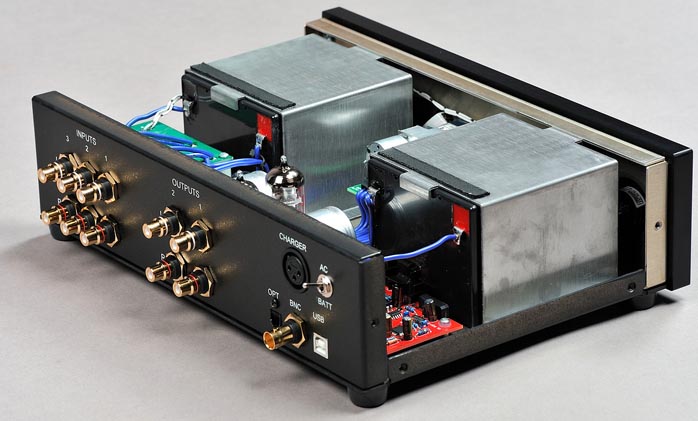
Adding it all up Forget about half width blackened boxiness. Forget about Red Wine Audio's DIY-inspired roots. Forget about previous price points in Vinnie's line. All of that is true but history; valid then, irrelevant today. Based on performance, the steep-for-the-brand $4000 Isabella competes against winners twice its wallet weight. Where it enters mostly uncharted territory is when one adds the $1500 Isabellina DAC option with a firm eye on its USB port. While outboard USB DACs are mushrooming, valve preamps with inbuilt truly fine NOS DACs aren't. Bundling the two to run off a shared battery pack is a very green and hifi-approved proposition. Tacking on a $500 headphone module to ride shotgun simply wraps it up with a bow. All in a single box. That's simply cool. Where the Isabella admittedly doesn't hold her own is in the flash 'n' glitz stakes. If pride of ownership means chrome, dressy back-lit tube chimneys, dot-matrix volume readouts and other such ingredients readily available elsewhere, Vinnie Rossi's concept sits on the other side of home-baked but still on the far side of chic. In that department, it's the Wavelength Audio Brick of preamplifiers. What's undeniable is that Isabella the package -- particularly with the Isabellina option -- is the most ambitious Red Wine Audio product yet. Equally true from personal dealings, reader feedback and forum posts is that this company treats its customers with respect and courtesy. Lastly, those who focus exclusively on the apparent value of things are nearly bound to overlook that considering what it competes against, the Isabella continues to be a good value. With it, Red Wine Audio now simply competes on higher ground. The same basic math of return on investment still applies. If Vinnie was related to Britney, he'd bat his eye lashes, then pronounce "oops, I've done it again". Should that prevent me from accepting that after I add it all up, the Isabella + Isabellina package (i.e. preamp + DAC) politely but firmly remind me why we created our Blue Moon awards in the first place: to recognize value, performance and worthiness of ownership; to help readers reduce available options to a manageable short list? After all, it's not appearances that matter, be it plain black boxes or certain manufacturers winning consecutively. It's about substance! Curiously enough, that's perhaps the best term to condense this entire review into one final snippet of pregnant meaning. Over and out. |
|||||||||||||||
 |
|||||||||||||||
 |
|||||||||||||||
 |
|||||||||||||||
Quality of packing: Very stout. Reusability of packing: Multiple times. Ease of unpacking/repacking: Easy. Condition of component received: Perfect. Completeness of delivery: Power cords, owner's manuals, universal chargers. Quality of owner's manual: Very good. Ease of assembly: None required. Tube replacement requires mere opening of sliding glass cover. Website comments: Perfectly informative and easy to navigate. Human interactions: Prompt and forthcoming on all info requested. Pricing: Higher than expected but fully commensurate with performance to remain squarely competitive. Final comments & suggestions: Brilliant implementation of batteries and tubes as well as USB-input digital conversion to transform humble lap tops into superlative CD transports. |
|||||||||||||||
|
| |||||||||||||||
 |
|||||||||||||||
 |
|||||||||||||||
|
Red Wine Audio website
|
|||||||||||||||
 |
|||||||||||||||