This review page is supported in part by the sponsors whose ad banners are displayed below |
 |
 |
This cable simply operated at quite a different level on just about everything like the analog interconnect. Its only possible shortcoming might have been a slightly recessed treble but I wasn't sure of this. It might have been more that the cable did not exhibit excess like my others. Since my Zu speakers aren't treble microscopes, what is actually balanced may come across as a little subdued.
Srajan will be able to comment on this element in a more resolving setting as he too has an Ocellia USB loaner. The effect in my system had the stage bigger than with any other USB on hand—especially depth—yet within that larger space instruments seemed closer together. Less air between them is how I would best describe it. Whether this presentation was more or less right is hard to tell. It certainly did not distract from enjoying the music especially in light of the spectacular tonal qualities of the cable.
|
|
|
|
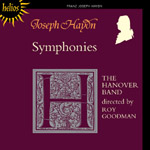 |
On the Helios release of Haydn's 1st Symphony under Roy Goodman, this translated to very rich strings, a wide orchestral stage but also a harpsichord that lacked a little of its usual bite. I know that Samuel Furon uses harpsichord as one of his references for fine-tuning his gear so I paid more attention to this than I might otherwise have. Here the Audioquest cables had more realistic metallic bite but far less rich-sounding brass instruments or strings. You should hear the French horns through the Zu speakers with a full Ocellia cable loom. It's really quite something! |
|
|
|
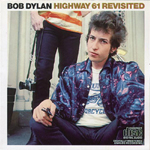
| Just out of curiosity I next hit Dylan's Highway 61 revisited on the remote app while writing this review on my iPad. Now I was rewarded with a bigger-than-life Dylan in the room. I own two vinyl versions of "Like a rolling stone". The original mono pressing is still my favorite but this download from Qobuz trumps any digital version I have heard as well as my stereo pressing for sheer power, density and dynamic. That was quite a shock. I had pretty much resolved myself to the fact that this music was vinyl only. All that to say that if you chase away nasty digital artifacts and static discharges, digital playback can actually sound decent (tongue in cheek - I own ten CDs for every LP in my collection and listen to both mediums interchangeably though I usually find most pop recordings from the 60s unbearable in digital hence my surprise with Dylan). |
|
|
|
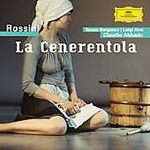 |
Continuing my exploratory trip I cued up the famous Abbado/Berganza recording of Rossini's La Cenerentola (Cinderella) which I'd not heard in months. The same aural shock hit me. The music was grander, denser, richer than anything I remembered but visualization of the stage was improved as well. This was not an A/B/X type analysis, just a disc I've heard a lot but not in the very recent past. Now it sounded significantly better than anything I remembered. I don't know of another way to assess system synergies especially with a line of cables than to let the new sound settle in, then go back to a very well-known disc and listen for aural differences. Sometimes it does not work. This time it was repeatably obvious. |
|
|
|
|
To be perfectly scientific about it I should have gone back to my reference cables, waited for my ears to settle back into their sound, then bring the USB cable in alone. I will leave those gymnastics to Srajan for his upcoming USB cable comparison. I focused on system synergy which I suspect is how Ocellia cables will most often be used and from my experience should be used.
|
 |
  |
 |