This review page is supported in part by the sponsors whose ad banners are displayed below
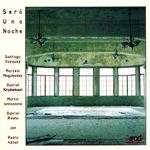
Será una Noche is an Argentinean group that takes Tango as its starting point from which to create inspired music that is heavily infused with other traditional rhythms and folkloric elements. Just like all M•A Recordings do, only acoustic instruments are permitted. Todd recorded the group in a monastery outside Buenos Aires using its natural reverb. We used the word ‘group’ but Será una Noche was actually specifically put together for this recording after a request Todd made to percussionist Santiago Vazquez.
First we played some tracks from the ‘normal’ CD. Fantastic emotional and involving music filled the room. All the musicians are top-notch players and the 16/44.1 version sounds very good indeed. If one didn’t know there are other versions available, one could be very happy. With the XRCD version—still 16/44.1!—the sound was different. During XRCD mastering the recording first undergoes a dithering process. Noise is added and the format enhanced to 20 bits. Later the excess bits are stripped off to result in a cleaner sound as jitter is removed. Next an enhanced glass master is made. Here extra care is given to the pits to place them precisely with perfectly shaped edges. When playing a pressing made from such a glass master, the CD player needn’t guess where a pit starts and stops. Imprecise readings add jitter.
Playing the XRCD version of Será una Noche created more air around the instruments. Instead of hearing an instrument caught as though in an individual slide, the instrument becomes more part of its environment. The instrument spreads out more to the left, right, top and bottom. Movements of the instrumentalists are more clearly conveyed. Switching to the 24/96 DVD version was no big change. There was no ‘wow effect’. Fortunately so. With the hi-res version the change which the XRCD had instigated simply expanded further to add more space around the instruments and voices. As a result, the recording became more of a hologram where individual players were part of a whole blended together. Silences now were part of the music and no longer black holes. Transients had much more fluent beginnings and decays were less on and off. As a side ‘effect’ sitting in the hot spot was no longer required. Throughout the room the music felt lifelike and the stereophonic illusion was just as present off axis.
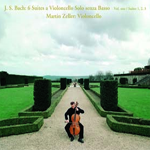
Something completely different happens on the recording of cellist Martin Zeller. Todd recorded the Swiss in a Belgian church where Herr Zeller performs solo on an Austrian cello built by Jacobus Strainer in 1673. This means the instrument was used during the time J. S. Bach wrote the 3 suites recorded here. Martin Zeller already participated in several M•A Recordings as a member of the Ensemble La Chimera but this is his first solo recording of which we now had 3 versions - 16/44.1 normal, a green polycarbonate Emerald Series and finally the 24/88.2 DVD.
The big difference between silver and green versions was loudness. For some reason the green version is louder and bolder. On the green disc the cello emphasizes both extremes of the frequency spectrum and no longer sounds entirely natural. The silver disc and DVD are more in line but the DVD is far more relaxed and flowing. One can dispute the interpretation of the Bach pieces—always an issue with popular pieces like the "Prelude" from the Suite in G—but not up for discussion is the fact that Martin Zeller is no member of the Bach breakneck speed-freak league. He takes his time to play the parts.
With this recording the hi-res version was preferable for its naturalness and ease. It does not take much to imagine the presence of the cellist in the room. Despite a popular church being the recording venue, its reverb is not overwhelming but merely adds a little warmth to the already warm woody sound of the vintage cello.