This review page is supported in part by the sponsors whose ad banners are displayed below |
 |
 |
Switching between standard 440Hz and processed 432Hz ‘tuning’ is done on the fly and only takes a fraction of a second. The big question is, what are the benefits? Switching as quickly as the plug-in supports creates the perception that the music slowed down quite as though dragging a turntable's platter with your finger. This slower feeling disappeared quickly however. It's better to pause between switching or to start a track from the beginning with the new tuning.
We listened to an extensive array of artists and styles, from classical to chanson, jazz manouche and Arabo-Andalouse to blues rock and in-between. With all our music the difference between original and tuned-down playback was notable. In most cases the result was a softer more rounded sound which was not unpleasant. Switching back to the original tuning brightened the sound slightly but again not unpleasantly so by comparison. The effect was a bit like dimming the lights a tad. All the details are still there, the overall image is intact in full width, height and depth, only the color is shifted ever so slightly into the red.
Frédéric van den Poel: "Yes, this notion completely agrees with how we created the SOtM plug-in. Using the Foobar method resulted in a loss of resolution." But did listening to the tuned-down versions affect our mental or emotional state? Not in our experience. We felt no calmer or more agitated to suggest anything unnatural about the 440Hz tuning. We enjoyed the music just as much. In most cases a blind ‘test’ of what was playing—original or altered—was inconclusive. Of course this involved real music and not single notes where pitch memory plays an important role. As music is being shifted down by 8Hz, the loudspeaker’s crossover is loaded differently. With some really cheap loudspeakers we noted how the overall tonality became warmer. This shift was far smaller or entirely absent with better speakers and their either more elaborate filter designs or entire absence thereof.
|
|
|
|
|
|
After many experiments we concluded that we preferred the SOtM combination without the 432Hz option engaged. The sMS-1000 streamer and matching sDP-1000 DAC/pre are a great combination which underlines the Korean company’s full business name of Soul Of the Music. Whilst trying to grasp why many people strongly prefer 432Hz, we dug deeper into the tuning subject to learn that symphonic A4 = 440Hz tuning is not a global standard. It appears that the majority of orchestras around the world tune to 442 or 443Hz instead. Franz Nistl is the resident piano tuner for the Salzburg Music Festival. He offers a comprehensive list of orchestras and their tuning standards – see Nistl.com. As the festival’s piano tuner he must match their grand piano to the visiting orchestra’s tuning standard. The orchestra members bring their own tuned instruments but the piano is always locally provided. Our Dutch Concertgebouw for instance tunes to 442Hz just like the Berliner Philharmoniker.
|
 |
|
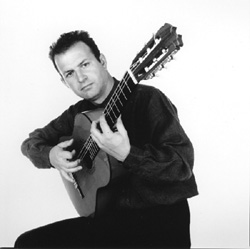 |
In popular music tuning is even more varied. Guitarists like Jimi Hendrix and Stevie Ray Vaughn always tuned down half a step (E-flat) not only to create a fuller sound but to have more string flex as the strings now have less tension. Flamenco and tango guitarists use not only a capo to raise pitch and hence their volume but may tune their guitars differently from song to song. Gerardo Nuñez for example tunes his guitar's lower E-string to a B—2.5 tones down—and the high E-string half a tone down to D-sharp. In Indian music the pitch is set by the singer and the musicians tune accordingly.
All in all just lowering pitch by 1.818% will not get you to the desired 432Hz tuning no matter how finely calibrated your software might be. There are too many other factors influencing music to begin with. We only mentioned a few of them like specific orchestral or artistic tuning preferences. What goes on in the recording studio and subsequent mastering process (speeding up/slowing down certain tracks or just parts of tracks) adds more unknown variables. Only a recording done at A4 =432Hz compared to one at 440Hz would show the real truth of the matter, preferably in the Pythagorean tuning.
|
|
|
|
|
Frédéric: "Our plug-in was made under the assumption that music is tuned to A4=440Hz. With most Western non-classical music this will work fine. Meanwhile we know that most classical orchestras tune slightly higher. As long as there is no meta data with exact pitch information, we must work with our assumption. It would be a relatively small effort to include additional options in the plug-in for 442, 443 or even 445Hz tuning. We are thinking of doing so in future releases."
|
 |
432evo
|
| With the SOtM components and 432 plug-in we had some interesting musical learning experience and lots of fun. We’ll keep on following the 432 movement. For now we'll simply say that we're not convinced of any 'right' versus 'wrong' claims associated with it. |
|
Condition of component received: Excellent.
Reusability of packing: Outer box hardly, inner boxes many times.
Website comments: In Dutch.
Completeness of delivery: All we needed except for the sDP-1000 remote control.
Pricing: Competitive for the SOtM hardware. The additional software is unique and the €250 price fair.
Human interactions: Not the quickest but kind.
Remarks: It would be interesting to find a way to assess the basic tuning of a recording first via plug-in recognition and then adjust the pitch to in this case 432Hz. This would result in a library of recordings and tracks just like the music libraries which are used to for ripping. We think that working this way would net truly reliable 432Hz results.
|
 |
 |
|
 |
