|
This review page is supported in part by the sponsors whose ad banners are displayed below
|
|||||||||||||||
 |
|||||||||||||||
|
There have been some discussions on the Icon forums about the drop in sound level in USB mode. For some reasons, the drop I experienced was not as dramatic as some reported. With both volume settings pushed to max in my PC's playback control, the Icon volume had to be dialed to 3:30 for USB to attain the same loudness as 2:30 for Line. Maybe that's due to the fact that I always encode FLAC at maximum level? While the sound quality from the USB DAC was marginally more refined than the sound card, it wasn't comparable to a good digital source. |
|||||||||||||||
|
| |||||||||||||||
|
|
|||||||||||||||
 |
|||||||||||||||
|
|
|||||||||||||||
 |
|||||||||||||||
|
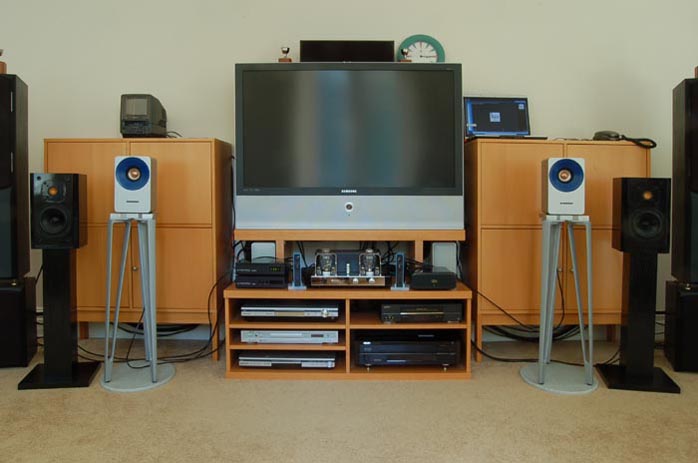
The audiophile conclusion Like all other NuForce projects, the Icon boldly plods along the same vein of resisting the usual. For that undivided commitment alone, the Icon is a success which breaks new ground in functionality and user-friendliness for Class D amps. As far as musical rewards and sonic attributes are concerned, the Icon as is demonstrates a major departure from the NuForce sound I know and love. As a resolute aficionado of the NuForce design philosophy and a proud owner of the P-9 preamp, two Reference 9 V2s and one Reference 9 V2 SE, you might feel that because of this, I have unjustly raised my expectations for the Icon. Throughout the audition, I cautioned myself to maintain an objective attitude and keep the price/performance equation in perspective. Still, I look for certain qualities despite personal preferences and price. I use the P-9 and the V2s to bi-amp my Apogee Stage or Mark & Daniel Maximus-Monitor. The V2 SE partnered with Audio Zone's Pre-T1 drives my Dynaudio Facette. These are very different speaker, yet NuForce brings out the best from them with a musicality/resolution equilibrium that seems unsurpassable. With any of these systems, I can fully submerge myself in the music without losing sight of the smallest details. With the Icon -- and the S-1 in particular -- I lose the latter which should be an integral part of the former. Of course I didn't expect the Icon to approach the P-9/V2 setup. Impossible. It's the level of enjoyment and involvement I missed, not sonic performance per se. Fortunately this is resolvable. The soft-spoken Icon needs a pair of sharp-tongued speakers like the JMlab Micron above. Upgraded speaker cables pushes the resolution envelope further. On the inevitable comparison between Icon, Trends TA-10.1 and KingRex T20U, one should not rush to conclusions over the same speaker. Whereas the Trends and KingRex have perfect synergy with my Klipsch Synergy F2 and Loth-X BS-1, the Icon proved to be too soft and laid-back. Again, this was salvageable. I powered the Icons with the KingRex SLAP batteries to drive the Loth-X BS-1. Bass consolidated and layering refined, bringing the overall performance on par with the other Tripath amps driving the same speakers. Bumping up gain by 12dB with the KingRex preamp, the Icons were more at ease driving the Mark & Daniel Maximus-Mini and started to display the true colors of NuForce characteristics. Resolution tipped to perfect balance with musicality, presenting a deep and wide soundstage that was spacious and uncongested. With the volume knobs of the Icons at 3 o'clock, preamp at 12, playing back orchestral masterpieces as challenging as Mahler's "Totenmarsch" from the Titan Symphony, localization of instruments was admirable. There was no fatigue or stress although with certain tempestuous Beethoven piano sonatas, occasional distortion cracks popped up. I wish there was a Mark & Daniel speaker with an 8-12 ohm impedance. Or Frederic's Rogers LS3/5a might be the perfect match. [Add my DeVore Fidelity Nines to the menu - Ed.] If you can find the perfect running mate, the Icon is capable of delivering the NuForce promise, which is good audio for every household. |
|||||||||||||||
|
| |||||||||||||||
 |
 |
||||||||||||||
 |
|||||||||||||||