|
This review page is supported in part by the sponsors whose ad banners are displayed below
|
|||||||||||||||
 |
|||||||||||||||
 |
|||||||||||||||
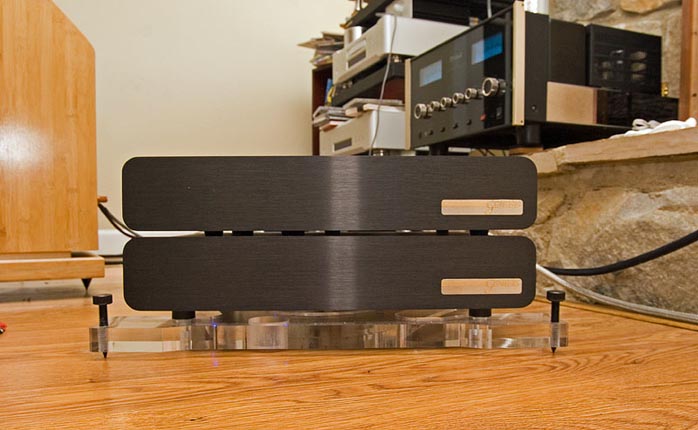
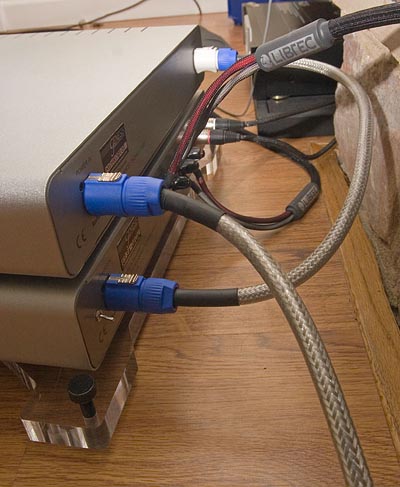
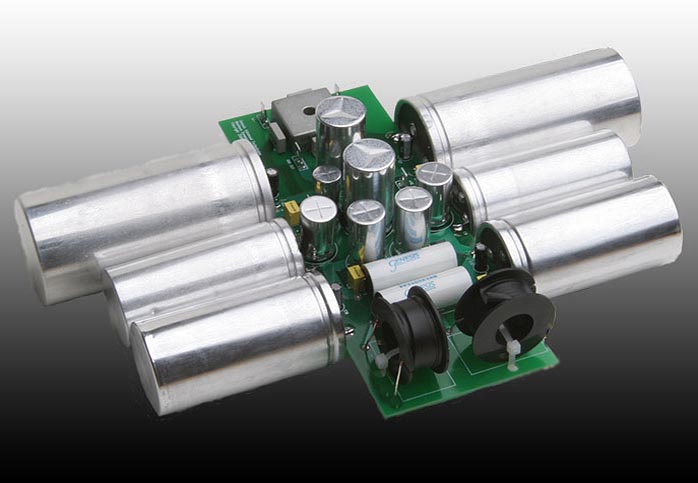
The Genesis Maximum Dynamic Headroom reservoir (henceforth MDHR) and affectionately nicknamed Max Headroom by the Genesis team (from the 1985 movie Max Headroom: 20 minutes into the future), arrived just a few days after the core review published and although the McCormack preamplifier would take a little longer to get here, the conclusions from adding the MDHR were so unequivocal that there did not seem any need to delay the conclusion any longer. As mentioned earlier, the $3850 MDHR is an extra power unit housed in the same slim grey enclosure as the main amplifier that gets stacked atop the GR360 (or GR180 or GM360 as applicable) and connects between the power transformer module and amplifier with a short cord of the same build and quality as the one coming from the transformer. Installing the MDHR is all plug & play. Turn off the amplifier, unplug the cord from the transformer to the amplifier, plug it back into the MDHR, use the provided short umbilical cord to connect MDHR and amplifier, turn the power back on and voilà! If the main amplifier is already burnt in, the benefits of the MDHR are instantly obvious and although they seem to increase after a few hours, there is really no break-in time needed per se, more a warm-up period than anything else. |
|||||||||||||||
 |
|||||||||||||||
The MDHR takes Genesis' Dynamic Power Delivery Supply (DPDS) concept a step further by providing additional capacitors of various sizes and proprietary resonance control circuitry to ensure smooth operation between all capacitor banks. If you are familiar with Naim's power upgrade schemes and the overall improvement in bass weight and macro dynamics they provide -- or just rely on the Max Headroom nickname to judge what the MDHR will do -- then you might be seriously misled. The MDHR does those things but they are only a very small part of the story. |
|||||||||||||||
 |
While the macrodynamic improvement is indeed the first to be noticed, it very quickly becomes obvious that microdynamic behavior benefits at least as much if not more from the addition of the MDHR. Forget my slight reserves about the amplifier's ability to portray all the raw energy of the music. With the MDHR in place, there is no such thing as limitation. From the largest surges to the smallest wrinkles, the amplifier is in control, in absolute control and nothing will smear, muddy or slow down the signal whatsoever. The strength of the MDHR is that you can take this statement and apply it to all the attributes of musical reproduction. They all benefit without restriction. The second most obvious improvement is probably what the MDHR does for treble extension and definition. It seems as if treble extends further and becomes far more varied and subtly hued, giving metallic instruments an extra level of sparkle (particularly notable on harpsichords, mandolins and guitars) without adding any harshness or artificially forcing details forward. It feels as if the information was always there but out of focus and the MDHR just tightened and crystallized this treble micro detail into something that sounds more like a real instrument - another step closer to the truth. |
||||||||||||||
|
| |||||||||||||||
Combine explosive macro dynamics, microdynamics alive with energy, a petulant guitar and one gets the ideal recipe to enjoy Renaud Garcia-Fons' Arcoluz like never before. Without the MDHR I knew something was left behind - not much but just a touch of passion. With the MDHR, the music rushed and swelled and sprung forth without limit. |
|||||||||||||||
 |
|||||||||||||||
| A very similar experience happened with Alexandre Tharaud's fantastic rendition of Couperin's Pieces for Keyboard [Harmonia Mundi - thank you David Kan for this discovery). Without the MDHR, the finger twisting Tic-Toc-Choc sounded just a touch |  |
||||||||||||||
| reserved. With the MDHR, the piano showed its full dynamic ability and diabolical rhythms. When I write finger twisting and diabolical, I truly mean it. Check this equally amazing performance by Sokolov and decide for yourself what it takes for a system to reproduce this piece accurately. |
|||||||||||||||
 |
Interestingly, the control exerted by the MDHR finds a more subtle but just as critical way to express itself in the midrange. The RPDs and their 8-inch open-baffle drivers dedicated to the 250~2500Hz range are ideal candidates to showcase what control means and does. I already highlighted how the GR360 gives this almost SET-like feeling of closeness with voices without ever quite matching it. The MDHR reduces even more the distance between you and the singers and on closely miked recordings like Leonard Cohen's Ten New Songs, one literally sits on his vocal cords, with nothing standing between the slightest imperfections of his voice and your ears. |
||||||||||||||
| Take the vastly nuanced voice of mezzo soprano Cecilia Bartoli in her homage disc to Maria Malibran [Decca 4759077 4] as another example of a very well recorded vocal recital. The mezzo range, sitting right above the upper midrange where my speaker's large driver hands over reproduction to the tweeter and both units need to work in perfect unison, is tremendously revelatory of both the qualities of the speaker's crossover network and the ability of the amplifier to maintain seamless control over this highly energetic band. Once again the GR360 and MDHR did not disappoint. Cecilia's voice was as solid, detailed, nuanced and integrated as in my concert memories. Truly an amazing performance from a speaker with a 2500Hz crossover point and one that had never been possible until being paired with an amplifier capable of handling the transition as if it did not exist. Once again, control - unflinching exactitude of impulses and complete lack of bleeding from one sound into another unless recorded as such. |
|||||||||||||||
 |
|||||||||||||||
| The only last quality that remains a tube privilege is the ability to highlight parts of the music by making them stand out in front of the rest. As this ability is a pleasant side effect of distortion and the GR360 + MDHR eschews this distortion, it should come as no surprise that the combination was faithful to the perspective, relative size and placement of the musicians as recorded without any editorial alterations. In all fairness, I love this ability of great tube amplifiers to sometimes make me feel as though they had an intelligence of their own, knowing what line to pick out and highlight in the music, revealing the soul of a piece while gently blurring the rest out of focus. But don't fear, the GR360 and MDHR do not put everything into hyper focus as early implementation of class D amplifiers used to do. They just scrupulously respect the recorded images - nothing more, nothing less. I have not talked about bass depth or soundstaging but obviously, better control throughout the frequency range translated to improvements in those two attributes as well yet the GR360 being so impressive already, the gains here felt more modest - which may very well vary depending on what speakers are used. To finish this portrait on a live note, I was last week at a concert of the Baltimore Symphonic Orchestra featuring Beethoven's First and Fourth Symphonies as well as a contemporary violin concerto. The concert was fine but not memorable had it not been for us arriving at the last minute and having to rush to one of the side boxes instead of our usual 1st balcony center seats. As a result, we ended up to the extreme left of the concert hall, literally feet away from the string section. It certainly gave the music a different tonal balance than what I am used to and the soundstage was skewed all wrong but guess what? Beethoven's Fourth was just as engaging as it always is. The highlight for me though was hearing the violins so clearly defined in the slightly dry hall acoustics. That was only possible because we were so close to them, right above them actually. What sumptuous tones! Anyway, having heard those strings unlike ever before and having at home the most capable system I have ever been exposed to for any sustained period of time, I went on a quest to find a recording of the Fourth that would give me the same intense feeling I had that night. It finally came with Paavo Järvi conducting the Bremen Chamber Orchestra for RCA Red Seal. First and foremost, Järvi's read of this so oft-recorded piece is far more original and surprising than the one I heard in Baltimore but it is coupled with a fantastic recording quality and the SACD layer, decoded by the Esoteric P05/D05, just gives an incredible feeling of orchestral presence. |
|||||||||||||||
 |
|||||||||||||||
No, the strings are not as clearly defined as when sitting feet away in Baltimore but they have more texture and tonal hues in this recording than in any other I own (short of a few SACD re-editions from 1960s' master tapes that are equally impressive in this regard but with a more holistic feeling to the recording and less separation between the sections) and this quality is quite apparent with all the soloists in the orchestra that seem to have received a particular level of attention from the recording engineers. This long digression is to reiterate that, had we not been late, I would have ended up sitting center stage but a lot farther from the orchestra and would have heard the music averaged out by distance. That day I heard what the violins really sound like when they play in an orchestra which allowed me to truly judge how real and accurate the Esoteric, Genesis and RPD system had become with the addition of the MDHR. If anything, take this experience as a good incentive to buy tickets with a completely different perspective next time you attend a symphonic concert. It's truly enlightening. But more fundamentally, it also reminded me that this level of tonal resolution and exactitude is what it takes to reproduce the 'live' experience of symphonic music. Back-of-the-hall perspective and mushy details are fine if that's how the recording was made but the real excitement is up close and intimate. Losing the intensity if it exists on the disc is certainly not enjoyable or desirable. The Genesis amplifier's raison d'être, if anything else, is to preserve as much of this intensity and veracity where it exists. |
|||||||||||||||
|
| |||||||||||||||
The conclusion from all this is obvious, at least to me; the MDHR takes a great amplifier and turns it into one that belongs with that handful of truly amazing and exceptional electronics regardless of class, technology or price. A lot of people will overlook the Genesis Reference amplifiers because Genesis is not an amplifier company with a name like McIntosh, Krell, Conrad-Johnson or Ayre but make no mistake - not only does the GR360 and MDHR belong with the statement amplifiers of those brands, I believe they actually exceed a number of them for a fraction of their price. Hard to believe that a class D amplifier and a few extra capacitors in a box could reach those rarefied heights? I know. Until you hear them. What the MDHR brings to the GR360 defies established conventions. It usually requires amplifier upgrades costing three to five times as much to get a fraction of the emotional connection delivered by what Mr. Koh calls his "Magic Box with Star Dust Inside". What an appropriate name. So, a Blue Moon award for the Genesis Reference amplifier with the Maximum Dynamic Headroom Reservoir? Yes, wholeheartedly for both value and absolute performance. Had you told me when I started writing for 6moons that my first award would go to an amplifier costing close to $12,000, I would not have believed you. Today, I just cannot imagine my system without those two boxes in it. |
|||||||||||||||
 |
 |
||||||||||||||
 |
|||||||||||||||
 |
|||||||||||||||
|
Genesis website
|
|||||||||||||||
 |
|||||||||||||||