 |
|||||||||||
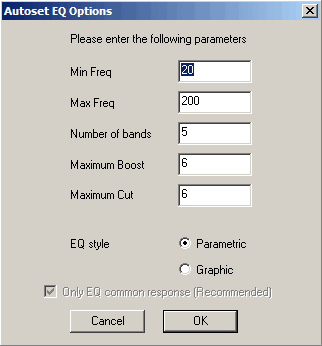 |
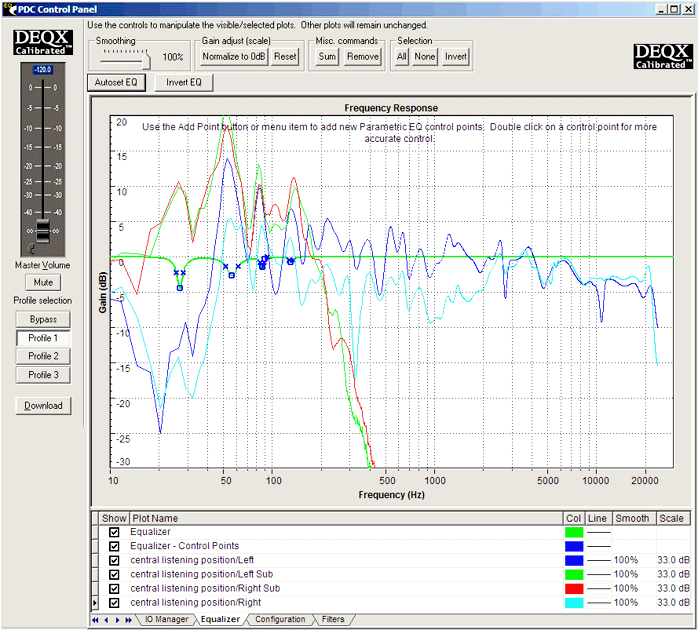
Or if autopilot is your preferred flying mode, you may wish to let the computer take over altogether. There's an AutoSet Q function where you just sit back and let the PDC have its way with your - ahem, curves. Anyways, the computer suggests the filters necessary to flatten the response curve. Then manually, add a little final creative touch and tweak the response a tad here for midrange presence or a smidgen there for fuller bass because as we all know, totally flat is totally uncool. Happy now? Well then, save it to a profile. The sound of ambiDEQXtrous abilities Okay, that was the hard part and believe you me, I only touched on it. Mindboggling. Hopefully not too superficially, I've succeeded to some degree in illustrating a modest portion of the DEQX's capabilities to provide a framework for the context of this review. The more in-depth detailed stuff and the myriad of fine adjustments and configurational options can be discovered and explored by the lucky audiophiles who shell out. After all, you wouldn't want this review to be 200 pages long, would you now? |
||||||||||
|
I evaluated the PDC in a three-pronged strategic assault: in the bypass mode as a straight-out pre-amplifier and after measuring the room, in Autoset EQ (nominated Profile 1) and manual EQ (Profile 2). Let's jump into that time capsule. Kim, flick the switch! |
|||||||||||
 |
|||||||||||
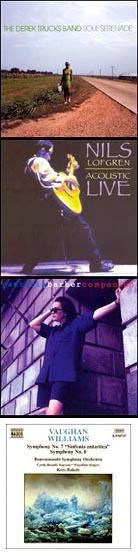
Bypasse mode: a straight-out preamplifier As a straight-ahead preamplifier, the PDC was quite impressive from the start. Derek Trucks' superb Soul Serenade [Columbia CK 89013, 2003] was as good a starting point as any. Derek Trucks is a guitar virtuoso in his mid twenties who, due to his precocious prowess, has been invited to play live with such greats as the Allman Brothers Band and Warren Haynes (Gov't Mule). This kid can play. Track 4 is a Rock/Blues fusion cover of Santamaria's classic jazz piece "Afro Blue". It starts with a delicately recorded flute solo and then Derek cuts in slyly, later be joined by the rest of the band on drums and bass. The PDC was transparent enough not to mask any of the delicate transient micro detail or breathy inflections of the flute intro nor for that matter the wonderful sense of air around Kofi Burbridge's instrument. Bass guitar on this CD is well recorded and the PDC reproduced it with high levels of detail and tautness. Derek's climaxing guitar riffs in unison with the rest of the band's frantic antics did not turn to a lump of mush as it can on lesser preamps. In other words, separation and nuance were retained pristine. Timbre was very good although not with the same level of abundant harmonic lushness, purity and texture a good valve unit can excel at. Also not up to par with good valve units was the so-called "bloom" around the instruments, the impression of instrumental body. Nils Lofgren's agile and dense guitar playing in Acoustic Live [The Right Stuff 72434-95736-2-8, 1998] was rendered accurately and with a healthy dollop of warmth, again surprising for a solid-state switch-mode preamplifier. This live CD is a phenomenal recording and the PDC captured the "liveness' superbly by not masking the ambient cues that lesser preamps can. I got a good sense of the acoustic space and simultaneously, an aural illusion of the size of the soundstage where Nils and his brothers perform. However ,that soundstage was not the ultimate in dimensionality of depth and width. This CD is also capable of pushing the dynamic limits of your system. When Nils strums -- or should I say smacks -- the strings, your system better be able to soar and fly the heights with him. The PDC flew high but not the highest. Nils, guitar in hand, skedaddled. |
|||||||||||
 |
|||||||||||
| Another brilliantly produced live CD is Patricia Barber's Companion [Blue Note 72435 22963 23, 1999]. Track 5 "Touch of Trash" features guest artist Jason Narducy on accompanying | |||||||||||
|
vocals. Normally, Narducy's voice is very present but annoyingly sibilant. The PDC is more forgiving of brash sibilance yet retains a good percentage of the presence that I hear in my reference system. Again, soundstage depth in this vast-sounding recording seemed noticeably reduced, with less of a 3-D effect to the presentation. On the other hand, localization of the track's multitude of percussive effects was impressive, with sounds seemingly jumping out of the mix from everywhere.
On classics, the vastness of the undulating snow dunes of Vaughan Williams' Sinfonia Antartica [Naxos 8 550737, 1996] was not quite as ominous in its grandeur as I'm used to. The presentation seemed slightly constricted, less involving, the awesome crescendos stunted. The conclusion reached of the PDC in bypass mode was of a resolving and transparent preamplifier up there in the higher percentile of good solid-state designs. It was capable of reproducing superb detail and micro transients if not revealing of the ultimate in dynamic contrasts. It could separate instrumental lines without confusion when things got busy. Bass was tight and detailed and the PDC forgiving of engineers' over-zealousness in the upper midrange and lower treble. This in particular translated to smooth, uncolored vocals with good but not outstanding presence. Rock, Blues and big-band Jazz fared better than the more intimate club Jazz or big orchestral epics where the distant perspective hindered emotional involvement for my taste Profile 1: Autoset EQ This is where the unit comes into its own. After all, the PDC was designed to be much more than just a nuts'n'bolts preamplifier. In fact, it was designed to be a lot of other things from the word go. The preamplifier option is really just a very clever enhancement to a state-of-the-art digital processor. How does the PDC perform in its intended raison d'être application? Well, Autoset EQ will correct to 0dB or flat whatever peaks or troughs the measured frequency response may exhibit. It is clever in that if for example the left channel showed a +5db peak from 80-110Hz and the right channel responded with a -5dB trough in parts of the same frequency range, the Autoset EQ will do nothing to the area of overlap since the combined response of left and right channels already nullify each other acoustically to flat. In addition, the user can specify a predetermined frequency range wherein the Autoset EQ will do its thing but leave the remainder of the audible spectrum alone. |
|||||||||||
|
|
|||||||||||
 |
|||||||||||
| Profile 2: Manual Equalization post Room Correction Measurements From experimentation beyond truly flat, my idea of a good frequency response curve that correlates to equally good sound quality thus became:
Hey, personal taste is king in this game so I put my mouse to the task of manually tailoring the curve with some filters to match the above description, all in real time while the music was playing and my ears the judge. The result this time? Hell yeah! Derek Trucks' acrobatics sounded much more present and resolved, with far better dynamics and detail. The signature Trucks guitar sound was rendered with a more pronounced sense of harmony with the rest of the band yet kept its relief within the mix. Bass guitar leading edges also improved to result in Todd Smallies' instrument becoming faster and therefore rhythmically more involving. Quite apart from my observations of improved dynamics, detail, soundstage size and image accuracy, a word that came to mind when room calibration and manual EQ were applied correctly was coherence. The music sounded gelled - not a sum of disjointed instruments manifested as an amusical phenomenon but a coherent singular event made up of said instruments in individual existence as spokes on a wheel and in unison as the wheel itself. The result just felt/sounded right. |
|||||||||||
 |
 |
||||||||||
 |
|||||||||||