|
|
 |
I came up on iTunes by sheer default. When, many many moons ago, time had rolled up in a rickety CD rickshaw to tell me to embrace PCfi, Apple's iMac hardware had appealed far more than any Windows alternative I had local access to. So my imported Redbook library and subsequent downloads became .aiff files, my player of choice PureMusic to buffer playlists, spin down the drive and disengage iTunes as playback engine. I always installed the maximum permissible RAM, 32GB on the current third machine. When I figured out how each subsequent iTunes version at a friend's took away features I liked, I categorically stopped upgrading iTunes. That I'd been inadvertently shanghaied by Apple's ways of doing things was a belated insight for this otherwise WIndows man. But the cracking reliability and physical beauty of their hardware still make me a staunch loyalist today. By sheer use, I've become - well, used to whatever might strike someone else as idiosyncrasies of the iTunes platform. Seeing how I don't use our 27" 3TB iMac for anything other but as an integral digital music transport—file storage, purchasing of music downloads, library access and playback all via mouse and keyboard to eliminate Wifi—running outdated iTunes software and a PureMusic version happy with it has zero impact on trouble free service. Au contraire. Meanwhile the large Retina display has eaten the lunch of the displays of any and all audiophile server challengers. Obviously it even dwarfs Apple's various iPads which those servers use by default. It's how I've arrived in waiting-room limbo for a solid reason to change my Mac stripes.
|
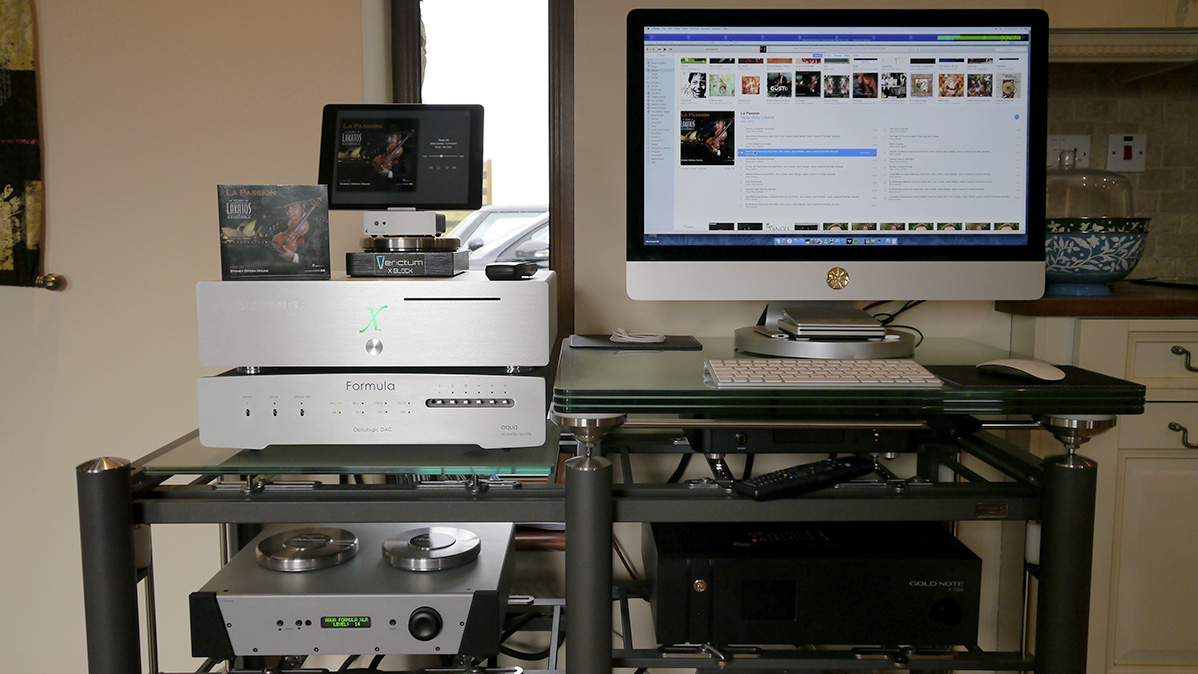 |
This Roby Lakatos "Passion" twofer live from the Syndey Opera imported as 'unknown artist/album' as well and had to be manually tagged and artworked thereafter. Ditto a Jesus de Rosario Flamenco CD. So I wasn't too impressed by the MusicBrainz database.
|
As an unrepentant iTunes user, the X-odos GUI was instantly intuitive and exactly what someone with my background would expect. I couldn't speak to Roon or JRiver fans and their baselines but for my purposes, I'd get on with the xo|one just fine. Given how I could basically kit out three different systems with iMacs for the price of just one xo|one, I obviously wanted to be hit hard about the head with the sheer obviousness of its sonic superiority. I really hoped to be shown the way and the light to finally get sworn into the righteous club of the audiophile music server fraternity. |
|
|
|
|
Alas, the waiting game continued. What I heard was a performance gap as narrow as the typical digital filter options on most DACs. At best, they seem to do something but it becomes a quickly nebulous and insubstantial affair when we're asked to get specific. If we can distinguish them reliably in the first place, a typical description for our favourite filter becomes a vague "it sounds best" or "most right". To me. Or you. Given the hedonistic nature of our hobby, that's indeed all anything hifi ever must accomplish. Whilst it makes for lousy reviews, those are never the purpose of owning a fine hifi whose sound delights you. And if the sound of our .aiff-loaded iMac with PureMusic into the Aqua Hifi Formula were to please you as it does us, you'd be absolutely delighted by the X-odos xo|one. That's because you'd be seriously hard-pressed to tell them apart.
|
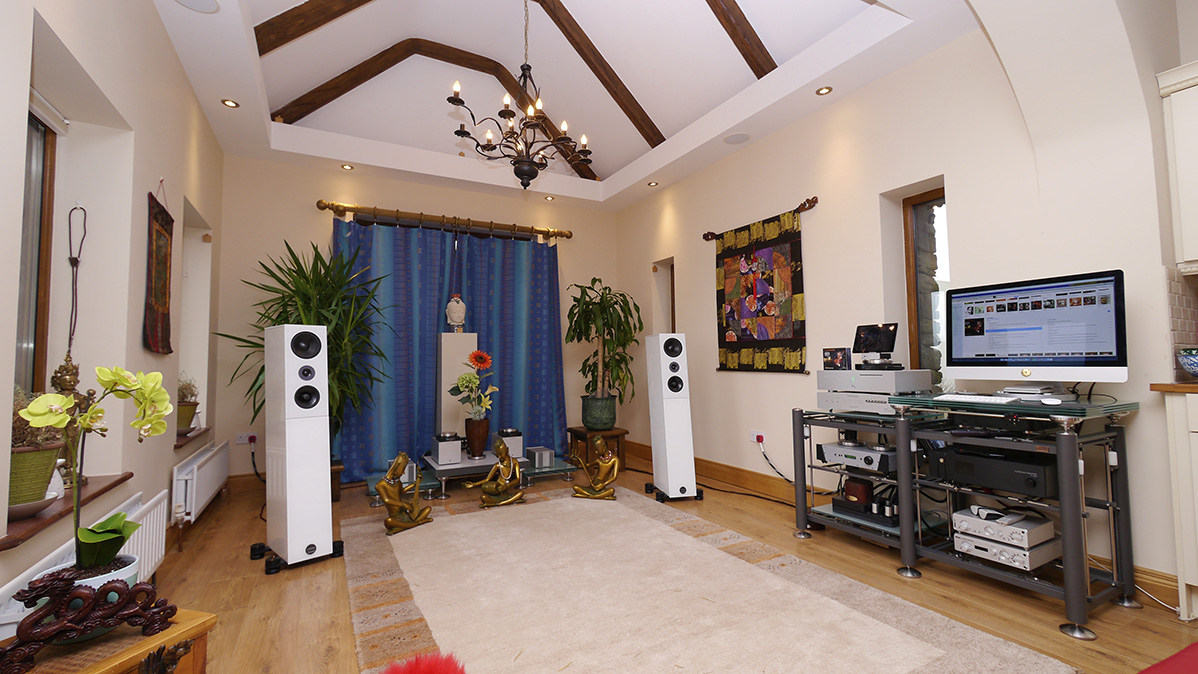 |
It's when I started venturing beyond my own RedBook files and those I knew which came preloaded and were fortuitously duplicated already on our iMac like some Jan Garbarek, Kari Bremnes and Vicente Amigo that the gap grew. Christof had preinstalled a number of Stereoplay albums, i.e. compilations by Germany's biggest audio print magazine. Those are exclusively audiophile productions assembled to show off certain hifi qualities. I began to notice that over the xo|one, the differences between those files and my regular stuff were more overt than they are over our own machine. There was more ambient verisimilitude, more detail refinement, more tonal elegance. In effect, hi-rez began to sonically matter which, frankly, it hadn't really before. Granted, I found it no easier to sit through lame white-dude Blues, metronomic Baroque numbers or other glorified samples of the audiophile persuasion. That is to say, I didn't suddenly care a weensy wit more about those typical music choices. Just so, I had to admit that on purely sonic grounds, the xo|one's apparent resolution advantage over the iMac came to the fore. It finally favoured such material with demonstrable distinctiveness, hence a valid raison d'être. Given my world music bias, Wifi aversion and iMac reference, it still made me all wrong as X-odos' ideal target customer. But I finally had crossed paths with a very well-built audiophile server which, on audiophile demonstration fare, enlarged the sonic lead over regular stuff to an extent that I could see people willing to pay for it. If that seems damning with faint praise, it's merely a personal reflection on the very significant surcharge over a fully loaded iMac (add iPad or iPhone as a prerequisite remote control and access point); and the fact that I just don't listen to 'audiophile' music. But if you asked me whether the X-odos xo|one sounded better than our iMac, I'd have to say that "on premium recorded fare, yes it did!" In my book then, the primary appeal of the xo|one rests squarely on the type music library you own or plan to assemble. If you're a high-resolution type customer, the xo|one really has your name on it.
|
|
 |
|

|
|
|

|
|