|
|
|
|
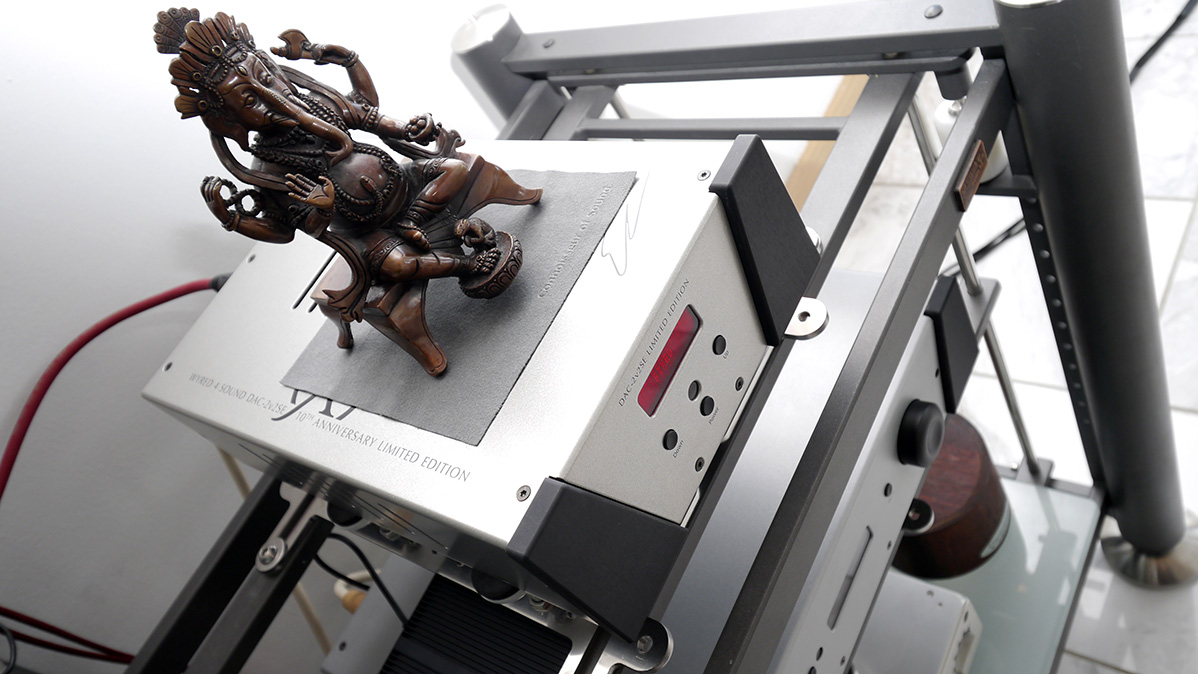
Wyred's own STP SE II linestage was the obvious mate to control volume in the analog domain. Our preferred SPL and overall gain push digital attenuation into lossiness. Continuing on this balanced signal path, the Pass Labs XA30.8 amp was fed XLR to drive the Audio Physic Codex four-way towers. Oops? This was not Colonel Sanders' deep-fried crispy Sabre sound of popular imagination where chip identification after one unsatisfactory long-gone encounter—or worse, one lone review read—confers automatic knowledge that by design, all DACs using it must sound the same. Another perspective accords the actual chip the perhaps lowest importance of all the variables. That instead looks at the analog output stage, power supply and how I/V conversion is handled. My own experience is closer to this second view point. Listening to the X certainly noticed tremendous detail density. Front and back layers of the soundstage all exhibited the same focus for perfectly lit depth of field. Rather than glassy or crystallized sorts can, this clarity didn't feel threadbare or artificially exposed. |
|
Neither did it feel harmonically enhanced or temporally lazy like tube buffers can. This Limited Edition tuning wasn't about that. To my ears, it instead followed the earlier precedent of Wyred's linestage with its extreme Stage II makeover. That had all been about maximizing low-level detail recovery by pushing circuit and power supply noise down to their practical limits. Besides benefiting imaging precision, it also produced improvements in treble intelligibility and very fine decay activity for most visible recorded ambiance. If there is no such ambiance, the difference with recordings which do have it is magnified. By increasing contrast between various levels of recording quality, the artifice of lesser (over-produced?) music is made more grave. It doesn't sound bad per se. It just reminds us of the type production values it never had in the first place when the same deck shows us how they factor with other albums.
|
|
|
|
Reviews of EJ's ICEpower amps, ours included, remarked on their warmth or chunkiness. This opposed popular beliefs on brittle, dry and cool Class D sonics. Again, it was not how I perceived the 10th Anniversary. Rather than feel tuned for comfort, it felt tuned for advanced systems; those beyond the need to compensate left or right but which instead hold steady to the middle to see how far they can go. On virtual surface textures, I perceived X as shiny rather than matte; like a computer monitor with glass not plastic screen. On subjective speed, X felt fast not slow. Literally underpinning that was supremely articulate and pitch defined bass that wasn't fat, blotty or excessively weighty. On the right recording, vocals could be very present and intimate. Consider the slinky "Ateneo" opener of Juan Carmona's 27 Flamenco with its rotating lead vocals and vibrant chorus. One imagines seeing virtual sand crystals lining Pedro Heredia's throat. They give him that signature graininess and nickname 'El Granaino'. Or take Subutay Kesgin—stage name Azerbaijani nightingale—whose big undulating voice could at times get nearly oppressive in its uncut intensity. |
|
|
|
 |
X struck me as a component which could pass on music's encoded energy without weighing it down. On impressionist classicist fare like Rafael Riqueni's Parque de María Luisa, that same transmission of energy manifested in the glossy timbres of solo guitar and string quartet. After all, music isn't all Sturm und Drang or youthful exuberance. It can be contemplative, introspective and minimalist. What prevents that from crossing into boredom especially to a non-attuned busy mind are richness of tone and timbre; and microdynamic scope for maximum ripple of minor voltage shifts. X seemed very much groomed for such finessed high-wire jobs that make the very most from seemingly little. Think of it as quiet fireworks. Bombast is comparatively easy. Unearthing drama from minimalism isn't. X knew the difference.
|
|
|
|
|
|
Sampling a new (broken-in!) component can enter familiar music through a new door. Capturing those moments when still fresh notes a particular perspective or aroma. Some DACs may trigger talk of beat fidelity and PRaT. Other have us first notice saturated colours; immense stage depth; treble sweetness; extended decays; etc. Soon we forget the door we came in through. We realize that this component does all the usual other things, too. Hence those can go unmentioned. It's understood. They'd need mention only if absent. Still, some readers want assurance. They want to be told that beyond a minor character or specific strength, a component is no one-trick pony. Clearly! Nothing plays in just e minor or C major. To a smart audience, that's obvious. Rattling off the whole litany of modes, aspects and qualities would be just tedious. So we'll spare us the litany. Let's instead revisit the early Sabre sound which created the whole imprint. Has any of it, the preconception or judgment, migrated into the 10th Anniversary? Other DACs are 'shallower' on the leading edge. If they were draftsmen, they'd use a softer pencil. With it, it's harder to tell where, exactly, any line starts. The harder/finer the lead tip, the clearer the distinction between white paper and the very first onset of scribbling. If one is used to music drawn with softer pencils, greater precision/articulation can at first seem sharper. But it needn't mean bite or prick. Done right, it's simply more precise. Very thin lines drawn very close together still come off discrete, not smudged together. |
|
|
If we stick with our pencils, it's clear that with fading eye sight also fades the legibility hence meaning of the tiniest spiderwebby scribbles. If we don't listen attentively enough; if the rest of the gear doesn't operate with the same 20:20 vision as our highest-resolution component; some subtlety falls by the wayside. It becomes irrelevant. Then X-grade resolution is wasted. If we create a front-to-back system of equivalent ability and pay close attention, then fine recording quality and top musicianship as they always coincide with guitarist Stephane Wrembel [Barbes-Brooklyn cover at right] show the differences. The last DAC coming through had been the Denafrips Terminator of two weeks ago. Memory was fresh enough and ancillary hardware identical to know that its voicing was lusher and sweeter, its pencil softer nosed. On Wrembel's "Afro Blue" track, X now had more quicksilver and upper-harmonic spray on the cymbal and stick workout, more snarl on the guitar's power notes, more tang on the Jazz fiddle. This meant ultimative separation power when these Manouche-inspired musicians fire on all cylinders. Borrowing from two headfi amps in residence just then, Wyred's DAC was the COS Engineering H1 whilst the Denafrips was a lighter version of the Riviera Labs AIC 10 hybrid with triode gain stage. My first encounter with a Pro Sabre had been ten months earlier in the Resonessence Veritas with 9028Pro; too long ago for specifics. But referencing my own review, I'd slot it into the same general sonic aesthetic as Wyred's; tuned for speed and lucidity to trim the fat. |
|
|
|
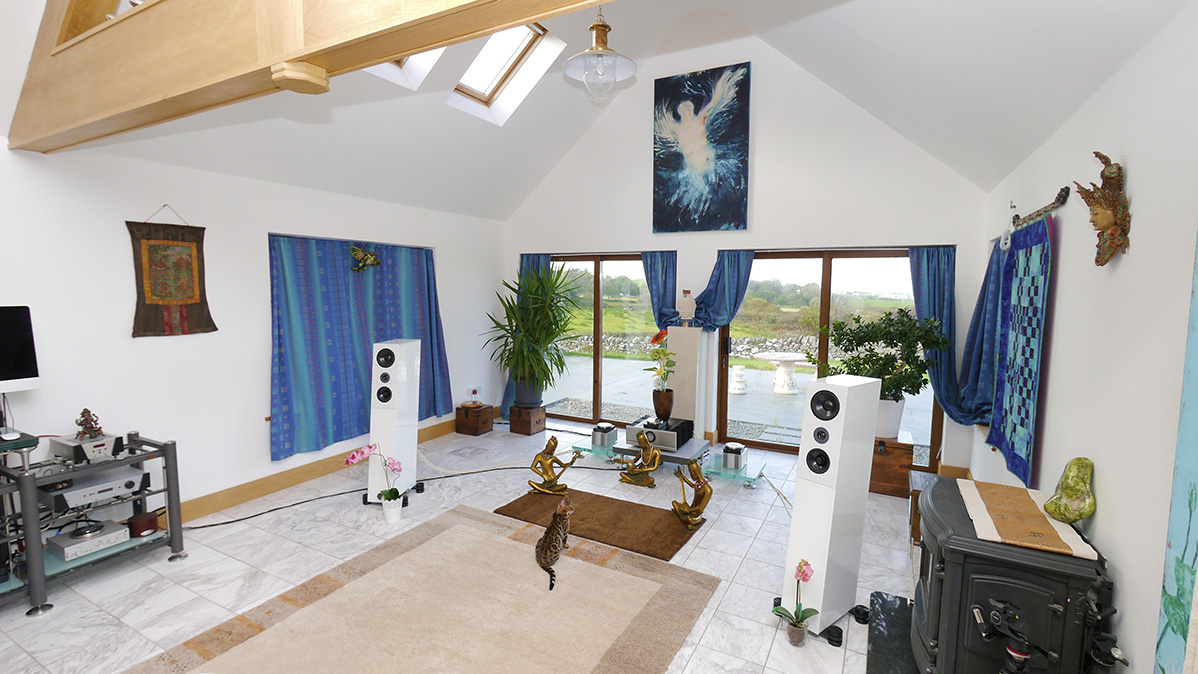 |
Bengal cat Chai judging left/right balance from the proper middle position.
|
That this now came off not skeletal or whitish but right down the imaginary middle was due to well-matched quality ancillaries. With a source of X calibre, even poor old Redbook without any MQA filtering or DSD conversion showed itself fully capable of high-resolution playback. If you doubt such assertions, spin up Drums & Bells and watch your hi-rez files twitch with envy. This gets us at system voicing and various approaches to it. Except for those who disavow all voicing altogether, everyone else does it. But where? Source? Preamp? Amp? Speakers? Cabling? Whichever way you fancy. With Wyred4Sound's 10 th Anniversary D/A converter, you'd start off purist-neutral and in max-resolution mode to not leave any crumbs under the table. Which makes perfect sense. After all, this is the n th and presumably final distillation of a proven platform which had already undergone earlier v2, DSD and SE upgrades. Curiously, musicality circles can treat 'high resolution' as a somewhat dirty word. On that score and for the Wyred, I'd add the prefix 'benign'. If you subtract brittleness, glare and glassiness from intense detail, what's left? Mature finesse; unless your source material isn't up to the full Monty. That's why I earlier called X an advanced component. It's not really for beginners. They'd either not have the right context to hear its full potential; or blame it for being honest. The Wyred is like a finely tuned sports car. You don't give its keys to a teenager; and you don't take it down a pot-hole ridden dirt road expecting a smooth ride. That's just common sense and self preservation.
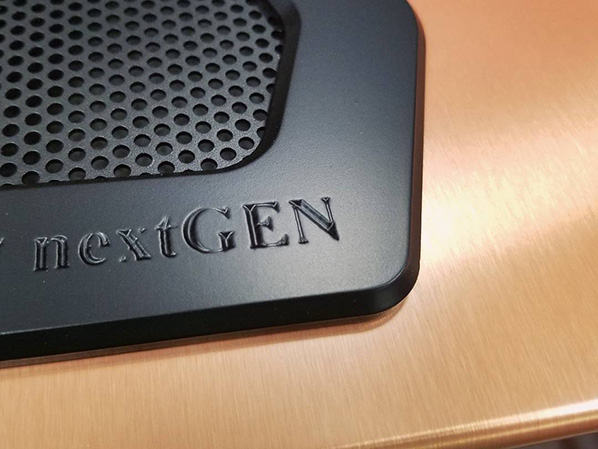
Pro Sabre; con bling. WIth the 10 th Anniversary, it's not just a latest-gen chip to keep up with the Joneses who relocate with alarming regularity in the DAC genre. It's a makeover of the entire surrounding circuitry wherever a liberated parts budget could still chisel out improvements by going exotic. The only non-exotic things about this deck are its packaging and model name. It's why it doesn't sell for five figures. But it should be the perfect mate for the firm's new nextGEN amps, 250wpc and 750wpc ground-up Class D machines with linear power; and VU metre plus spectrum analyzer for the bigger one. |
|
|
Perfect it also was with its stablemate linestage and our Pass Labs XA30.8 stereo amp. With the Nagra Jazz, the 1MHz class A/B LinnenberG Allegro monos would have been ideal as well. With two 'super' rez front-end components, the darker heavier Class A Pass was simply better. Not only had this mix proper colour and body but, most exciting of all, tremendous presence and energy. The tunes projected vigorously across space for that turn-on factor which is very different from a tame over-there perspective that casts the music at a safe distance. More of an X-rated lap dance then? Quite. This was a winning example of voicing at just the amp juncture and selecting neutral components with high magnification power for the other positions. Not having heard the standard version of this DAC, I can't tell you what and how much separates it sonically. What I can say is that like this particular Pass amp and Wyred preamp, the Limited Edition DAC packs stiff value by putting the money where it sonically matters. Gussied-up face plates from Neal Faye and oversized chassis are for the other guys. |
|
 |
|

|
|
|

|
|