|
|
|
"I wouldn't call this system totally neutral—it had a special shine to it, as would a jewel that had been buffed and polished to perfection—but it was supremely musical and drop-dead seductive." If you remember, that was Jason Serinus' impression from his Denver show report for Stereophile. That special sheen he heard is an elevation at ~2kHz. It gives an emphasis to vocals and instruments in the presence region; and serves as a minor dynamic expander in the same band. It's well-behaved enough to allow a full reveal with quick neutral transistors and being toed head-on without coming across as peaky. Instead it's more intimate, sculpted and intense. It imbues cymbal crashes with energy to have you forget that a Raal ribbon tweeter for example would excavate more air and shimmer above it. Listeners with a heightened presence-band sensitivity can tweak that aspect with lesser toe-in; or fire the speakers straight out.
|
 |
It's a fascinating aspect/effect that would bother scope jockeys yet makes for an attractive difference to the subjective experience.
Calling it a special shine or sparkle feels spot on to hit that target. Which leaves the domain of timing or rhythmic perspicacity. Cue up complex stuff like the Khoury Trio's stunning Revelation album of Middle-Eastern Jazz, my favourite new music find of the year. The benefits of a decrappified time domain unmolested by fuzzy late bass are crystal like a polished decanter; or complex crochet needle work. Following intertwining beat patterns is very easy. Their bass portions are like playful cat paws, not panicked elephants. It's appropriate to talk of heightened detail density in the sense that a multitude of simultaneous transients all stand clear of one another without blur or running together. Instead of being unnaturally prickly or needly like extra zing that might be needed to cut through the standard grease, it's back to easeful and non-pushy. When the camera stands perfectly still on a tripod and the lens is perfectly focused, no special lighting effects or post-production sharpening are needed.
|
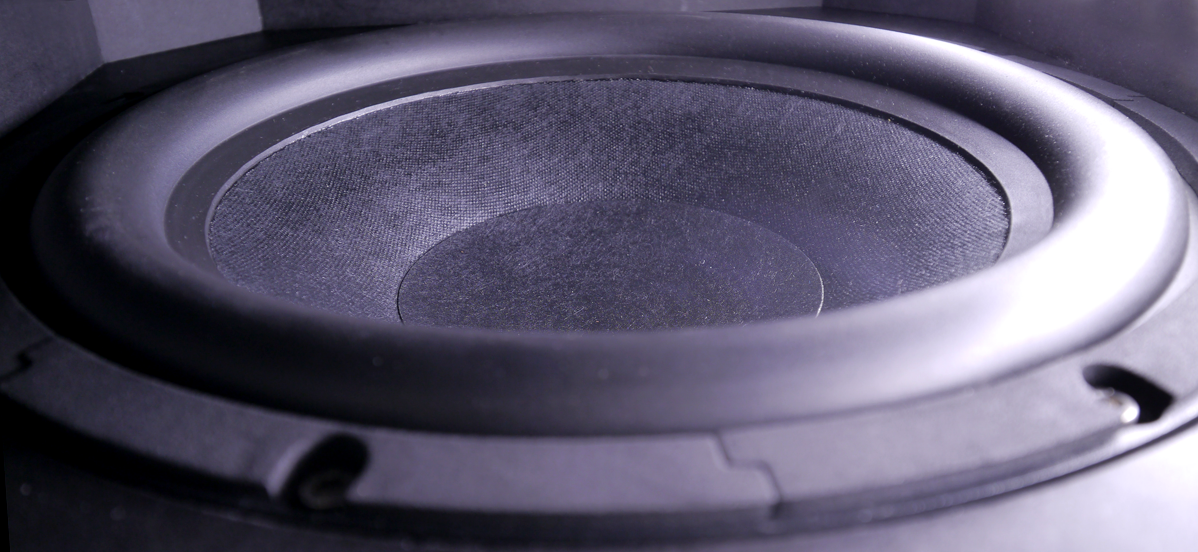 |
Of course, those too deeply conditioned by conventional bass—what goes for slam or crunch in certain quarters—may prove incapable or unwilling to make the switch. Instead of delighting in obvious gains of speed, articulation and seamless textures, they'll focus on losses in 'room lock', droning and pressurization effects. Indeed they're predestined to calling the 9.87 system too sophisticated and refined. And it's true. Such full-scale clarity makes all manner of modern grunge music act strangely dry-cleaned. Despite it being what it actually sounds like when certain otherwise typical playback distortions fall away, it could still feel alien or plain wrong just because it's so unfamiliar and antithetical to such genres. Not that it's a surprise to anyone that the Voxativ 9.87 system wouldn't appeal to punk rockers and garage grunge lovers in the first place. For them, a big JBL stack would be far more appropriate; and do so for pennies on the dollar.
|
|
|
|
|
|
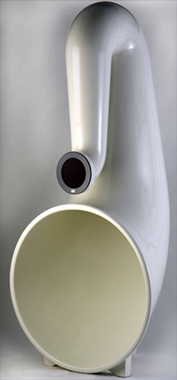
Many moons ago, I awarded Voxativ's Ampeggio. Then Stereophile followed suit. The Ampeggio made their 'Product of the Year' distinction to edge out a number of popular multi-way speakers from big very established vendors. It was a real front cover triumph. Retro tech and doggone underdoggery trumped mainstream fame with the trumpets blaring. Now it's 2015. The wheel of audio dharma has turned. The 9.87 system exceeds the original Ampeggio on two counts. First there's Voxativ's latest widebander. Their drivers continuously evolved. The wood-cone 104dB version reviewed here wasn't yet listed at time of publication. Then there's the novel 99dB active bass system. Though not without small limitations like missing 20Hz, this docked affair in true piano-gloss black or white is a full-on statement effort. My friend Dan found it superior to his thrice-priced big Voxativ Dué model with JL Audio subs. He sold that off to acquire this. Having heard the squared Pi first in his space, I can vouch that open floor plans even bigger than our 100m² remain very ably served.
All this arrives in a rather more compact form factor than most all rear-hornloaded competitors of equivalent reach (Rethm excepted). What the 9.87 has accomplished for the bigger picture is twofold as well. Not only has it domesticated or house-broken the full-range widebander breed; it's moved it beyond the pale of justified earlier audiophile critique and associated fringe appeal. As a result, it's become a bona fide mainstream consideration on acceptability, desire and worthiness. You'll agree how that's a far cry from open-baffle Lowthers with their guts spilling out the back; or Arcadian System Pnoe-type giants of 2.2m height [right] which still require subwoofer assist below 55Hz to be called complete.
A fringe benefit is that the bass cabs with their flexible settings may be acquired for competing products; and that a soloing bachelor Pi can be converted to a properly married Pi at any time by simply inserting a folded felt damper into its horn throat and docking it atop the bass base. Punters with ears bigger than their wallets can thus approach the 9.87 system in two steps to defer the full crunch of the final bill. Add truly impeccable lacquer skins applied by an actual piano maker to cross off luxury optics in the same sentence as luxury costs. On my list of speaker hotties I'd most like to keep around, Voxativ's 9.87 system enters a tight secret group which includes the KEF Blade 2 and the Vivid Audio Giya 4. Yes that's illustrious company. And yes, that's where this one belongs; different but equally accomplished and one to settle down with to call it game over. |
|
|
|
|
Delivery: Securely palletized, shrink-wrapped and tied down behind added plates, then spread over four equal-sized cardboard cartons with plenty of inner styrofoam liners and additional shrink wrap to protect the finish.
Contents: Includes a long RCA/RCA interconnect pair for the woofer sections; and a banana/banana speaker cable for the widebanders. User supplies power cords.
Footers: Cork-covered flat footers on the bass bins; very pointy spikes captured by integral receivers for the tops.
Connectivity options: None. The speaker-level inputs of the plate amps are defeated. Line-level from a preamp's or integrated's pre-out is the only way.
Special recommendations: The Vinnie Rossi LIO makes for a superb one-box source/amp that's utterly quiet, tube-reminiscent in its density and priced to counteract some of Voxativ's steep sticker. With black and white options, the LIO even matches on cosmetics.
Against: Except for price and associated perception (no conventional crossover parts from Mundorf, Duelund & Co., not three or more >80Hz drivers including fashionably exotic Beryllium, diamond or ribbon units to visualize where some of the money went), nothing. In reality of course, there are four super-high performance Neodymium-powered woofers and two hand-made widebanders with exotic wood cones and physically maximized Neodymium motors of extreme field strength. To appreciate those facts simply requires a bit more product involvement than a cursory glance and knee-jerk brush-off because of it.
|
|
 |
|

|
|
|

|
|