|
|
|
At low SPL, Eos+ couldn't match the satisfaction our transistors generate. Recorded ambiance collapsed onto the performers. The usual traces of treble shimmer were absent. Rather than fully incarnated presences surrounded by space haloes, the virtual players felt more sketched and two-dimensional. They were there but not fully. To arrive wanted more signal voltage. Such observations are the usual side effects of lower magnifying power. The obvious antidote is turning up the volume. If you don't do a lot of quiet listening, you may never go below the critical threshold.
|
 |
At higher volumes, the meat showed up but with less than the usual sizzle. In hifi terms, this meant a "they are here" not "I'm there" perspective. The sounds were in our room rather than me feeling transported to their original locale. That too was a side effect of lesser resolution. The first things to diminish or eventually fall away are the tiny ambient cues; what I call audible space. Space per se is just silent emptiness. We cannot hear it. But a flash light still illuminates a windowless cellar by how it reflects off its walls even if we don't find the main light switch. In the same way recorded reflections of the original sounds audibly light up the space the musicians were in. When that spatial context shrinks or disappears, we're left with what it contained. That's the "they're here" effect. To virtually relocate to where the artists were—the club, concert hall or studio—relies on the original spatial context. That's simply not an aspect Eos+ dug into deeply though consecutively higher levels certainly included more of it.
|
 |
Compared to our ultra-bandwidth transistor amps, Eos+ was also darker on top to remove their sheen. What at really low levels sounded somewhat dull at standard SPL simply became matte not glossy. Here the typical side effect is what hifi talk calls more forgiving. Bright steely recordings tone down, spitty sibilance lessens, audible edges smooth over. Given how standard not rare audiophile fare tends to be recorded, this can be rather valuable, i.e. practical. It knocks down the nasties.
|
|
|
|
|
Lower resolution also meant lower contrast. Over ultra-revealing gear, close-mic'd recordings can begin to feel too explicit and etched. This goes well beyond what we'd hear in a live setting. After all, our ears never detach or telescope. They never magically fly down a singer's throat or hover within inches over a guitarist's frets. With Eos+, that unnatural perspective diminishes naturally. Its softer more respectful focus contributed to Chip's comfort sound. Another constituent was a tighter musical weave. Seeing less through and around things meant more physical tone density. And it's precisely this heavier chunkier mass—comfort sound's bigger portions—which becomes prime focus and roast with Eos+. Its benign very robust handling of the tunes welcomed dynamic vitality. Unlike a dietician's special, it simply wanted a heavier foot on the gas. Then it turned on full-fat readings atop a powerful slightly bloomy bass foundation. Softer not chiseled transitions, big dynamic reserves, a subjectively slightly downshifted tonal centre due to that somewhat genteel top, the antithesis of lean, brittle, whitish, nervy or annoying... Trafomatic's big Eos+ had all of it. It behaved like a big cruiser, not a high-revving twitchy roadster. It was about the macro not micro side of town where our household doesn't venture much.
|
 |
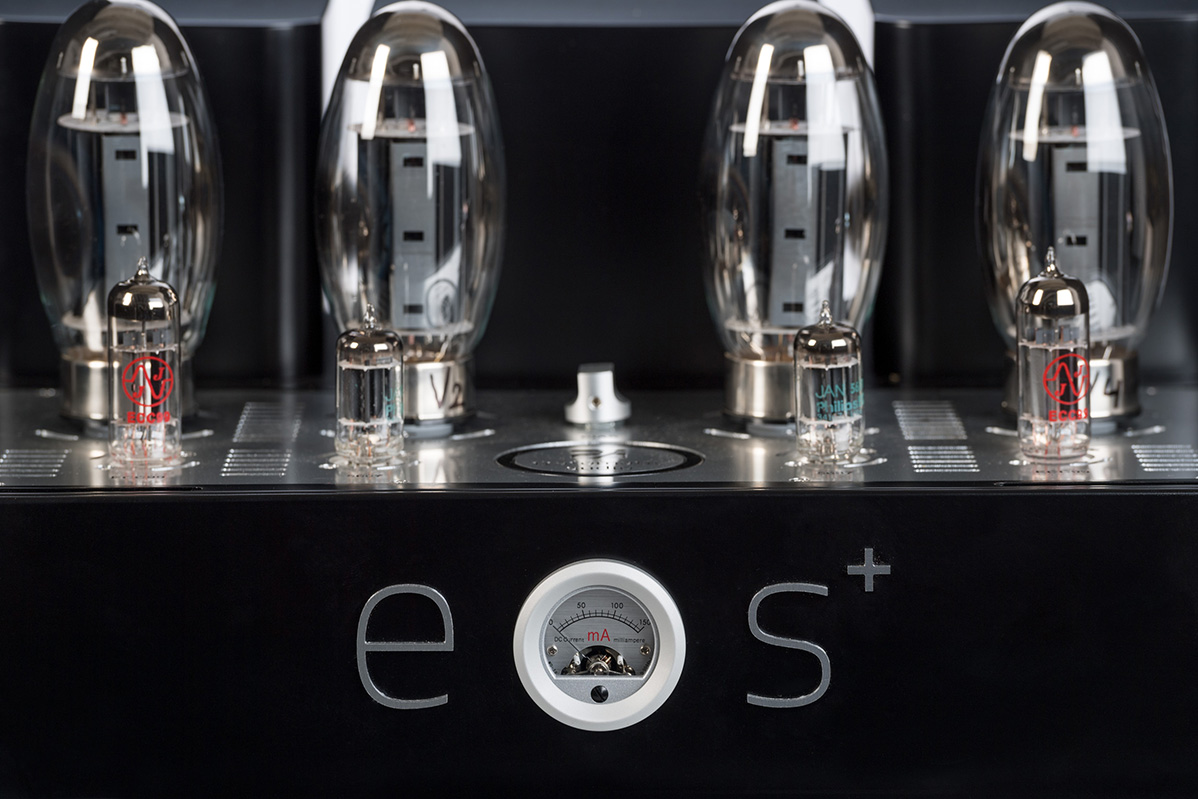
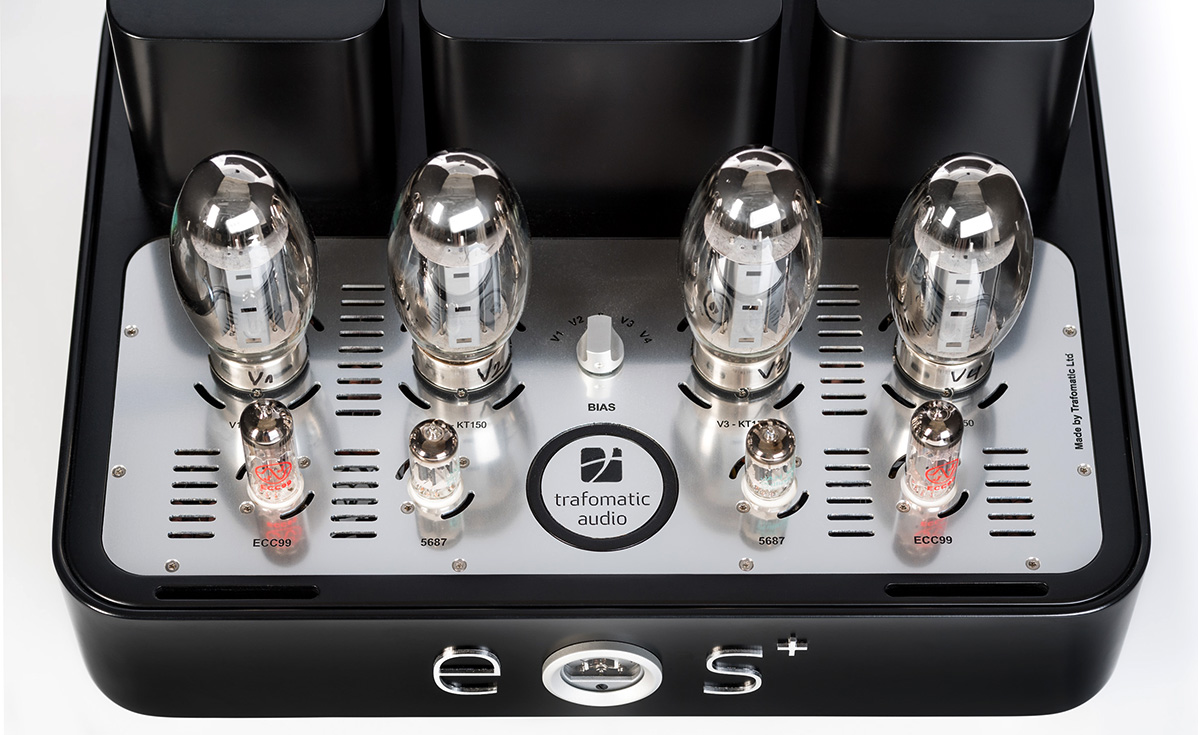
And like a big-bore car, it wanted to stretch its legs. Why else would you go after a 150wpc tube amp in the first place? That our household was never the intended target audience should be clear. After many years, iterations and flavour permutations, our main system is optimized now for a full-bandwidth highly resolved sound at low playback levels. It mirrors core qualities which SET/widebander fans pursue but, rather contrariously, goes after them with pure transistors and standard 87dB four-way speakers. It's a different ticket than today's assignment. That really addresses other expectations and hardware partners. It's why it came about not from my end but the maker's. It gave me an unplanned chance to revisit earlier times when valve amps were still part of our inventory. As always, one must know one's desired destination. From that arises a road map and the means on how to get there. To move Eos+ out of first gear should favour inefficient speakers in large spaces played at a god clip. Full appreciation of the sonic school which it represents will find fault with so-called modern sound's emphasis on ultimate detail and its up-close overly intimate perspective. The desired shift steps back and instead loads up on tonal weight, mass and overall chunkiness. Eos+ caters to modern recording trends with a flattering soft focus and gentle treble. It caters to modern music with powerful punchy bass. It supports Rock with stout power reserves to bring home the arena without the glare. It meets high-end ambitions with noise-free behaviour both mechanical and electrical. Its industrial design combines curves with squares and sports an attractive solution to a tube shield, with no visual penalty for not using it. Finally, Trafomatic are well known for supporting custom paint requests. If black or white aren't your thing, they'll still have you covered. That's what the two-chassis Eos+ put on the menu in our digs: down-home sonic food for the whole family. |
|
 |
|

|
|
|

|
|